
Three Player Mahjong: How to Count Points Fairly
Last updated: Nov 23, 2026
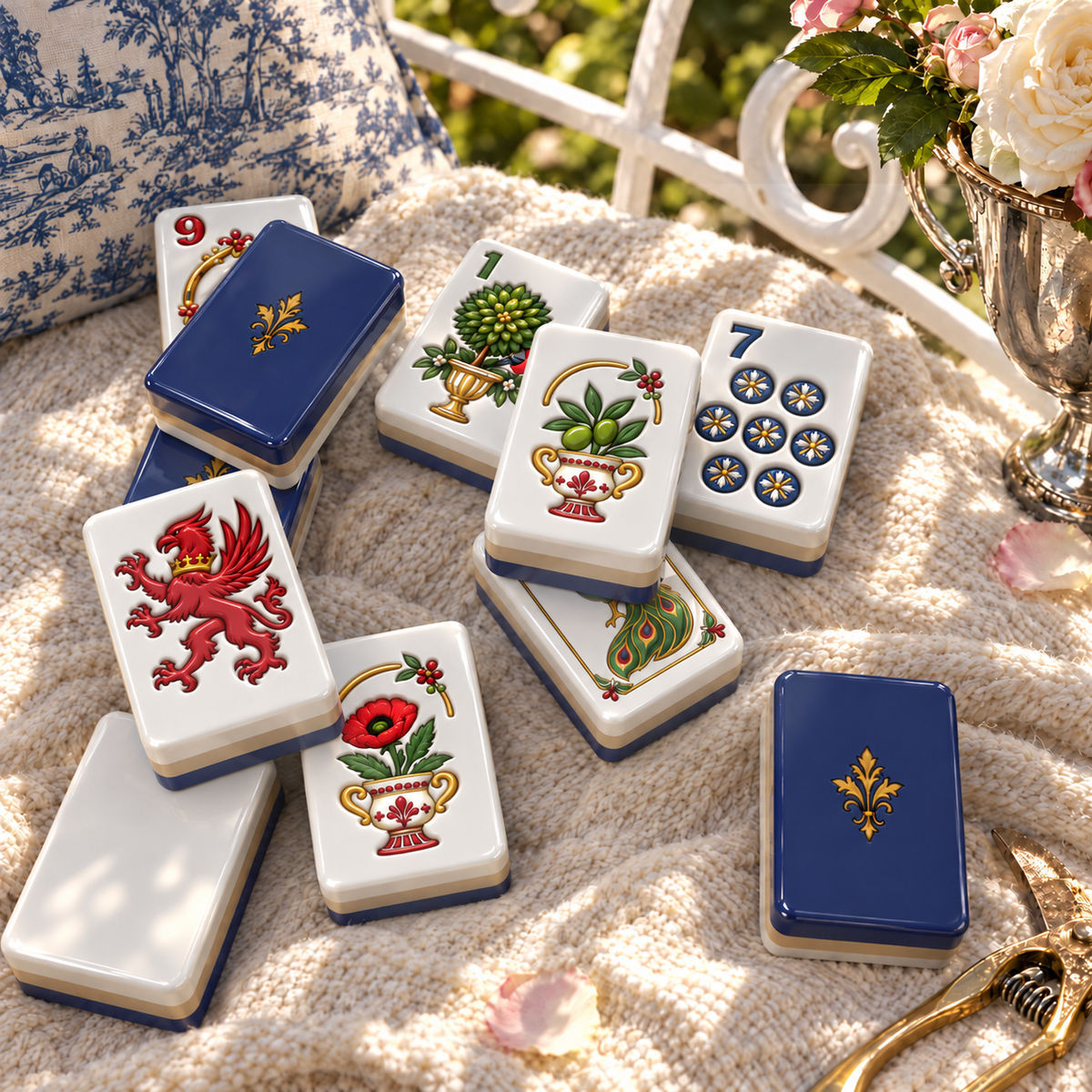
Three-player American mahjong uses the same 152 tiles and hand-matching system as the four-player game, but removes the North wind and one duplicate of most honor tiles to bring the total from 152 to 108 tiles (some rule sets use 132). Scoring still bases on your hand's value from the current National Mah Jongg League card, but payouts shift: instead of one player paying all losers, payments rotate—often each of the two losers pays the winner, then the loser-to-loser payment adjusts by half or is waived, depending on house rules. Point calculation follows the card's point values (15, 20, 25, 30, 40, 50, 60, 70, 80+), but the who pays whom logic changes. Most groups play 16 hands per game (four rounds, four positions). Before buying a set designed for three players, confirm your group's specific payout method, because scoring clarity prevents disputes faster than any other single rule.
Three-player mahjong strips out one wind (usually North) and condenses the tile set, but the real complexity lives in how payments work when someone wins. We host three-player games every other Thursday, and we've learned that scoring confusion ends friendships faster than a single dropped tile—so let's build a shared understanding.
How many tiles do you actually remove for three players?
The standard approach removes North wind entirely (4 tiles) and one copy each of East, West, and South (3 tiles), dropping the set from 152 to 145 tiles. Some regional groups use a 132-tile three-player set instead—removing both North and an extra copy of the three remaining winds, plus reducing flowers or jokers. The clearest path: agree before you shuffle which reduction your group uses, then write it down. Most North American casual groups use the 145-tile version. If you're playing multiple groups, you'll encounter both—and if your set is labeled or has a guide to three-player rules, that saves the pre-game negotiation entirely.

What does the winner get paid in three-player?
In four-player American mahjong, one winner collects from all three losers. In three-player, most rule sets do one of these:
Equal-payment model: Each loser pays the winner an equal amount (e.g., if the hand is worth 30 points, each loser pays 30, winner nets 60). Simplest math, fairest to the winner.
Half-payment model: One loser pays full value; the other pays half. The "extra" loser—often determined by position—absorbs a reduced bill. Common in casual home games; favors the player paying half.
Discard-player model: The player whose discard was the winning tile pays double or full value; the other two pay nothing or half. Penalizes the unlucky tile-thrower.
No-payment between losers: Each loser pays the winner, but losers do not pay each other. Speeds up settlement.
Write your rule down before the first hand. Otherwise, someone will pull out their phone after the third win and argue a different interpretation.
How do you calculate points from the mahjong card for three players?
The National Mah Jongg League card assigns every legal hand a base point value (15, 20, 25, 30, 40, 50, 60, 70, 80, or higher). You find your hand on the card, read its point value, then apply your group's payout rule. Example:
Your hand is worth 40 points (per the card).
Under equal-payment: you collect 40 from each loser = 80 total.
Under half-payment (one loser at full, one at half): you collect 40 + 20 = 60 total.
Under discard-player: you collect 80 if it's a discard win (one loser pays 80, other pays nothing), or 40 if it's a self-drawn win (each pays 20).
The card is your source of truth. Do not invent or negotiate the base value—look it up on the card, every time. If three of you disagree on whether a hand matches the card, a fourth person or a shared image of the card resolves it in under 30 seconds. Many groups keep a printed card at the table to speed this up.
What happens if someone ties or goes out on the same turn in three-player?
Three-player games can create tie situations four-player does not:
Simultaneous discard calls: If two players call the same discard, the player closest to the discarder in turn order (typically the one sitting immediately counterclockwise) takes it; the other continues waiting.
Simultaneous win claims: If you and another player both claim a win from the same discard, the first call stands (or the player closest in turn order). Clarify this rule before the game starts.
Draw rounds (no winner): If the wall is exhausted and no one has won, the hand is drawn with no payment. Mark it and move to the next hand. No bonus or penalty carries forward.
One house rule we use: the player to the discarder's immediate left (counterclockwise) has priority on any call. This mirrors four-player convention and removes ambiguity.
How do you track cumulative scores over a full game?
A full game is typically 16 hands (four rounds of four hands each, with each player in a different position). Keep a running tally for each player:
Player | Hand 1 | Hand 2 | Hand 3 | … | Total |
Alice | +60 | 0 | −30 | … | +90 |
Bob | 0 | +45 | −40 | … | +35 |
Carol | −60 | −45 | +70 | … | −125 |
Alice ends as the overall winner if she has the highest cumulative score. Some groups settle only the final win/loss (high score collects from the other two); others settle each hand independently. Again: write this down before you start. We keep a paper scoresheet for each three-player game, date it, and file it—because someone will want to replay the last hand or verify the final settlement six months later.

How do you handle jokers and special melds in three-player?
American mahjong rules for jokers and exposed melds (pungs, kongs, quints, sextets) do not change in three-player; the only difference is tile count. A joker is still never used alone or in a pair, and a pung is always three identical tiles. The same exposed-meld strategies apply: expose a pung of Winds or Dragons early to block opponents from pursuing similar hands. In three-player, blocking becomes even more critical, because there are fewer competing players but also fewer tiles in play. If one player is one tile away from a win, the other two should both hold suspect tiles longer to deny the discard.
🀄 Shop best-selling mahjong sets →
What equipment helps three-player games run smoothly?
Our experience shows that three-player games benefit from gear four-player games can live without:
Tile storage that fits 108–145 tiles: A dedicated bag or case that holds a three-player set (or a full 160-tile set with a labeled compartment for which tiles to remove) saves setup time and prevents lost tiles.
Individual racks with pushers: Each player sorting 30–35 tiles—instead of 13–14—benefits from a rack with a pusher guide to keep tiles from sliding across the table mid-hand.
A compact mat or compact-sized table cover: Three players around a table can use a full standard mahjong mat, but some groups prefer a smaller surface to reduce reach. This is a comfort choice, not a rule requirement.
A full 160-tile American mahjong set works fine for three players—you simply remove and store the tiles you don't need. No need to buy a separate set unless you play three-player regularly and want to pre-sort the tiles.
What are the most common scoring errors in three-player games?
Forgetting which payout rule applies mid-hand. One player thinks "half-payment," another thinks "equal-payment." Write the rule on the score sheet before the first tile falls.
Mixing up who gets paid. In equal-payment, both losers pay the winner. In discard-player, only the discarder pays (or pays more). Read the card value, then apply your payout rule methodically.
Calculating point totals wrong. Example: Hand is 30 points, equal-payment model. Winner should collect 60 (30 from each loser), not 30. Pause, count on your fingers, confirm aloud.
Not updating the running tally immediately. Settle the hand, record the score, then move on. Delaying tally updates causes errors and disputes later.
Assuming the card value is "doubled" or "halved" for three players. It is not. The card value is fixed. Only the payout rule changes.
To dodge these: read the card aloud, state the payout rule aloud ("equal-payment, so each of you pays 30"), calculate aloud, record aloud.
🎁 See our most-loved mahjong sets & accessories →
What to check before you buy a three-player set or rules guide
Does the set documentation specify three-player tile counts? If you buy a standard 160-tile set, you'll need a separate guide (or our three-player rules resource) to know which 45–52 tiles to remove.
Is the set labeled with tile names or numbers? If tiles are unmarked, sorting the right tiles to remove becomes guesswork. Labeled tiles (Bam, Crak, Dot, Wind symbols, Dragon symbols) make verification instant.
Do you have a printed or laminated copy of the current National Mah Jongg League card? Three-player hands must still match the card—there is no separate three-player card. A shared physical card at the table eliminates phone lookups and arguments.
Has your group agreed on the payout rule in writing? Before your first hand, email or text the rule to all three players. "Equal-payment: each loser pays the winner the full card value" is clear. "We split it somehow" is not.
✨ Find your Mahstead set — free US shipping →

FAQ
Do I need a different mahjong set for three-player games?
No. A standard 160-tile American mahjong set works for three or four players—you simply remove the tiles you don't need (typically the North wind and extras) and store them. If you play three-player regularly, a labeled set makes identifying which tiles to remove much faster.
How is three-player scoring different from four-player scoring?
The card values are identical, but the payout structure changes. In four-player, one winner collects from all three losers. In three-player, most groups use equal-payment (each loser pays the winner the full card value) or half-payment (one loser pays full, one pays half). Your group must choose and document the rule before play.
What if no one wins in a three-player hand?
The hand is a draw. No points are awarded, and play moves to the next hand. Some groups rotate positions after a draw; others keep positions the same. Decide this rule upfront to avoid confusion.
Can I use jokers the same way in three-player as four-player?
Yes. Joker rules never change between three and four-player: a joker is never used alone or in a pair, and it can substitute for any single tile in a pung, kong, quint, or sextet.
How do I know which tile counts are "legal" for three-player?
The most common reduction removes North wind (4 tiles) and one copy each of East, West, South (3 tiles), leaving 145 tiles. Some groups use a 132-tile version instead. Confirm your group's preference before the first hand, and consult the detailed three-player rules guide if you're unsure.
Should I keep a written score for three-player games?
Absolutely. Write down each hand's result and running total for all three players. This prevents disputes and lets you settle at the end of 16 hands based on cumulative score. Most groups settle only the overall winner; some settle each hand independently—but either way, a paper tally is your defense against "I thought I won money, not lost it."


View More
View More
View More
