
Thanksgiving Mahjong Tablescape: Hosting a Four-Player Game at Home
Last updated: Nov 23, 2026
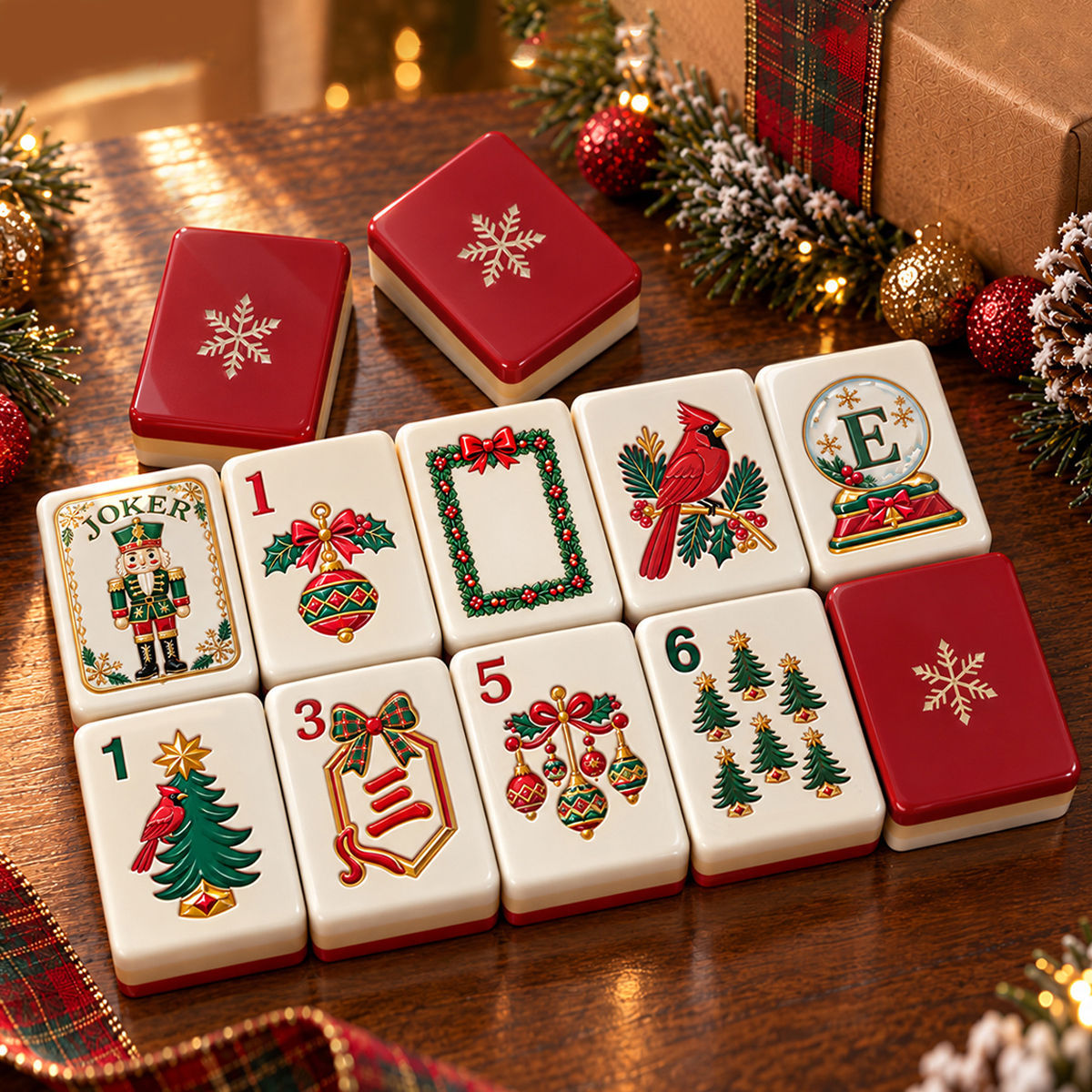
A Thanksgiving mahjong tablescape is a thoughtfully arranged four-player table where the game happens: a central mat protecting the surface, four seated players with individual racks and pushers, the live wall (tiles not yet drawn) arranged in a wall at the center, and clearly visible discards in the middle. Light it well enough to read tiles but warm enough to feel welcoming; seat players North, East, South, West in a square or rectangle so no one has to lean far. Use an acrylic set with readable tiles (either engraved designs or bold numbers), a quality mat that cushions the snap of tiles dropping, and racks with pushers so hands stay private and tiles don't tumble. The tablescape includes the 2026 National Mah Jongg League card, pen for scorekeeping, and water or tea within reach. A full game runs 30–90 minutes depending on skill; if you're new to hosting, plan 2 hours.
🀄 Shop best-selling mahjong sets →
Why does a Thanksgiving tablescape matter more than a casual living-room game?
Thanksgiving gatherings bring mixed-skill players, family chatter, and limited time. A dedicated tablescape—a defined playing surface with good lighting, clear tile visibility, and organized racks—keeps the game moving and makes beginner players feel less rushed. You're signaling: "This game is worth doing right." A mat prevents tile scratches on Aunt Carol's nice table, a quality set with large, legible tiles cuts confusion, and racks with pushers let players hold their hands privately without accidentally revealing what they're holding. Lighting matters most: overhead lights that cast shadows on the tiles frustrate everyone; a mix of ambient light and a focused lamp pointed at the center wall works best. Four-player American mahjong requires visible tile pips, clear discard rows, and enough table space (about 36 inches square minimum for the central play area plus lap space for each player's rack). A rushed, poorly lit, crowded game breeds mistakes and kills the fun; a clean tablescape keeps Thanksgiving convivial.

What surface and mat work best for a holiday table?
You need a mat or table protector that cushions tile placement without being so thick it causes tiles to wobble or catch. A quality mahjong mat serves this purpose by offering a textured, non-slip base that keeps tiles from sliding and reduces the noise of the "tile snap" that can jar people mid-conversation. Avoid thin felt or bare wood: tiles bounce and scatter. Wool or synthetic blend mats feel more substantial and age well through repeated holiday games. The mat should be at least 32 inches square so the central live wall (a stack of face-down tiles divided into four sections, one per player) sits safely in the middle without crowd, and discard tiles can be laid in rows around it without overlapping onto anyone's lap. If you're playing on a dining table, protect the surface first: use a tablecloth under the mat or a mat designed with a waterproof backing. Measure your table beforehand; if space is tight (under 30 inches square in the play area), consider a smaller mat or moving to a card table set up just for mahjong. A padded mat also reduces sound, which matters on Thanksgiving when TV, cooking, and family talk are already loud.
Check our guide on how to choose a mahjong mat for detailed sizing and surface recommendations.
What kind of mahjong set reads well under typical Thanksgiving lighting?
Acrylic tiles with bold, high-contrast designs read faster than bone or bamboo, especially for players over 50 or in mixed-light rooms. Look for sets where the Bam, Crak, and Dot suits are visually distinct—each with its own symbol color and shape—and where numerals are large and clear. Many of our best-selling mahjong sets use engravings or thick-painted designs that catch light rather than disappear into shadow. Test readability: if you can spot a 5 Dot from 18 inches away under your dining-room lamp, the set will work. Avoid very pale or very dark sets if your lighting is inconsistent. Engraved sets often age beautifully and remain readable for decades; painted designs can chip if tiles are handled roughly during rapid play. For a Thanksgiving crowd of mixed ages, an engraved design or one with large, embossed numerals beats a minimalist or monochrome set. If your group includes children or anyone with low vision, bring a backup set with larger pips or ask players to call out tiles when discarding.
🎁 See our most-loved mahjong sets & accessories →
How should players be seated, and what does each player need in their personal space?
Seat the four players in a compass pattern (North, East, South, West) around the table, each about 18–24 inches from the center live wall. Each player needs their own rack with pushers—a stand that holds thirteen or fourteen tiles upright so they're hidden from other players' sight and organized by hand. A pusher (a flat tool that comes with the rack) lets players slide individual tiles forward to "call" or "expose" them without picking them up, which keeps hands clean and game flow smooth. Racks also prevent accidents: tiles held in laps slip or get knocked over; tiles in racks stay put. Position each player's rack directly in front of them, tilted slightly toward them so only they see the pips. Behind the rack, leave lap space for the National Mah Jongg League card (the current year's card, required for hand verification), a small notepad for tracking scores, and a drink. The discard area stays in the center, between the live wall and players: typically four rows of up to nine tiles each (one row per player's discards, laid left to right and cleared when the next player wins or the wall is exhausted). This keeps eyes on the game and prevents mix-ups about who played what tile when.

What's the complete setup checklist for a Thanksgiving game that runs smoothly?
Item | Why | Check? |
Table, at least 36" square | Central live wall + four lap areas need room | ☐ |
Mahjong mat, 32"+ square | Protects surface, cushions tile snap, prevents slides | ☐ |
Complete acrylic mahjong set (152 tiles + 8 jokers) | Standard American game; acrylic reads under varied light | ☐ |
Four racks with pushers | Keeps hands hidden, organized, and private | ☐ |
2026 National Mah Jongg League card (one per player) | Required to verify winning hands; current year only | ☐ |
Pen and scorecards | Track cumulative or round scores | ☐ |
Lighting: overhead + focused lamp | Reads all tile details without shadows | ☐ |
Water, tea, or wine within reach of each player | Players stay hydrated; keeps hands off the game table | ☐ |
Backup set or loan set (optional) | Replacement if tiles break; gift for a player to take home | ☐ |
Flat surface for Charleston tile passing | Separate table or lap space to shuffle and exchange tiles | ☐ |
A smooth Thanksgiving game hinges on setup done before guests arrive: table cleared and wiped, mat laid flat and centered, set opened and tiles inspected for breaks, racks positioned, cards and pens at each seat, and lights tested. The Charleston (a 15-minute ritual where players pass tiles three times before the game starts) happens after everyone's seated; it builds anticipation and ensures no two players hold the same tiles. If this is your first time hosting, set up 45 minutes early so you can walk through one practice round of drawing, discarding, and calling a pung to make sure everyone's comfortable with the flow.
✨ Find your Mahstead set — free US shipping →
What common hosting mistakes ruin the tablescape experience?
Lighting from above only: creates shadows over the live wall and discard rows, making tile pips hard to read. Add a desk lamp or table lamp angled at the center play area so all tiles catch light.
Racks placed too far forward: forces players to crane their necks or reach across others' space to see their own hand. Mount racks directly in front of each player, close to the table edge.
Bare wood or no mat: tiles snap loudly, bounce, and slide into each other; the sound startles people and the movement creates errors. A mat is non-negotiable.
Not testing the set beforehand: missing or chipped tiles discovered mid-game stop play and annoy players. Open and count your set the day before.
Discard rows placed randomly: mix-ups over whose tile was played when cause arguments. Establish one rule: each player's discard row is laid left to right in front of their rack, and refresh rows every time the wall is reset.
No backup card or version confusion: players can't verify hands if the card is torn or if someone's using an old year's card (hands differ by year). Bring two cards and confirm the year with players before the Charleston.
Table too small: forces the live wall into a corner or leaves no lap space, causing constant tile tumbles. Aim for 36 inches square minimum; if your table is smaller, rent a card table or move to a different room.
What to check before you buy
Tile readability: View the set in the same light you'll use on Thanksgiving; if you're unsure, order a set with engraved or embossed designs, which age better than paint.
Rack comfort: Test a rack or ask how deep it is; shallow racks feel cramped for longer games, and tiles pop out if bumped.
Mat thickness and backing: A mat should be at least 0.25 inches thick and have a waterproof or non-slip backing to prevent sliding on tablecloths.
Set completeness: Confirm you receive all 152 tiles plus 8 jokers and that no tiles are cracked or missing pips.
Card year: Verify the 2026 National Mah Jongg League card is included or obtain it separately; old-year cards will not match the hands you can play.
FAQ
Can I play mahjong on a regular dining table without a mat?
You can, but tiles will slide, bounce, and mark the surface. A mat costs far less than refinishing a table and makes the game quieter and more pleasant. We recommend one for any Thanksgiving game.
How many tiles do I need, and why are some sets sold as 160-tile sets?
American mahjong uses exactly 152 tiles and 8 jokers in play. A 160-tile set includes spare tiles (extra jokers or blanks) so if one tile breaks during a game, you have a replacement without stopping play. The extras never go on the table.
What's the difference between racks with pushers and racks without pushers?
A pusher is a flat stick that slides tiles forward to "call" them without lifting them, keeping your hand private and maintaining a clear game record. Racks without pushers require you to pick up tiles, which is slower and lets other players see your hand shape. For Thanksgiving with mixed-skill players, pushers make a big difference in pace and fairness.
Should I engrave a set as a Thanksgiving gift if the game is my first time hosting?
Engraving takes time and is best done if you know the recipient plays regularly. For a first Thanksgiving game, buy a standard set from our best-selling collection so you can see if guests enjoy the game; if they do, an engraved set makes a meaningful gift later.
How do I know if my table is big enough for four players?
Measure the play area. You need at least 36 inches square for the mat and central live wall, plus lap space (about 12–18 inches per player on each side). A standard dining table (36–48 inches wide) works if it seats four people at the corners with space for racks and cards.
Do I need to provide each player with their own mahjong card?
Yes. Each player should have a 2026 National Mah Jongg League card at their seat so they can verify their hand if they think they've won. One shared card between four players creates delays and confusion. You'll also need a card to confirm all hands at the table.
What lighting setup is most forgiving for a Thanksgiving game?
Overhead lights plus a focused lamp (desk lamp or swing-arm lamp) pointed at the central play area. Test it: you should see the pips on all tiles from 18 inches away without leaning. Dim overhead lights + one bright lamp in the center works better than very bright overhead light, which can create harsh glare on acrylic tiles.


View More
View More
View More
