
Thai Mahjong Winning Hands: Rules, Patterns & How to Play
Last updated: Nov 23, 2026
Thai mahjong winning hands consist of four melds plus a pair (14 tiles total). Unlike American mahjong, Thai allows sequences of three consecutive numbers (chows) alongside identical triplets (pungs), both can be exposed or concealed. A "hand" might be three 5–6–7 Bams, a pung of White Dragons, a pung of East winds, a chow of 2–3–4 Dots, plus a pair of North winds—play wins immediately upon completing this structure. Thai uses identical suit and number combinations: Red Dragons pair with Craks, Green with Bams, White with Dots. The game plays with the full 152-tile set plus 8 jokers (jokers act as wildcards in melds, unlike American rules where they cannot complete a pair). Games are faster because hand patterns repeat seasonally rather than following a printed card, making Thai accessible to casual players but requiring solid memory of viable combinations across our best-selling mahjong sets.
What exactly is a Thai mahjong winning hand?
A Thai mahjong winning hand is any combination of four melds (any mix of chows and pungs) plus one pair, totaling exactly 14 tiles. Unlike American mahjong, which restricts hands to patterns printed on an annual card, Thai mahjong allows any valid meld combination so long as it follows the three-tile-per-meld rule. Each meld must be either identical (pung: three 5 Dots, four 5 Dots if a kong) or sequential in the same suit (chow: 1–2–3 Bams, 5–6–7 Craks). The pair is always two identical tiles. Victory is immediate—no scoring rounds, no waiting for announcements.
The core difference from American mahjong: Thai players draw and discard one tile per turn, creating open melds across the table as play progresses. Jokers function as wildcards within any meld (a pung of three 5 Dots + one joker acts as a pung of four). This simpler rule set means Thai games often move faster and suit players who prefer fluid, memory-based hand recognition over card-based lookups.

How do chows and pungs combine into a winning hand?
Thai players combine two types of melds. A pung is always three or four identical tiles: three 5 Bams, three South winds, three Red Dragons. A chow is three consecutive numbers in one suit: 1–2–3 Craks, 6–7–8 Dots, 7–8–9 Bams. A winning hand needs exactly four melds plus a pair—no more, no fewer.
Example winning hand:
Pung: 3–3–3 Dots (or three 3 Dots + joker = "pung" of four)
Chow: 4–5–6 Bams
Pung: East–East–East winds
Chow: 2–3–4 Craks
Pair: White–White Dragons
Because chows can only exist in one suit and must be consecutive, players often pursue mixed strategies: one or two pungs of honor tiles (winds, dragons) plus chows in the number suits. A hand with four chows and no honor tiles is perfectly valid. The only constraint: no chow can wrap around (8–9–1 is not a valid sequence); each chow stands within its suit's 1–9 range.
Jokers speed up completion because they substitute for any single tile in any meld. If you hold two 7 Dots, a 6 Dot, and a joker, you can declare the 6–7 as part of a chow waiting for an 8 Dot—or use the joker to complete it immediately if no 8 Dot arrives. This flexibility is why Thai games often feel less rigid than American mahjong's fixed hand patterns.
What's the difference between Thai and American mahjong hands?
Aspect | Thai Mahjong | American Mahjong | Impact on Play |
Winning structure | 4 melds + 1 pair | Patterns on annual card (same structure, but hand combos fixed) | Thai offers infinite combinations; American requires memorization of ~50–80 hands |
Chows allowed? | Yes, exposed or concealed | No chows in American play | Thai encourages sequential thinking; American relies on identical triplets/sextets |
Joker use | Wildcard in any meld | Cannot complete pair or single tile | Thai hands often use jokers in melds; American saves jokers strategically |
Hand lookup | Player memory / regional guides | National Mah Jongg League card (current year only) | Thai is more accessible to casual players; American demands the official card |
Speed of game | Often 20–30 min/game | Often 30–45 min/game | Thai rewards quick pattern recognition |
The most striking difference: American mahjong restricts you to hands printed on a laminated card issued each spring. You cannot win with any other combination, no matter how logical. Thai mahjong asks only that your four melds and pair follow the basic rules—chows are consecutive and same-suited; pungs are identical; pairs are identical. This makes Thai feel more like poker (infinite hand types) and American more like Scrabble (fixed valid words).
For players hosting weekly games, the switch from American to Thai often requires unlearning the card-check habit and trusting hand structure instead. Many players find Thai liberating after years of "Is this hand on the card?"

How do you score and win in Thai mahjong?
Thai mahjong scoring varies by region and table rules, so we always confirm the scoring system at the start of play. Some regional variants use simple point systems: a basic winning hand (no special conditions) earns base points; hands with all honor tiles, all one suit, or all chows may earn bonuses. Other tables play without scoring, treating each round as a single win for the player who completes their hand first—no cumulative tally, just four rounds (East, South, West, North) to decide a session winner.
The winner is declared the moment they draw or claim a discard tile that completes their four melds and pair. Play stops immediately. In American mahjong, the winner must announce and often waits for verification against the card; in Thai mahjong, the hand structure is self-evident, so verification is quick.
One common practice: the player who wins as East (the first seat/dealer) remains dealer for the next round; if a non-dealer wins, the East seat rotates. This rule set is simpler than American mahjong scoring, which tracks hand difficulty, payoffs, and bonus points per the National Mah Jongg League card.
For casual hosting, Thai mahjong scoring often boils down to "who finished first wins the hand, then rotate seats." This keeps games social and moves play along, making Thai ideal for newcomers or players who tire of lengthy scoring debates.
🀄 Shop best-selling mahjong sets →
What tiles do Thai players use, and how many?
Thai mahjong uses the standard 152-tile set: three number suits (Bams, Craks, Dots, each numbered 1–9, four copies per number = 36 tiles per suit), 16 winds (four each: North, East, South, West), 12 dragons (Red, Green, White, four copies each), 8 flower tiles, and 8 jokers. Thai regional play sometimes includes blank tiles (especially if sourcing from older sets), though the core game requires only the 152 standard tiles. The 8 jokers are always shuffled into the wall at the start; they act as draws or claims during play, never as fixed "dead tiles."
When hosting Thai mahjong, ensure your set includes all tiles clearly marked: number suits distinguished by symbol (bamboo stalks for Bams, circles for Craks, dots for Dots), winds labeled in English or Thai script, and dragons color-coded or labeled. Worn, unmarked, or mixed tiles from multiple sets cause endless delays—a critical pain point in casual play. Our best-selling mahjong sets feature acrylic tiles engraved with clear symbols and high contrast, so Thai players can read at a glance even during fast games.
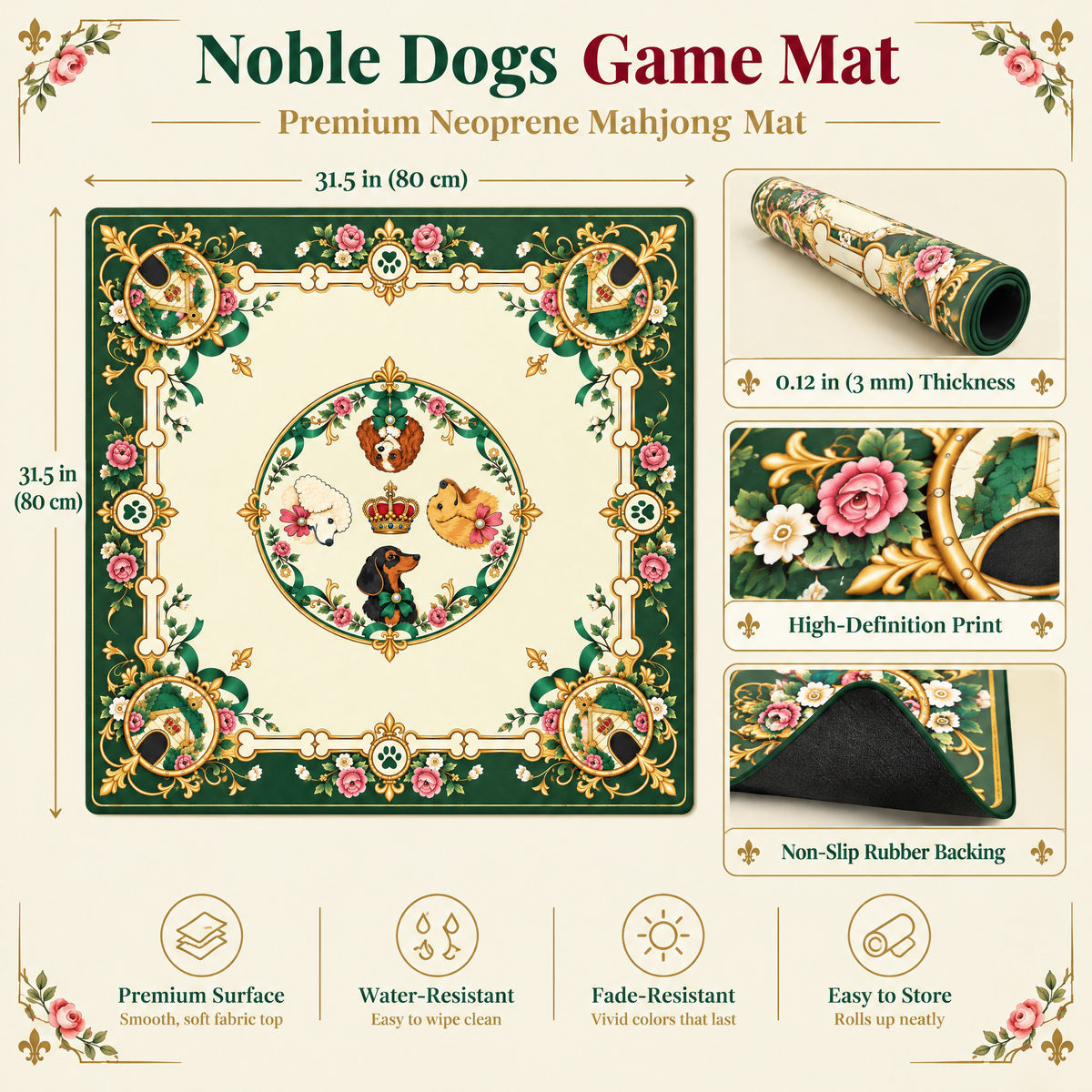
Many Thai players prefer sets with pushable tile racks to keep melds organized and prevent accidental discards. The combination of rapid play (Thai rounds move faster than American) and open melds (all players can see your layout) means clean, well-lit tiles reduce disputes. If your group plays weekly, a dedicated mahjong mat with clear meld zones and a discard pile area also speeds play and removes ambiguity about which tiles have been played.
Can Western or American mahjong players learn Thai rules quickly?
Yes, but the mental shift takes one or two games. American mahjong players often struggle initially because they must stop referencing the annual card and instead trust the simple four-melds-plus-pair rule. The habit of scanning the card for every potential hand lingers; Thai demands you recognize valid chows and pungs on sight.
The learning curve is gentler than you'd expect because both games use identical tiles and the same basic meld types (pungs, sequences). American players already know that 1–2–3 Bams can form a valid grouping; they just haven't been taught to call it a "chow" or use it as a standalone winning component. Thai simply unlocks that flexibility.
Newcomers should play 2–3 practice rounds before joining a stakes game. Focus on: (1) memorizing one sequence type (e.g., 1–2–3, then 2–3–4, then 3–4–5 in the same suit), (2) recognizing pungs instantly (three matching tiles), and (3) understanding that any four-melds-plus-pair combination wins. Within a few hands, the pattern recognition clicks.
🎁 See our most-loved mahjong sets & accessories →
Common mistakes to avoid
Confusing chows with scattered tiles. A chow must be consecutive in the same suit. 1 Bam, 3 Crak, 5 Dot is not a chow; 1–2–3 Bams is.
Using jokers in pairs. In Thai mahjong (unlike some house rules), jokers are never used to complete a pair. If you hold a joker and one Red Dragon, you do not have a pair of Red Dragons.
Discarding without checking neighbors' melds. Thai play moves fast. If you discard a 5 Crak and the player to your left was holding 4–5–6 Craks waiting for the fourth copy or a joker, they can claim your tile and declare a meld immediately (depending on your table's rules for "claiming" discards versus drawing).
Mixing tiles from multiple sets. This is the single biggest drag on casual Thai games. If your set is missing a 7 Dot, borrowing one from another set often means two 7 Dots look slightly different in size, color, or engraving. Confusion cascades through four rounds.
What to check before you buy
Tile clarity. All suits, numbers, winds, and dragons must be instantly distinguishable under normal table lighting. Worn or faded tiles kill Thai play (which is faster than American).
Complete count. Verify your set contains 152 tiles (four copies of each numbered tile, winds, dragons, flowers, jokers). Thai games halt if even one tile is missing.
Joker visibility. Jokers in Thai play are drawn from the wall like any tile; they should be clearly marked so no one mistakes them for a 1 Dot or a blank.
Storage. A dedicated mahjong bag or case prevents tile loss and keeps your set in play condition across many sessions.
✨ Find your Mahstead set — free US shipping →

FAQ
Can I use an American mahjong set to play Thai mahjong?
Yes. Both games use the same 152-tile set (four each of 1–9 in three suits, 16 winds, 12 dragons, 8 flowers, 8 jokers). The only difference is the rules and hand recognition, not the tiles. Simply set aside the American mahjong card and apply Thai hand rules.
What happens if two players complete a hand in the same draw round?
Thai house rules vary. Some tables declare the player closest to the dealer (or the dealer if they both complete) as the winner. Others replay the hand. Clarify this rule before the game starts to avoid disputes.
Is Thai mahjong suitable for beginners?
Absolutely, especially if they don't already play American mahjong. The four-melds-plus-pair structure is easier to explain than American card-based hands. After one practice round, most newcomers grasp the winning concept and can play socially within 20 minutes.
Can I play Thai mahjong with three or two players instead of four?
Standard Thai mahjong is designed for four players. Two or three-player variants exist in some regions, but they require modified tile draws, wall structure, and passing rules. Stick with four-player games if you're learning.
How long does a Thai mahjong game typically last?
A single round (one winner declared) usually takes 15–25 minutes once players are familiar with the rules. A full session (four rounds) typically lasts 60–90 minutes, faster than American mahjong because hand recognition is simpler and scoring is often streamlined.
What's the best way to remember valid chows?
Think of chows as small counting exercises: 1–2–3, 2–3–4, 3–4–5, and so on through 7–8–9 in each suit. Practice five minutes daily by laying out tiles in sequence on a mat. After 2–3 games, your hands will move automatically and you'll spot chow opportunities without conscious thought.


View More
View More
View More
