
How to Play Thai Mahjong: Rules, Tiles & Strategy
Last updated: Nov 23, 2026
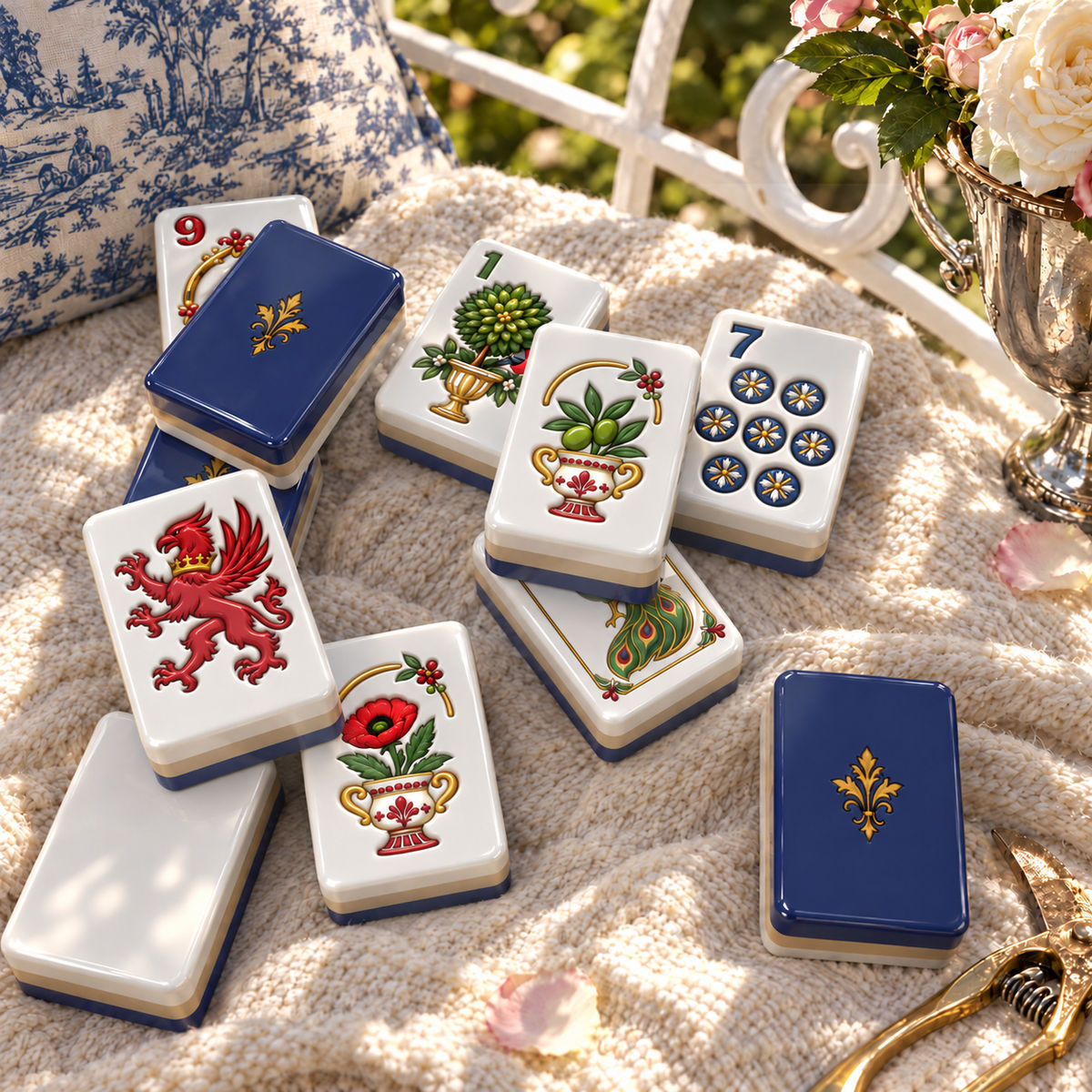
Thai mahjong uses 144 tiles—three suits (Bamboo, Character, Dot, numbered 1–9) plus honors (winds N/E/W/S and dragons Red/Green/White)—played by four players aiming to form one pair plus four melds (14 tiles total) before opponents. A complete winning hand requires a pair plus pungs (three identical tiles), kongs (four identical), or chows (consecutive sequences like 1-2-3). Rounds move faster than American mahjong; each turn players draw and discard one tile. Unlike American play, which locks hands to an annual card, Thai mahjong allows flexible patterns and calls melds openly. Winning requires both pattern completion and often speed; players who declare "mahjong" first claim the win and corresponding points.
What tiles do you need for Thai mahjong?
Thai mahjong requires exactly 144 tiles: 36 Bamboo (1–9, four of each), 36 Character (1–9, four of each), 36 Dot (1–9, four of each), 16 winds (four each: North, East, South, West), and 12 dragons (four Red, four Green, four White). Some sets sold as variants include bonus tiles, but a standard Thai game uses only these 144. The Red dragon typically pairs with Character tiles, Green with Bamboo, and White (often called Soap or blank) with Dot tiles and functions as a zero. Unlike American sets, Thai tiles omit flowers and jokers; speed and tile recognition matter more than wild cards. Verify your set includes exactly four copies of each number and honor before play—missing tiles break the game.

How does winning work in Thai mahjong?
Thai mahjong awards the win to the first player to complete a hand of 14 tiles arranged as one pair plus four melds. Winning patterns include all pungs (three-tile sets), a mix of pungs and chows (three-tile sequences), or specific lucky patterns (like all terminals, all honors, or repeating numbers). The winner scores points based on the hand's pattern and any bonuses—higher-point melds like terminals and dragons multiply the base score. If two or more players complete hands simultaneously, the player seated closest to the discarder in turn order wins. Declaring "mahjong" too early (before tiles are truly complete) results in a penalty or disqualification depending on house rules. Speed and accuracy both reward winners; slow, careless declaration costs table position and credibility.
How is Thai mahjong different from American mahjong?
Thai mahjong plays with 144 tiles and flexible hand patterns, while American mahjong uses 152 tiles and only hands from the annual National Mah Jongg League card. Thai play calls melds openly mid-game; American players form hidden hands and expose only at win. Thai chows (sequences) are called and melded; American mahjong forbids sequences entirely—only identical-tile pungs, kongs, and higher sets are exposed. Thai rounds last 15–30 minutes; American games often run 45 minutes to two hours due to strategy depth. Thai scoring emphasizes point multipliers and bonus timing; American scoring tallies hand difficulty and meld types from the card. Both are four-player games, but Thai favors speed and pattern flexibility while American rewards long-term hand planning and risk management.
What are the basic turn and discard rules?
On your turn, draw one tile from the wall (the face-down tile pile), then discard one tile from your hand face-up into the center (the discard pond). Other players may call your discard if it completes a pung, kong, or chow in their hand; if called, your tile is taken and added to that player's exposed meld. If no one calls your tile, play passes to the next player clockwise. You must keep your hand to 14 tiles when calling a discard (or 13 if you are not the discarder); adding a drawn tile keeps hand size at 14. Discards stay in the pond in the order played; players read discard sequences to infer opponents' holdings and avoid throwing matching tiles. Never pick up or handle a discard out of turn; violations may forfeit your turn or incur a penalty.
How do you score and keep track in Thai mahjong?
Thai mahjong scoring awards points based on hand patterns and bonus multipliers: simple melds earn base points (1–4 points per meld), while terminals, dragons, and honors earn double or triple. If you win on a drawn tile (self-draw), points from all players combine; if you win on a discard, only the discarder pays the full amount. Common bonuses include winning on the first discard (double), winning with all one suit (triple), or winning with specific repeating patterns (×2 or more). A scorekeeper writes each player's total after each hand; lowest score at the end loses (or highest wins, depending on your group's house rule). Many casual groups play best-of-three games or settle a single session; high-stakes play may track cumulative scores over weeks or seasons.

What's the best strategy for new Thai mahjong players?
Start by learning which melds score highest: terminals (1 and 9 tiles) and honors (winds, dragons) are worth more than middle numbers, so build hands around them early. Watch discard patterns—if a player throws two 1-Bamboo in a row, they likely don't need Bamboo; avoid throwing tiles that could complete their hand. Keep your hand balanced: hold a mix of low, middle, and high tiles so you can adapt if others call melds and change the pond layout. Don't rush to declare "mahjong" until your hand is mathematically certain—a false declaration loses points and table credibility. Play your first 3–5 games defensively, focusing on recognizing winning patterns in others' hands before optimizing your own. Speed improves with repetition; experienced players spot complete hands in seconds, while beginners should take a full turn to review their 14 tiles before discarding.
Thai Variant Choice | Player Level | Round Time | Why It Fits |
Standard Classical | Beginner | 20–30 min | Fixed hand patterns, clear rules |
Fast Regional | Intermediate | 15–20 min | Bonus multipliers, speed emphasis |
Mixed Suite (mixed rules) | Advanced | 25–40 min | Flexible melds, bonus stacking |
Tournament (official) | Competitive | 30–50 min | Strict scoring, formal calls |
Each variant keeps the core 144-tile, four-player structure but changes bonus timing and discard enforcement. Beginners should master classical rules first, then experiment with regional bonuses after 10–15 sessions. Switching variants mid-session confuses turn order and scoring; agree on one rule set before the first draw.
🀄 Shop best-selling mahjong sets →
What equipment do you need to play Thai mahjong at home?
A standard Thai mahjong set includes 144 tiles, a bamboo or plastic wall (tile rack), and a discard tray or felt mat to organize play. Many players use a mahjong mat to mark player seating, protect the table, and define the discard pond—essential for home games. Mahjong racks with pushers hold your tiles upright and out of sight, speeding up play and preventing accidental reveals. A scorepad and pen are mandatory for tracking points; many casual groups use a smartphone calculator. Optional but helpful: a small timer (to enforce turn time limits in competitive play), a carousel or bag to store tiles between sessions, and a cloth mat to muffle tile noise (important for apartment dwellers). Unlike American mahjong, Thai sets don't require a reference card; the tile types and rules are memorized or written on a house-rules sheet.
🎁 See our most-loved mahjong sets & accessories →
What mistakes should beginners avoid?
Calling a discard without confirming your hand is complete—always recount your tiles before declaring "mahjong." Discarding tiles that match the suit or number pattern of exposed melds; safer discards are off-suit or opposite the current winning pattern. Throwing all similar tiles early; keep at least one backup of each number so you retain options as opponents' melds reveal. Forgetting the discard pond order; experienced players read discards to deduce hidden tiles—your discard sequence telegraphs your strategy. Playing too fast under pressure; one incorrect declaration or illegal meld voids your hand and delays the round. Not agreeing on house rules before starting—establish whether a self-draw wins double, whether bonus multipliers stack, and what happens if two players declare mahjong simultaneously.
What to check before you buy a Thai mahjong set
Verify the set includes exactly 144 tiles (not 152 or 160, which are American). Count the suits: 36 Bamboo, 36 Character, 36 Dot, 16 winds (four each), and 12 dragons (four each). Check that tiles are durable acrylic or bone-composite—plastic tiles wear fast and tiles chip easily in informal play. Ensure the wall and tile holders are sturdy; flimsy racks flip during draws and disrupt momentum. Look for clear, readable symbols (especially on small Bamboo/Character/Dot icons) so players can spot melds quickly without squinting. If buying online, confirm free or affordable shipping; a 144-tile set is lighter than American sets, so costs should reflect that. Buy from sellers who describe tile material and size (typically 1 inch × 0.5 inch); vague listings often hide wear or missing tiles.
✨ Find your Mahstead set — free US shipping →

FAQ
Can you play Thai mahjong with fewer than four players?
Thai mahjong is designed for four players; two- or three-player variants exist but require rule modifications and are uncommon in casual settings. Most Thai games simply wait for a fourth player or rotate sitters. If you're interested in flexible player counts, discuss rule changes with experienced players first.
Do Thai and Hong Kong mahjong use the same tiles and rules?
Both use 144 tiles and allow chows, but Hong Kong mahjong emphasizes waiting patterns and has distinct bonus scoring. Thai mahjong prioritizes speed and pattern recognition. Switching between them mid-session causes confusion; master one fully before exploring the other.
How long does it take to learn Thai mahjong if I know American mahjong?
Typically 2–3 sessions (3–5 hours). American players already understand tile recognition and four-player dynamics, but must unlearn the American card system and learn chow rules, bonus timing, and Thai scoring. Practice with an experienced Thai player for fastest progress.
What happens if I draw a tile and can't use it immediately?
You must discard one of your 14 tiles before the next player's turn. The new discard enters the pond and may be called by others. You can never hold more than 14 tiles unless you're declaring "mahjong."
Can jokers or wild tiles be used in Thai mahjong?
Standard Thai mahjong has no jokers or wild tiles—all 144 tiles are fixed and unambiguous. Some casual groups house-rule a joker, but this slows play and complicates scoring; avoid it as a learner.


View More
View More
View More
