
How to Use the 4 Bam Tile in American Mahjong
Last updated: Nov 23, 2026
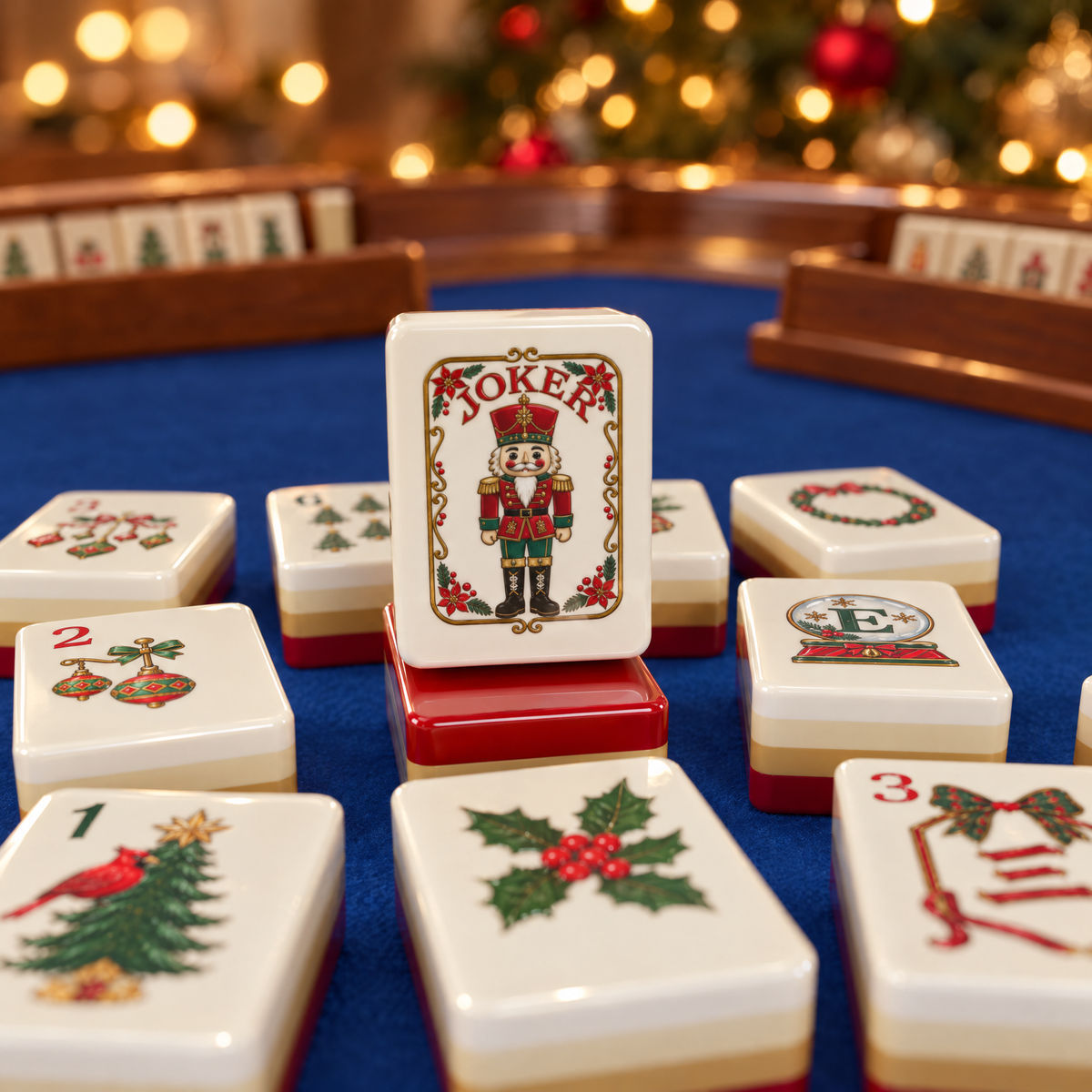
The 4 Bam is a standard suited tile (Bam suit, number 4) that behaves like 1, 2, 3, 5, 6, 7, 8, or 9 in most contexts: it forms pungs (three identical), kongs (four identical), quints (five) and sextets (six) with other 4 Bams. Where it differs crucially is in a pair (the two-tile foundation of every American mahjong hand). American mahjong rules forbid jokers in a pair or single tile; therefore, your pair of 4 Bams must be actual 4 Bams—you cannot use White Dragons to replace them. You'll encounter the 4 Bam in roughly 1 in 9 hands that contain Bam-suit melds. Many players track it mentally during the game: if you need a pair for your hand and the 4 Bam is your candidate, confirm on the current year's National Mah Jongg League card that both copies are available and haven't been discarded by others.
The 4 Bam is a regular number tile in the Bam suit—one of the three suited lines in what's in an American mahjong set. It works exactly like any other number from 1 to 9 in forming melds, but it hits a wall when you're building a pair. Understanding this single rule—and spotting when the 4 Bam is your best pair option or a liability—separates casual players from those who read the League card with confidence.
🀄 Shop best-selling mahjong sets →
Why can't you use a joker to replace the 4 Bam in a pair?
American mahjong's fundamental restriction is that jokers (and the White Dragon, which acts as a universal tile in melds) cannot substitute for any tile in a pair or single tile. A pair is always two identical actual tiles. The 4 Bam pair must be two physical 4 Bams from your set. This rule exists to keep pairs fixed and verifiable—the National Mah Jongg League card lists hands with explicit pair requirements, and allowing jokers there would create ambiguity. If your hand requires a pair of 4 Bams and you cannot draw or keep two actual 4 Bams, that hand is not available to you this turn.

Where does the 4 Bam fit in melds—and where doesn't it?
The 4 Bam behaves like every other Bam number in pungs, kongs, quints, and sextets. Three 4 Bams form a pung (exposable). Four 4 Bams form a kong (exposable and refills). Five or six 4 Bams form a quint or sextet (exposable). You can also sequence—in a "run"—with other Bam numbers (e.g., 3 Bam, 4 Bam, 5 Bam), but sequences aren't called or exposed in American mahjong; they exist only in your hand or as "concealed" melds. The 4 Bam does not function as a joker anywhere. It cannot be swapped into another suit or number slot. It is always 4 Bam.
How do you recognize a 4 Bam tile in a set?
On most acrylic American mahjong sets, the 4 Bam displays the number "4" and a Bam symbol (traditionally four circles or dots arranged in a 2×2 pattern, or as a "bamboo" pictograph depending on design). It's one of four identical copies in a standard 160-tile set; the other four numbers and all three suits follow the same visual rule. When you choose a mahjong mat and set, familiarize yourself with the tile face—modern sets use clear, bold engravings so the 4 Bam is as easy to read as any other tile. If you host weekly games, sorting a new set in daylight before play prevents confusion mid-hand.
What's the difference between the 4 Bam and the White Dragon (Soap)?
The White Dragon—called "Soap" in American mahjong—is a honor tile, not a suit number. Its function is universal: it can substitute for any tile except in a pair or single tile. The 4 Bam is a Bam suit number and has no substitution power. If a hand calls for a pair of 4 Bams and you only have one 4 Bam in your hand, you cannot use a White Dragon to complete the pair. However, if the hand calls for a pung of 4 Bams and you have two 4 Bams, you can add a White Dragon as the third tile to complete that exposed pung. This flexibility in melds—but rigidity in pairs—is the core rule.

Should you hold or discard the 4 Bam early in a hand?
Strategy depends on the current League card and your drawn hand. If you're building toward a hand that needs a 4 Bam in a meld (not a pair), holding it early makes sense. If you're chasing a hand that requires a pair of 4 Bams and you have only one, keeping it weakens your options unless the second copy is still in the wall or in other players' hands. Experienced players study the card before drawing; if a hand you like uses a 4 Bam pair and both copies have been discarded by other players, that hand is dead. Early in the game, track which honor tiles and high-value Bams have been exposed; if you see both 4 Bams on the table, any hand needing that pair is impossible. Discard the 4 Bam you're holding and pivot to a new hand. One common mistake: holding a 4 Bam "just in case" for five turns while your real hand collapses—lock in your direction early and discard tiles that don't feed it.
🎁 See our most-loved mahjong sets & accessories →
Scenario | Action | Why It Works |
Hand needs a 4 Bam pair; you have one 4 Bam. | Study the card first; if both copies are visible, switch hands. | Saves a dead turn. |
Hand needs a 4 Bam pung (meld); you have one. | Keep it; add a second 4 Bam or a White Dragon later. | Melds allow joker substitution. |
You're unsure if the hand is still "live." | Ask other players to confirm or check the current League card. | Honesty prevents mis-melds. |
You have both 4 Bams; the hand on your card shows them in a pair. | Protect them; don't expose or discard either one until your hand is complete. | They're irreplaceable. |
How does the 4 Bam interact with the current year's League card?
The National Mah Jongg League issues a new card every spring. Each hand on the card specifies which tiles form the pair, which form melds, and whether jokers are allowed in any of those melds. If the card shows a hand with a 4 Bam pair, you know immediately that both 4 Bams in your set are a requirement—you cannot substitute. If the card shows a 4 Bam in a pung or kong, jokers can replace it. Before each game, one player reads the current year's card aloud or passes it around; everyone confirms they're playing from the same card. New players often miss this step and become confused when a hand they thought was valid isn't on the card at all. The 4 Bam tile itself is identical across all sets and all years, but where it appears on the card changes annually. Keeping the card at the table and referring to it during play eliminates disputes.
✨ Find your Mahstead set — free US shipping →
What to check before you buy a new set
Tile clarity: Hold a 4 Bam up to light and confirm the number and suit symbol are sharp and legible. On Mahstead's best-selling mahjong sets, acrylic tiles are engraved deeply so they survive thousands of shuffles.
Four copies present: Count at least four 4 Bams in your new set. A complete 160-tile set includes four of every number and honor tile.
Suit consistency: Verify the 4 Bam matches the style and size of all other Bams and tiles in your set—no chipped edges, no faded engravings.
Storage solution: If you host weekly games, store your set in a dedicated travel bag or case to protect tiles from dust and damage between sessions.

FAQ
Can I use a White Dragon instead of the 4 Bam in a pair?
No. Pairs in American mahjong must be two identical actual tiles. White Dragons (Soap) substitute only in pungs, kongs, quints, and sextets—never in pairs or single tiles. Your 4 Bam pair must be two real 4 Bams.
What happens if I only have one 4 Bam and my hand needs a pair?
That hand is no longer playable. Switch to a different hand on the League card that uses tiles you can complete. Discarding the lone 4 Bam allows you to focus on a live hand.
Is the 4 Bam the only tile with this pair rule?
No. Every tile in American mahjong follows the same rule: pairs are always two identical actual tiles, never joker-substituted. The 4 Bam is just one example.
How many 4 Bams are in a 160-tile mahjong set?
Exactly four. Every number in each suit (Bam, Crak, Dot 1–9) appears four times in a standard set.
Can I use the 4 Bam in a sequence or chow?
In your concealed hand, yes—you can hold 3 Bam, 4 Bam, 5 Bam as a run. But sequences are never called or exposed in American mahjong. Only pungs, kongs, quints, and sextets are exposed.
Why does the 4 Bam matter more than other number tiles?
It doesn't inherently. All numbers follow the same rules. The 4 Bam matters to your current hand because of what the League card requires that week. If your target hand uses a 4 Bam pair, it becomes critical; if not, treat it like any other tile.


View More
View More
View More
