
Taiwanese vs Sichuan Mahjong: Rules, Tile Counts & Key Differences
Last updated: Nov 23, 2026
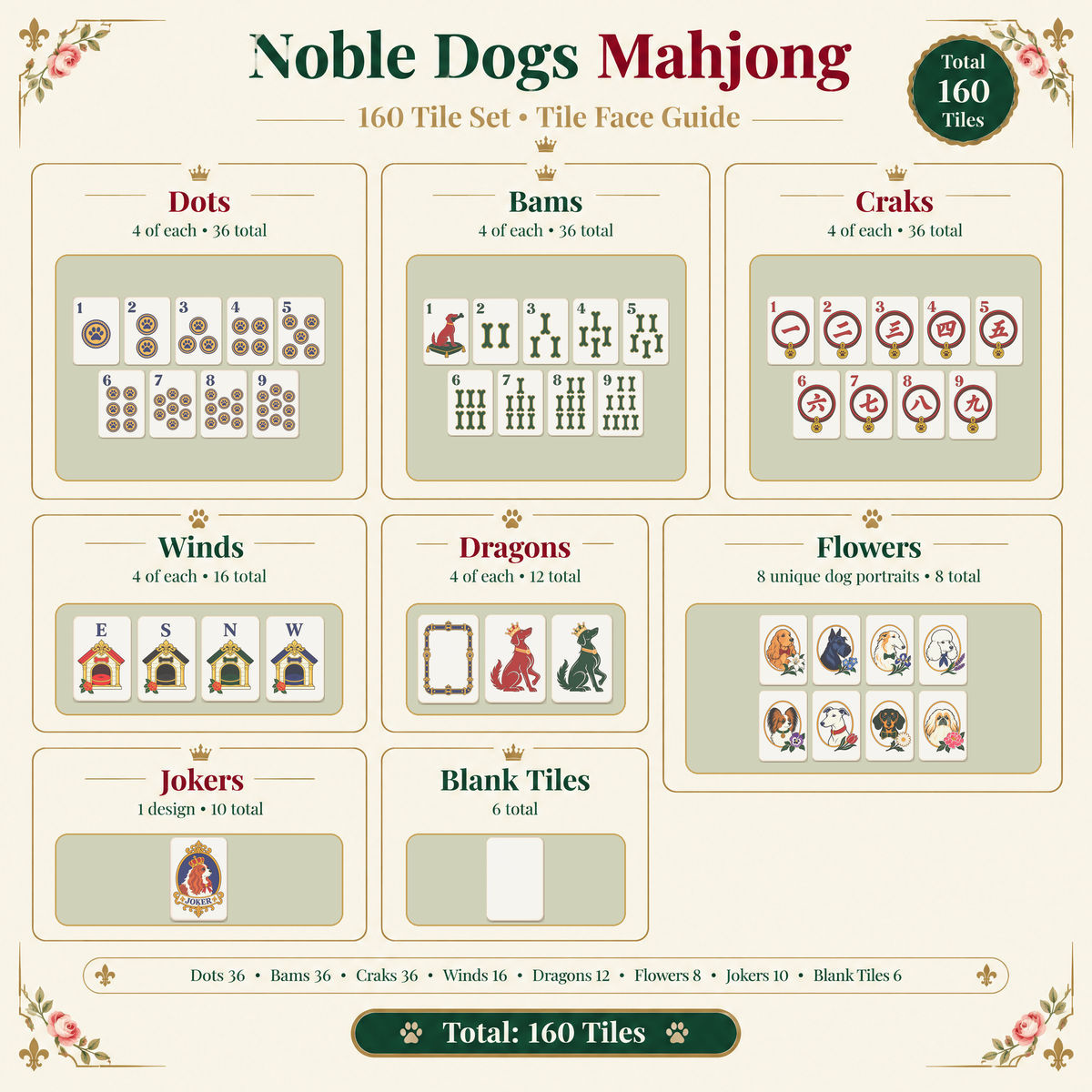
Taiwanese mahjong uses 144 tiles (bamboo, character, dot suits numbered 1–9, four copies each; 16 winds; 12 dragons; 8 flowers) and allows both concealed hands and exposable melds like chows (sequences). Sichuan mahjong typically uses the same 144-tile base but emphasizes paired sequences and often plays with regional house rules that vary by locality. Both require forming a winning hand of four melds plus a pair, but Sichuan rewards specific hand structures and may include unique bonus patterns. Taiwanese play is closer to Hong Kong rules, while Sichuan focuses on combination scoring and speed. American mahjong players working with best-selling traditional sets will notice these variants use smaller tile inventories (144 vs. American's 152) and allow sequences—a fundamental rule difference from the American game.
Taiwanese mahjong and Sichuan mahjong represent two major branches of Chinese regional play, each with devoted followings across Asia and growing diaspora communities worldwide. While both descend from the same root game, they diverge sharply in tile composition, winning hand structures, and the role of sequences. If you've played American mahjong and wondered how the rest of the world plays, these variants offer eye-opening differences—and they're worth learning if you host international game nights or travel to regions where these rules dominate.
What is the exact tile count difference?
Taiwanese mahjong uses exactly 144 tiles: three suited ranks (bamboo, character, dot) numbered 1–9 with four copies of each (108 tiles), 16 winds (four each: North, East, South, West), 12 dragons (four each: red, green, white), and 8 flowers (typically two each of four seasons or a simplified variant). Sichuan mahjong begins with the same 144-tile base but many regional house rules add or exclude specific tiles depending on local custom. American mahjong, by contrast, plays with exactly 152 tiles—the same three suits plus all four winds and dragons, plus 8 flowers, plus 8 jokers—making it a heavier, slower game with more meld variety. The fundamental difference: Taiwanese and Sichuan are suit-focused, while American mahjong is joker and wind-focused.

How do Taiwanese and Sichuan differ in hand-winning rules?
Taiwanese mahjong requires a winning hand of four melds (pungs, kongs, or chows) plus a pair. A chow is a sequence—for example, 3 Bamboo, 4 Bamboo, 5 Bamboo—and can be formed from your hand and called from another player's discard, making it a social, interactive game. Sichuan mahjong also requires four melds plus a pair, but emphasizes specific hand patterns: certain combinations like all-sequences, all-triplets, or mixed-honor hands score bonus points or are considered "special" hands. Crucially, Sichuan often uses pairs of sequences—two identical chows side by side—as a core winning strategy, and may restrict certain melds in specific hands. American mahjong allows only pungs (three identical tiles), kongs (four identical), quints (five), and sextets (six)—no sequences at all. This single rule removes the social element of calling sequences and forces American players into a more solitaire-like hand-building mode, making American games slower and more methodical.
What scoring systems set these variants apart?
Taiwanese mahjong scores based on meld types and hand composition: concealed hands (all four melds drawn, not called) earn more points; mixed honors (winds, dragons with suits) score differently than pure suits; and doubling occurs for specific patterns. Base scores typically start low (1–2 points per hand) and are multiplied by the number of doublings (e.g., concealed hand = one double, all terminals = one double). Sichuan mahjong often uses a tile-counting system: each hand scores a fixed point value based on its pattern, and bonuses multiply for special hands like "all greens" or "robbing the kong." Some Sichuan house rules award rapid play bonuses or penalize slow play. American mahjong scores in a completely different currency: hands are not drawn from rules but from the current year's National Mah Jongg League card, and each hand has a fixed point value (often 30–60 points depending on complexity); there are no doublings—only the hand's listed value applies. The American card system creates a level playing field but requires memorizing hundreds of hand patterns annually.
Can you move between these variants easily?
A player fluent in one variant can often recognize the rules of another but will face a steep learning curve when switching. The biggest hurdle: sequences. If you've learned American mahjong, you've learned to forget about sequences. Taiwanese and Sichuan players rely on spotting and calling chows as a core strategy; American players do not. Conversely, an American player will struggle with Taiwanese or Sichuan's scoring multipliers and hand-memorization demands, which are far lighter than learning the annual American card. The tile count difference also matters: Taiwanese and Sichuan play faster (144 tiles vs. 152, fewer jokers, no joker rules to track), so the rhythm of draw-discard-call feels snappier. If you host mixed-rule game nights, we recommend keeping separate equipment: Taiwanese and Sichuan players need traditional 144-tile sets, while American players need the full 152-tile American set with jokers. This prevents confusion and keeps everyone playing their best.

Which variant has the steepest learning curve?
American mahjong has the highest initial barrier: learning the National Mah Jongg League card is like memorizing a rulebook's worth of hand patterns. However, once learned, the rules are fixed—the card changes every spring, but the game mechanics stay identical. Taiwanese mahjong requires fewer memorized patterns but demands split-second recognition of chows, honor sequences, and doubling opportunities; beginners often slow the game by miscalculating scoring. Sichuan mahjong is the fastest to learn but the hardest to master: house rules vary wildly between regions, and bonus hands can be unclear to outsiders. If you're visiting Taiwan or mainland China, ask your host for their house rulebook upfront—no two Sichuan tables play identically. For pure accessibility, Taiwanese is gentler than American; for consistency, American is superior. We recommend best-selling sets designed for American play if you're learning in an English-speaking community; if you're in a Taiwanese or Sichuan-dominant area, source a local set and observe a few games before buying.
When should a host choose one variant over another?
Choose Taiwanese mahjong if your players value social interaction and enjoy calling melds from the discard—it's the most participatory variant and feels collaborative. Choose Sichuan mahjong if your group loves rapid, competitive play with high payoffs for lucky hands—it rewards aggression and speeds up the game. Choose American mahjong if your players like studying strategy, prefer a level playing field where memory and luck are balanced, or live in the US (where it dominates club play). For hosting, consider your guests' backgrounds and comfort level: mixed groups often do best starting with American rules on familiar equipment, then experimenting with variants at a separate event using proper tiles and a willing teacher. The best-selling mahjong set collection includes traditional options suitable for Taiwanese play; American-specific sets with engraved tiles make learning the card easier.
🀄 Shop best-selling mahjong sets →
What to check before buying for a variant game
Before purchasing equipment for Taiwanese or Sichuan play:
Confirm tile count: Most traditional sets are 144 tiles (correct). American sets are 152 (different). Verify the seller's description.
Check tile size: Taiwanese and Sichuan tiles are often slightly smaller than American tiles; ensure they fit your existing racks or mats.
Look for symbols, not English: Taiwanese and Sichuan sets use Chinese characters (simplified or traditional) and bamboo/character/dot symbols. If you see Roman numerals or English letters, it's American.
Verify honors: Winds should be labeled 東 (East), 南 (South), 西 (West), 北 (North) in Chinese; dragons may be 中 (red), 發 (green), 白 (white).
Ask about jokers: Traditional sets have zero jokers. If the seller mentions jokers, it's American.
Test discard pile space: Taiwanese and Sichuan games see more called melds, so you need room to lay sequences on the table. Ensure your mahjong mats have side spaces for multiple meld displays.
🎁 See our most-loved mahjong sets & accessories →
Side-by-side comparison table
Aspect | Taiwanese | Sichuan | American |
Tile count | 144 | 144 (varies by house rules) | 152 |
Sequences allowed | Yes (core mechanic) | Yes (pattern-focused) | No |
Jokers | None | None | 8 required |
Scoring basis | Multiplied doublings | Fixed pattern values + bonuses | Annual National Mah Jongg League card |
Game speed | Medium (social) | Fast (competitive) | Slow (strategic) |
Hand study | Moderate (recognize chows) | High (memorize patterns) | Very high (hundreds of card hands) |
Best for | Social groups, diaspora | Casual competitive play | Serious club players |
Difficulty for newcomers | Medium | Medium | High (card learning) |
✨ Find your Mahstead set — free US shipping →

FAQ
Can I use an American mahjong set to play Taiwanese rules?
No. American sets have 152 tiles (including 8 jokers), while Taiwanese uses 144 with no jokers. The extra American winds and jokers shift the probability of draws. You need a proper 144-tile traditional set. Jokers also violate Taiwanese sequence-building logic.
Do Taiwanese and Sichuan tiles look the same?
Usually yes—both use the same three suits (bamboo, character, dot) and honor tiles (winds, dragons). The difference is in rules, not appearance. However, some Sichuan regional variants use simplified symbols or omit flowers, so confirm your host's tile setup before playing.
Which variant is easiest to teach a beginner?
Taiwanese mahjong is gentler than American because you don't memorize hundreds of hand patterns—you just learn sequences, doublings, and basic hand types. Sichuan is fastest to play but house rules vary so much that teaching is inconsistent. American requires the most upfront study but is most standardized once learned.
Can I switch between American and Taiwanese mid-session?
Not cleanly. The tile counts and scoring logic are too different; players will make costly mental mistakes. Host separate game nights for each variant, or designate one-variant evenings so players can focus.
Where do I find Taiwanese or Sichuan players to learn from?
Community centers, libraries, and cultural organizations in areas with large Taiwanese or Chinese diaspora populations often host mahjong groups. Meetup boards and local Facebook groups are good starting points. Ask your host for house rules in writing before joining—variants within variants are common.
Do I need special racks or mats for Taiwanese mahjong?
Standard mahjong racks work fine, though you may want extra table space for displaying called melds (sequences). Racks designed for American play (often longer) also work but are not required.


View More
View More
View More
