
Can You Play American Mahjong with a Chinese Set?
Last updated: Nov 23, 2026
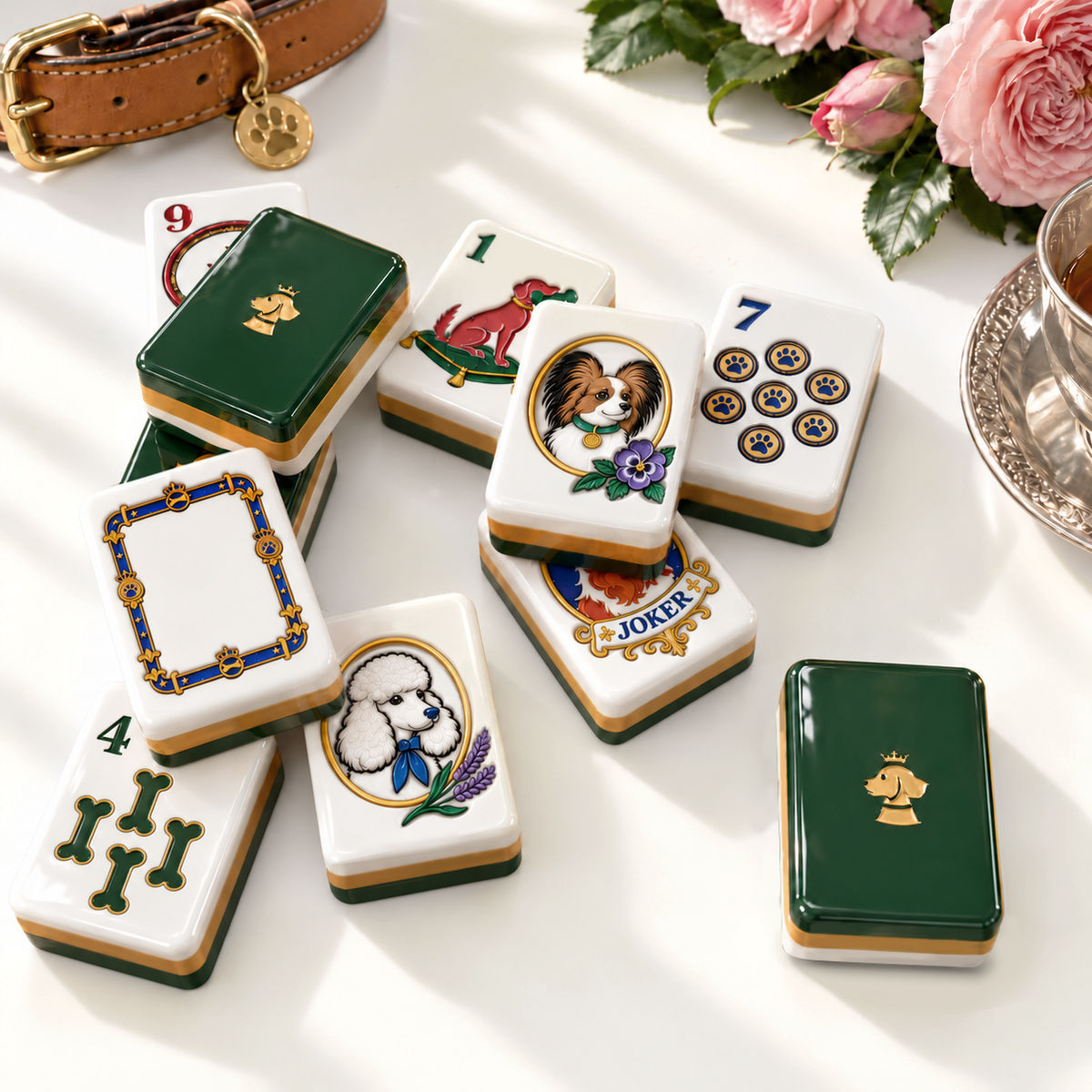
No. American mahjong and Chinese mahjong are separate games with incompatible tile sets and rules. American mahjong uses 152 tiles including winds, dragons, flowers, and eight jokers—tiles with symbols and numbers that correspond to hands printed on the current National Mah Jongg League card. Chinese mahjong uses a different tile inventory, lacks jokers, and plays by an entirely different hand system with melds you can call from other players. A Chinese set lacks the specific tiles American players need (like the "Soap" white dragon serving as zero), lacks jokers, and has no way to track the annual card-based hand roster. You need an American-specific set: look for sets clearly labeled "American mahjong" with jokers included. Mahstead's acrylic American mahjong sets come with all 152 playing tiles plus spares, designed for the card-based American game.
What tiles does an American mahjong set have that Chinese sets don't?
American mahjong requires 152 specific tiles: three suits (Bams, Craks, Dots) numbered 1–9 with four copies each; 16 winds (four each of North, East, West, South); 12 dragons (Red, Green, and White); and eight flower tiles. Chinese mahjong omits flowers entirely and uses a different dragon count. Most critically, American mahjong includes eight jokers—wild tiles that substitute for any other tile in a meld and are essential to completing hands from the card. Chinese mahjong has no jokers. The White dragon in American mahjong also serves as zero, a function absent in Chinese play. Without jokers and the full American tile breakdown, a Chinese set cannot fulfill a single American hand.
🀄 Shop best-selling mahjong sets →

How do the rules differ between American and Chinese mahjong?
American mahjong is entirely card-driven: you can only make hands that appear on the current year's National Mah Jongg League card (refreshed each spring). You cannot call or expose chows—sequences like 1-2-3—only pungs (three identical tiles), kongs (four identical), and longer melds. Chinese mahjong plays by a fixed ruleset where you form sequences (chows) and sets freely without a card; you can call melds from discards to complete combinations. American play uses the Charleston—a tile-passing ritual before the hand begins—which Chinese mahjong skips. American mahjong is drawn-and-discarded strictly; Chinese mahjong allows robbing the kong under certain conditions. The two games operate from completely different strategic frameworks and tile interactions.
Can you convert a Chinese set by adding jokers or removing tiles?
No. Adding jokers to a Chinese set doesn't solve the core problem: the tile faces, numbers, and symbols still don't match the American card. American tiles show Western numerals and suit symbols (Bam, Crak, Dot); Chinese tiles often use traditional characters. The tile inventory is wrong—Chinese sets have fewer dragons and no flowers in the right proportions. You'd need to remove tiles, relabel others, and recount, which leaves you with an incomplete and unreliable set. After the effort, you'd still have mismatched tile weights, inconsistent backs, and tiles that don't play predictably. It's simpler and cheaper to buy an actual American set. Our best-selling mahjong sets are designed from the ground up for American play—every tile is accounted for, the materials are consistent, and they're ready to use out of the box.
What should you look for when buying your first American mahjong set?
Look for these non-negotiables: 152 playing tiles plus spares (a complete American set); jokers clearly marked (usually bright colors or special symbols); suit markings as Bam, Crak, and Dot (not foreign characters); winds labeled N, E, W, S or with compass points; a White dragon that can function as zero; and uniform tile weight and back design for smooth shuffling. Check whether the set includes a mat, a rack with pushers, or a bag—convenience factors that vary by product. Acrylic sets are durable and easy to read; bamboo-and-bone sets are traditional but require more care. Read the product description to confirm it's explicitly designed for American mahjong and includes the 152-tile count. Avoid sets labeled "Chinese mahjong" or "mahjong" without regional clarification. If you host weekly games, invest in a mat and racks—they protect tiles, organize play, and make the game smoother.
🎁 See our most-loved mahjong sets & accessories →

How do you know if you've been given the wrong set by mistake?
Count the tiles by category. You should have exactly 36 tiles per suit (1–9 in Bams, Craks, and Dots, four copies each). You should have 16 winds—four each of N, E, W, S. Dragons: four Red, four Green, four White—12 total. Eight flowers. Eight jokers. If the count doesn't add to 152 tiles, it's incomplete or not American mahjong. Look at a meld from the current National Mah Jongg League card—can you form it with your tiles? Chinese sets often show characters instead of numerals, lack jokers entirely, or have a different flower or dragon count. If the box says "Chinese" or "Hong Kong" or shows traditional characters on the tiles, it's not an American set. Always cross-check the product page before ordering; the description should explicitly state "American mahjong" and the 152-tile inventory. When you buy from Mahstead's collection, the set is engineered for the National Mah Jongg League card, so you can trust it out of the door.
Feature | American Set | Chinese Set |
Total tiles | 152 | varies (usually 108–144) |
Jokers included | 8 | 0 |
Flowers | 8 | 0 or different count |
Dragons | 12 (R, G, W) | varies |
Sequences (chows) | not played | core mechanic |
Hand source | Annual card | fixed ruleset |
Suit labels | Bam, Crak, Dot | often characters |
White dragon function | also serves as zero | standard dragon only |
✨ Find your Mahstead set — free US shipping →
What to check before you buy
Confirm the game variant. The product page must say "American mahjong." If it says "Chinese," "Hong Kong," or leaves it vague, move on. Verify the tile count. A proper American set has exactly 152 playing tiles plus spare jokers and/or blank tiles (marketed as a 160-tile set, for example). Look for jokers. Eight jokers should be visibly described or shown in photos. Check suit labeling. Tiles should read Bam, Crak, and Dot—not characters. See the card reference. The product page should mention compatibility with the National Mah Jongg League card. Read reviews from other American players. They'll confirm tile quality, shuffling feel, and readability—critical for weekly game hosting.
If you're a beginner, start here
New to American mahjong? Read our guide to mahjong for beginners to understand hand types, the Charleston, and how to read the card. Understanding the rules first helps you pick the right set. Once you have tiles, learn how to read the mahjong card so you can spot hands quickly at the table. Many beginners also benefit from a mat and racks—they slow play just enough to prevent mistakes and make shuffling consistent. See our mahjong racks with pushers and mahjong mats collections for options that pair with any set.

FAQ
If I learn on a Chinese set, can I switch to American mahjong later?
You'd need to relearn the hand structures, rules, and card reading—very different systems. It's faster to learn American mahjong directly with an American set from the start. The investment in the right tiles is small compared to the confusion of switching.
Are there any American mahjong sets sold in stores that also work with Chinese rules?
No. A set is designed for one game or the other. American sets have jokers and specific tile counts; Chinese sets don't. Trying to play both games with one set creates errors. Buy the set that matches the game you want to play.
What happens if I try to play American mahjong with a Chinese set anyway?
You'll be missing jokers, so you can't complete many hands from the card. Your tiles won't match what the card shows. Scoring and hand combinations won't align. The game breaks down. Everyone at the table notices immediately.
Where can I find a reliable American mahjong set if I don't know where to start?
Look for sets explicitly labeled "American mahjong" with a 152-tile count and jokers listed in the product description. Check that the product page references the National Mah Jongg League card. Mahstead's sets are designed for American play with consistent acrylic tiles and come with a full 152-tile inventory.
Is it worth buying an expensive American set versus a budget one?
Quality matters most for shuffling feel, tile durability, and readability—you'll handle these tiles weekly for years. A cheaper set may have uneven tile weight, faint numbers, or chipped edges that affect play. Mid-range acrylic sets offer good balance. Bamboo-and-bone sets cost more but are beautiful and last decades.


View More
View More
View More
