
Taiwanese Mahjong Winning Hands: Rules, Patterns & Strategy
Last updated: Nov 23, 2026
Taiwanese mahjong (also called Taiwan-style or "Taiwanese") awards victory to the first player completing a legal hand—a combination of melds (three-tile or four-tile groups) plus a pair, similar to Hong Kong rules but with faster tempo and different scoring weights. Hands rank by type (e.g., all honor tiles, mixed sequences with dragons, suited combinations) rather than fitting a seasonal card like American mahjong uses. The game uses a standard 136-tile Chinese set: three suits (Bams, Craks, Dots) numbered 1–9 in four copies each, four winds, three dragons, and eight flower tiles. Play moves at speed: players draw and discard in rapid succession, call melds openly, and scoring awards points for hand type, sets completed, and bonus tiles. Unlike American mahjong, Taiwanese variants permit sequences (chows)—three consecutive numbers in one suit—as part of winning combinations. The learning curve is steep but learnable in a few sessions; most winners emerge within two hours of play. Mahstead's best-selling mahjong sets include designs suited to both American and traditional tile aesthetics, though Taiwanese play typically uses unmarked Chinese-style tiles without the colored card guides American players rely on.
🀄 Shop best-selling mahjong sets →
What counts as a winning hand in Taiwanese mahjong?
A complete Taiwanese hand consists of melds plus a pair—four groups of three or four tiles each, plus one identical pair. Each meld is either a pung (three identical tiles), a kong (four identical tiles), or a chow (three consecutive numbers in the same suit: e.g., 2–3–4 Craks). The pair must be two identical tiles. A player wins by drawing or claiming a discard that completes this structure. Scoring then depends on which meld types the hand contains: pure sequences in one suit score highest, mixed honor tiles (winds and dragons) score medium, and simple mixed hands score lowest. The hand must use exactly 14 tiles—no more, no fewer.

How do melds and sequences differ from American mahjong?
American mahjong does not permit sequences (chows) in winning hands at all—every group must be a pung (three identical), kong (four identical), quint (five identical), or sextet (six identical) of the exact same tile, and hands must match patterns on the current year's National Mah Jongg League card. Taiwanese mahjong, by contrast, allows sequences freely: a 2–3–4 Dot run counts as a valid meld in almost any hand. This opens far more combination possibilities and shortens decision time—you are not locked to a card. Pungs and kongs work the same way (three or four of one tile), but they are interchangeable components of a broader menu. Because sequences are legal, hand completion feels less restrictive and gameplay moves faster. Beginners often find Taiwanese rules more intuitive once they grasp that "consecutive numbers in one suit" is always valid.
What is the role of honor tiles in Taiwanese winning hands?
Honor tiles—winds (North, East, South, West) and dragons (Red, Green, White)—are treated like any other suit tile for meld purposes: you can form a pung or kong of honors, and some hands award higher scores for certain honor combinations. A hand of "all honors" (composed entirely of wind and dragon pungs or kongs, no number tiles) scores the maximum points. Mixed hands may include one honor pung alongside three number-suit melds. The White dragon often serves as a wildcard in scoring contexts but does not function as a joker during play itself. Some local rulesets award bonus points for hands holding a specific dragon (like Red dragons), but core Taiwanese rules treat them as regular tiles that happen to be high-value when grouped. This contrasts with American mahjong, where dragons carry symbolic weight in specific card patterns but melds follow rigid suit-based structures.
What scoring system rewards different Taiwanese hand types?
Taiwanese mahjong scoring ranks hands on a tiered scale based on composition and difficulty. The chart below shows approximate point values relative to hand complexity:
Hand Type | Example Composition | Relative Point Value | Why It Scores High |
All honors (pure) | 4 honor pungs (no numbers) | Highest (100+) | Rarest, most melds match |
All one suit (pure) | 4 Dot melds only + pair | High (60–80) | No mixed suits, clean structure |
Mixed with honors | 2 honor pungs + 2 number melds | Medium (30–50) | Honors boost value |
Mixed with sequences | 2 Dot chows + 1 Crak pung + pair | Medium (20–40) | Sequences easier than pure |
Simple mixed | 3 number pungs + 1 dragon pung + pair | Low (10–20) | Common, little restriction |
High-scoring hands typically reward restriction (all one suit, pure honor) or rarity (dragons held, bonus sets). Fast play means scoring happens instantly after hand completion, then the next game begins; there is no hand-by-hand decision tree like American mahjong's annual card structure.
🎁 See our most-loved mahjong sets & accessories →

How do players claim discards and call melds aloud in Taiwanese play?
In Taiwanese mahjong, when a player discards a tile, the three other players watch to see if they want to claim it. If your hand needs that tile to complete a meld, you call "pung" (three-of-a-kind), "kong" (four-of-a-kind), or "chow" (sequence)—claiming it stops the turn. For chows, you must announce which sequence you are completing (e.g., "3–4–5 Bam"). Once claimed, the meld is placed face-up on your rack or in front of you, and play resumes with you discarding a different tile. If no one claims the discard within seconds, the next player in rotation draws from the wall. This real-time call-and-claim system creates rapid, social gameplay: players watch the discard pile intently, react within a second or two, and respond aloud. It requires alertness and quick hand-reading. American mahjong is much quieter by comparison: exposing sets is optional, silent, and strategic—you never announce a meld before laying it. Taiwanese play is loud, fast, and communal.
What are common beginner mistakes when learning Taiwanese hand combinations?
New Taiwanese players often struggle with three recurring errors. First mistake: forgetting sequences must be in consecutive numeric order. A 1–3–5 combination is not a sequence; it must be 1–2–3 or 5–6–7, for example. Second mistake: mixing up honor tiles with number tiles—many beginners think a 1 Dot and a White dragon can form a sequence together, but they cannot (one is numbered, one is an honor; only honors can meld with honors, and only numbers can sequence with numbers, with rare exceptions in local rules). Third mistake: overlooking that the pair must be identical. You cannot pair a Red dragon with a Green dragon; the pair must be two Red dragons or two identical number tiles. Avoiding these three errors cuts lost hands by half. Most players internalize the rules after four or five sessions of regular play.
What equipment do you need to host Taiwanese mahjong?
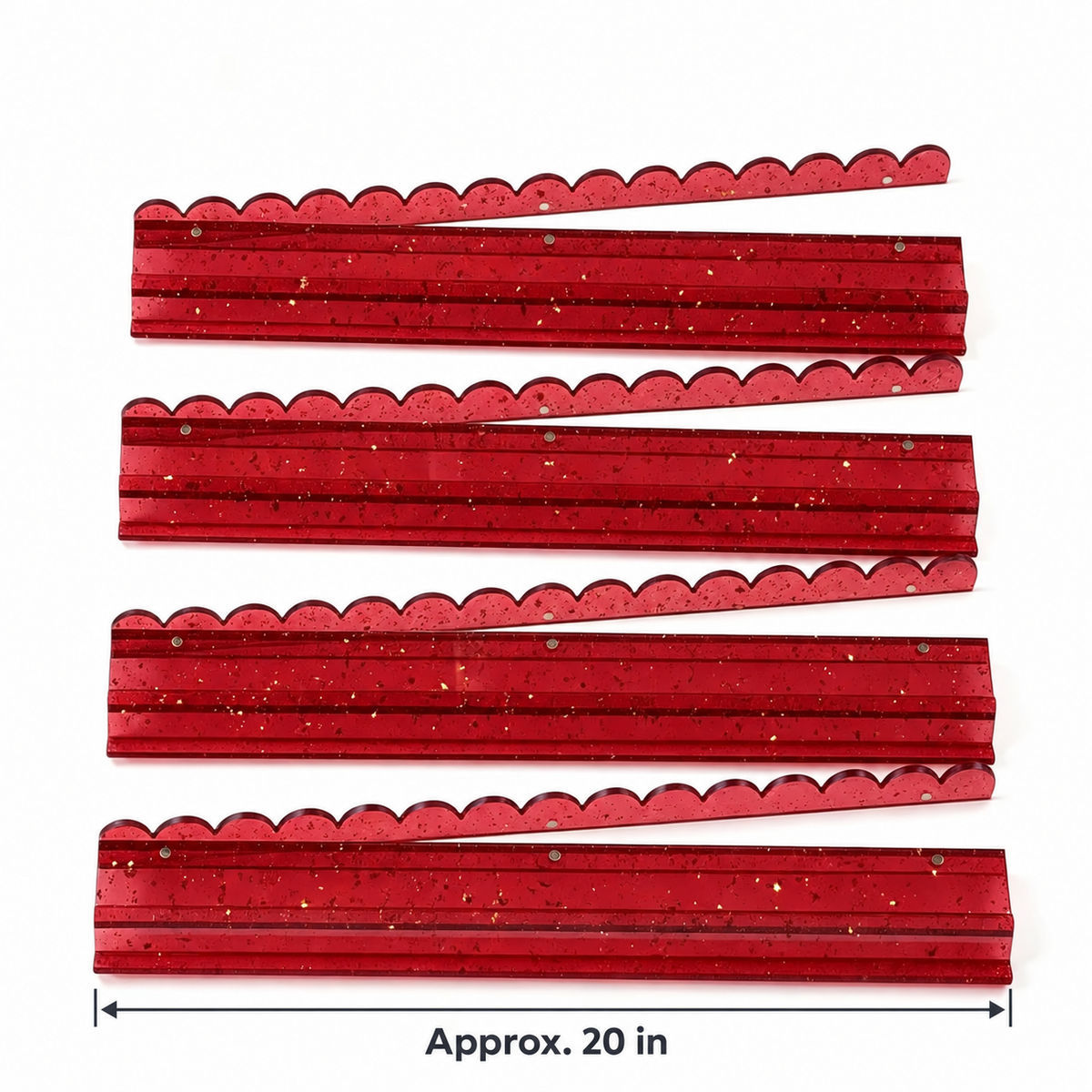
Taiwanese mahjong requires a standard Chinese tile set (136 tiles), a sturdy playing surface, and ideally four racks to hold and organize tiles during play. Our mahjong mats provide a cushioned surface that protects tiles and reduces noise—important for weekly home games where play sessions stretch two to three hours. A set of mahjong racks with pushers helps each player keep melds organized and prevents accidental tile mixing. For travel to weekly game nights or tournaments, a quality mahjong bag or case protects your set during transport. When buying or upgrading, confirm your set is a standard 136-tile Chinese set (not an American 152-tile variant) if you plan to play only Taiwanese rules.
Before you buy—what to check
Tile count: Verify the set contains exactly 136 tiles for Taiwanese play (American sets use 152 and cannot be substituted).
Tile size and weight: Heavier tiles feel more authentic and signal quality; lighter acrylic tiles are cheaper but wear faster with daily play.
Cleanliness and printing clarity: Ensure numerals, suit symbols, and honor-tile characters are crisp and won't fade after dozens of games.
Completeness: Confirm all four copies of each tile are present (a missing tile disables the game).
Mat or surface: Taiwanese play involves rapid discarding and claiming; a padded mat reduces tile breakage and noise for family and neighbors.
✨ Find your Mahstead set — free US shipping →

FAQ
Can I use an American mahjong set to play Taiwanese mahjong?
No. American sets contain 152 tiles and include jokers and special tiles (like flowers in the American format) that do not exist in Taiwanese play. A standard Taiwanese set has exactly 136 tiles: Bams, Craks, Dots, winds, dragons, and flower tiles in fixed quantities. Mixing the two defeats both games. Buy or borrow a Chinese-format 136-tile set instead.
What is the difference between Taiwanese mahjong and Hong Kong mahjong?
Both allow sequences (chows) and use similar hand structures, but Taiwanese play tends to move faster and reward pure single-suit hands more heavily. Hong Kong variants sometimes include bonus scoring for "chicken hand" (lowest-scoring completion) and different point multipliers. Rules vary by region and table; clarify with your group before starting. The core tiles and melds overlap, so learning one helps the other.
How long does a typical Taiwanese mahjong game take?
A single hand (round) usually resolves in 5–10 minutes of play. A full session of four to six rounds takes 30–60 minutes. Games can continue for hours if players keep rotating through multiple sessions, but each individual hand concludes quickly because play moves rapidly and hands are won or discarded fast. American mahjong games, by contrast, often take 20–30 minutes per hand due to card-matching complexity.
Are there regional rule variations in Taiwanese mahjong I should know about?
Yes. Taipei, Kaohsiung, and rural Taiwan play slightly different scoring systems, bonus-point rules, and kong penalties. Some regions allow a kong to be claimed mid-hand (called "robbing the kong"), while others forbid it. Always ask your group which house rules are in effect before sitting down. Writing them down prevents disputes. Most casual home games use a simplified version with core rules (melds, pairs, sequences) and skip advanced regional tweaks.
Is Taiwanese mahjong harder to learn than American mahjong?
Both have a learning curve, but in different ways. Taiwanese mahjong has fewer rules (no seasonal card to memorize, simpler hand structure) but requires faster reaction time and real-time calling. American mahjong has more complex hand patterns but allows slower, more contemplative play. Most people pick up Taiwanese basics in three to five sessions; American mahjong takes four to eight sessions because the card-matching layer adds cognitive load. Choose based on your preferred pace: fast and social (Taiwanese) or strategic and thoughtful (American).


View More
View More
View More
