
Mahjong Tiles for Beginners: What to Buy & How to Choose
Last updated: Nov 23, 2026
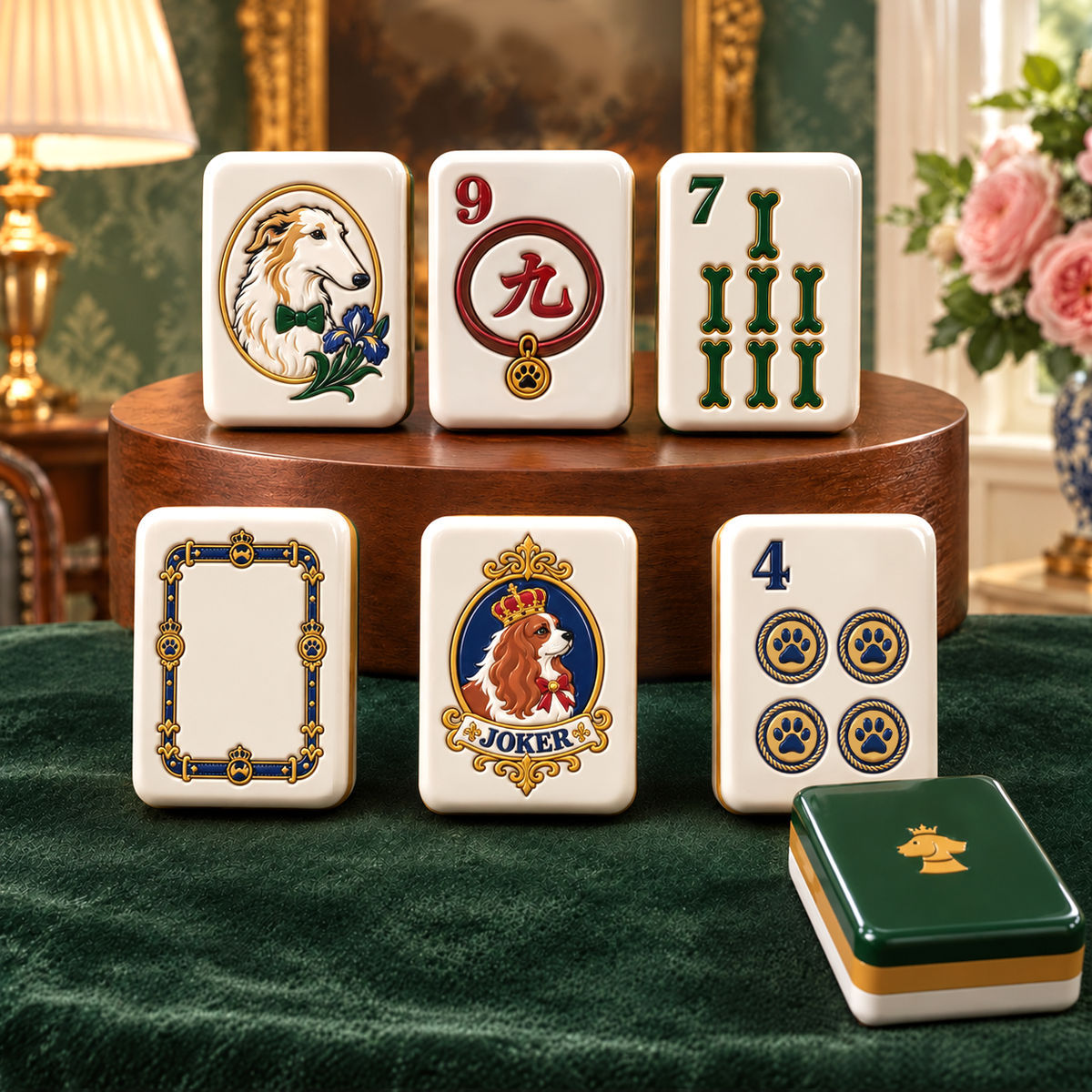
American mahjong sets for beginners come in two tile types: acrylic (durable, loud click, easy to read) and bamboo/bone (traditional, quieter, pricier). A beginner set contains 160 tiles—152 for play plus spares—including three suits (Bams, Craks, Dots numbered 1–9), 16 winds, 12 dragons, and 8 flowers, plus 8 jokers. Look for sets with bold, high-contrast numerals and suit symbols, especially if players have vision concerns; acrylic sets from our best-selling collection are ideal because the bright colors and clear etchings cut table glare and make tile spotting instant. Avoid sets with faint or ornate calligraphy—you'll spend game time squinting instead of playing. Mahstead acrylic sets ship with a mat, carrying bag, and racks with pushers, so you start complete without buying extras.
What exactly is in a beginner mahjong set?
A standard American mahjong set holds 160 tiles: 152 active tiles (three suits of 36 each, plus 16 winds, 12 dragons, 8 flowers) and 8 jokers for play. The remaining tiles in your 160-tile set are spares—replacements for lost or damaged pieces. You'll also get a mat (felt or nylon surface to protect tiles and muffle noise), a carrying bag or case for travel, and plastic racks with pushers to hold your hand tidily. The pushers slide tiles smoothly so you don't reveal your hand to opponents.

Should beginners choose acrylic or traditional tile materials?
Acrylic tiles are best for beginners: they're loud (you hear every play at the table), colorful, chip-resistant, and printed so clearly that numbers pop even under poor lighting. Traditional bamboo-and-bone sets are beautiful and quieter but cost significantly more, break if dropped, and feature hand-painted markings that fade or blur with age. Start with acrylic. Once you've played regularly for a year or two, you'll know whether you prefer the traditional aesthetic—by then you'll already read tiles fluently and won't need bold printing. Acrylic also suits households with children, dogs, or frequent moves.
How do I pick between standard and engraved tiles?
Standard tiles come with classic printed symbols and numbers—reliable, readable, affordable. Engraved tiles are etched into acrylic so the markings won't fade, last indefinitely, and feel luxury; they're ideal if you host weekly games and want tiles that look polished. Engraved sets suit gifting to experienced players or upgrading after six months of regular play. For your first set, standard print suffices—the printed marking is perfectly legible for years if you're casual.
What's the real cost difference, and what does price tell you?
Price varies by material, engraving, and included accessories. On the product list, you'll find sets at different tiers: basic acrylic with mat and bag at the lower end, premium engraved acrylic with upgraded cases higher up. A beginner doesn't need the priciest option; mid-range acrylic with clear print, a decent mat (at least 18" × 20"), and a padded travel bag gives you everything. Avoid the cheapest import sets online—tiles crack, paint chips fast, mats tear, and bags lack compartments. Mahstead's best-selling sets balance durability and cost for players committing to the game seriously.
🀄 Shop best-selling mahjong sets →
How do I know if a set is right before ordering?
Check four things: tile readability (zoom product photos—numerals and suit symbols must be bold), mat thickness (at least ¼ inch felt or rubber dampens tile noise and protects your table), bag padding (your tiles are fragile; a thin tote isn't enough), and weight (160 tiles are heavy; if the bag has no shoulder strap or handle, you'll regret it). Read the dimensions—a standard mat is 18" × 20" minimum; smaller mats crowd your hand racks. Confirm the set includes a current-year National Mah Jongg League card, because hands change annually and an outdated card means you can't legally play at clubs. Mahstead includes the card and ships free across the US, so you have no surprises.

What beginner mistakes should I avoid when buying?
Don't buy the cheapest option online. Low-cost sets have dull colors, faint printing, brittle tiles, and thin mats that slide on polished tables. Don't assume "360 tiles" or "large sets" are better. American mahjong uses exactly 152 tiles; anything beyond is marketing fluff. Don't buy without a carrying bag. Loose tiles in a box invite spills, lost pieces, and dust damage. Don't pick a set based on color alone. Novelty colors (hot pink, holographic) look fun in photos but make the suit symbols hard to distinguish under dining-room light—stick to classic red, green, blue, and ivory. Don't ignore the mat. A thin mat causes tiles to slide, slowing play and frustrating beginners still learning speed.
Comparison: What to buy based on your situation
Situation | Best choice | Why | What to check |
Playing once a month casually | Standard acrylic set, printed tiles | Low cost, durable enough for occasional use | Readable numerals, padded bag, mat ¼" thick |
Hosting weekly games | Engraved acrylic set, upgraded case | Lasts indefinitely, professional look, quieter | Engraved contrast, rigid case, carrying strap |
Gifting to an experienced player | Engraved set with matching mat & case | Luxury feel, shows you know the game | Check recipient's existing set style first |
Playing with vision-impaired players | Largest-print acrylic set available | High contrast, jumbo numerals, bright colors | Test photos under poor lighting, oversized numerals |
First-time beginner, unsure if you'll continue | Mid-range standard acrylic | No buyer's remorse, still solid quality | Readable print, decent bag, included accessories |
🎁 See our most-loved mahjong sets & accessories →
What accessories do beginners really need?
A mat (prevents tiles from sliding, protects your table), a carrying bag (lets you transport tiles safely), racks with pushers (keeps your hand private and organized), and a current-year National Mah Jongg League card (required to look up legal hands). Most beginner sets include these; verify before ordering. Nice-to-haves: a second mat if you rotate through multiple tables weekly, a waterproof case if you travel by car, or dice for determining seating. Check our racks and bags separately only if your set doesn't include them or they're damaged later.
How long should a beginner set last?
Acrylic tiles last 5–10 years of casual play (once or twice a month) or 2–3 years of heavy use (weekly games). Print tiles fade gradually; engraved tiles are immune to fading. A mat lasts 3–5 years before the felt pills or the rubber backing cracks—replacement mats are inexpensive. Bags wear faster; a padded nylon bag survives 2–4 years of regular hauling before zippers jam or handles tear. Racks and pushers rarely break unless dropped repeatedly. Plan to replace the mat or bag within 3 years if you play weekly; don't hesitate to buy a replacement set if tiles crack (this is rare but happens if a set is dropped hard on tile).
✨ Find your Mahstead set — free US shipping →
What to check before you buy
Tile readability: Zoom into product photos. Can you read the numerals from 12 inches away under household lighting?
Material: Confirm acrylic, not plastic. Plastic feels hollow and cracks easily.
Included accessories: Does the price include a mat, racks, pushers, bag, and card? If not, add the cost of buying them separately.
Mat dimensions: Minimum 18" × 20"; confirm in the product description.
Bag construction: Padded interior, reinforced handles, waterproof exterior (if you travel in humid climates).
Set completeness: 160 tiles total; verify the product list confirms this.
Shipping: Confirm free US shipping—Mahstead offers it standard, so that's your baseline.
Return policy: Check if the seller accepts returns for damaged goods (tile cracks in shipment happen occasionally).

FAQ
Can I play American mahjong with tiles from any country?
No. American mahjong uses 152 specific tiles per the National Mah Jongg League rules. Chinese, Hong Kong, or riichi sets have different tile counts, no jokers, and incompatible hands. Buy a set labeled "American mahjong," never a generic or import set.
What if a tile breaks in my set?
Spare tiles are included in your 160-tile set. If a played tile cracks, swap in a spare. If you lose a spare and need another replacement, contact the seller; Mahstead can provide spare tiles.
Do I need to memorize all the tiles before playing?
No. The current-year National Mah Jongg League card shows every legal hand. You look up hands during play. Beginners typically memorize tile names (like "5 Bam" or "East Wind") within 3–4 sessions by repetition alone.
Can I use an older mahjong set or borrow one?
Only if it's American mahjong format with exactly 152 tiles. But confirm the National Mah Jongg League card is current-year; hands printed on old cards are no longer legal. Most clubs and groups reject outdated cards, so a new set is safer.
Is acrylic loud? Will it bother my family?
Yes, acrylic tiles clack noticeably—that's actually ideal for group play because everyone hears the tile movement. If noise is a concern, play on a thicker mat or consider upgrading to engraved acrylic, which is slightly quieter. Bamboo-and-bone tiles are quietest but are more fragile and expensive.
How much table space do I need?
An 18" × 20" mat is standard and fits most dining tables. If your table is under 36" wide, a mat is essential to prevent tiles from sliding onto laps. Wider tables (48"+) give you room to spread without a mat, but one still protects the surface.


View More
View More
View More
