
Taiwanese Mahjong vs Singapore Mahjong: Key Differences
Last updated: Nov 23, 2026
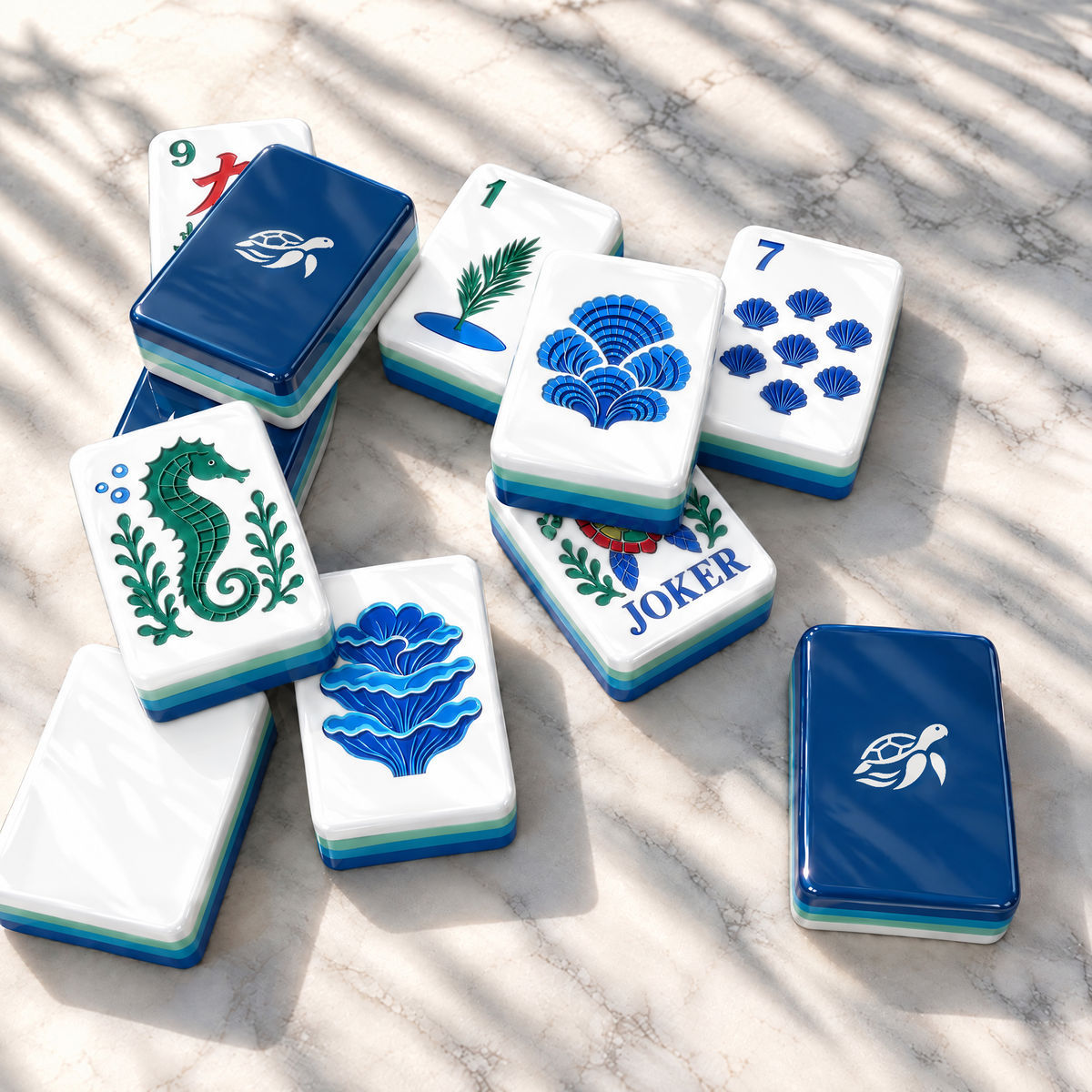
Taiwanese mahjong uses 144 tiles (suits Bamboo, Character, Dot; honors; bonus tiles; jokers), plays with hand patterns drawn from a fixed seasonal card, and emphasizes closed-hand play with minimal exposure. Singapore mahjong also uses 144 tiles but introduces regional hand variations and faster pace; it allows more frequent chowing (runs) and exposures than Taiwanese rules permit. The core difference: Taiwanese mahjong mirrors American mahjong's rigid structure and card-dependency, while Singapore mahjong permits greater fluidity in pattern recognition and melds. Both require 4 players, a single draw-and-discard cycle per turn, and a firm grasp of winning conditions. Neither variant uses the 152-tile format; if you're hosting either game, you'll need a 144-tile set—a design choice that affects tile size and set weight compared to American equipment.
Taiwanese mahjong and Singapore mahjong are often confused because both emerged from classical Chinese tile play and share the same base tile count. Yet side-by-side, they're distinct games with different strategic depth, hand availability, and player culture. We've hosted both at the table, and the shift between them is real—not merely cosmetic. This guide walks you through the core mechanics, where they fork, and how to prepare your table correctly.
What tiles do Taiwanese and Singapore mahjong use?
Both games begin with 144 tiles: three numbered suits (Bamboo 1–9, Character 1–9, Dot 1–9, each in four copies = 108 tiles), four honors (East, South, West, North), three dragons (Red, Green, White), and eight bonus tiles (four Seasons, four Flowers). Taiwanese mahjong often adds 8 jokers during casual play, bringing the working set to 152; Singapore mahjong traditionally stays at 144 and treats jokers as optional house rule. The tile face is identical in both: a Bamboo 5 looks the same across regions. The decisive difference lies not in inventory but in how hands are built and which melds count toward winning.

How do hand patterns differ between Taiwanese and Singapore?
Taiwanese mahjong hands are drawn from an annual seasonal card—similar in concept to the American National Mah Jongg League card. Each pattern on the Taiwanese card specifies exact tile combinations: e.g., "Pung of Honors, two Chows of Dots, Pung of Bams." A valid hand must match the card exactly; off-card hands are not recognized. Singapore mahjong, by contrast, uses a fixed set of hand types that don't change seasonally: patterns like "All Pungs" (fourteen identical tile groups), "Mixed (colors and honors mixed freely)," or "Concealed Hand" (all tiles hidden until winning). This makes Singapore mahjong more portable and learner-friendly—no annual card purchase—but less variable year-to-year. Taiwanese players often experience seasonal hand refreshes; Singapore players master a stable repertoire.
What role do chows and melds play in each game?
Taiwanese mahjong permits chows (runs: 1-2-3 of the same suit), but they must be called from the discard and exposed on the table; you cannot form a chow in your closed hand. Pungs (three identical) and kongs (four identical) are standard in both. Singapore mahjong is more permissive: chows are recognized, and in many house rules, a run can remain concealed until winning, or be called and exposed with less penalty. This flexibility makes Singapore faster—fewer dead hands, more paths to completion. Taiwanese play, by contrast, demands tighter reading of opponents' exposures and more conservative discard strategy. If you've played American mahjong (which forbids chows entirely), Taiwanese will feel more structured; Singapore will feel more open.
🀄 Shop best-selling mahjong sets →

What are the scoring and payment rules?
Taiwanese mahjong scores are often computed as a base unit per hand, multiplied by a factor depending on how the winning tile arrived (drawn, called, or stolen). A typical scoring frame: if you win by drawing your own tile, you earn double; if an opponent discards to you, you earn single; if you steal a kong-discard, the payout varies. Most Taiwanese games play for chips or small unit stakes, and a session might run four rounds (East, South, West, North) with each player dealing once. Singapore mahjong typically uses point accumulation per hand: a closed hand (all tiles concealed until winning) scores more points than an exposed hand. Payment is often settled at session end by comparing total points. American mahjong players will note that Taiwanese scoring is far more straightforward—no multiplier tables, no rank bonuses—making it quicker to resolve after each hand.
Comparison of Hand and Scoring Mechanics
Aspect | Taiwanese | Singapore |
Hand reference | Annual seasonal card | Fixed standard patterns |
Chows allowed | Yes, called/exposed | Yes, often concealed option |
Jokers in play | Optional (often 8 added) | Rarely used; traditional rules omit them |
Scoring method | Base unit × multiplier | Point accumulation per hand |
Typical session length | 4 winds (60–90 min) | Flexible, often 4–6 rounds (45–120 min) |
Beginner learning curve | Moderate (card-dependent) | Easier (fixed patterns) |
Which variant is more popular today, and where is each played?
Taiwanese mahjong remains the dominant form across Taiwan, parts of Malaysia, and among diaspora communities in North America. It's often played in clubs, family gatherings, and social halls in urban centers with significant Taiwanese immigrant populations. Singapore mahjong holds strong in Singapore proper, parts of Malaysia, Brunei, and among certain regional networks, though fewer formal tournaments exist compared to Taiwanese events. Both are less visible in mainstream Western media than Hong Kong or Riichi variants, yet both command loyal player bases. If you're learning to host a game, ask your players' heritage or preference: a Taiwanese player will have a seasonal card and memorized hand patterns; a Singapore player often brings flexibility and doesn't require external reference materials. Neither is objectively "better"—the choice depends on your table's background and comfort level.
Practical Checklist Before Hosting Either Game
Confirm which variant your players know (ask directly; don't assume).
If Taiwanese: obtain the current seasonal card for that region/year; verify hand patterns with at least one experienced player beforehand.
If Singapore: review the fixed hand list with your group; clarify house rules on jokers, chow concealment, and payment structure.
Ensure your tile set is 144-tile, not 152-tile. (American mahjong sets are 152-tile and will not fit either game's framework.)
Test the tile set's feel: Taiwanese and Singapore play favor slightly heavier or rounder tiles than some American sets; run your hand through shuffles to confirm comfort.
Set a timer for rounds. Taiwanese: ~15 min per hand average; Singapore: ~12 min (faster pace).
If English is not the table's primary language, write down the night's hand list or scoring rules on a card visible to all.
🎁 See our most-loved mahjong sets & accessories →
What equipment setup works for both Taiwanese and Singapore mahjong?
Both games require a flat playing surface large enough for four players to sit around, typically 30–36 inches square. A dedicated mahjong mat with raised edges keeps tiles organized and prevents slides during heavy play; many mats are sized to accommodate standard 144-tile sets comfortably. Racks with pushers are less essential for casual Taiwanese or Singapore play than for American mahjong—both Asian variants have looser hand-holding conventions—but they improve posture and tile visibility on longer nights. Dice are standard for determining dealer and draw order in both games. A wall-draw system works identically: after the dealer's opening draw, players draw in sequence from the wall (the face-down tile row on the mat), left to right, and discard to the center. If you're transitioning from American to either variant, the equipment footprint is nearly the same; only the tile count changes. Mahstead's best-selling sets are designed for American mahjong (152 tiles), so they won't directly suit Taiwanese or Singapore play—you'll need to source a 144-tile set separately and verify the tile size matches your existing mats and racks.

FAQ
Can I play Taiwanese mahjong with a 152-tile American mahjong set?
No. American sets contain 152 tiles by design; Taiwanese uses exactly 144. You'd have 8 extra tiles (usually jokers) that can't be dealt or used meaningfully. Always confirm your set's tile count before hosting.
Is the seasonal card for Taiwanese mahjong the same everywhere, or does it change by region?
The card is regional and annual. Taiwan, Malaysia, and North America each publish variants. Always source the card for the specific region and year your players reference; mismatched cards cause confusion mid-game.
Can beginners learn Singapore mahjong faster than Taiwanese?
Generally yes. Singapore uses a fixed, smaller repertoire of hand patterns that don't change seasonally, while Taiwanese requires memorizing or referencing a specific card. Singapore is more intuitive for new players but less variable after mastery.
Do I need a mahjong mat for Taiwanese or Singapore play?
A mat is helpful but not mandatory for casual home games. It organizes tiles, prevents slides, and clarifies the wall. For regular or social-club play, it's highly recommended.
What's the best tile material for Taiwanese or Singapore mahjong—bamboo, bone, plastic, or acrylic?
Acrylic tiles are durable, loud (easy to hear shuffles across a room), and affordable; plastic is lighter and portable; bamboo and bone are heavier and prized for tactile feel. For weekly home games, acrylic or quality plastic suits most players.
How long does a typical Taiwanese mahjong session last?
One "wind" (one player as dealer) typically runs 15–20 minutes per hand; a full session of four winds runs 60–90 minutes with breaks. Singapore sessions are often slightly faster.
Is Singapore mahjong easier to teach to American mahjong players?
Yes, in some ways. Both use four players and standard tile suits. Singapore's fixed hand list is simpler than American's annual card, but Taiwanese is closer in structure because both rely on external reference cards. American players often pick up Singapore's strategy faster because it allows chows and more open play.


View More
View More
View More
