
Taiwanese Mahjong Scoring Chart Explained
Last updated: Nov 23, 2026
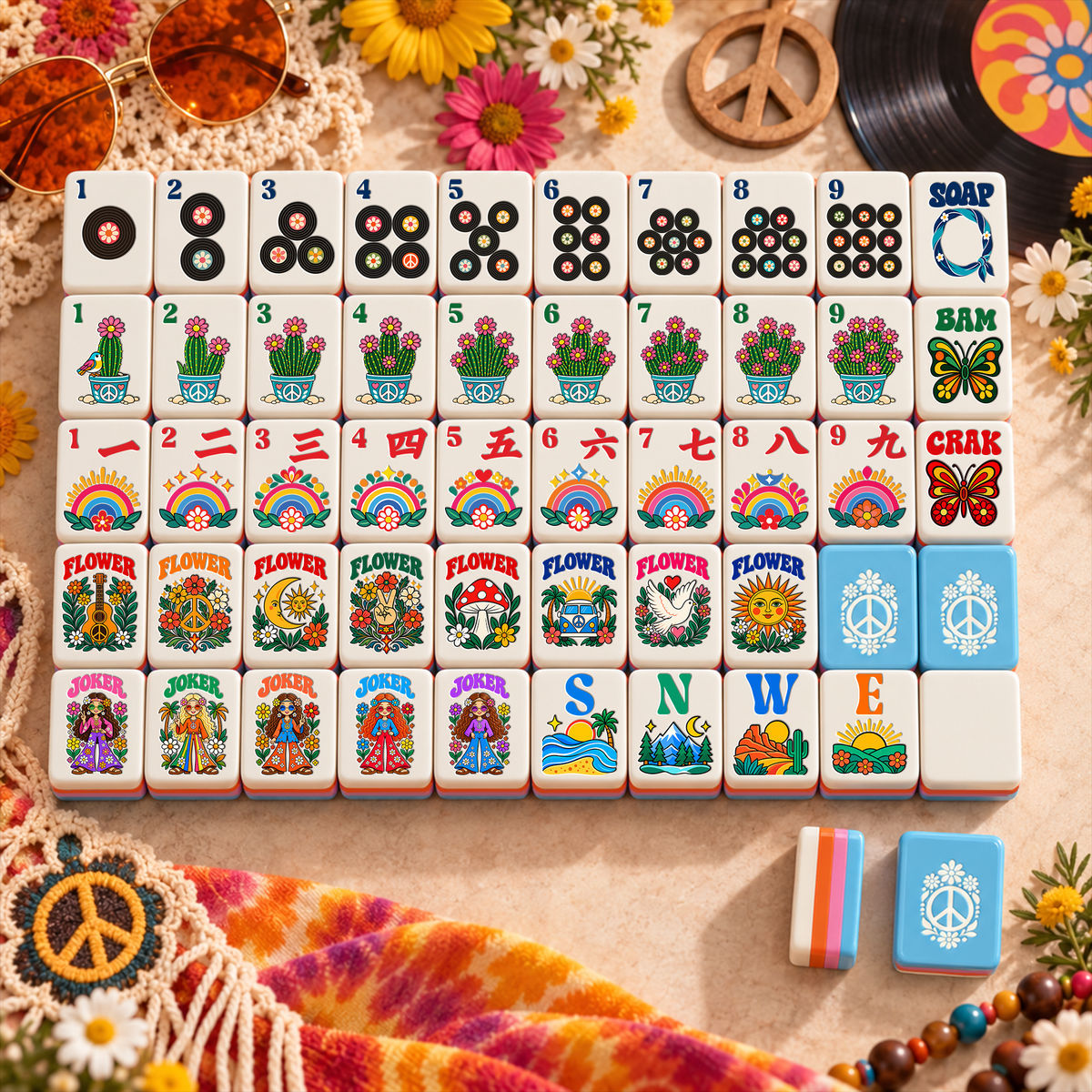
Taiwanese mahjong scoring awards points based on hand composition—melds (pungs, chows, kongs), terminals, honors, and winning patterns—rather than matching a yearly card like American mahjong does. A winning hand earns base points multiplied by a "double" factor (usually 1–8) depending on bonuses present. Common bonuses include all pungs, all chows, all terminals, concealed hand, self-drawn win, or eye pair (pair of dragons/winds). Points are calculated after win and divided among the three losing players, often using a scoring table. Games typically end at a target score (e.g., 500 or 1000 points) rather than by round count. Unlike American mahjong's fixed yearly hands, Taiwanese play allows any valid 14-tile combination—three melds plus an eye—to win. Scoring speed and variant depth make Taiwanese play distinct; many players combine it with hand notation systems or apps to track totals.
Taiwanese mahjong sits between the rigid hand lists of American play and the pure meld-building of Chinese classical mahjong. Its scoring system rewards specific hand patterns while staying fast enough for casual weekly games. Whether you're switching from American or starting fresh, understanding the scoring logic means faster games and fairer payouts.
How are base points and doubles calculated?
Every winning hand starts with a base point value—typically 20, 30, or 40 points depending on whether melds are open or closed. That base then multiplies by a "double" count (each bonus = one double). A hand with two bonuses gets ×4 points; three bonuses get ×8. The final payout is base × (2 to the power of doubles), divided among the three non-winning players. For example, a 30-point base with three bonuses (×8) = 240 points per loser. Most Taiwanese games cap at 8 doubles to keep rounds short.

What are the main bonuses worth recognizing?
Bonuses (called "faan" in Cantonese) vary by house rule but follow consistent themes: all pungs (no chows), all chows (no pungs), all terminals, all honors, concealed hand (no called melds), self-drawn win (not claimed from discard), dragon or wind pair, win on a one-chance tile, and no-tile win (drawing the last tile). A single hand can stack multiple bonuses—a self-drawn win with all pungs on a terminal pair might earn 4–5 doubles. The scoring table or app your group uses lists which combos stack and which exclude each other (e.g., all pungs and all chows cannot both apply).
Do chows work differently than in American mahjong?
Yes—Taiwanese mahjong not only permits chows (1–2–3, 5–6–7, etc. in the same suit) but requires them in many hands. Unlike American mahjong, where chows cannot be claimed or exposed, Taiwanese play treats chows like pungs: they can be open (called from another player's discard) or concealed (drawn yourself). A chow always spans three consecutive numbers in one suit. Many hands mix chows and pungs freely. The bonus for "all chows" pays because it's a genuine restriction—building an entire hand from sequences alone is harder than mixing.
How do payment systems work in practice?
When a player wins, each of the three losers pays the winner a share of the hand's point value. If the win is self-drawn, all three pay equally. If the win is claimed from one player's discard, that player pays more (often double or triple). A typical round: Hand scores 240 points. If self-drawn, each loser pays 240 ÷ 3 = 80 points to the winner. If claimed from one discard, the discarder pays 160, the other two pay 40 each. At session end, players settle to zero: whoever is up pays those who are down. Most groups use a scoresheet or phone app to track cumulative points and avoid cash every hand.

Why is Taiwanese scoring faster than other variants?
Taiwanese play uses looser hand definitions (any 14-tile winning combo with valid melds) and numeric bonuses (not a rigid yearly card) so players decide faster whether to claim a discard or push. Games end by target score, not fixed rounds, keeping play flexible. American mahjong requires consulting the card for every potential hand, which slows play considerably. Chinese classical mahjong uses point caps and more complex pair rules. Taiwanese trades depth for speed: most hands finish in 15 minutes. The numeric bonus system also lets groups adjust difficulty (lower/higher double cap) to match their skill level.
Variant | Hand Definition | Scoring Basis | Payout Model | Avg. Round Time |
Taiwanese | Any valid 14-tile meld combo | Bonuses (double stack) | Divided per payout rules | 12–18 min |
American | Current year's NMJL card only | Hand matches card | Fixed value per hand | 20–30 min |
Chinese Classical | Standard meld patterns | Point caps + penalties | Scaled by hand rank | 15–25 min |
Riichi (Japanese) | Meld + honor combos | Meld count + yaku | Winner-takes-all | 18–25 min |
What common scoring mistakes should we avoid?
Forgetting to declare bonuses early: Always announce melds and concealment status before the next draw—disputes arise if someone claims a bonus retroactively. Miscounting doubles: Use the scoring table or app every time; mental math under pressure causes errors. Misapplying mutual-exclusion rules: Some house rules say all pungs and all chows cannot both count; check your group's rules before the session. Confusing open and concealed payment rates: If you claimed a tile, the discarder pays more—state this before settling. Dropping precision on split payments: Use a calculator or app to split evenly; rounding errors compound over many hands. Most groups print a one-page bonus table and use a simple spreadsheet or mahjong app to log all scores.
How do I set up a scoring system for our weekly game?
Start by agreeing on: base point value (20, 30, or 40), bonus list (which combos count, which stack), double cap (4, 6, or 8), payout rule (self-drawn vs. claimed), target score (500, 1000, or dealer score). Write these on a card and keep it at the table. Then choose your tracker: a spreadsheet (Google Sheets), a group whiteboard, or a free mahjong app (several exist for Taiwanese play). Enter each winner's hand value and payout splits; the app or sheet auto-calculates totals. At game end, whoever is positive owes those who are negative. This setup ensures fairness, kills disputes, and speeds up settlement by 5–10 minutes per session.
🀄 Shop best-selling mahjong sets →
If you're playing Taiwanese mahjong regularly, a solid set with acrylic tiles and a cloth mat cuts setup time and keeps tiles visible during scoring reviews. Many groups also keep a travel bag or case for sets so they can move easily between homes or venues.
What to check before you buy tiles for Taiwanese play
Tile clarity: Taiwanese hands move fast; you need to read suit and number instantly. Look for tiles with bold, clear engraving or print. Sorting ease: Many Taiwanese games shuffle and sort by suit on every deal; buy tiles that stack and separate smoothly. Case or mat: If you host weekly, a padded bag and cloth mat prevent tile wear and damage to furniture. Tile count: A standard 160-tile set holds enough for casual play; confirm your group's preference before ordering.
🎁 See our most-loved mahjong sets & accessories →
Next steps
Download or print your group's bonus table and payout rules.
Pick a scoresheet format (app, spreadsheet, or paper) and test it for one session.
Brief all players on which bonuses apply and the double cap before game one.
Log each hand's score immediately to prevent disputes.
Settle at session end using cumulative totals, not round-by-round cash.
✨ Find your Mahstead set — free US shipping →

FAQ
Can I play Taiwanese mahjong with an American mahjong set?
Yes, the tile distribution is compatible (Bams, Craks, Dots, winds, dragons, flowers). The difference is how hands are formed and scored, not the tiles themselves. American sets work fine for learning Taiwanese rules.
What's the difference between Taiwanese and Hong Kong mahjong scoring?
Taiwanese play uses a simpler double system; Hong Kong mahjong has more complex hand rankings and different bonus names. Hong Kong also uses a "win on eye" pair rule and stricter concealment rules. Both are fast, but Hong Kong requires more memorization.
Do all Taiwanese groups use the same bonus list?
No. Bonus combinations and which ones stack vary by region and house rule. Always agree on your group's version in writing before playing for money. Some groups use 4 doubles max, others allow 8.
How do I settle money at the end if scores are negative for some players?
Calculate each player's cumulative total (sum of all hand payouts). Positive players owe their surplus; negative players are owed their deficit. Use a spreadsheet to verify totals sum to zero, then settle player-by-player.
Is Taiwanese mahjong easy for American mahjong players to learn?
Yes, because both use the same tile set and basic meld concepts (pung, chow, kong). The main shift is learning bonus patterns instead of a yearly card, and understanding the double multiplier system. Most American players adapt in 2–3 sessions.
What happens if someone wins on a tile that should be dead or blocked?
This is a house-rule question. Most groups define dead tiles before the session (e.g., any tile already played three times, or a tile you personally cannot legally claim). Write the rule down so disputes don't slow play.


View More
View More
View More
