
Common Mistakes in Mahjong Competition Rules
Last updated: Nov 23, 2026
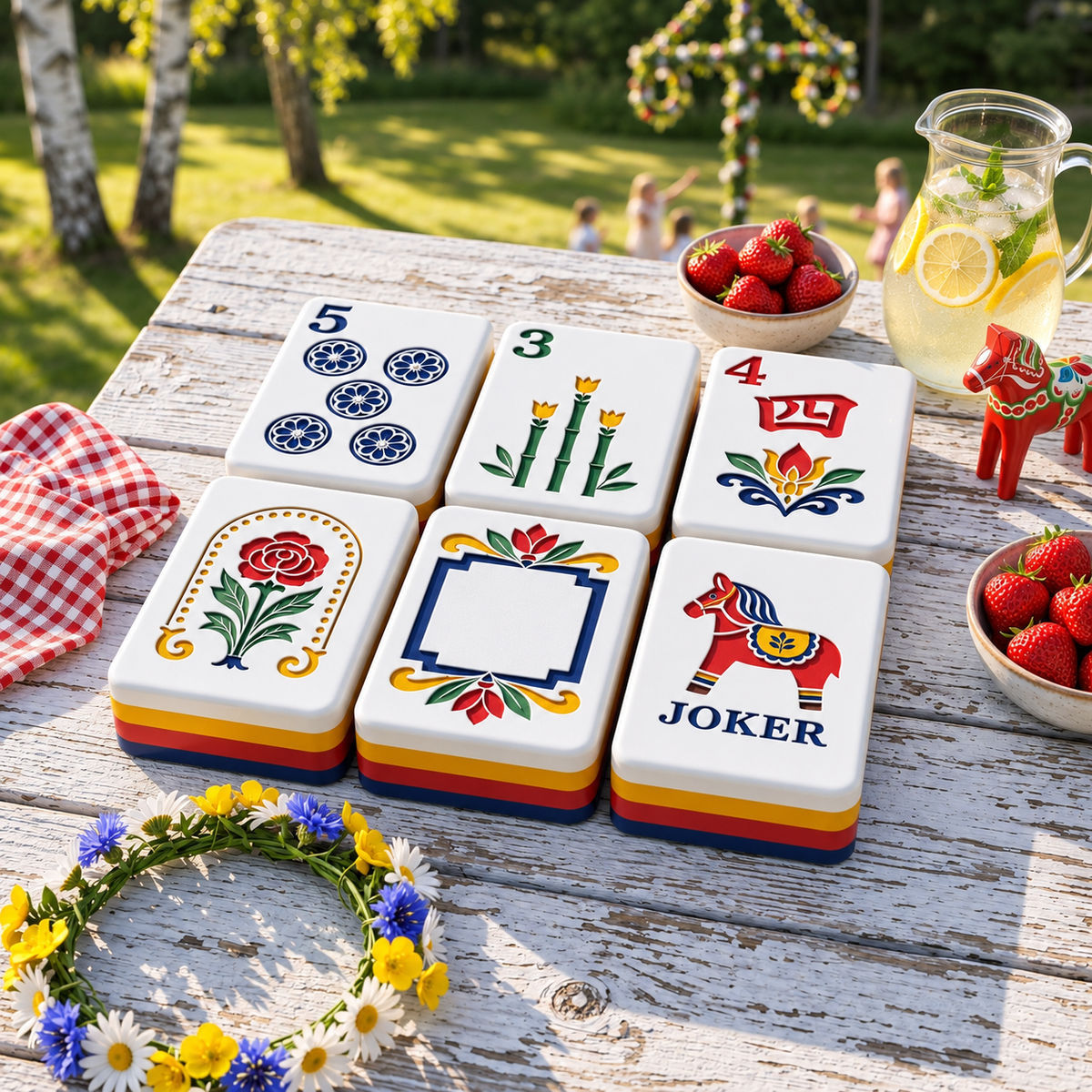
American mahjong competition rules are stricter than casual play, and the most frequent errors involve jokers, exposure windows, and what counts as a legal call. Most players accidentally misplace jokers in pairs, call tiles outside the discard window, or misunderstand how pungs and kongs differ from one another in competitive settings. The National Mah Jongg League card (issued each spring) governs all legal hands in American mahjong; tournament play follows the official calling sequence and fourteen-tile final hand rules. Common pitfalls include assuming a 1-2-3 pattern counts (it doesn't—American mahjong has no sequences or chows), exposing tiles at the wrong moment, or holding a joker incorrectly. We've seen weeks' worth of practice derailed by a single misread on the card; understanding the rules beforehand prevents disputes and keeps the game flowing.
Why does American mahjong ban sequences when other variants allow them?
American mahjong has no chows or sequences like Chinese or Riichi variants do. Every meld must be identical tiles: a pung is always three of the same Bam, Crak, or Dot number; a kong is four identical tiles. This constraint—enforced since the game's formalization in the mid-20th century—keeps hands simpler to verify and card-dependent. You cannot call or expose 1 Crak, 2 Crak, 3 Crak as a legal meld, no matter how tempting. The card shows only valid hand patterns, and the National Mah Jongg League enforces this rule uniformly in every tournament. New players assume "1-2-3" will work because they've seen other mahjong variants; it won't in American play.

Can you place a joker in a pair, and what happens if you do?
No—jokers can never fill a pair slot in American mahjong, period. Many players slip a joker into a pair to complete a hand on the wall, then discover mid-game that the hand is illegal. A pair must be two identical tiles (e.g., two 5 Dots), with no joker substitution. Jokers belong only in pungs (3 identical + joker variants showing on the card), kongs (4 identical + joker), quints (5 identical), or sextets (6 identical). If you play a joker where a pair is required, your hand is void and you must draw and discard. We've seen this mistake stall a game for ten minutes while the entire table confirms the card rule. Check the card pattern before you claim "mah jongg"—the hand diagram shows exactly which tiles are jokers and which are not.
What is the correct discard-window timing, and when must a tile be called?
You have roughly five seconds after a discard hits the table to call that tile (pung, kong, or quint), depending on house rules and tournament format. If you don't call within the window and the next player draws, the discard is dead—no one can claim it. Many casual players assume they can call a tile that's been sitting for a minute; they can't. Competitive play enforces strict timing so the game doesn't stall. The discard window closes the moment the next player draws from the wall. If you're not paying attention and the discard has passed, you've missed your opportunity. Tournament directors may tighten the window to 3 seconds for speed; always confirm house rules before the first hand begins.
How do you distinguish between a pung, kong, quint, and sextet, and when can you expose each?
A pung is three identical tiles (e.g., three 2 Bams); you may expose it and call it from a discard, or declare it from your hand. A kong is four identical tiles; exposure works the same way. A quint is five identical tiles—possible only when a joker substitutes for one of the identical four copies. A sextet is six identical tiles—likewise possible only with jokers substituting for two of the four copies. You can only declare a quint or sextet if the card pattern shows it; you cannot invent one. Each must be immediately placed face-up on the rack so all players verify the meld. The cardinal rule: all identical tiles, never mixed numbers. If you try to expose three tiles of different numbers as a "pung," it's illegal and you forfeit the hand.
Meld Type | Tiles Needed | Jokers Allowed? | Legal Call? | Card Dependent? |
Pung | 3 identical | No | Yes | No |
Kong | 4 identical | No | Yes | No |
Quint | 4 identical + 1 joker | Yes | Only if card shows | Yes |
Sextet | 4 identical + 2 jokers | Yes | Only if card shows | Yes |
Pair | 2 identical | Never | No | Yes |
Chow (1-2-3) | Three consecutive numbers | — | Never in American | — |
What happens when you misread the card and declare a hand that isn't on the card?
Your hand is void, and you must draw and discard to stay in the game. You cannot correct the error once you've claimed "mah jongg." The National Mah Jongg League card changes every March; players must use the current year's card only. We've watched someone confidently lay down a hand that was perfectly legal two years ago—and it's now off the card. The card shows the date clearly; always double-check before the game starts. If two players are using different years' cards, stop and align them immediately. Misreads are not uncommon at the start of each season; take thirty seconds to confirm everyone is reading the same card. You can also reference the card pattern number on the back of the hand for extra verification.

What is the fourteen-tile rule, and why does it matter in competition?
Your final hand must contain exactly fourteen tiles: thirteen in your hand (or melds plus hand) plus one drawn or called from the discard. American mahjong hands are always fourteen tiles; you cannot win with thirteen or fifteen. Many new players lose count, especially after exposing multiple pungs and kongs, and wind up with the wrong tile total. Before you declare "mah jongg," count aloud: expose all melds, count the tiles in your hand, and confirm that your called tile makes fourteen. If you short or over-count, you are mah jong false and the hand voids. Keep engraved racks with pushers handy—they help organize tiles so you never lose count.
🀄 Shop best-selling mahjong sets →
Are there different competition rule sets, and how do you know which one applies?
Yes. Most American play follows the National Mah Jongg League format, but some clubs use the American Mah Jongg Association (AMJA) rules, and other regional variants exist. Before joining a competition, ask the organizer which ruleset governs play. The differences are usually minor (discard window timing, pung exposure rules) but can affect your strategy. Chinese, Hong Kong, and Riichi mahjong have entirely different tile counts (136, 136, and 136 respectively), hand patterns, and scoring systems. American mahjong alone uses 152 tiles and the seasonal card. If you're playing casually with friends, clarify your rules before the Charleston begins. Online platforms sometimes use hybrid rules; confirm before signing up.
🎁 See our most-loved mahjong sets & accessories →
What gear helps you avoid competition mistakes?
A mahjong mat with a clear center marking defines discard zones and timing boundaries, making the five-second window visible. Sturdy engraved American mahjong sets with acrylic tiles are easier to count and display clearly than bone or bamboo sets, especially under tournament lighting. Racks keep your hand organized and prevent accidental exposures or miscounts. A printed copy of the current year's card (laminated) sits at the table so all four players reference it simultaneously; no ambiguity. Many travel bags and cases include a card pocket, so you never leave it behind. We recommend setting up your gear five minutes before game time, so you're not scrambling once hands are dealt.
✨ Find your Mahstead set — free US shipping →
Quick reference: a pre-game checklist
Confirm the card year — current National Mah Jongg League card printed or laminated?
Verify tile count — is your set exactly 152 playing tiles (not counting spares)?
Set the discard window — 3, 5, or 10 seconds? All players agree?
Test the rack — does it hold all your tiles without spillage?
Check joker placement rules — jokers banned from pairs. Any local exceptions?
Count melds aloud — every exposed pung, kong, quint, sextet. No silent assumptions.
Final count — always fourteen tiles at "mah jongg." No exceptions.
Note the Charleston rules — does your game use the full three-pass ritual?

FAQ
If I accidentally call a tile I didn't intend, can I retract it?
Generally no—once called aloud and placed on the rack, the call stands. Retracting voids your hand in most tournaments. In casual play, house rules vary; clarify before starting. Always think before you call.
What if someone is using last year's card and we're using this year's?
Stop the game immediately and align everyone to the current year's card. All hands won under the old card are void. This is a common season-start error; check at the table setup.
Can a joker replace a Soap (White Dragon) in a pair?
No—jokers can never fill a pair, and White Dragons cannot be paired with jokers either. Only two identical tiles form a legal pair. No substitutions.
Is it illegal to count your tiles aloud during play?
No—counting aloud is encouraged in competitive play. It prevents miscounts and keeps the game transparent. Many tournaments require players to announce their tile total before claiming "mah jongg."
What is a "dead" discard and can I claim it later?
A dead discard is one that passed the calling window without being claimed. Once dead, no player can call it again. It stays in the discard pile. Pay attention to timing or lose the opportunity.
If the game ends in a draw (wall runs out, no one wins), do you start a new hand or replay the same one?
In most American formats, a new hand begins immediately with a new deal. Some tournaments replay the dead hand with the same players; check house rules beforehand.


View More
View More
View More
