
Siamese Mahjong Scoring: Rules, Hand Values & Payoffs
Last updated: Nov 23, 2026
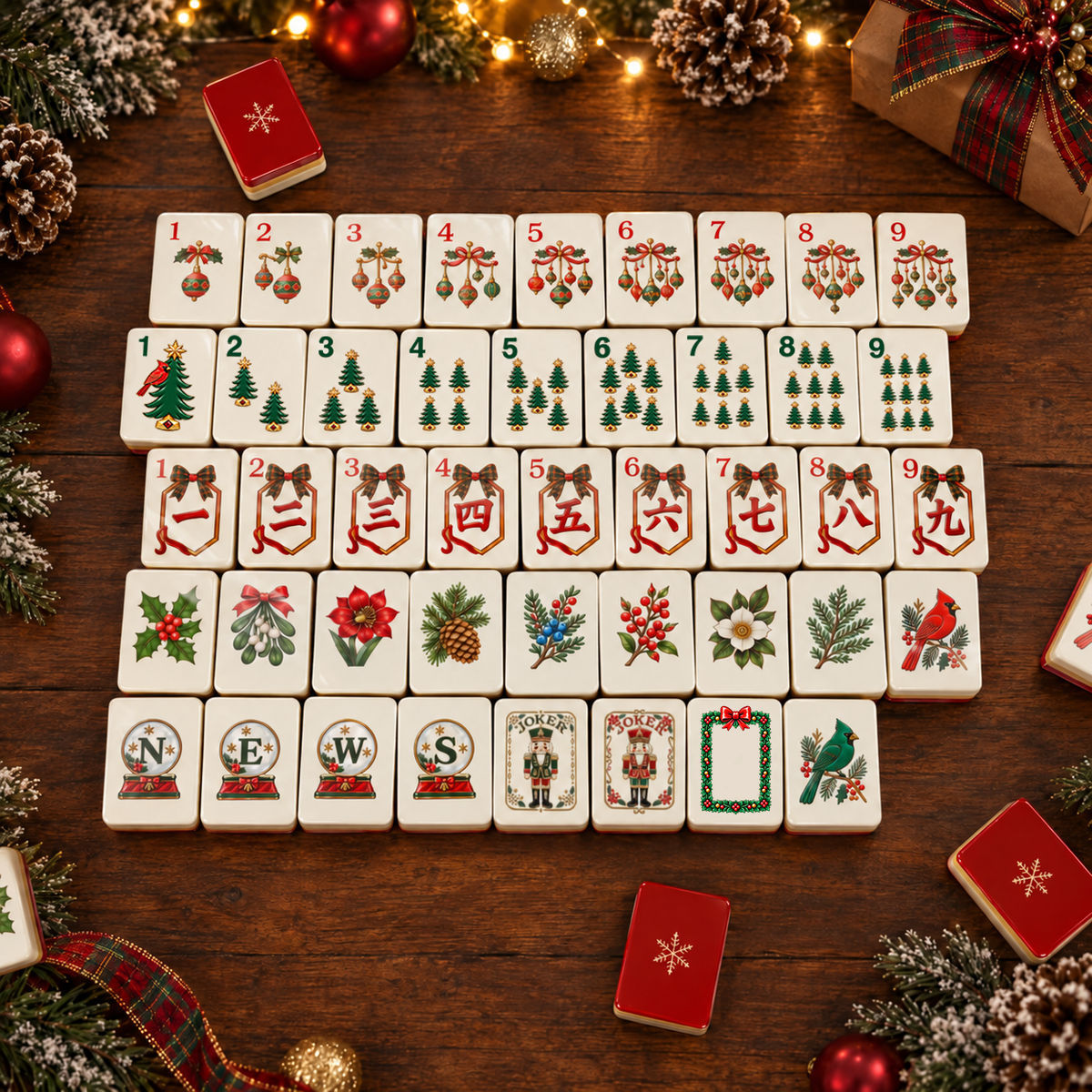
Siamese mahjong (also called Thai mahjong) uses a scoring system centered on hand patterns—pairs, pungs, kongs, and jokers—with bonus points for matching the prevailing season or wind, and extra points for "all honour" hands or hands made from the discard wall. Scoring is typically recorded as points per hand, then settled per round or at the end of the game; common base points range from 2–8 per hand, multiplied by player count and bonuses. The game is played with a standard tile set (usually 144 tiles in traditional Thai play), often with a mat and racks to keep tiles organized during play. We recommend hosting games with printed score sheets or a shared notebook to avoid disputes; many players new to Siamese rules make mistakes by counting bonuses twice or forgetting season penalties. Mahstead's best-selling mahjong sets work well for learning because they include clear tile markings and can be paired with a mat to keep your game neat and scores traceable. 🀄 Shop best-selling mahjong sets →
How does Siamese mahjong scoring differ from American mahjong?
American mahjong awards points only when a hand matches the current year's official card; hands off-card score zero. Siamese mahjong, by contrast, scores every hand based on tile patterns and bonuses—no card needed. In American play, the player who goes out collects from all three opponents; in Siamese, the payout depends on whether the winning hand was drawn from the wall or called from a discard. Siamese also ranks hands (a pung scores higher than a pair), and applies season and wind multipliers that American play doesn't use. The settlement method also differs: American mahjong typically uses fixed point values per hand from the card, while Siamese calculation is formula-based and varies by house rules. This makes Siamese play faster and more adaptable to regional preferences, though American players often find the bonus system confusing at first.

What are the main hand patterns and their base point values?
In Siamese mahjong, hand value depends on tile combinations. A pair (two identical tiles) is worth 1 point, a pung (three identical tiles) is worth 2 points, and a kong (four identical tiles) is worth 4 points. Jokers (often called wildcards) may be scored as 0 points or, in some variants, contribute to the hand value if the house rules allow them. A winning hand must include a pair (the "eye"), plus three to four other melds (pungs, kongs, or chows—sequences like 1-2-3). Many regional rules award bonus points for "all honours" (a hand made entirely of winds and dragons), typically +2 to +4 points. Self-drawn hands (winning tiles from the wall, not from a discard) often earn +1 bonus. Season and wind bonuses add points if the winning player's tile matches the current season token or prevailing wind—usually +1 per match. Base hand scoring is rarely more than 8 points before bonuses; bonuses can double or triple the final payout.
How do you calculate payoffs from base points?
Start with the base hand value (sum of all melds plus bonuses). Multiply by the number of losing players paying out. In a four-player game, the winner collects from three opponents, so multiply base points by 3. Example: a pung-based hand scores 3 base points (1 pung = 2 points, 1 pair = 1 point). If the winner drew self, add +1 bonus = 4 points total. Each of the three other players pays 4 points to the winner; total payout is 12 points. If the hand was called from a discard, some rules award only half payout from the player who discarded; other players pay zero. This requires consistent house rules noted before the game starts—we recommend writing them on a scoresheet or shared document so disputes don't arise. Many experienced players use a tally board or notebook to track cumulative points across rounds.
🎁 See our most-loved mahjong sets & accessories →
What bonuses and penalties apply in Siamese play?
Common bonuses include:
Self-drawn win: +1 point (tile came from the wall, not a discard).
Matching season: +1 point (your tile matches the current season token).
Matching prevailing wind: +1 point (your tile matches the declared wind).
All honours: +2 to +4 points (entire hand is winds and dragons, no suit tiles).
All one suit: +1 to +2 points (entire hand from Bams, Craks, or Dots).
Penalties are less common but may include:
Discarder pays double: In some variants, the player whose discard was called pays double while others pay single.
Three-player payout reduction: If a hand is called (not self-drawn), the discarder pays full value; the other two pay half or zero.
House rules vary widely by region and group. Before your first game, sit down with players and agree: Do self-drawn hands earn a bonus? Do matching seasons count? Is an all-honours hand a big bonus or small? Write these down. We've seen more disputes from unclear bonus rules than from tile counting errors.

What are common scoring mistakes and how do you avoid them?
Mistake | What goes wrong | How to prevent it |
Counting a bonus twice | Awarding +1 for self-drawn AND +1 for matching season when only one applies. | Read the hand once; mark bonuses on a scoresheet as you count. |
Forgetting discarder rules | Paying the discarding player the same as non-discards, or vice versa. | Write down your house rule on the scoresheet before the first hand. |
Misidentifying melds | Calling a pung a kong, or a kong a pung, which changes points. | Count tiles aloud before recording. Racks or a mat help keep melds separate. |
Paying wrong player count | In a three-player game, multiplying by four. | Confirm player count before settlement. |
Unclear season/wind token | Not knowing which season or wind is "in play." | Place the token visibly on the table, rotate it clockwise each round. |
Avoiding mistakes is easier with a mahjong mat with labeled sections to separate melds clearly, and a set of racks with pushers that keep your hand organized so you don't miscalculate pung vs. kong. A printed or digital scoresheet is non-negotiable; oral scores lead to disputes.
How do you host a Siamese mahjong game and manage scoring?
Before play: Confirm house rules in writing. Decide on base points per hand (often 2–4), define bonuses, state discarder payout rules, and agree on rotation (who is East, who discards first). Print a scoresheet with columns for each player, rows for each hand, and a final total row. Place a season token (often a printed card or marker showing Spring, Summer, Autumn, or Winter) visibly on the table, rotating it clockwise each round or each game depending on your group's preference. Assign a scorekeeper (often the player sitting out for the first hand, or a designated scribe) to record each hand's value, bonuses, and payout immediately after play ends—never wait until the end of the round.
During play, announce the hand value aloud after winning; others confirm before payout. Use a mat with clearly marked regions to keep melds visible and help the scorekeeper verify counts. After each hand, record the result in the scoresheet; cumulative scores prevent argument later. If a dispute arises, refer to your written rules and the scoresheet—never guess. At game's end, calculate each player's net score (winner minus losers) and settle in cash or points as you prefer.
What to check before you buy a set for Siamese play:
Tile clarity: Can you quickly spot the suit (Bam, Crak, Dot) and number? Siamese play is often faster than American, so legible tiles matter.
Set completeness: Does the set include jokers/wildcards? Some Siamese variants use them; confirm with your group first.
Mat fit: If you use a mat, ensure it has defined regions for melds, the discard row, and player racks so scoring disputes are minimized.
Racks and pushers: These keep your hand compact and make tile counting easier, reducing scoring errors.
✨ Find your Mahstead set — free US shipping →
Comparison: Which setup works best for Siamese game nights?
Setup type | Best for | Why it works |
Basic set + scoresheet | Casual home play, small group | Quick setup, easy rule adjustments. Scoresheet prevents disputes. |
Set + mat + racks | Regular or competitive play | Mat separates melds clearly; racks organize hands; scorekeeper can verify counts at a glance. |
Set + mat + racks + printed scorecards | Hosting for multiple groups | Consistent house rules across tables, faster turnover, professional feel. |
Mahstead's best-selling sets pair well with any of these setups. If you host often, adding a mat and racks with pushers is worth the investment—they cut scoring time and disputes in half.

FAQ
Can I use an American mahjong set for Siamese mahjong?
Yes. Siamese play uses the same 144 tiles (Bams, Craks, Dots, winds, dragons) as traditional mahjong. American sets include 152–160 tiles, so you'll have spares, but the playable tiles are identical. Just set the extra tiles aside before dealing.
What's the difference between self-drawn and called hands in Siamese scoring?
A self-drawn hand means you drew the winning tile from the wall; a called hand means you won by a discard from another player. Self-drawn typically earns a +1 bonus. Some rules pay called hands at half value from the discarder only; others award full value from all players. Confirm your group's rule before play.
How many rounds does a Siamese mahjong game usually last?
A typical game is 4 rounds (one per wind: East, South, West, North), with 4 hands per round, so 16 hands total. Some groups play 2 rounds (8 hands) for a quicker session. The duration depends on how many games you play and how fast your group decides hands.
What if a player forgets the house rules and scores wrong on purpose?
This is rare, but write your rules on the scoresheet before the game starts and make a copy for each player. If a dispute happens, refer to the written rules. If it happens repeatedly, that player may not be a good fit for future games.
Can jokers (wildcards) be used in any tile combination in Siamese play?
This depends on your house rules. Some variants allow jokers only in certain melds (like a pung or kong). Others don't allow them at all. Confirm with your group—add this to the written scoresheet so there's no confusion mid-game.
Is Siamese mahjong scoring harder than American mahjong scoring?
No, it's different. American scoring is fixed per card (no calculation needed), but Siamese scoring requires adding base points and bonuses. Once you know your group's bonuses, Siamese scoring is just arithmetic. A scoresheet keeps you honest and fast.


View More
View More
View More
