
Taiwanese Mahjong: Rules, Hands & How It Differs from American
Last updated: Nov 23, 2026
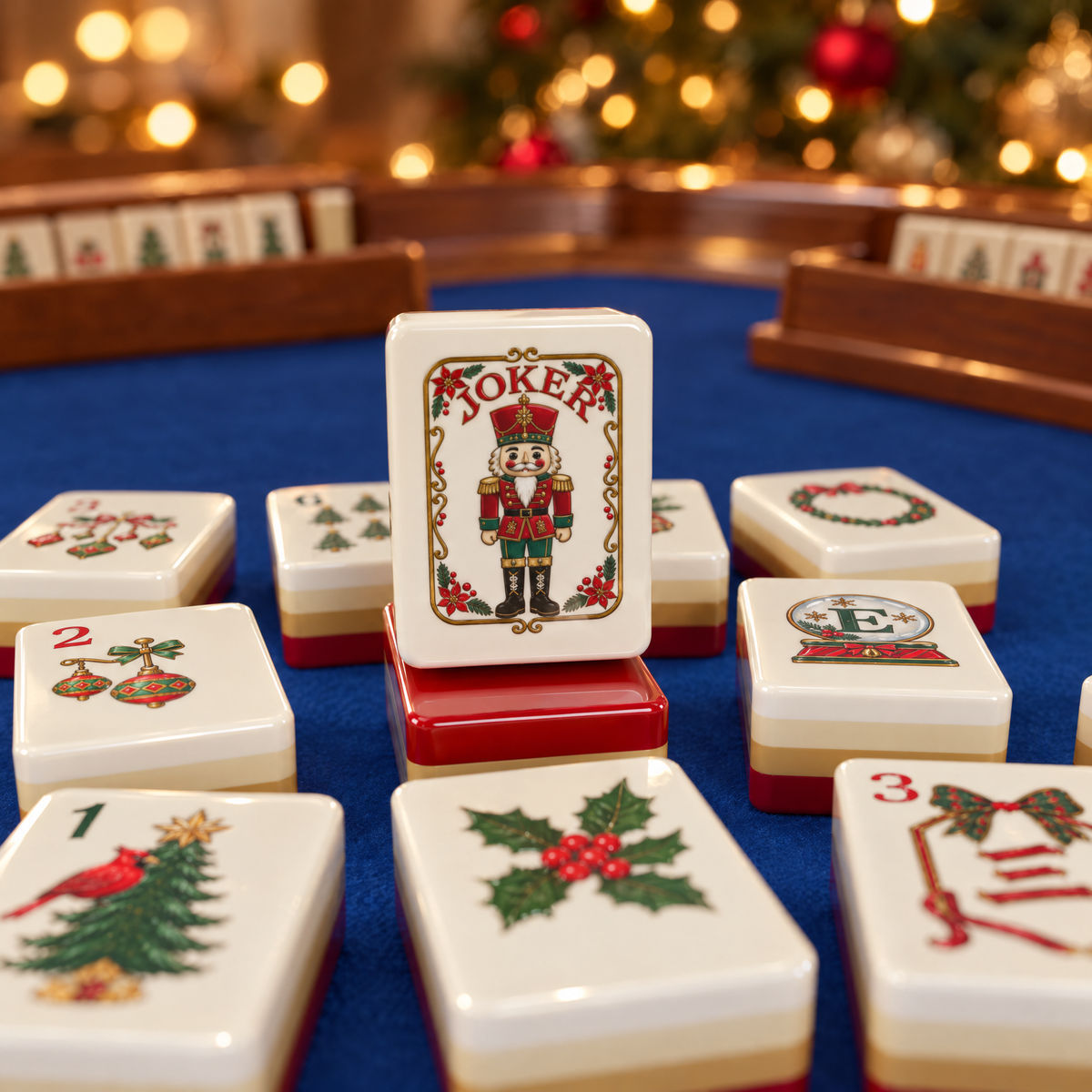
Taiwanese mahjong is a classic Chinese variant where four players draw and discard tiles to build winning hands made of sequences (chows), triplets (pungs), or pairs, without a standard reference card. Players begin with thirteen tiles, draw one each turn, and discard one; the hand wins by completing four melds plus a pair, or by winning off another player's discard. Unlike American mahjong—which requires hands from the seasonal National Mah Jongg League card and forbids sequences—Taiwanese play allows and encourages chows (three consecutive tiles in the same suit), accepts smaller tile sets (often 144 tiles), and plays significantly faster, usually 20–40 minutes per round. Scoring is simpler: wins are often point-flat or based on whether you won from a draw (self-draw) versus a discard. You'll need a standard set (any compact tile collection will do), and many Dallas-area players keep a portable Taiwanese set alongside their acrylic American mahjong for variety. The game feels looser, more improvisational, and highly social—ideal for players who enjoy quick rounds and less rule-checking.
What makes Taiwanese mahjong different from American play?
American mahjong and Taiwanese mahjong are fundamentally different games sharing only tiles and name. American uses 152 tiles, forbids sequences, requires hands from the current year's card, and plays 90–120 minutes per round with complex scoring. Taiwanese uses chows (sequences), plays from any hand pattern, typically runs 20–40 minutes, and scores simply. American is rigid and reference-dependent; Taiwanese is fluid and pattern-driven. If you know American mahjong well, Taiwanese will feel looser and faster—almost like jazz improvisation after reading sheet music.

How does hand-building work in Taiwanese mahjong?
In Taiwanese mahjong, you build your winning hand from four melds (groups of three: pung, kong, or chow) plus one pair. A pung is three identical tiles (e.g., three 5 Dots). A kong is four identical tiles. A chow is three consecutive tiles in the same suit, in order—for example, 4 Bam, 5 Bam, 6 Bam. The pair is two identical tiles. On each turn, you draw one tile and discard one; players around the table can claim your discard to complete a pung, kong, or chow (called "going out" or "melding"). If no one claims your discard, play passes and the next player draws. You win by announcing a complete hand—four melds plus a pair, or in some regional rules, by completing your hand via a self-draw (drawing the winning tile yourself).
Can you actually call sequences in Taiwanese mahjong?
Yes—and this is the biggest rule difference from American mahjong. Sequences (chows) are not just allowed; they're central to Taiwanese play. Any player can call another player's discard to complete a chow, pung, or kong, and you immediately expose that meld on the table. This constant back-and-forth—where a tile you discard might help an opponent complete a sequence you didn't expect—is what makes Taiwanese mahjong feel dynamic and social. You're always watching which tiles others might need; American play, by contrast, is silent and card-locked.
How does winning actually happen in Taiwanese mahjong?
Taiwanese mahjong wins happen two main ways: self-draw (you draw the winning tile yourself) or discard win (you call another player's discard as your final tile). Some versions award different point values to self-draw wins (slightly higher); others treat all wins equally. In addition to the basic win, bonus points can be scored for pungs and kongs of honor tiles (winds and dragons, worth more), all-simples hands (only numbered tiles, no honors), or special patterns like seven pairs or a hand of all one suit. Scoring is typically simpler than American mahjong—often a flat point value per win, with bonuses tallied quickly. Regional variations exist: some play with a "loose" style (more casual bonuses), others with strict hand requirements. Most home games use pen and paper for a running total; formal club play may follow a printed scorecard.
What tile set size do you need for Taiwanese mahjong?
Taiwanese mahjong traditionally uses a 144-tile set—three suits (Bams, Craks, Dots) × 1–9 × four copies each, plus 16 winds (four each of North, East, West, South), 12 dragons (four each of Red, Green, White), and 8 flowers. This is smaller than the American 152-tile set. Many players prefer portable 144-tile Taiwanese sets for travel or quick home games; others use a full American-size set and simply don't use the extra jokers. Some Taiwanese players also accept a 108-tile set (removing the flowers) for ultra-fast, stripped-down play. The key is that any set with a standard tile structure—identifiable suits, winds, dragons, flowers—will work; you don't need fancy tiles or an engraved set to play Taiwanese mahjong at home, though many players enjoy them for aesthetics and durability.

What's the actual pace of a Taiwanese mahjong game?
A single round of Taiwanese mahjong typically takes 15–30 minutes; a full session (usually four rounds, one at each seat) runs 60–120 minutes depending on play speed and chat. This is drastically faster than American mahjong (where a single game often takes 90–120 minutes) because Taiwanese hands are simpler to build, there's no card-reading pause, and play is continuous—no "checking the card" every turn. Players experienced in both games often play two or three Taiwanese rounds in the time one American game takes. This speed makes Taiwanese mahjong ideal for casual weeknight gatherings, lunch break games, or multi-game sessions where players want variety without burning an entire evening. The downside: less time to strategize, and more luck-dependent outcomes, which some players love and others find less satisfying than the puzzle-like precision of American play.
🀄 Shop best-selling mahjong sets →
What's the history and regional variation in Taiwanese mahjong?
Taiwanese mahjong evolved from classical Chinese mahjong in the 20th century and became the dominant home-game variant across Taiwan, Hong Kong, and modern immigrant communities across North America. Regional variations are numerous: Hong Kong style emphasizes concealed hands and special bonuses (like "thirteen unique tiles"); Taiwanese style is more open, allowing more exposed melds and faster play. Some regions play with a "dead wall" (tiles drawn from a special section rather than the regular wall); others eliminate flowers entirely. The Taiwanese version familiar to North American players is typically the open, social style—less formal than Hong Kong, faster than classical Chinese, and more flexible than American. If you're learning from a community center or church group, ask which regional rule set they follow; most will be happy to explain their local tweaks within five minutes.
Variant | Tile Count | Sequences Allowed? | Hand Format | Game Length | Best For |
Taiwanese | 144 | Yes | 4 melds + pair | 15–30 min | Quick rounds, social play |
American | 152 | No | Card-defined hands | 90–120 min | Strategic depth, rules consistency |
Hong Kong | 144 | Yes | 4 melds + pair | 20–40 min | Concealed strategy, bonuses |
Classical Chinese | 144 | Yes | 4 melds + pair | 30–60 min | Traditional, honor-heavy scoring |
Why do players switch between American and Taiwanese mahjong?
Many experienced players maintain both games in their weekly rotation because each scratches a different itch. American mahjong is a puzzle—you're constantly reading the card, planning your hand, and executing a specific pattern under tight rules. It rewards study and long-term strategic thinking; a session is an investment of time and mental energy. Taiwanese mahjong is improvisational jazz; you play by feel, adapt on the fly, and games end quickly enough to play three or four in one evening. Switching between them keeps the hobby fresh and challenges different skills. Players who host weekly games often find that having mahjong sets for multiple variants on hand—and knowing when to suggest each one—keeps your table engaged and attracts both newcomers and veterans. If you're curious about Taiwanese play, try one round at a casual meetup before investing in a dedicated set; many community centers and clubs keep both games available.
How do you learn Taiwanese mahjong as a beginner?
Start by finding a local player or group—check community centers, libraries, country clubs, or online meetup boards in your area. Ask to observe a full round without playing; you'll absorb hand patterns, timing, and the rhythm of play within 15 minutes. Then ask to play as East (dealer) for one round with an experienced player guiding you; most players are patient with genuine learners. Focus on two things: (1) recognizing the four melds—pung (three same), kong (four same), chow (three in order)—and (2) watching what tiles others are discarding and trying to remember them. By round two, you'll start seeing patterns; by round three, you'll likely win at least once. Practice with the same group twice before switching to a new table; consistency builds muscle memory. Many beginners try American mahjong first and find Taiwanese easier because there's no card to memorize; the hand patterns are visual and learnable in real time. Unlike American play, where you need hours of study, Taiwanese is playable confidently within 90 minutes.
🎁 See our most-loved mahjong sets & accessories →
What to check before you buy a mahjong set for Taiwanese play
Tile clarity: Ensure Bams, Craks, and Dots are visually distinct (not similar colors). Numbers 1–9 should be legible at arm's length.
Suit completeness: Confirm you have all three suits, winds (N, E, W, S), dragons (Red, Green, White), and at least one flower set. Most 144-tile sets include flowers; some stripped-down play omits them.
Jokers: Taiwanese play doesn't use jokers (unlike American mahjong). If your set includes them, set them aside.
Storage and portability: Taiwanese players often play multiple rounds, so a bag or case that holds tiles, a dice pair, and a score sheet saves setup time between games.
Comfort in hand: Pick up sample tiles if possible. Thinner tiles (1–2 mm) shuffle faster; thicker ones feel more substantial and wear longer.
✨ Find your Mahstead set — free US shipping →

FAQ
Is Taiwanese mahjong easier than American mahjong for beginners?
Yes, often. Taiwanese has no reference card and hand patterns are visual and intuitive (sequences, triplets, pairs). American requires memorizing the seasonal card and understanding fixed patterns. Most beginners play their first Taiwanese round competently within an hour; American typically requires 2–3 hours of study first.
Can I use my American mahjong set to play Taiwanese?
Yes. An American set has 152 tiles; Taiwanese typically uses 144. Simply set aside the eight jokers. Your American set will work fine for Taiwanese play, though it's slightly heavier and larger than a dedicated Taiwanese set. Many home players keep one large set and play both variants.
How does scoring differ between Taiwanese and American mahjong?
Taiwanese scoring is simpler: most home games award a flat point value per win, with small bonuses for honor tiles, self-draws, or special patterns. American scoring is complex and card-specific, with multipliers and hand-dependent values. Taiwanese scoring is fast and verbal (often announced in seconds); American typically requires a scorecard and calculator.
What happens if someone claims my discard for a pung and I didn't realize?
They announce it, take your discard, expose their meld on the table, and play continues immediately. You can't block or "take it back." This is why watching other players' discards and keeping track of exposed melds is crucial to Taiwanese play strategy.
Do all Taiwanese mahjong groups play by the same rules?
No. Regional and family variations exist. Some allow all melds to be called (loose play); others restrict certain melds. Before joining a new group, ask the host or most experienced player to explain their local rules in five minutes—it's expected and appreciated.
What's the difference between a chow and a pung in Taiwanese mahjong?
A chow is three consecutive tiles in one suit (e.g., 4 Dot, 5 Dot, 6 Dot). A pung is three identical tiles (e.g., 4 Dot, 4 Dot, 4 Dot). Both are valid melds; chows are often easier to build because many discard tiles can form a sequence, while pungs require exact matches.


View More
View More
View More
