
Taiwanese Mahjong Fan Counting Tips: Calculate Scores Fast
Last updated: Nov 23, 2026
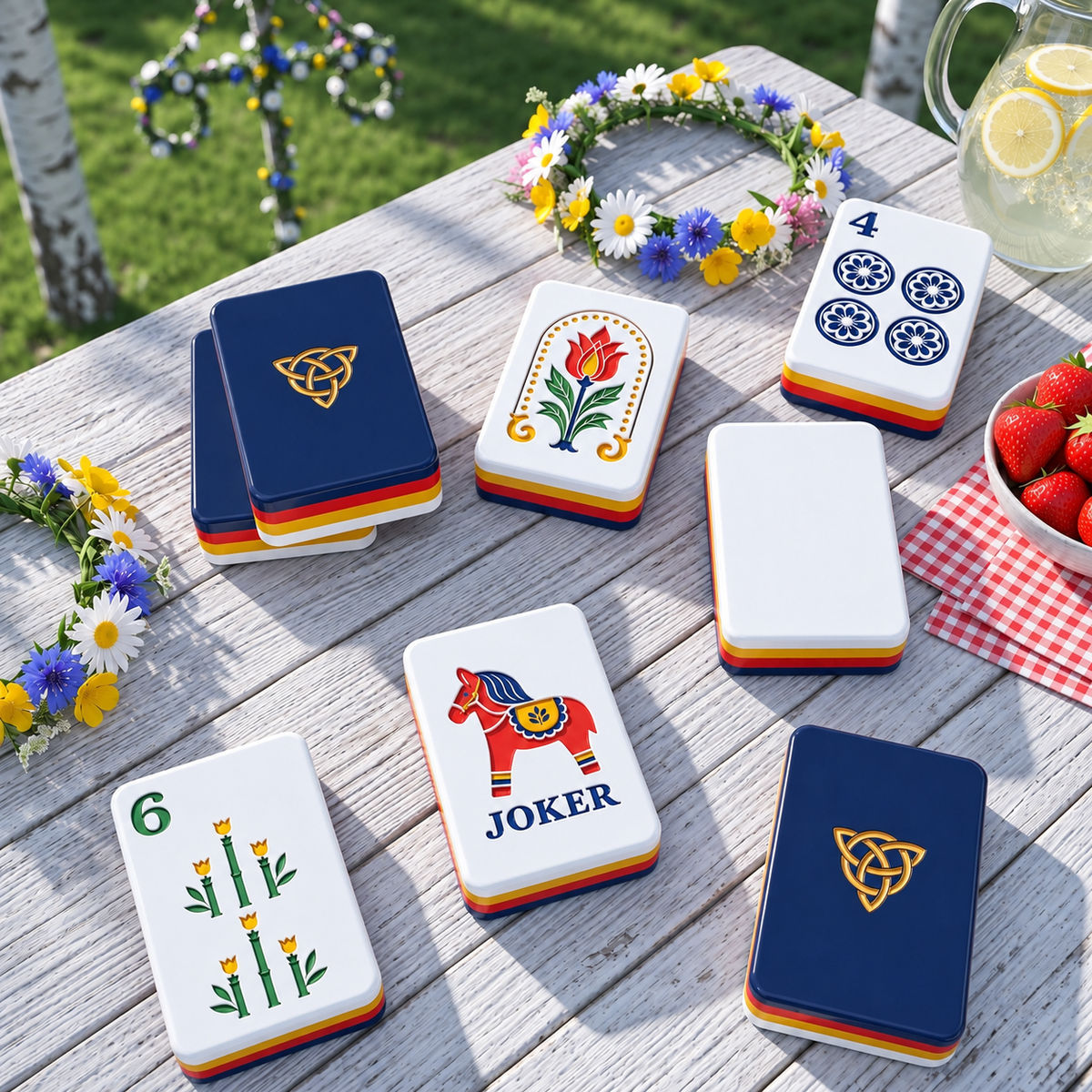
In Taiwanese mahjong, a "fan" (番) is a multiplier unit; each completed hand earns fans based on patterns and bonuses, then multiplies your base points by 2, 4, 8, 16, or more. Fan categories include melds (pungs of dragons or winds), pairs, self-draw wins, honor tiles, and melds composed entirely of terminals and honors. You calculate total points = base points × 2^(fan count), then divide among losers or apply table rules. Fans range typically from 1 to 8 in casual play, though tournament rules may differ. The system rewards pattern complexity, not tile rarity alone, making every hand structure matter. Unlike American mahjong's fixed National Mah Jongg League card, Taiwan relies on player-known rules and quick mental math—so players hosting weekly games need a reference system and a calm counting routine to keep the table moving and disputes rare.
What exactly is a fan in Taiwanese mahjong?
A fan is a numerical multiplier representing the complexity and rarity of your winning hand. Each pattern type—a pung of the Dragon Red tile, a self-drawn win, concealed melds—earns one or more fans. The fan total then determines the payout formula: you multiply your base points (usually 20 or 30 per tile count, depending on house rules) by 2 to the power of your fan count. For example, a 3-fan hand with 30 base points pays 30 × 2³ = 30 × 8 = 240 points per loser. Fans accumulate; most casual games award fans freely across multiple categories in a single hand, so a hand might score 1 fan for self-draw, 1 for all simples, and 1 for a pung of Greens, totaling 3 fans and a much higher payout.

How do you count fans step-by-step?
Start by identifying which fan-eligible patterns exist in your winning hand. List them: Do you have a pung of a Dragon? That's 1 fan. Self-drawn win? Add 1 fan. All tiles are from one suit (all Bams, all Craks, or all Dots)? Add 1 fan. All honor tiles or all terminals? Add 1 fan. A concealed pung (no one called it before you exposed it at win)? Add 1 fan. Write each fan down as you spot it. Next, verify no overlaps—some houses don't double-count identical melds or exclude certain fan categories in combination. Once you've agreed on the final count with the table, apply the multiplier: points = 30 × 2^(fan count). If you won by self-draw, the payout is split equally among all three losers (rounded down per house rule). If you won by discard, the discarder pays the full amount. Writing fans aloud ("that's one for pung-Dragon, one for concealed, one for all Bams—three fans total") prevents disputes and keeps play fluid.
🀄 Shop best-selling mahjong sets →
What's the difference between Taiwanese and American fan counting?
Aspect | Taiwanese | American |
Scoring basis | Earned multipliers (fans) | Fixed hand card from National Mah Jongg League |
Calculation method | Points × 2^(fan count) | Points from card lookup, fixed per hand |
Rule flexibility | House rules define fan categories | Standardized yearly card; less variation |
Skill emphasis | Quick mental math and pattern recognition | Card reading and hand memorization |
Fan count range | Typically 1–8 in casual play | N/A (American uses fixed payouts) |
Payout structure | Same multiplier formula for all winners | Winner pays fixed amount per loser |
American mahjong players follow the current-year National Mah Jongg League card—the hand must match exactly from that card to win. There are no multipliers; instead, each hand on the card has a fixed point value printed alongside it. Taiwanese mahjong uses earned fans, meaning no card is consulted during play. Players instead must know the fan categories agreed on before the game started (often regional or house variants). A Taiwanese player winning with four Dragon Red pungs and a self-draw might accumulate 5 fans or more, multiplying a base of 30 points to 30 × 32 = 960 points per loser—a dramatic swing. An American player's hand is either on the card (they win the fixed amount shown) or not on the card (they can't declare a win). This makes Taiwanese scoring more dynamic and reward-heavy for complex melds, while American scoring is predictable and card-dependent.
What are the most common Taiwanese fan categories?
Single-suit fans: All tiles from Bams, Craks, or Dots = 1 fan per hand. Mixed terminals and honors (all 1, 9, wind, or dragon tiles) = 1 fan. Pung-based fans: Each pung of the four winds (North, East, West, South) = 1 fan; pung of a Dragon (Red, Green, or White) = 1 fan each. Special win types: Self-drawn win (ツモ style) = 1 fan. Concealed hand (no melds exposed until win) = 1 fan. Win on the last tile or on a replacement tile = 1 fan (rules vary). Pair bonuses: If your pair is a Dragon or Wind, some houses grant 1 extra fan. All honors or terminals: An entire hand of 1, 9, wind, or dragon tiles (no 2–8 simples) = 2–3 fans, depending on house rule. Most casual weekly games use five to eight core fan categories; tournament or regional play may expand the list. The key is to agree before the game starts which categories count and whether they stack (e.g., can you earn both "self-draw" and "concealed hand" in one round, or is self-draw automatic when concealed?). Writing this on a scoresheet before dealing the first hand prevents arguments mid-game.
🎁 See our most-loved mahjong sets & accessories →

How do you avoid fan-counting mistakes?
Mistake 1: Forgetting to check for overlaps. Some house rules exclude a fan if you've already counted a more valuable one. For example, "concealed hand" might be voided if you also count "all terminals"—clarify before play. Mistake 2: Miscounting multipliers. A 4-fan hand = 2^4 = 16×, not 4×. Write it out: 30 × (2 × 2 × 2 × 2) = 30 × 16 = 480. Saying it aloud catches errors. Mistake 3: Splitting payout incorrectly. If you self-drew with 6 fans for 30 × 64 = 1920 points, each loser pays 640 (1920 ÷ 3), not 1920 each. Mistake 4: Confusing suit names. Ensure all players use the same term (Bam, Crak, Dot, or "Wàn, Tiáo, Bǐng" in Mandarin). A pung of "three Bams" and a pung of "three Craks" are not the same hand and don't trigger the same fan—verify suit colors on the tiles. Mistake 5: Adding fans mid-hand. Agree on fans before the round starts; don't negotiate scoring after someone wins. Keep a laminated house-rules card on the table or screenshot it on a phone and pass it around before the first deal.
What house rules should we set before playing Taiwanese mahjong?
Ask the table these questions in order:
Base points: Is it 20, 30, or something else per hand calculation?
Fan list: What specific patterns earn fans? (Write them down: self-draw, all one suit, Dragon pung, concealed, etc.)
Fan caps: Can fans exceed 8, or does a hand max out at 8 and then freeze payouts?
Overlap rules: If a hand qualifies for two fans, do both count, or does the higher one cancel the lower?
Discard vs. self-draw payout: Does a discard win cost one payer the full amount, or is it split three ways anyway?
Bonus tiles: Do flowers or seasons earn fans in your game? (Many Taiwanese variants exclude them entirely; American mahjong uses them differently.)
Replacement tile rule: If you drew a replacement after a kong, does that win automatically grant 1 fan?
Once the table agrees, write these rules on a sheet or photo them on a phone, and refer to this reference every game for the first month. Most disputes occur because players recall different house rules from different tables. Consistency beats flexibility.
What you'll need
When you're hosting weekly Taiwanese mahjong with multiple players, accurate tile visibility and comfortable seating speed up fan counting. High-contrast tiles, a sturdy mat, and personal racks with pushers keep hands organized so you can spot patterns instantly. Check our best-selling mahjong sets for acrylic designs with crisp suit markings—a 160-tile set holds the standard playing tiles you'll need. Pair that with a durable mahjong mat for a smooth layout and racks with pushers so each player can organize tiles without fumbling. A clean setup means clearer melds, fewer "wait, is that a pung?" moments, and faster fan counting.
Before you count: checklist to avoid disputes
☐ All four players know the fan categories for this game.
☐ You've written or screenshotted house rules and the base-points formula.
☐ The winning hand matches all its fan conditions (e.g., if claiming "all Bams," verify no Craks or Dots in the hand).
☐ You've confirmed whether self-draw payouts split three ways or if the rule book differs.
☐ You've stated each fan aloud and seen table agreement before calculating payout.
☐ You've written the final fan count and payout on paper (not just spoken it) so no one disputes it later.
☐ If unsure, pause and ask "Does everyone agree this is 1 fan?" before moving to the next fan.
✨ Find your Mahstead set — free US shipping →

FAQ
Can a single hand earn the same fan twice?
No. Each fan category (self-draw, Dragon pung, all one suit, etc.) counts once per hand. However, a hand can earn multiple different fans in one win—for example, self-draw + pung of Green Dragon + all Bams = 3 separate fans, multiplying your base points by 2³.
What if my house rule differs from my friend's house rule?
Agree before every game starts. The best practice is to write down or photograph your table's rules before the first hand. If you're visiting another table, ask for their fan list and base-points rule before buying in—many regions and families have house variants, and no single "official" Taiwanese mahjong rule set exists outside tournaments.
Does Taiwanese mahjong use flowers and seasons like American mahjong?
Many Taiwanese variants do not score flowers or seasons as hand multipliers; some count them as bonus points only (e.g., +10 points per flower drawn at game start). Check your house rules. American mahjong treats flowers as mandatory melds that must be exposed and replaced immediately.
How do I calculate a payout if the base points are 30 and I have 5 fans?
Points = 30 × 2⁵ = 30 × 32 = 960 points per loser. If you self-drew, each of the three other players pays you 960. If one player discarded the winning tile, that player alone pays you 960 (or all three pay a split, depending on house rule—clarify beforehand).
Can I use an American mahjong card to play Taiwanese fan counting?
No. American mahjong uses a fixed card issued each year by the National Mah Jongg League; hands must match that card exactly to win. Taiwanese fan counting uses earned multipliers and no card—the rules and fan categories are oral/written house rules. The two games are incompatible scoring systems, though the tile set is the same.
Is there an official fan-counting rulebook I can download?
There is no single international standard. Taiwanese mahjong has regional variants (Taiwan, Hong Kong, Riichi-style Japan) and household rules. Your best source is the players at your table or a regional mahjong club; ask them for a one-page house-rules sheet when you join a game.


View More
View More
View More
