
What Is Zimo in Mahjong: American vs. Asian Rules
Last updated: Nov 23, 2026
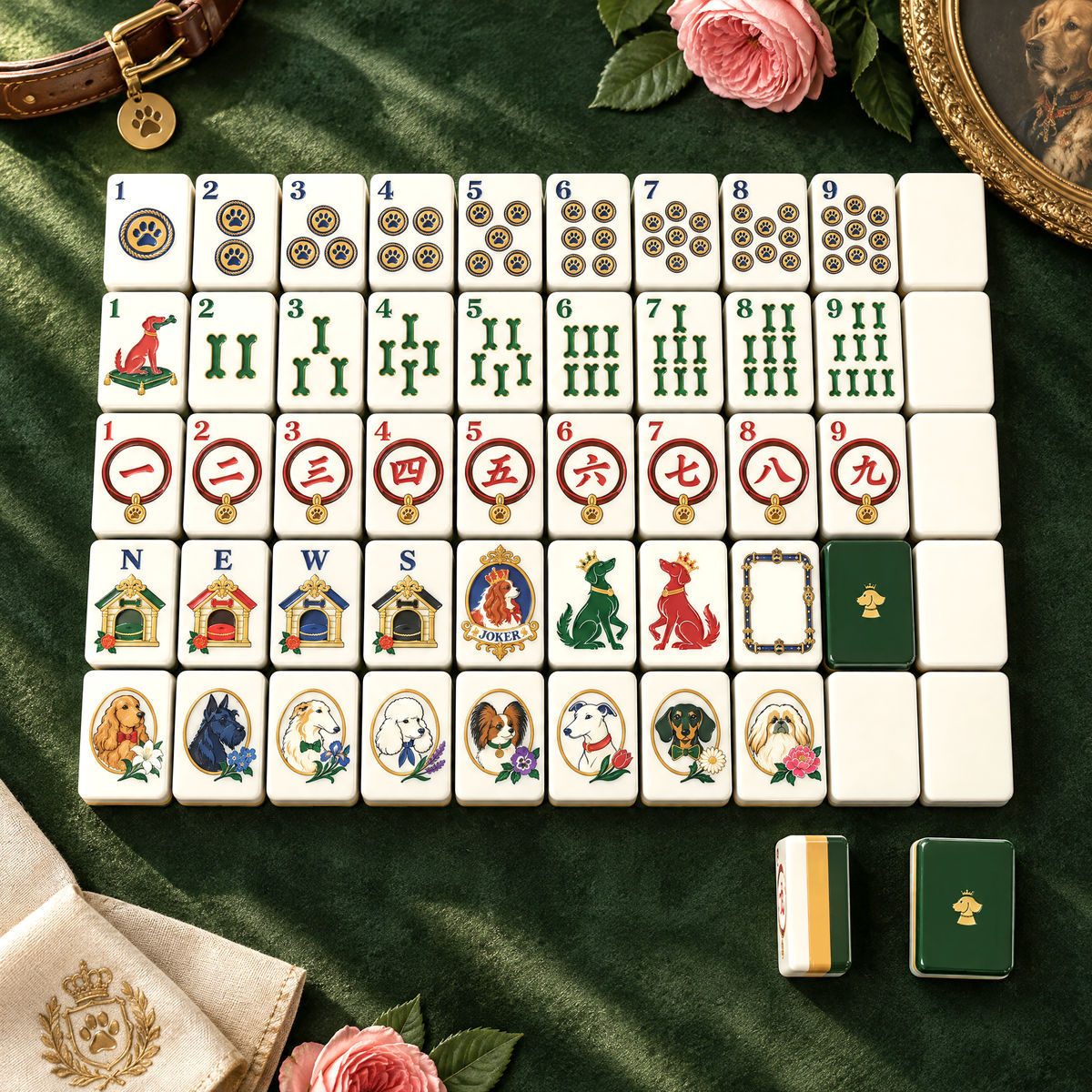
Zimo (自摸, "self-draw") is a win condition in Chinese, Hong Kong, Taiwanese, and Riichi mahjong where a player completes their hand by drawing a tile from the wall rather than calling a discard. In these variants, zimo is often scored higher than a regular win (hu/agari) because the player took no help from opponents' discards. American mahjong has no zimo rule; all winning hands must come from the official National Mah Jongg League card each season, and a win occurs when a player melds all tiles into completed groups (pungs, kongs, quints, sextets) and a pair, whether the final tile came from the wall or a call. The distinction matters only if you're switching between American and Asian games; most American players never encounter zimo. Understanding which game you're hosting helps set expectations and choose the right playing surface.
🀄 Shop best-selling mahjong sets →
How does zimo differ from a regular win?
In Chinese and Hong Kong mahjong, zimo occurs when you draw your own winning tile from the wall, completing your hand without calling anyone's discard. A regular win (hu) happens when you call a discard—that opponent has "given" you the tile. Zimo hands typically earn bonus points because you achieved the win independently; your opponents all contribute to the payment, not just the discarder. American mahjong has no such distinction: any winning hand (whether the final tile was drawn or called) scores the same value based on the hand's pattern and rarity on that year's card.

Is zimo worth more points than a regular win?
Yes, in most Asian variants. In Chinese mahjong, zimo wins typically pay four times the base hand value (one from each player), while a regular win pays only from the discarder. Hong Kong mahjong often doubles or triples the zimo score. Riichi (Japanese) mahjong multiplies payment based on the hand's closed status and whether you've declared riichi before drawing—again, higher for zimo. American mahjong assigns a fixed point value to each hand pattern; there is no multiplier for self-draw. If you're scoring a casual Asian game, agree on the zimo bonus beforehand.
Which mahjong variants use zimo?
Chinese mahjong, Hong Kong mahjong, Taiwanese mahjong, Vietnamese mahjong, and Riichi (Japanese) mahjong all feature zimo as a core rule. These variants use 144-tile sets with 36-tile suits and different tile classifications (dragons, winds, honors). American mahjong—played with 160-tile sets containing 152 playing tiles—does not use zimo; hands come entirely from the current year's National Mah Jongg League card. If you're learning online or reading rules without clarity on the variant, ask which scoring system applies before dealing.
What happens if you draw your last tile and no one wins in Asian mahjong?
When the wall draws down to the final one or two tiles and no player has completed a winning hand, the game ends in a "draw" or "goulash" (called a no-win round). In some variants, the wall position moves to the next player; in others, you immediately reshuffle and play continues. American mahjong games almost never reach this state because hands are drawn from a known card; if no hand appears viable, players may opt to pursue a less common pattern or restart the game. The actual stopping point varies by house rules and regional custom.

Can you win zimo on the discard of another player?
No. Zimo, by definition, is a self-drawn win. If you call a discard (even on the tile you would have drawn), it is a regular win (hu), not zimo. In American mahjong, this distinction is irrelevant because scoring depends only on the hand pattern, not on who provided the final tile. If you are playing an Asian variant socially, keep in mind that claiming zimo when you called a discard is a violation and should be corrected immediately.
How do you play if some players know zimo and others don't?
Teach the whole table before the first hand. Zimo is fundamental to every Asian variant; playing without explaining it creates confusion about payouts. If mixing skill levels, consider playing American mahjong instead, where the card-based system is easier to follow uniformly. When hosting, a mahjong mat with printed rules or a reference card helps everyone stay aligned on scoring. If players want to try both systems in one evening, play American first (simpler), then switch to an Asian variant with a fresh agreement on zimo bonus and who keeps score.
Variant | Win Type | Zimo Pays From | Score Basis | Tile Count |
American | Pattern on card | N/A (no zimo rule) | Card rarity & season | 152 (160-tile set) |
Chinese | Hu or Zimo | All 3 opponents | Hand + melds + bonus | 144 (144-tile set) |
Hong Kong | Hu or Zimo | All 3 opponents | Hand + melds + limit | 144 (144-tile set) |
Riichi (Japanese) | Agari or Tsumo | All 3 opponents | Closed melds + riichi | 136 (136-tile set) |
Taiwanese | Hu or Zimo | All 3 opponents | Hand + melds + bonus | 144 (144-tile set) |
🎁 See our most-loved mahjong sets & accessories →
Why don't American mahjong rules include zimo?
American mahjong evolved as a social card-game variant optimized for speed and equality among players. The National Mah Jongg League standardized the game in 1937 using a published card of legal hands, removing the complexity of calculating open/closed bonuses and self-draw multipliers. This design choice makes American mahjong faster to teach and score, ideal for home games and tournaments. Asian variants, by contrast, value the strategic depth and skill difference between a closed self-drawn win and an open called win. Neither system is "better"—they serve different play styles. If your group prefers the bonus-point logic of zimo, you're likely playing an Asian variant; if you play only from the card, you're in American territory.
✨ Find your Mahstead set — free US shipping →
What should you check before you buy a set for your variant?
Before purchasing, confirm which game your group plays. American mahjong sets contain 160 tiles (152 play + spares) with no blanks or extra tiles beyond the standard 16 winds, 12 dragons, 8 flowers, 8 jokers, and 108 suited tiles. If you're playing an Asian variant, you'll need a different set—typically 136–144 tiles—with different tile markings and no jokers. Mahstead's best-selling collection focuses on American mahjong sets with clear suit designs, jokers, and flowers. If you're new to the game, verify your local club or dealer stocks the same variant; mismatched rules and tile sets create delays and disputes. A quality mat and rack set makes scoring and hand management easier regardless of variant.

FAQ
Is zimo the same as calling a tile in American mahjong?
No. American mahjong has no zimo rule. All wins come from the card's hand list; whether you drew the final tile or called it doesn't change the score. Zimo exists only in Asian variants (Chinese, Hong Kong, Taiwanese, Riichi).
Can I play zimo if I'm using an American mahjong set?
You can try, but American sets include jokers and flowers that Asian mahjong doesn't use. You'd need to remove those tiles and play with 136–144 tiles. It's simpler to get a set made for your chosen variant.
Does zimo apply if I call my own discard from the floor?
No. Zimo is drawing a tile you did not see; if you called a discard, it is a regular win. In American mahjong, calling your own discard is not allowed—all calls are of other players' discards.
What's the penalty if someone falsely claims zimo?
In formal Asian mahjong, a false zimo claim voids that hand and the player may lose points or pay a penalty. Agree on house rules before play. In American mahjong, there is no zimo claim, so this error cannot occur.
If I'm a beginner, should I learn American or Asian mahjong first?
American is simpler because scoring comes from a printed card, not multiplied bonuses. Start with American, learn the card and two-player basics, then explore Asian variants if interested. Check how to play American mahjong for a step-by-step guide.


View More
View More
View More
