
Table Rules in Mahjong: Examples & How to Call Melds
Last updated: Nov 23, 2026
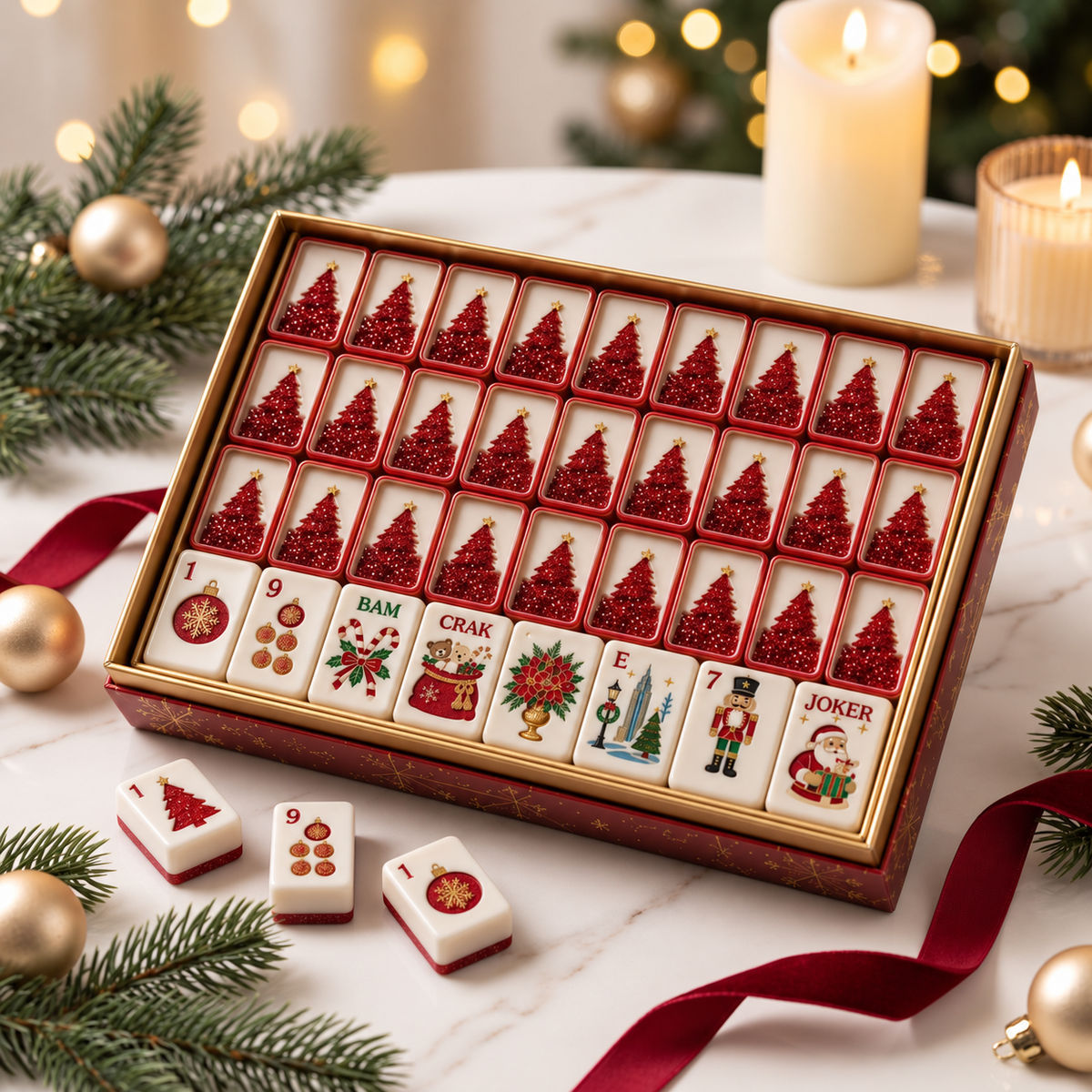
In American mahjong, table rules control which melds you can expose, when you call a discard, and how jokers fit into plays. You may only expose pungs (three identical tiles), kongs (four identical), quints (five identical) and sextets (six identical) — never chows or sequences like 1-2-3. Jokers substitute for any tile within a meld but can never form a pair or stand alone. When someone discards a tile you need, you call it loudly, take it, expose your meld, and discard a different tile. The hand you're playing comes only from the current year's National Mah Jongg League card. Most errors happen when players try to expose "sequences" or use a joker as a single tile. Playing on a quality mat designed for clear sightlines prevents confusion and keeps melds visible to all four players.
🀄 Shop best-selling mahjong sets →
What melds can you actually expose and call?
In American mahjong, only four meld types are legal: pung, kong, quint and sextet. A pung is three identical tiles—three 5 Dots, three East Winds, three Red Dragons. A kong is four identical tiles. A quint is five identical, and a sextet is six identical. Each suit has exactly four of every number, so a quint requires you to have drawn a tile, called one from the wall, and used a joker. You cannot expose a "sequence" like 1 Bam, 2 Bam, 3 Bam because American mahjong has no chows. This is the single biggest rule difference from Chinese or Hong Kong variants.

How do jokers work in exposed melds?
A joker can substitute for any one tile inside an exposed meld. For example, if you need three 3 Craks but hold two 3 Craks and one 5 Dot, you can use a joker in place of the third 3 Crak, then expose the pung: 3 Crak, 3 Crak, joker (standing in for 3 Crak). Jokers can never form a pair—so you cannot use two jokers as a pair. Jokers can never stand alone as a single tile. If you call a 3 Crak discard and your hand contains 3 Crak, 3 Crak, joker, you take the discard, expose the pung, and continue play. The joker "belongs" to the meld it sits in; it cannot be moved once exposed.
When do you call and expose—and what comes next?
You call a discard when it completes a legal meld you can expose immediately. Hearing a discard hit the table, if it fills a pung, kong, quint or sextet already forming in your hand or among your melds, you call the tile loudly ("Call!" or repeat the tile name), take it from the discard, add it to your hand or exposed meld, and then discard one tile from your hand that you do not need. You expose the meld containing the called tile by laying it face-up in front of you or in the center of the table—rules vary slightly, but all players must see it clearly. After you expose and discard, play passes to the next player (usually the one to your right). You cannot call a tile "just in case"; you must need it for an immediate, legal meld.
What tiles make up a hand on the card?
The current year's National Mah Jongg League card lists all legal hands. Each hand is a combination of melds and a pair. For instance, a hand might read: "2 Pungs, 1 Kong, 1 Pair" or "1 Pung, 2 Kongs, 1 Quint, 1 Pair." The card specifies which suits, numbers and meld types are allowed. You must match the card exactly—if the card says your hand is three Red Dragons (pung), two East Winds (pung), three 1 Dots, four 2 Dots, four 3 Dots, one 4 Dot (pair), then that is the only configuration you can declare when you win. Learn how to read the card before your first session so you avoid false wins and slow play.

Common calling mistakes and how to prevent them
The most frequent error: a player calls a tile but cannot actually expose a legal meld with it, or the meld they expose does not match the hand they have declared on the card. Solution: Before calling, scan the card and confirm the meld type is listed and the tiles match what you hold. Second error: a player exposes a meld using a joker but then tries to move the joker to a different meld later. Solution: Jokers are locked into the meld they join; establish this rule at the table before play starts. Third error: a player discards, another player calls, but the called player cannot see the meld clearly due to poor lighting or cramped table space. Solution: Use a mat with generous meld zones and good contrast so all four players can verify melds instantly. Fourth error: confusion about whether a tile was on the table or in hand when called. Solution: Establish that all discards go to the center of the table in a designated discard pile, separate from living hand tiles. Fifth error: calling out of turn. Solution: Only the player whose turn it is can call a discard; if other players need it, they cannot take it unless a meld rule (like needing the tile to go out) applies—house rules vary here, so set this before the first game.
🎁 See our most-loved mahjong sets & accessories →
Comparison: Meld Types & When to Use Them
Meld Type | Tile Count | Example | Called or Hidden | Joker Allowed |
Pung | 3 | Three 5 Dots | Yes, always | Yes, 1 joker |
Kong | 4 | Four East Winds | Yes, always | Yes, 1 joker |
Quint | 5 | Five Red Dragons | Yes, always | Yes, 1 joker |
Sextet | 6 | Six 1 Bams | Yes, always | Yes, 1 joker |
Pair | 2 | Two 3 Craks | Never exposed | Never joker |
The pair (the two identical tiles that complete your winning hand) is always hidden in your hand or rack—never exposed until you declare "Mahjong!"
How American rules differ from other variants
American mahjong stands apart from Chinese, Hong Kong, and Riichi variants in three ways. First, American mahjong uses only hands listed on the current year's card; you cannot win with a hand that is not on that card, even if it looks valid. Second, American mahjong forbids chows (sequences like 1-2-3), so every exposed meld is a pung, kong, quint or sextet of identical tiles. Third, American mahjong requires the Charleston—a three-pass tile exchange before play begins—and does not use the "kong replacement tile" or other variants' wall mechanics. If you are learning American mahjong after playing another variant, review the full ruleset to avoid carrying over illegal calls or melds.
✨ Find your Mahstead set — free US shipping →
What to check before you buy a set (and how it affects your table game)
A quality set reduces rule disputes because tiles are easy to read and melds stay organized. Acrylic tiles with engraved numbers and suit symbols stay readable for decades, unlike painted designs that wear off. Clear racks with pushers keep your tiles upright and hidden from opponents' view, preventing accidental reveals and confusion about whether a tile is in your hand or on the table. A sturdy mat with designated meld zones and a discard pile area (sometimes called a corner mat or full table mat) gives all four players a clear view of exposed melds and prevents the accidental mixing of discards with melds. When you host a weekly game, these details matter: players new to the rules feel more confident, calling and exposing happens faster, and disputes disappear. Budget about the same as you would for a good dinner; the set will outlast hundreds of games.

FAQ
Can I call a discard if I have not exposed a meld yet?
Yes. You can call your first discard even though no melds are exposed; that call creates your first meld and starts your hand. After that, you can call additional discards to build more melds.
What happens if two players call the same discard?
House rules vary. Most groups award it to the player closest to the discarder, moving clockwise. Some groups give it to the player going out (if that is imminent). Establish this rule before the first game.
Can a joker ever be the pair that completes my hand?
No. A joker cannot form a pair. Your pair must be two identical, real tiles. This is a strict rule in American mahjong.
If I expose a pung with a joker, can I replace the joker later with the real tile?
No. Once a joker is placed in a meld and the meld is exposed, the joker stays in that meld for the rest of the hand. It cannot be swapped out or moved.
What happens if I call a tile but then realize I miscounted and do not have a legal meld?
You must take back the call if the meld is not yet exposed. If it is already exposed, you are committed; most groups enforce a penalty (loss of points, sitting out a hand, or similar, depending on house rules). Call carefully and scan the card first.
Can I expose melds on my turn if I did not call a discard?
House rules vary widely. Some groups allow "melding down" (exposing melds on your turn without calling); others forbid it except during the Charleston. Agree before play starts. Check American mahjong scoring rules to see if your group's house rule affects points.
How many jokers come in a mahjong set, and can I use extra jokers in a meld?
A standard 152-tile American mahjong set plays with 8 jokers. All 8 are in play during a game; spare jokers (if your set includes them) stay off the table. You cannot use more than one joker per meld.


View More
View More
View More
