
Malaysian vs. Siamese Mahjong: Key Rules & Tile Differences
Last updated: Nov 23, 2026
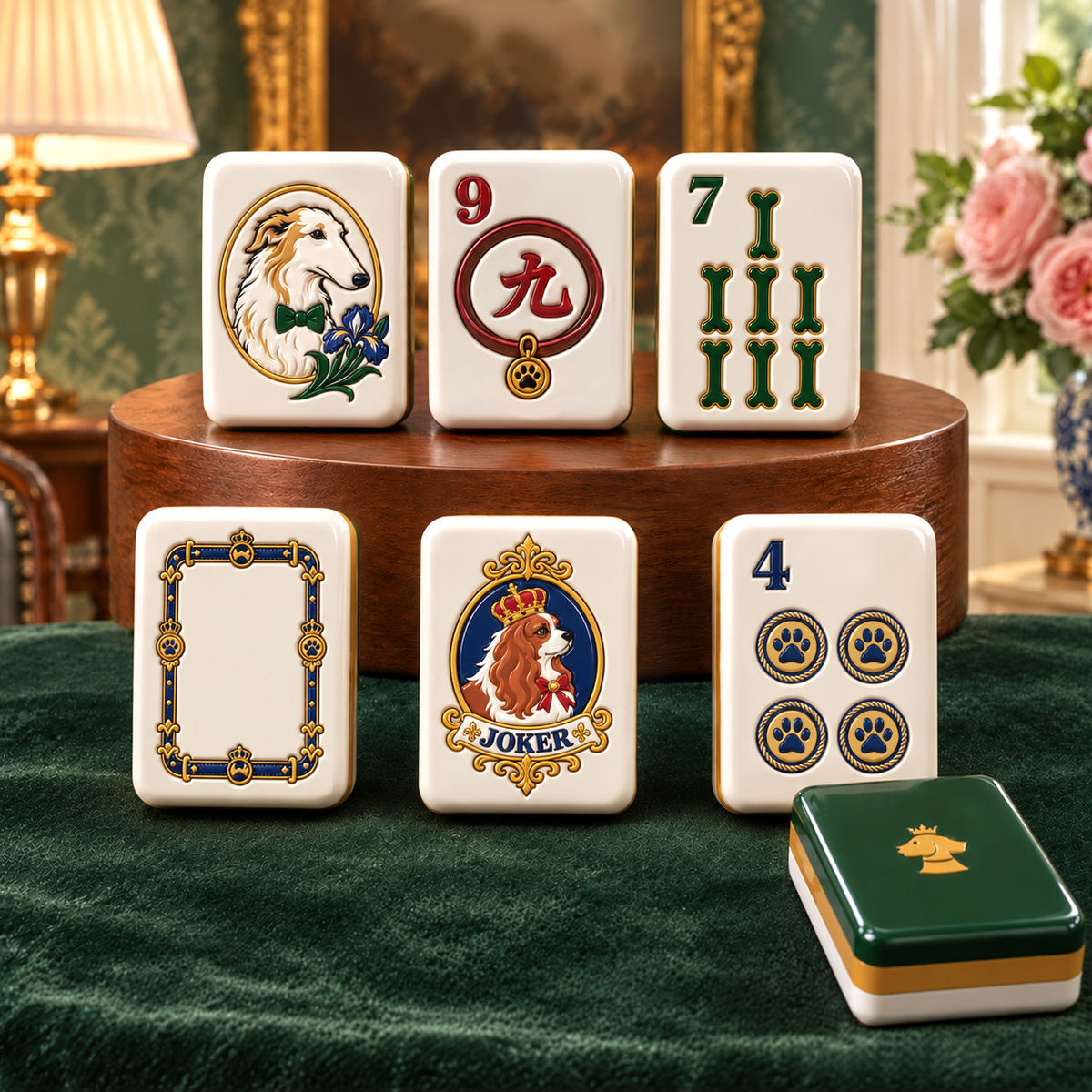
Malaysian mahjong (Mahjong Klasik) typically uses 144 tiles with a faster, simpler hand structure favoring pairs and sequences; Siamese mahjong (Mahjong Thai) employs 148 tiles, stricter hand rules, and bonus scoring for specific tile combinations. Malaysian play emphasizes speed and draws from a live wall; Siamese requires memorized hand patterns. Both diverge sharply from American mahjong, which uses 152 tiles, no sequences, and tiles drawn only from the current year's National League card. Neither Malaysian nor Siamese sets are sold by Mahstead, which specializes in American mahjong; if you play American at home, you'll want a 152-tile set from our best-selling collection to ensure compliance with league rules.
What tile count does each game use?
Malaysian mahjong plays with 144 tiles total: three suits (Bams, Craks, Dots) numbered 1–9, four copies each (108 tiles), plus 16 winds, 12 dragons, and 8 flowers. Siamese mahjong uses 148 tiles by adding four extra tiles (often blanks or duplicates of flowers). American mahjong uses 152 tiles—the 144-tile base plus 8 jokers—and plays with all 152 plus 8 jokers every hand, never removing any from the rack. This tile-count difference shapes how quickly walls shrink and how many dead tiles remain undrawn during play.

How do hand patterns differ between the two?
Malaysian mahjong hands require four melded sets (pung, kong, or sequence/chow) plus a pair—similar to Chinese classics. Sequences are called and exposed openly, allowing other players to build on them; jokers function as wildcards. Siamese mahjong hands also follow a melds-plus-pair structure but impose stricter pattern rules and award bonus points for "special" combinations (e.g., all one suit, all terminals, mixed honor hands). American mahjong abandons sequences entirely: hands consist only of pungs (3 identical), kongs (4 identical), quints (5), or sextets (6) plus a pair, and no sequences can be called—all melds are concealed until you declare a winning hand. American jokers cannot substitute in singles or pairs, only in groups of 3+.
What scoring system does each variant use?
Malaysian mahjong scoring follows the standard Chinese model: base points determined by meld type (pung beats chow, kong beats pung) and doubled based on winds and dragons held. Final score often rounds to multiples of 100 or 1,000 points. Siamese mahjong layers on regional bonus multipliers for certain patterns (e.g., "pung of pung," all simples, mixed majors) and uses a tiered point structure that rewards concealed hands and self-drawn wins more generously. American mahjong scoring is entirely different: the National League card lists around 300 named hand patterns and their point values (typically 30, 40, 50, 60, or 70 points); you score points only if your hand exactly matches a printed pattern on that year's card, and there is no doubling or bonus multiplier system—you either win the named hand or you don't.
🀄 Shop best-selling mahjong sets →
Which variant is faster to learn and play?
Malaysian mahjong is typically faster to learn because the hand structure mirrors standard Chinese rules most players encounter online or in casual play. Games move quickly; rounds finish in 15–30 minutes. Siamese mahjong adds complexity through bonus patterns and stricter hand rules, requiring players to memorize regional scoring variations—expect a learning curve of 3–5 games to recognize common patterns. American mahjong has the steepest initial learning curve: you must learn to read the official card, understand that only named hands win, and internalize the Charleston passing ritual. However, once you grasp the card-based system, American play becomes very learnable—our guide to how to play American mahjong walks new players through setup, passing, and winning step-by-step. Most players comfortable with one variant take 5–10 games to adapt to another.

Where are these variants played today?
Malaysian mahjong thrives in Malaysia, Singapore, and parts of Brunei; you'll find casual home games in Kuala Lumpur, online tournaments on regional platforms, and community clubs in areas with diaspora populations. Siamese mahjong is strongest in Thailand and among Thai expatriate communities; Bangkok hosts regular tournaments, and casual play is common in neighborhoods with Thai residents. American mahjong dominates the United States, particularly in the Southwest, California, and areas with large Jewish and Chinese-American populations; weekly games run in community centers, synagogues, libraries, and country clubs coast-to-coast. If you're hosting an American game at home, ensure your table has a proper mat to define the wall and meld zones—our mahjong mats collection includes options sized for four-player comfort and marked for the standard American layout.
How do you choose which variant to play?
Comparison: Choosing Your Mahjong Variant
Variant | Best For | Time per Hand | Tile Count | Sequence Calls? | Joker Rules | Learning Curve |
Malaysian | Speed players, online casuals | 15–25 min | 144 | Yes | Wildcard substitute | Low |
Siamese | Pattern memorizers, regional pride | 20–35 min | 148 | Yes | Wildcard substitute | Medium |
American | Card-based players, league players | 20–40 min | 152 | No | No singles/pairs | Medium–High |
Choose Malaysian if you want fast, loose play with forgiving rules; choose Siamese if you enjoy memorizing bonus patterns and scoring multipliers; choose American if you prefer structured, card-based hands and a nationwide community. Your choice affects which tiles and equipment you'll need: American requires a 152-tile set with the 8 jokers separate, while Malaysian and Siamese use 144 or 148 tiles without a separate joker rack. If you're new to mahjong overall, our mahjong for beginners guide covers foundational concepts that apply across all variants.
What equipment do you need for each game?
All three variants require the same basic hardware: tiles, a wall, a meld rack, and a mat. Malaysian and Siamese games often use simpler equipment—tiles stacked in the wall without racks, sometimes played on a bare table. American games benefit from specialized gear: a mahjong mat marked with wall and meld zones keeps play organized, and racks with pushers prevent tiles from accidentally tipping—the pushers make it easy to manage dozens of tiles in front of you without fatigue or accidents. If you travel between game locations, a durable mahjong bag or case protects your tiles during transport and keeps them separate from dust or damage.
What to check before you buy:
Tile material: Acrylic (durable, easy to clean) vs. bamboo/bone (heavier, more luxe).
Size: Standard (roughly 1 inch per tile) suits most hands; smaller or larger tiles affect comfort during long sessions.
Set contents: Verify your set includes all required tiles for your variant. For American, ensure 152 playing tiles plus 8 jokers.
Spare tiles: Sets sold as 160 tiles include spare tiles beyond the playing set—useful replacements if a tile chips.
Mat fit: Your mat should accommodate your table size (typically 36–42 inches square for four-player American).
🎁 See our most-loved mahjong sets & accessories →
Can you play all three variants with the same tile set?
Technically, yes—all three use identical tile faces (Bams, Craks, Dots, winds, dragons, flowers). The difference is in which tiles you use (144 vs. 148 vs. 152) and how you play. A 152-tile American set can be stripped down to play Malaysian or Siamese by removing 4–8 tiles and ignoring the jokers. However, this approach is clunky: you're leaving tiles on the shelf and players may confuse which rules apply mid-game. If you play primarily one variant, buy a set designed for that game. If you rotate between American, Malaysian, and Siamese, owning one best-selling mahjong set with clear, easy-to-read tiles (and a spare mat labeled by hand zones) lets you pivot quickly between variants by simply following each game's draw and meld rules. Many multi-variant players keep a card or cheat sheet on the table listing winning hands for each variant to avoid confusion.
✨ Find your Mahstead set — free US shipping →

FAQ
Can I learn Malaysian mahjong online, or do I need a local teacher?
Online tutorials and apps exist, but Malaysian mahjong thrives in regional communities with oral tradition. Your best bet: find a local club (search community boards, Malaysian restaurants, or expatriate associations in your city) where experienced players teach live play. Online video is a supplement, not a replacement.
Is Siamese mahjong harder than American mahjong?
Not necessarily harder, just different. Siamese demands memorizing regional bonus patterns; American requires memorizing the league card. Both take 3–5 games to internalize. American has stricter rules (no sequences, no jokers in pairs), which some find constraining; Siamese offers more flexibility in hand construction.
Why does American mahjong use 152 tiles instead of 144?
The 8 jokers are a distinctly American addition (not found in Chinese or Southeast Asian play). They allow more hand flexibility and reduce dead-tile problems in four-player games. The National League standardized on 152 to balance luck, strategy, and hand variety.
Can I play Malaysian or Siamese mahjong with an American set?
Yes, you can set aside 8 tiles and play, but it's awkward. American sets are optimized for 152-tile play (sized, colored, and numbered for that count). Buy a Malaysian or Siamese set if you plan to play that variant regularly.
Which variant do most people learn first?
In the US, American mahjong dominates; most Western beginners start there. In Southeast Asia, Malaysian is the casual entry point. Globally, Chinese mahjong (four suits, sequences allowed) is most widespread. Start with whichever variant is played in your local community—that ensures you have players to learn from.


View More
View More
View More
