
Singles and Pairs in Mahjong: Examples and Rules
Last updated: Nov 23, 2026
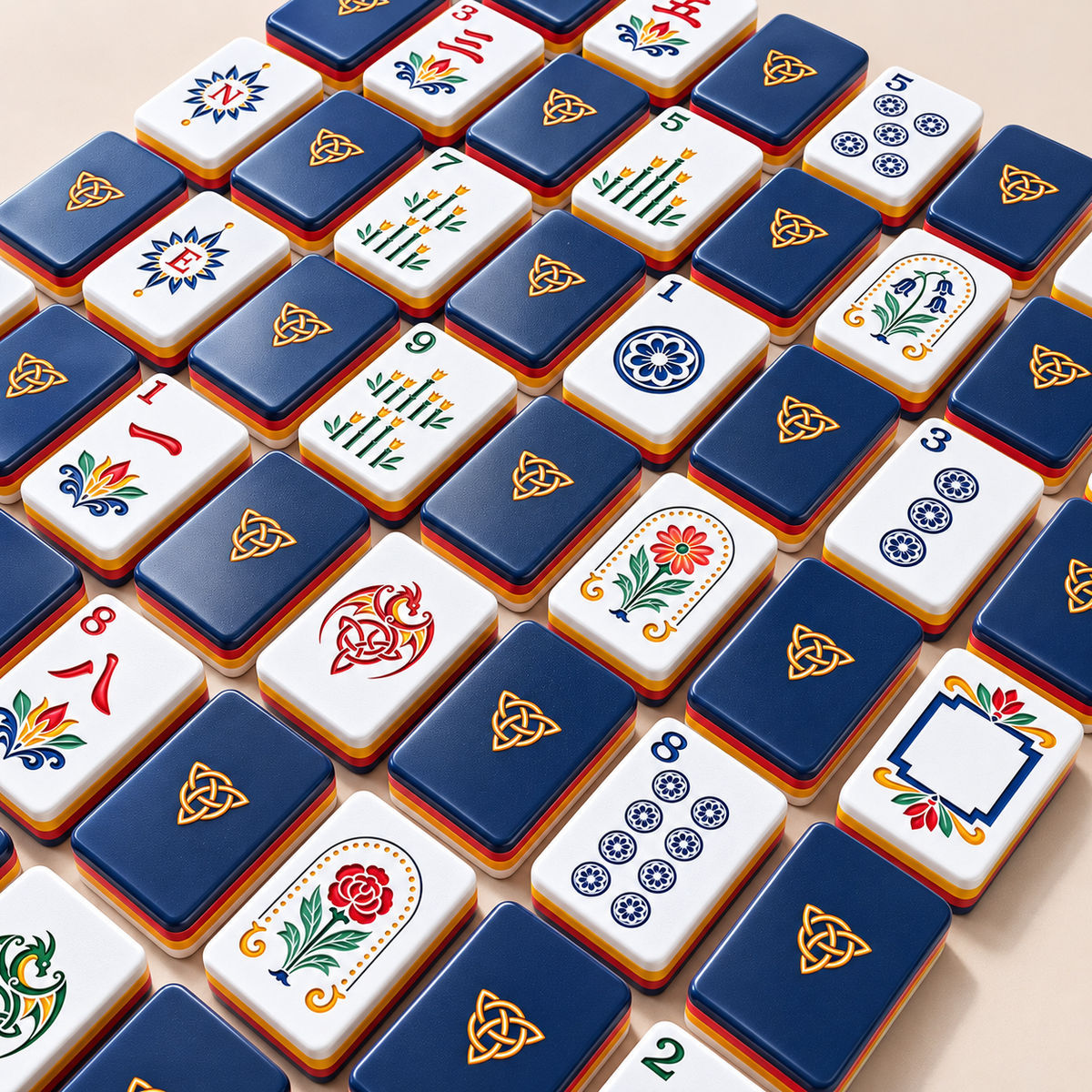
In American mahjong, a single is one tile standing alone; a pair is exactly two identical tiles (same number, suit, wind, dragon, or flower). Every hand on the current year's National Mah Jongg League card must contain exactly one pair—never zero, never two—and the rest of the hand is made up of melds (pungs, kongs, quints, or sextets). Singles never appear as playable melds; they exist only as the required pair or as a loose tile in your rack before you complete a hand. Pairs cannot use jokers: a pair must be two real tiles of the same type. When you go mah jongg, the pair you expose is the last tiles you've matched. Most reading errors happen when players confuse a pair with two separate singles or try to use jokers to "fill in" a pair. We recommend learning to mark the pair on your rack first before hunting for melds, since the pair is non-negotiable and everything else builds around it.
In American mahjong, singles and pairs are not optional—they're the backbone of legal hands. Every winning hand contains exactly one pair. Understanding where pairs sit on the card, how to spot them in your rack, and which tiles can form them will cut your reading time and prevent the frustration of picking up tiles that don't fit your chosen hand.
What's the difference between a single and a pair?
A single is one tile. A pair is two identical tiles of the exact same rank and suit (or same wind, dragon, or flower). If you pick up two 5 Dots, that's a pair; two 5 Bams is a different pair and cannot be mixed. Many newer players accidentally treat two tiles of different numbers (like a 5 Dot and a 6 Dot) as a potential pair; this is the most common error we see at the table. Singles only matter in the sense that you hold loose tiles before completing your hand—they're not melds you expose.

Why does every hand need exactly one pair?
The National Mah Jongg League card is constructed so that every legal hand must have one—and only one—pair plus four melds (pungs, kongs, quints, or sextets of three or more tiles each). If you try to play a hand with zero pairs or two pairs, the hand is dead and you cannot win that round. The card designer built this rule into every pattern; there are no exceptions. This constraint is what makes how to read the mahjong card critical—the card shows you exactly where the pair sits in each hand pattern.
Can you use jokers in a pair?
No. Jokers cannot be part of a pair, period. A pair must be two real (non-joker) tiles of the same type. Many beginners ask this because jokers feel like "wild" tiles, but how jokers work in American mahjong is strict: jokers can only replace a single tile inside a pung, kong, quint, or sextet—never in a pair, never alone. If you need two 1 Dots for your pair and you only have one real 1 Dot and one joker, you cannot use that combination. You must either find a different hand or draw another real 1 Dot.
How do you spot pairs when you're sorting your rack?
Start by grouping identical tiles into piles: all 1 Bams together, all Winds together, all Dragons, etc. Look for any type where you have at least two tiles. That's a candidate pair. Once you spot a potential pair, check the card to see if a hand exists with that pair as the required pair. If it does, trace that hand line to see what melds you need to complete it. This is the fastest way to avoid dead-end hands: pair first, melds second. We recommend using mahjong racks with pushers with clearly defined rows, which makes grouping and spotting pairs much faster and less likely to cause misreads.
What if you can't find any pair in your rack?
You're either still drawing tiles or you've picked the wrong hand to pursue. Keep drawing; the law of probability means you'll eventually see a second copy of some tile. If you've drawn most of the tiles and still have no pair, walk through the card methodically: pick a specific pair (say, 7 Dots), then check if any hand on the card uses that pair. If the hand exists, look at what melds you need. If those melds aren't forming, your hand strategy was wrong. This is called "hand planning," and it's discussed in how to play American mahjong in detail.
Examples: Singles vs. pairs in real hands
Let's say you're holding:
1 Dot, 2 Dots, 3 Dots, 3 Dots (pair), 4 Dots, 5 Dots, 6 Dots
The two 3 Dots form a pair. The 1, 2, 4, 5, 6 Dots are all singles at this point in your draw. If you also have a pung (three identical tiles) and two more melds, plus this pair, you have a complete hand.
Now, another scenario:
Red Dragon, Red Dragon, White Dragon, North Wind, North Wind
You could form a pair from either the two Red Dragons or the two North Winds—but not both. The card will tell you which pair goes with which hand. If the card shows a hand with a Red Dragon pair + three other melds using your remaining tiles, that's your hand. The two North Winds become part of another meld or stay unmatched.
Here's where mistakes happen: beginners sometimes try to "count" two different numbers of the same suit as a single unit, like 3 Dots + 4 Dots = "a pair." This is wrong. A pair is only two of the same tile.

When reading the card, where does the pair sit?
On the National Mah Jongg League card, the pair is usually shown at the end of a hand line, though its position can vary. Learn to scan the card by suit and position. The card uses abbreviations and symbols: two boxes side by side often indicate the pair, though you'll get faster at recognizing it with practice. How to read the mahjong card walks through the card layout in depth so you can avoid misreading a pair as a pung or a quint.
Pair-finding checklist
Step | Action | Why |
1 | Sort tiles by type and number | Spot duplicates fast |
2 | Mark any two identical tiles | These are pair candidates |
3 | Check the card for each pair | See if a hand exists with that pair |
4 | Trace the full hand line | Confirm you can build the melds |
5 | Count your melds | Should be exactly one pair + four melds |
🀄 Shop best-selling mahjong sets →
Common pair mistakes—and how to avoid them
Mistake 1: "I have a 5 Dot and a 5 Bam, so that's a pair." No. A pair must be the same suit and number. 5 Dot ≠ 5 Bam. These are two separate singles.
Mistake 2: "I'll use a joker as the second tile of my pair." Jokers do not work in pairs. Full stop. If you need two 1 Craks and you only have one real 1 Crak, you cannot pair it with a joker and call it a pair.
Mistake 3: "The card shows two boxes next to each other—that must be my pair." Maybe, maybe not. Two boxes can represent a pair, or they can represent the first tile of a quint or sextet. Read the context: how many rows, how many melds, and which position. The card legend varies by year; always check the top of the sheet.
Mistake 4: Forgetting to set aside the pair once you've spotted it. Mentally "lock in" your pair as soon as you're certain. Don't keep moving it around your rack. This prevents confusion and saves time.
We see these errors most often when players rush or when they're new to the card. Slow down on pair identification—it's the easiest win at the table.
Why does pair strategy matter for winning?
Finding your pair early in the draw sharpens your hand strategy. Once you know your pair, you know which hand you're pursuing, which melds you need to find, and which tiles to discard. Players who spot pairs last often discard tiles they needed for their melds, then scramble to adjust. Pair-first thinking gives you a roadmap. It also tells you when to quit a hand: if you've drawn twenty tiles and your pair hasn't appeared, and the card shows no alternate hand you can build, it's time to switch strategies. This is called "hand discipline," and it's covered in how to play American mahjong.
What to check before you play
Are you using the current year's League card? (Card rules change slightly each spring.)
Have you traced your entire hand line on the card, including the pair location?
Does your chosen pair appear as the pair in that hand, not as part of a pung or quint?
Do you have exactly four melds (each three or more tiles) plus one pair?
Have you used no jokers in your pair?
If all five checks pass, you're legal.
🎁 See our most-loved mahjong sets & accessories →
Pairs in other mahjong variants
Chinese mahjong uses pairs differently: you need a pair to go "mah jongg," but melds (called "chows," "pungs," and "kongs") follow different rules and can include sequences. Hong Kong mahjong has similar pair rules to Chinese but with its own scoring system. Riichi mahjong (Japanese) uses a concealed hand and pairs work differently too. American mahjong is unique because the pair is mandated by the card and jokers never touch it. If you're learning American first, understand that this "pair-centric" rule is not universal—other variants are looser about pairs and stricter about sequences.
Building a strong home game with clear rules
When you host weekly games, consistent pair-checking prevents arguments and keeps the game moving. Print a one-page house rule sheet that covers pair rules (especially "no jokers in pairs") and post it at the table. Use engraved American mahjong sets that are easy to read and tell apart—high-contrast engraving cuts errors caused by tile confusion. Pair misidentification drops dramatically when tiles are legible.
✨ Find your Mahstead set — free US shipping →

FAQ
Can a pair be two different tiles of the same number but different suits?
No. A pair must be two identical tiles—same number AND same suit. Two 3 Dots and two 3 Craks are two different pairs, never one pair.
What if I have three of the same tile—does one set of two count as my pair?
If you have three 5 Bams, you have one pung (a three-tile meld), not a pair. The card will tell you whether that pung is part of a hand. A pair is always exactly two tiles, used as the single pair in that hand.
Is the pair always the last tiles I draw to win?
Usually yes, but not always. You complete the pair when you have all the tiles needed to expose a winning hand. The pair is the last thing you mentally "lock in," but the physical tiles might land anywhere in your rack.
Can two jokers make a pair?
No. Jokers cannot form a pair under any circumstance. A pair must be two real (non-joker) tiles of the same type.
What happens if I call mah jongg but my pair has a joker in it?
Your hand is dead. You cannot win that round, and you may face penalties depending on house rules. This is a grave mistake and costly to your score.
How do I know if the card is showing a pair or a pung?
The card shows this through position and notation. A pair is two boxes/symbols; a pung is three. Check the card legend at the top of the page each year, as notation can shift slightly.


View More
View More
View More
