
Singapore Mahjong vs Vietnamese Mahjong: Rules, Tiles & Play
Last updated: Nov 23, 2026
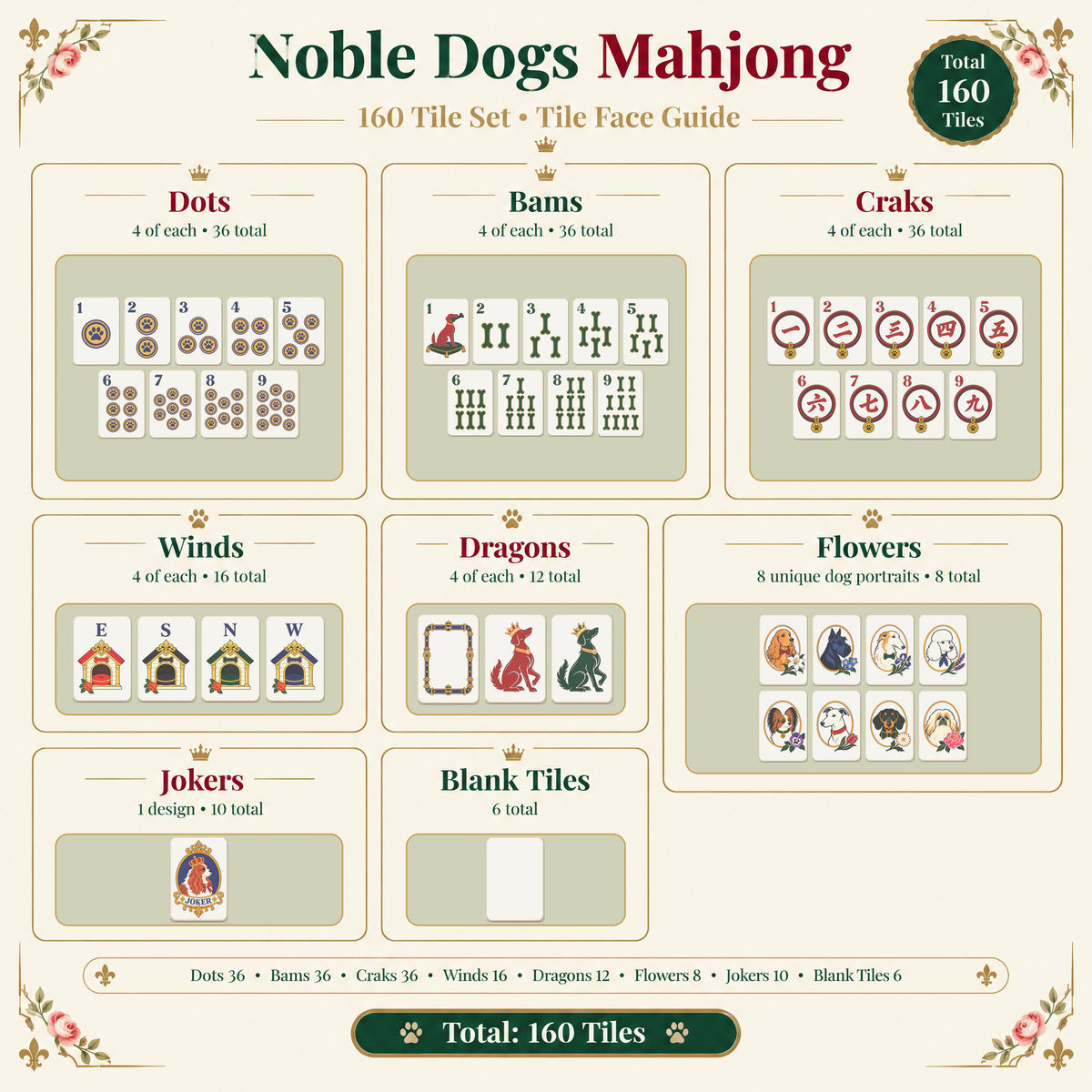
Singapore mahjong typically uses 144 tiles and plays closer to Cantonese or classical Hong Kong rules, with emphasis on melded sets and a fixed hand pattern list. Vietnamese mahjong (often called Tài Xỉu or other regional names) varies significantly by region and house rules—some versions use 120 or 136 tiles, prioritize different melds, and allow sequences (chows) more freely than Singapore play. Both differ sharply from American mahjong, which uses 152 tiles, restricts exposure to pungs and kongs only, and requires hands from the annual National Mah Jongg League card. If you're hosting games in North America, American mahjong sets from Mahstead's best-selling collection are purpose-built for the NMJL rules and come ready for Charleston, scoring and standard four-player format.
Singapore and Vietnamese mahjong sit at opposite ends of Southeast Asian play, each shaped by local history and house tradition. If you're caught between them—or curious why American mahjong players see neither as the "real thing"—this guide breaks down what makes each tick, how they differ, and which rules fit your table.
How does Singapore mahjong differ from Hong Kong mahjong?
Singapore mahjong evolved from Cantonese play but developed its own flavor over decades of regional standardization. The game uses 144 tiles, with hand patterns drawn from a fixed list similar to the Hong Kong "fan" system, though Singapore often simplifies or reshuffles which combinations count and how many points they earn. Players expose pungs, kongs and sometimes sequences; the hand list emphasizes value-stacking—combining patterns that reward skill and calculated risk. Hong Kong play, by contrast, retains more flexible melds and a deeper fan hierarchy. Both games honor sequences (chows), unlike American mahjong, which bans them entirely. If you've played American and tried Singapore, the pivot from memorizing a single annual card to learning a regional "standard" list feels like switching languages mid-conversation.

What tile count does Vietnamese mahjong use?
Vietnamese mahjong has no single international standard—the tile count and rules vary by province, family tradition and which city you're in. Some versions use 120 tiles (removing flowers or winds), others 136, and a few stick closer to 144 like Singapore. The lack of a published rulebook means house rules dominate; your neighbor's version may differ from your cousin's. This flexibility appeals to casual players who adapt the game year to year, but it complicates teaching newcomers or joining a unfamiliar table. Vietnamese play tends to allow sequences more openly than Singapore and often emphasizes speed and luck over the rigid pattern-matching of Hong Kong or American formats. When visiting Vietnam or playing with Vietnamese friends abroad, always ask which house rules apply before the first hand.
Why can't American mahjong players easily switch to Singapore or Vietnamese games?
American mahjong is a purpose-built variant locked into a single ruleset: 152 tiles, no chows, exposures limited to pungs and kongs, and hands valid only if they match the current year's National Mah Jongg League card. This rigidity creates a teaching advantage—everyone nationwide plays the same game—but it also creates a wall. Singapore and Vietnamese players use different tile inventories, accept sequences you'd never expose in American play, and work from regional pattern lists rather than an annual card. The leap from "I can only expose a pung or kong, and only if my hand sits on the NMJL card" to "sequences are fair play and there's no single official hand list" rewires how you think about what's legal. Many American players find the freedom liberating; others feel untethered. If your group plays American mahjong, the most reliable approach is to invest in a dedicated American set from our best-selling collection—the tiles, racks and mats are engineered for American rules and save confusion when teaching or switching games week to week.
What are the core scoring differences between these variants?
Variant | Scoring basis | Hand origin | Speed of scoring | Limits |
American | Point value tied to hand complexity and tile rarity | Annual National Mah Jongg League card | Moderate—reference card each hand | Fixed maximum per hand type |
Singapore | Fan system (patterns earn 1–8+ fan, each fan = point multiplier) | Regional standard list, not annually updated | Slower—debate over fan count common | No hard cap; lucky hands score huge |
Vietnamese | House rules; often simple point totals per pattern | Oral tradition, written only informally | Fast—quick settlement, fewer disputes | Varies widely by table |
Hong Kong | Fan + point system, melds earn separate values | Traditional fan list, centuries old | Moderate to fast, fewer rule gaps | Structured but complex |
American mahjong scoring uses the card's printed values, so there's little ambiguity—once you read the hand, points are locked. Singapore and Hong Kong rely on counting fan, which requires knowing your pattern library cold; one disputed pung can stall the table. Vietnamese simplicity wins points for speed but loses clarity; mismatches over what a hand is worth kill momentum. If your table values quick play, Vietnamese house rules win. If you crave pattern mastery and don't mind slower hand-by-hand debate, Hong Kong or Singapore reward that. American mahjong splits the difference: the card is fast to read, but the patterns themselves are intricate.

Which variant is easiest for beginners?
Vietnamese mahjong's speed and flexible house rules make it beginner-friendly at first glance—fewer official patterns to memorize, and mistakes can be house-ruled on the fly. However, that same flexibility breeds confusion: a new player invited to two different tables may feel they're learning two different games. Singapore mahjong sits in the middle. It demands you learn a fixed hand list and fan system, but that work pays off—once you know the list, every hand is consistent and portable to any Singapore table. American mahjong has the steepest front-loaded learning curve: the current year's card is dense, the exposure rules are strict, and the Charleston takes practice. The payoff is that you learn one ruleset that doesn't change mid-season, and the tile engineering is optimized for American play. If you're hosting your first game and teaching from scratch, Vietnamese keeps the mood light; if you're committing to a season of regular play, Singapore or American—especially American, with its standardized equipment and rules—teaches discipline and consistency.
🀄 Shop best-selling mahjong sets →
How do sequences (chows) work differently in each game?
In American mahjong, sequences do not exist as legal melds. You cannot call, expose or lay down a chow (e.g., 4-5-6 Dots). Every exposed meld is a pung (three identical), kong (four identical), or a higher-value set like a quint or sextet. This design simplifies the game and forces players to master blocked-tile thinking: if someone plays a 4 Dot, a 5 Dot becomes harder to use because the sequence-building options that dominate other variants don't apply. In Singapore and Hong Kong, chows are core. A player can expose a sequence like 4-5-6 Bam just as readily as a pung; in fact, hand patterns often demand sequences to score well. Vietnamese play also accepts sequences, and some house games lean hard into them—three sequences in a row may be worth extra points. This difference cascades: in American mahjong, discarding the middle number of a run is safe because no one can chow you; in Singapore, that same discard is risky and can hand an opponent the hand they need. If you're learning multiple variants, practice tile reading—spotting which discards are dangerous in a sequences-allowed game versus an American sequences-banned table.
What's the practical first step if you want to host both variants at home?
Start by picking one and mastering it. A table split between American and Singapore players mid-season creates chaos: different hand lists, different exposure rules, different scoring. Commit to hosting American mahjong with a dedicated American set engineered for 152 tiles, jokers and the NMJL card. If you have friends visiting from Singapore or Vietnam, a separate night with those rules is cleaner than a hybrid. If you're truly splitting your year—say, American Mondays and Singapore Thursdays—store each variant's tiles and reference materials separately so setup is instant and rule confusion evaporates. Many long-time players keep a travel bag or storage case for their primary variant and a second set for experimentation; this prevents tiles from different games mixing, which kills tile recognition during play. The golden rule: one table, one ruleset, clear house agreement signed before the first shuffle.
🎁 See our most-loved mahjong sets & accessories →
What should you check before hosting a game with visitors from Singapore or Vietnam?
Before your guests arrive, ask these five questions in writing or a clear text:
Which ruleset? "Are you playing Singapore standard, your local Vietnamese house rules, or are you open to learning American?"
Tile count and inventory. "Do you have a 144-tile set, 136-tile, or can you use American tiles (152)?"
Hand list source. "Do you work from a published Singapore hand book, or is it house memory?"
Sequence rules. "Are chows (sequences) legal, and can they be exposed or called?"
Scoring method. "Do you score by fan, points per pattern, or house flat rates?"
Write the answers down and review them 20 minutes before play starts. If you don't have clarity, simplify: offer to host American mahjong with the current year's NMJL card printed or your best reference, since that's the only variant with a published, unchanging ruleset within a season. If your guests prefer their home game, ask them to bring a rulebook or written cheat sheet; oral tradition is beautiful but not friendly to first-time play. A quick mat with clear workspace and racks with pushers also signal professionalism and reduce tile-mixing errors.
✨ Find your Mahstead set — free US shipping →
What to check before you buy a set for multi-variant play
If you're planning to host both American and another regional variant, avoid mixing tiles from different games. American sets contain 8 jokers and are optimized for 152-tile play; many Southeast Asian sets drop jokers and run 144 or fewer tiles. Invest in one complete American set for home play and, if you travel or host international games regularly, a separate regional set stored in its own case or bag. This prevents tile loss, rule confusion and the awkward mid-hand discovery that you don't have enough jokers or winds for the variant you promised.

FAQ
Can I use an American mahjong set to play Singapore or Vietnamese mahjong?
Technically, yes—both use similar basic tiles (Bams, Craks, Dots, winds, dragons). However, American sets include 8 jokers and are built for 152-tile play; Singapore uses 144 tiles and typically no jokers. You'll have extra tiles, which is awkward. A regional set keeps the counts exact and signals you're serious about playing each game fairly.
Is Vietnamese mahjong the same everywhere in Vietnam?
No. Rules vary by region and family tradition. Always confirm house rules before sitting down. What works in Hanoi may not apply in Ho Chi Minh City, and neither may match your neighbor's version in the US.
How long does a Singapore mahjong game take compared to American?
Both typically run 12–16 minutes per hand, with four hands per round. Singapore can feel slower if the table debates fan counts; American moves steadier because the card is the authority. Vietnamese speed depends on house rules—some games finish faster due to simpler scoring.
Do I need to memorize hand patterns for Singapore mahjong like I do for American mahjong?
Yes, but it's different work. Singapore players learn a regional pattern list (the "fan book"), which is larger and more fluid than the annual American card. American demands memorization of one card per year; Singapore demands deeper pattern literacy but less total switching.
What happens if my table can't agree on which variant to play?
Vote or rotate. American mahjong is the safest default in the US because the ruleset is published, standardized and doesn't change mid-season. If guests prefer their home game, ask them to bring a written reference or teach the first hand slowly. If play breaks down, shift to a game everyone knows.
Can I play mahjong solitaire using Singapore or Vietnamese rules?
Yes. Solitaire play ignores hand legality and simply matches adjacent tiles until none remain. The variant rules don't matter because there's no scoring, no dealer and no opponent strategy. Use any tile set and any quiet space.


View More
View More
View More
