
Singapore Mahjong vs. Competition Rules: Key Differences
Last updated: Nov 23, 2026
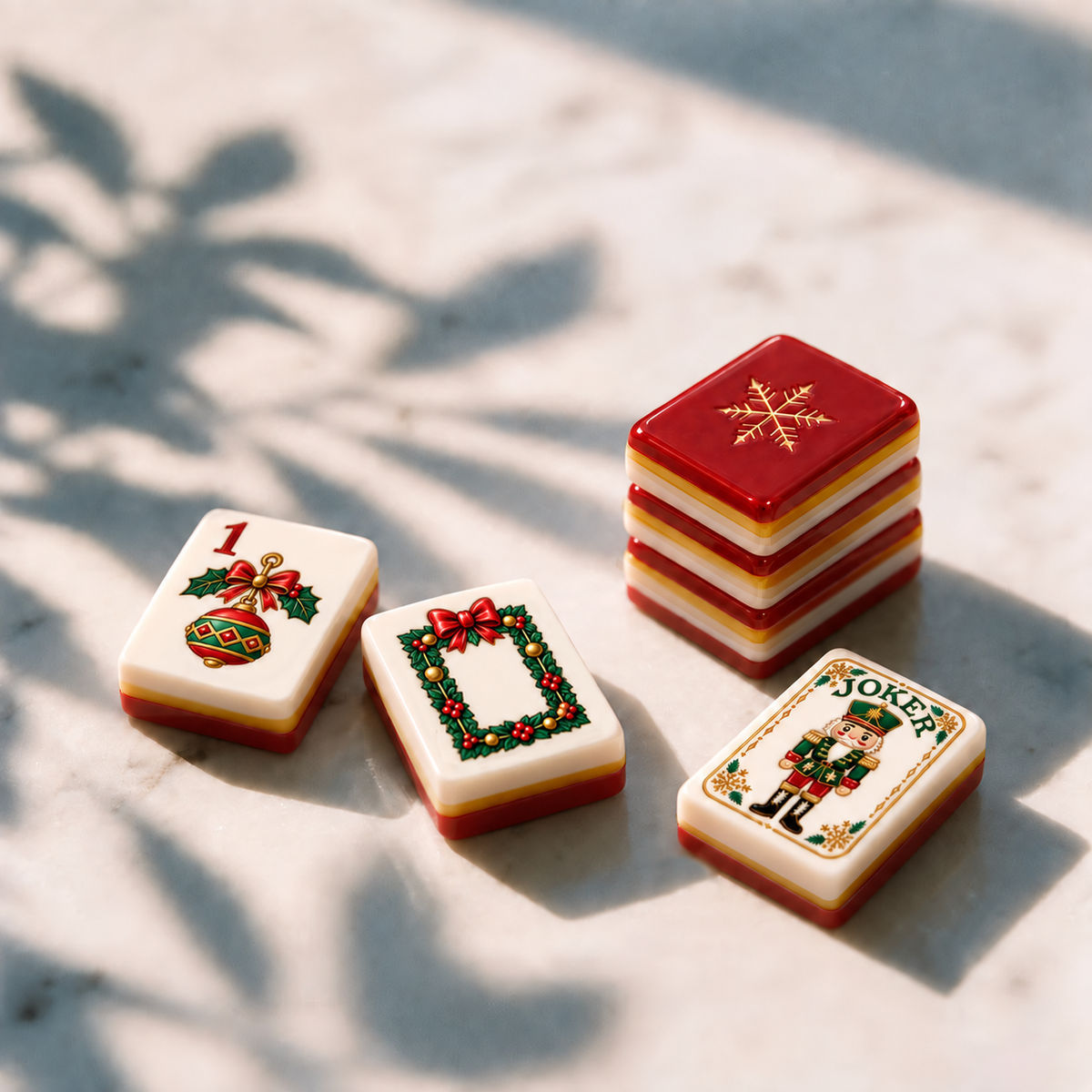
Singapore mahjong typically uses 144 tiles (108 suited tiles in three suits numbered 1–9, plus 28 honor tiles—16 winds and 12 dragons) and permits chows (sequences like 1-2-3) in addition to pungs and kongs. International competition mahjong, particularly American mahjong played under National Mah Jongg League rules, uses 152 tiles and forbids chows entirely; hands must match patterns from the current year's official card, and the game includes a formal tile-passing ritual called the Charleston. Singapore's scoring is point-based per hand; American competition scoring multiplies value by rarity. Both demand precision, but Singapore rewards tactical flexibility while American mahjong rewards pattern recognition. Your choice depends on whether your group prefers fluid sequences or strict hand-matching structure.
What exactly is Singapore mahjong?
Singapore mahjong is a Cantonese-rooted variant played across Southeast Asia, using 144 tiles and emphasizing fast, flexible play. Chows (runs like 1 Bam–2 Bam–3 Bam) are allowed and can be called or exposed. Pungs (triplets), kongs (fours), and melds form hands faster than American rules allow. A player can win with any combination meeting basic criteria, without consulting a rigid hand list. Scoring depends on the specific hand type—simpler hands score fewer points, complex ones more. Games play quicker and feel more improvisational than their American counterparts.

How does American competition mahjong differ?
American mahjong under National Mah Jongg League rules uses 152 tiles and 8 jokers. Chows are banned—the only legal melds are pungs (three identical tiles), kongs (four identical), and quints or sextets in higher-tile formats. Every hand must match one of hundreds of patterns printed on the official card, renewed each spring. The Charleston—a three-round tile exchange before the game begins—is mandatory. Jokers are wildcards but cannot fill a pair or stand alone. This rigid structure makes American mahjong feel more like a game of recognition and strategy than improvisation.
Why do rule systems matter for your weekly game?
Rule choice determines pace, learning curve, and who feels welcome. Singapore mahjong rewards pattern intuition and quick thinking; new players can join mid-conversation and catch on within a few rounds. American mahjong demands upfront study of the card and Charleston protocol, but once learned, every game follows identical logic—no house rules to argue. If your group plays for social fun and speed, Singapore works. If your group values consistency, scoring rigor, and long-term skill progression, American competition rules fit better. Many groups host both variants on alternate weeks—Singapore on casual nights, American on tournament preparation days.
What equipment do you need for each variant?
Aspect | Singapore Mahjong | American Competition |
Tile count | 144 tiles | 152 tiles + 8 jokers |
Tile sources | Asian import retailers, some boutiques | Specialty acrylic sets, club distributors |
Mat type | Any bamboo or neoprene mat works | Felt or neoprene mat with cord markings preferred |
Racks needed? | Optional; hand play acceptable | Recommended for tile storage and visibility |
Pushers | Rarely used | Standard for speed and accuracy |
Card reference | None (memory-based) | Current year's official League card (essential) |
For American play, you'll want engraved acrylic mahjong sets for durability and clarity, a felt mat with wind indicators, and racks with pushers to keep tiles organized and prevent fumbles. Singapore players benefit from quieter neoprene surfaces and smaller hand racks. Both variants benefit from travel-ready bags if you're rotating games between homes.
🀄 Shop best-selling mahjong sets →

How do scoring and hand values differ?
Singapore mahjong scoring is additive and hand-specific: a simple pung scores 1 point; a concealed kong scores 8; a winning hand adds bonuses for purity (all one suit), dragons, or self-drawn tiles. Final scores are tallied at the end of each round. American competition scoring multiplies hand value by frequency rarity—a common hand (appearing often on the official card) scores fewer points; a rare hand scores exponentially more. This means winning with an unusual hand is financially rewarded, pushing players toward creative tile combinations. Singapore rewards consistency; American mahjong rewards surprise. Both systems require scoresheets and careful arithmetic to avoid disputes.
Which variant is easier for beginners?
Singapore mahjong has a gentler learning curve for players new to tile games. The allowed chows feel intuitive—1, 2, 3 runs like dominoes. Hands form naturally from collected tiles. Beginners can join a casual game and ask for help between turns. American mahjong demands studying the hand card beforehand—dozens of patterns, many unfamiliar at first glance. The Charleston adds ritual overhead. However, once the patterns click, American play becomes more predictable because the card is the single source of truth. If you're teaching someone today, start with Singapore rules. If you're building a long-term skill group, invest time in American how-to-play guides.
🎁 See our most-loved mahjong sets & accessories →
How do you switch from one variant to the other?
Start by clarifying terminology—what your Singapore group calls a "hand" differs from American "hand." In Singapore, a completed winning combination is a hand. In American play, a hand is your entire tile collection mid-game; you win by declaring Mahjong when your tiles match a card pattern. Next, review the tile count: swap a 144-tile set for a 152-tile set if moving to American play. Practice the Charleston with a smaller group before hosting mixed tables. Study the current year's official card thoroughly—reading patterns is a skill in itself. Many players keep both rule cards on the table and ask, "Which variant are we playing today?" before the game starts. This honesty prevents confusion and keeps friendships intact. If your group needs quality, durable sets for both styles, acrylic tiles withstand frequent play and rule transitions better than wood or bone.
What to check before you buy
Tile count: Confirm whether you're hosting Singapore (144) or American competition (152 + 8 jokers) games before ordering.
Joker presence: Singapore sets rarely include jokers; American sets include eight. Do not assume they're interchangeable.
Card availability: American players must obtain the current year's National Mah Jongg League card separately—it is not included with tiles.
Surface material: Acrylic tiles suit both variants; bamboo and bone are traditional but less durable for frequent switching between rules.
Storage and transport: If you host multiple games weekly, bags and cases protect your investment and simplify setup.
Mat markings: American play often uses mats with wind and season indicators; Singapore play does not require these.
✨ Find your Mahstead set — free US shipping →

FAQ
Can I use the same tiles for both Singapore and American mahjong?
No. Singapore uses 144 tiles; American uses 152 plus 8 jokers. A 144-tile set cannot support American competition play, and American sets include jokers that Singapore rules do not recognize.
Which variant is faster to play?
Singapore mahjong typically plays faster because chows form fluidly and hand patterns are intuitive; no card consultation needed. American competition can feel slower for beginners due to card-checking, but speeds up once pattern recognition becomes automatic.
Do I need the official card to play American mahjong?
Yes. The current year's National Mah Jongg League card is the rule book for legal hands. Playing without it invites disputes and invalidates results. The card is issued each spring and is essential for any competitive or serious American game.
Can beginners join a Singapore game easily?
Yes. The chow concept is intuitive, and experienced players can coach between turns without disrupting flow. American mahjong requires upfront study, so beginners typically need a training session or written guide first.
What's the cost difference between setting up for each variant?
Comparable entry-level sets cost similarly, but American play demands additional purchases: the official card, a felt mat with wind indicators, and often racks with pushers for speed. Singapore games can launch with just tiles, a simple mat, and willingness to hold tiles in hand.
Is Singapore mahjong played in tournament formats?
Singapore has informal leagues and club competitions, but no single internationally standardized body like the National Mah Jongg League. American mahjong tournaments operate under strict League rules, making results comparable across venues.
Which variant do casinos and tournaments use?
American mahjong tournaments use National Mah Jongg League rules exclusively. Singapore and Hong Kong variants dominate social and family play across Asia; formal tournament structures are less standardized regionally.


View More
View More
View More
