
Mahjong Lessons in Nashville: Where to Learn & What to Expect
Last updated: Nov 23, 2026
Nashville mahjong instruction is available through community centers, libraries, and private teachers—most offer beginner classes in American mahjong. Search community center websites and library bulletin boards, check Meetup for weekly game groups (which sometimes include teaching sessions), and ask at local country clubs or synagogues, which often host mahjong nights. Lessons typically run 2–4 hours; beginner courses focus on tile recognition, the Charleston (tile-passing ritual), reading the National Mah Jongg League card, and basic hand-making rules. You'll need a 160-tile American set, a mat, and four racks with pushers. Most instructors provide tiles during lessons; owning your own set from our best-selling collection lets you practice at home and signals you're serious about the game.
Where do Nashville teachers advertise their lessons?
Nashville's mahjong community uses multiple channels. Public libraries often post flyers and hold beginner sessions; call ahead to ask if one is scheduled. Community centers near you may list classes on their websites—search "(your neighborhood) community center mahjong." Meetup.com has Nashville mahjong groups; filtering by "beginner-friendly" or "teaching" shows game nights that welcome newcomers. Social media (Facebook groups for Nashville activities, NextDoor for neighborhoods) occasionally lists instructors. Word-of-mouth matters: ask anyone you know who plays. Country clubs and temple/synagogue game committees sometimes hire teachers for members; check their websites or call the main office.

What exactly does a Nashville mahjong lesson cover?
A typical first lesson teaches tile recognition (suits, dragons, winds, flowers, jokers), basic scoring concepts, and why American mahjong uses only the current year's official card. You'll learn the Charleston—the four-step tile-passing sequence before play starts—and how to "read" the card to identify which hand patterns are legal this year. Most instructors then walk through a complete game: drawing, discarding, calling (pungs, kongs), and ending. Advanced beginner topics include joker rules, how to spot blocking tiles, and common mistakes (like trying to make a sequence, which isn't allowed in American mahjong). Expect hands-on practice: everyone plays at least one full round so you feel the rhythm of the game. A good lesson mixes talk and play, about 60/40.
How long does it take to feel comfortable playing?
Most players feel ready for a casual game after 3–5 two-hour sessions. You won't be fast—your brain will still work through tile names and card patterns—but you'll understand what's happening. Muscle memory (recognizing tiles at a glance, shuffling, moving tiles smoothly) takes about 10–15 games. Truly solid play—making fast decisions and spotting traps—comes after 30+ games over a few months. The National Mah Jongg League card changes every spring, so expect a small refresh then. Once you've played in person, home practice with friends accelerates confidence faster than watching videos. Many players say their first year feels slow, but by month six, they're calling hands and laughing at their own early confusion.
What equipment do you need before your first lesson?
Check with your instructor: some supply tiles and mats; others ask students to bring their own or split the cost of a classroom set. If you're buying for home practice, you'll need an American mahjong set (152 playing tiles plus spares in a 160-tile set), a mat to keep tiles from sliding, four racks with pushers for your hand, and a secure bag or case if you're transporting to lessons. A recent National Mah Jongg League card (updated each spring) is essential—check if your instructor sells one or if you can download it free from the League. Dice and a scorepad are standard but often shared in group play. Many Nashville teachers have spare sets; ask before you buy. If you do invest, engraved American sets add personality and are easy to spot on the table during group games.
🀄 Shop best-selling mahjong sets →

How do you find a teacher who fits your learning style?
Interview before you commit. Ask: Do you teach American or another variant? (Nashville is almost always American.) What's your teaching method—mostly lecture, lots of guided play, or a mix? How many students per class? Are there absolute beginner sessions, or will you be mixed with people who know basics? What's the cancellation policy? Some teachers are detail-oriented rule-explainers; others jump into games and teach on the fly. Neither is wrong—it depends on whether you learn better from structure or immersion. Ask if the teacher provides a League card or expects you to own one. Finally, chat about the social tone: Is the class competitive, relaxed, or a mix? A good fit makes the difference between loving the game and feeling lost. Many instructors offer a trial session at a discount or free; take it.
Lesson type | Best for | Typical format | What to expect |
Group beginner class (community center or library) | First-timers, budget-conscious learners | 6–8 students, 2–3 hours, structured teaching + one full game | Friendly pace, shared materials, questions welcomed |
Private instructor (1-on-1 or small group 2–3) | Learners who need personalized attention or want faster progress | Flexible schedule, tailored to your pace | Higher cost, deeper Q&A, fast-tracked to joining a regular game group |
Meetup game night (beginner-friendly) | People who learn best while playing, want to meet a community | 4 players per table, no lesson, experienced players teach as you go | Social, informal, you'll play multiple rounds, brings confidence quickly |
🎁 See our most-loved mahjong sets & accessories →
What mistakes do beginner Nashville players make—and how do you avoid them?
Confusing tile names. American mahjong uses three suits: Bams (often marked with a stick or bird on the 1 Bam), Craks (marked with lines forming a design), and Dots (circles). Write these out on a card your first week. Flashcards before lesson two speed recognition.
Forgetting the Charleston happens before every game. The Charleston is mandatory—you pass 6 tiles right, 6 left, 6 across, and your partner chooses 1 from your pass. Many newcomers skip this or do it halfway. Ask your instructor to demo twice.
Trying to make sequences. American mahjong has no runs (1-2-3 in one suit). Hands use only pungs (three identical), kongs (four identical), quints, sextets, or pairs. This rule surprises players familiar with Chinese mahjong. Highlight it in your notes.
Misreading the card. The National Mah Jongg League card is dense; it lists legal hand patterns by section. Early on, trace your potential hand on the card with a finger, section by section. Don't guess. Check with the instructor or card before you declare.
Playing too fast to keep up. There's no rush. Slower games are more fun for learners. Tell your group you're new; real players will slow down and wait.
How do you keep learning after your lessons end?
Join a regular game group—most Nashville neighborhoods have weekly plays at libraries, community centers, or homes. Attend every week if you can: repetition beats sporadic play. Play with the same people a few times; you'll learn their habits and spot patterns faster. Keep your League card at the table and use it—no one minds beginners checking hands; it's expected. Watch more experienced players; don't copy blindly, but notice how they read the card and manage their tiles. Many players record a video of one full game on their phone, then review it at home to spot where they got stuck. Finally, when you feel solid (usually by month 3), teach someone else; explaining rules cements what you know.
What to check before you buy your own mahjong set
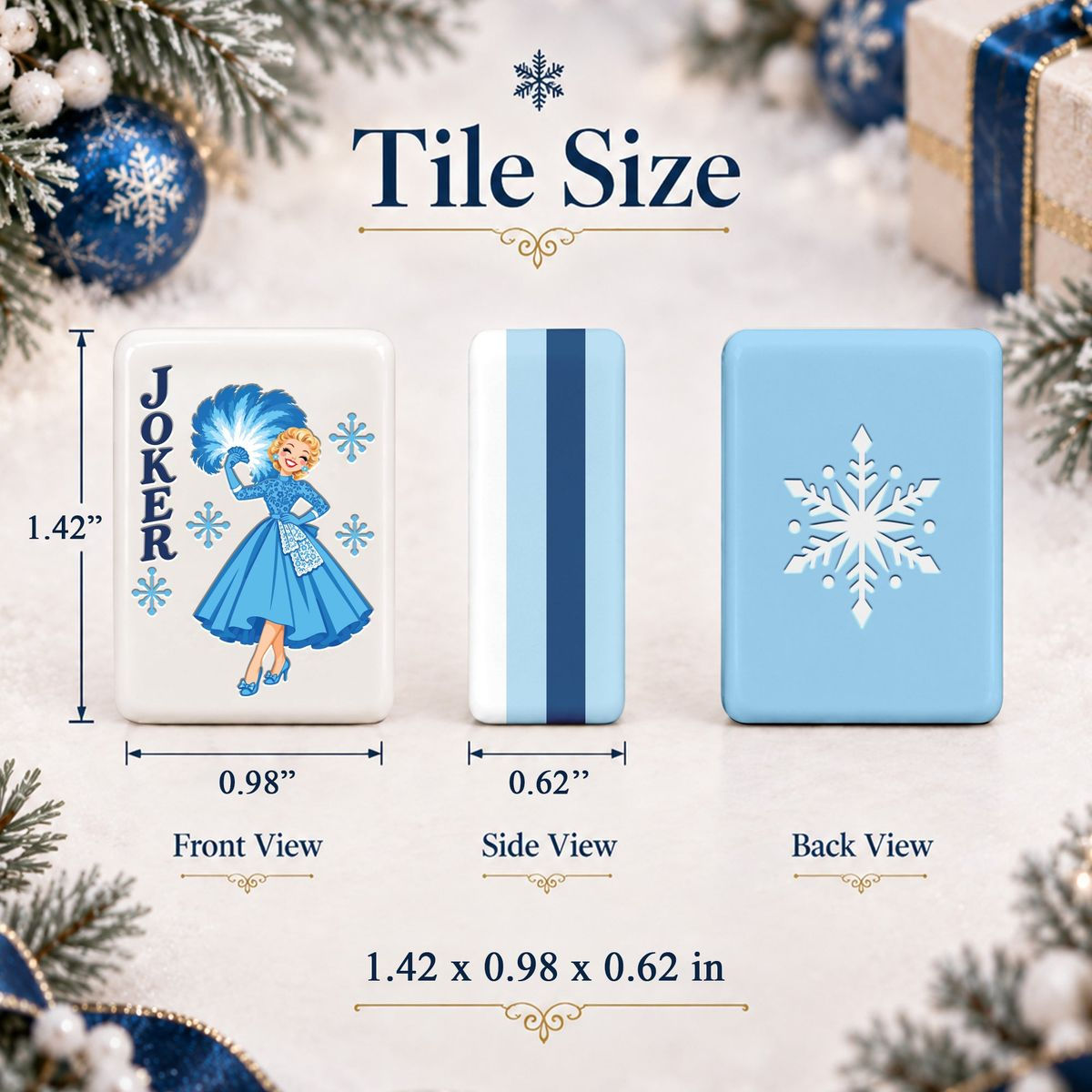
Tile quality and size. American mahjong tiles are usually bamboo or acrylic, about 1 × 0.75 inches. Acrylic is louder but durable; bamboo feels warmer and lasts decades. Make sure tiles are evenly weighted and numbers are clear (not fading after a few months).
Set completeness. You need 152 playing tiles plus spare jokers and blanks. A 160-tile set includes the extras; don't buy a 144-tile variant for American play—you'll be one tile short every game.
Racks and pushers. Cheap racks jam; better ones slide smoothly. Pushers help move tiles without your neighbor seeing your hand. Test them if you can, or read reviews.
Mat and case. A good mat keeps tiles from sliding and protects your table. A case makes transport easy if you travel to games. Both are worth the investment if you're playing weekly.
✨ Find your Mahstead set — free US shipping →

FAQ
Can you learn mahjong online instead of taking Nashville lessons?
Videos teach rules, but nothing replaces playing with real tiles and people. Online learning works best after your first in-person lesson. Many Nashville instructors offer hybrid: a one-time class, then online office hours to answer questions as you practice.
Do I need to know the rules before my first lesson?
No. A good teacher assumes you know nothing and starts from tile names. Showing up curious and on time is enough. Reviewing the three suits (Bam, Crak, Dot) the night before helps you focus on larger concepts.
What's the difference between American and Chinese mahjong? Should I learn American first?
American mahjong uses the official League card, no sequences, and jokers as wild tiles. Chinese mahjong allows sequences and chows, uses hand patterns you memorize, and plays without a card. Learn whichever is popular near you; Nashville is almost all American. Starting with American is fine.
How much does a mahjong lesson cost in Nashville?
Rates vary. Community center or library group classes often range from no fee to modest per-session costs. Private instructors charge more. Check directly with instructors or venues; most offer a trial session first.
Can you play mahjong with fewer than four people?
American mahjong is designed for exactly four. Three-player and two-player variants exist but change rules significantly. Most Nashville games are four-player. Ask your instructor if they teach shorter versions.
After one lesson, will I be ready to join a regular game group?
Probably not on your own—you'll likely make rule mistakes and slow the group. After 3–5 lessons and home practice between sessions, you'll be ready. Mentioning you're a beginner helps groups welcome you and slow their pace.


View More
View More
View More
