
Singapore Mahjong Terms and Glossary: Essential Vocabulary
Last updated: Nov 23, 2026
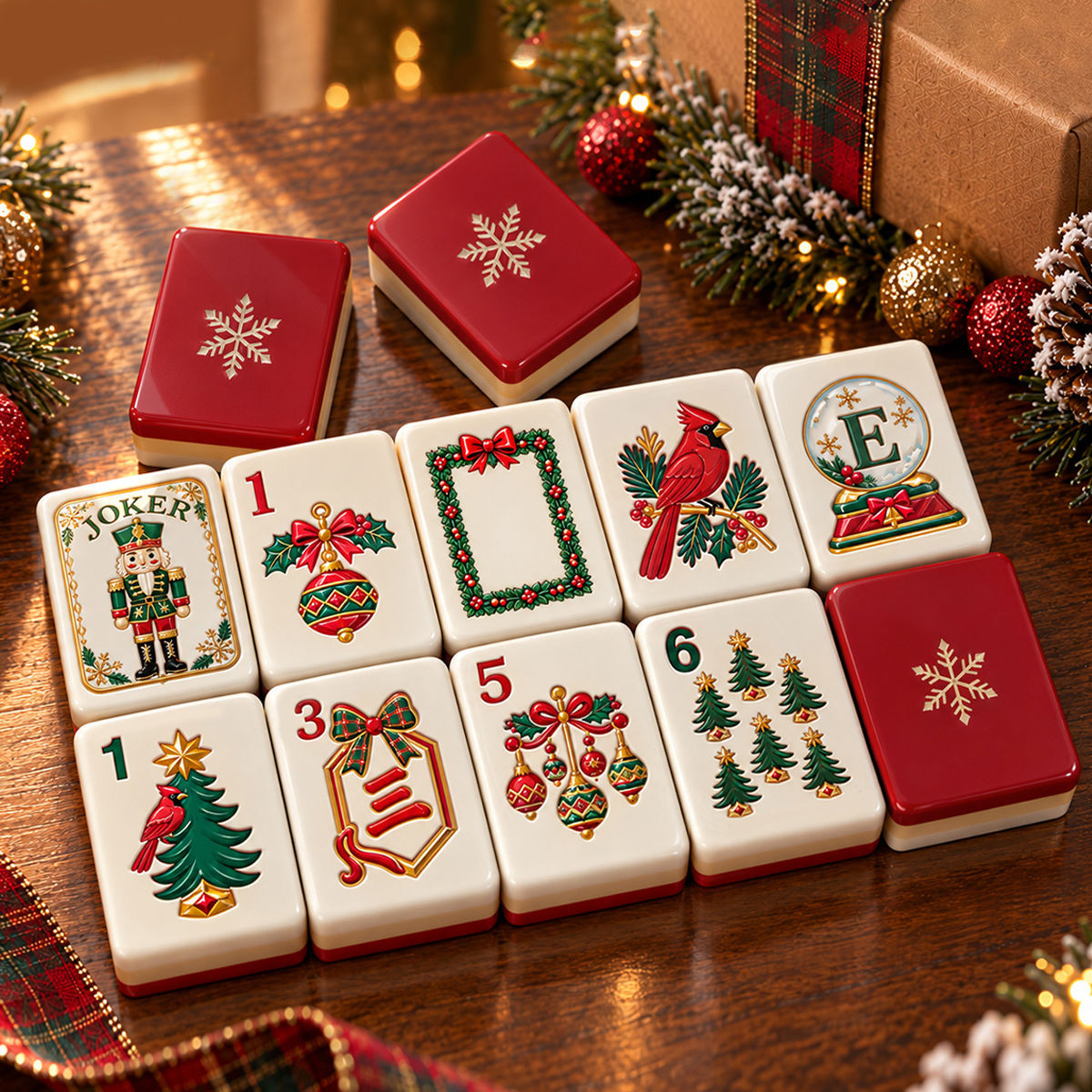
Singapore mahjong terminology draws from Hokkien, Cantonese, and English, creating a glossary quite different from American mahjong. Core terms include gung (empty hand before the draw), pung (three identical tiles), kong (four identical), chow (a sequence like 3-4-5), pair (two identical), and win hand (a complete combination). Scoring terms like double wind (player's wind + round wind) and triple wind (player + round + seat wind) track multipliers. Singapore also recognizes flower and season bonuses, unlike American rules. The standard game uses 144 tiles (one copy each across all ranks and honor tiles), and players call melds directly from the wall or discard pile—a fundamental difference from the American variant's restricted exposure rules. Learning these terms unlocks faster communication at the table and prevents costly misplays.
🀄 Shop best-selling mahjong sets →
What is "Gung" and why does it matter?
Gung means a completely unfinished hand—no melds, no exposed tiles—at any moment before a player draws from the wall. In Singapore play, declaring gung protects you from certain penalties when opponents challenge the legality of your draw. Once you expose any meld (pung, kong, or chow), gung status ends immediately. A player who loses gung status but hasn't won must finish their hand using only discards and concealed wall draws, making each decision riskier.

How do Pung, Kong, and Chow differ?
A pung is three identical tiles (e.g., three Red Dragons). A kong is four identical tiles of the same rank and suit. A chow (or "sequence") is three consecutive numbered tiles in one suit—for example, 5 Bam, 6 Bam, 7 Bam. American mahjong forbids calling chows from the discard pile; Singapore play allows it freely, turning chows into a core strategic tool. Kong carries a bonus draw: after exposing a kong, the player draws one additional tile from the end of the wall, keeping their hand size steady while gaining fresh options. Pung and chow don't trigger bonus draws.
Meld | Tiles | Called? | Bonus draw? | Singapore vs. American |
Pung | 3 identical | Yes | No | American: yes; SG: yes |
Kong | 4 identical | Yes | Yes (1 extra tile) | American: yes; SG: yes + draw |
Chow | 3 consecutive same suit | Yes | No | American: never; SG: always allowed |
What does "Double Wind" or "Triple Wind" mean in scoring?
Double wind occurs when your player wind (the compass point assigned to your seat) matches the round wind (the prevailing wind for the entire round, e.g., East Round). This doubles your base score. Triple wind adds a third match: your player wind + round wind + a tile pair matching that wind (e.g., you hold East Wind as your pair). Triple wind is rare but worth four times the base score. A player who is East (both player and round wind) sitting in the East seat automatically claims double wind on winning hands. Conversely, a player holding none of these winds scores only the base hand value. Wind scoring introduces meta-strategy: tracking who benefits from which wind shifts across the round structure.
How do flowers and seasons factor into winning hands?
Singapore mahjong includes eight flower and season tiles (Plum, Orchid, Bamboo, Chrysanthemum, Spring, Summer, Autumn, Winter). Each flower or season tile a player holds at the moment of win adds bonus points—typically one point per flower initially, though house rules vary. Flowers are not part of the hand meld sequence; they sit aside and are automatically replaced with wall draws when drawn. This contrasts sharply with American mahjong rules, where flowers sit in hand and contribute to specific patterns on the annual card. A player who exposes a kong and draws a flower automatically draws another tile to replace it, maintaining meld integrity and hand size. Tracking your own and opponents' flowers is crucial for hand evaluation and win prediction.
What is "Chop" or "Chop" and how does it change play?
In Singapore parlance, a chop (or limit bet) is a pre-agreed maximum payout per hand, usually set at the start of the session. Players also negotiate a flower rate (bonus points per exposed flower). Chop levels typically range from low (friendly home games) to high (serious club play), and declaring chop aligns all four players' financial stakes upfront. Once chop is set, no hand scores above that cap, no matter how many multipliers stack. This rule prevents a single hand from bankrupting a player and keeps games socially sustainable. Many Singapore clubs require chop declarations before the Charleston (or initial tile distribution) begins. Misunderstanding or ignoring chop is a leading source of table disputes.
🎁 See our most-loved mahjong sets & accessories →

How do "Dead" tiles and "Loose" tiles work?
A dead tile is any tile that has appeared on the discard pile or been exposed in a meld—it cannot be drawn from the wall again. Tracking dead tiles helps predict which melds remain possible. A loose tile is one that has been discarded but not yet claimed by another player; it sits on the discard pile waiting. Once a new discard arrives, the loose tile moves to history and cannot be claimed. In Singapore play, a player may claim a loose tile for a pung, kong, or chow immediately after it's discarded, but only during their turn. Calling out of turn forfeits the claim. Dead and loose tile awareness separates strong players from beginners—estimating the probability of drawing your needed tile requires instant mental accounting of every discard.
What terms describe hand timing and readiness?
A player holding a one-away (or "tingpai") hand needs only one tile type to win—a single draw or discard completes them. A two-away hand needs two different tile types across multiple melds. A wait or ting is the specific tile or tiles that complete your hand. Players announce "waiting for Craks" or "waiting for Winds" to signal their hand stage to the table, though advanced players guard this information strategically. A dead hand (or "fouled hand") contains an illegal meld, unequal tile count, or impossible combination; the player loses immediately. Conversely, a live hand at any moment contains only legal melds and respects all hand-building rules. Rapid assessment of your own and opponents' timing drives betting, discarding, and defensive play.
✨ Find your Mahstead set — free US shipping →
Comparing Singapore Glossary to American Terminology
Concept | Singapore Term | American Equivalent | Key Difference |
Three identical | Pung | Pung | Same |
Sequence (1-2-3) | Chow | (forbidden) | SG allows; AM forbids |
Hand fully ready | Tingpai | Mahj (near win) | SG = call; AM = card-dependent |
Concealed win | Tse mow | Concealed hand | SG bonus higher |
Bonus draw after kong | Kong draw | No equivalent | SG only |
Limit bet | Chop | No formal term | SG explicit; AM: score cap varies |
Flowers/seasons bonus | Flower points | Flower pung (rare) | SG = auto bonus; AM = card pattern |
What to check before you learn Singapore terms at the table
Confirm house rules – Some Singapore clubs add non-standard terms (e.g., "soak" for a player who doesn't win), so clarify before play begins.
Agree on chop and flower rate upfront – Never assume; always state the limit and bonus points per flower explicitly.
Track discards mentally – Keeping dead tiles in mind prevents illegal calls; lag here and you'll slow the game and anger your table-mates.
Learn suit names consistently – Whether your group calls them "Craks, Bams, Dots" or uses Hokkien equivalents, use the same pronunciation every hand.
Ask for clarification mid-game – A moment of confusion now beats a disputed score later; experienced players expect and respect the question.
New to Singapore mahjong? Start with these foundations
If you're switching from American mahjong or learning Singapore for the first time, begin by mastering the core vocabulary in order: pung, kong, chow, pair, gung, wait, chop. These seven terms unlock 80% of table conversation. Practice identifying chows on your tiles—the biggest rule shock for American players is that sequences are legal and common. Then layer in wind scoring and flower bonuses once you're comfortable with basic meld language. For a deeper dive into variant rules and strategy, resources from established Singapore clubs and regional federations provide house-specific glossaries. Finally, attend a few supervised games before playing for stakes; terminology makes no sense in a vacuum.
A high-quality mahjong set with engraved tiles helps new players learn Singapore terms faster—legible markings prevent misreadings and speed up meld identification. If you're hosting regular Singapore games at home, a durable mahjong mat and a set of racks with pushers keep tiles organized and visible, reducing confusion over terminology and hand state. For traveling to clubs or tournaments, a protective mahjong bag or case preserves your equipment and projects confidence.

FAQ
Is "gung" the same as being "closed" or "concealed"?
No. Gung means your hand has zero exposed melds—you hold all tiles in hand. A concealed (or tse mow) win is when you win without ever exposing a meld during play, then reveal your completed hand. Gung is a state during play; concealed is a win condition that awards bonus points.
Can I call a chow from any discard, or only on my turn?
In Singapore play, you may claim a chow from a discard only when it is discarded on your turn immediately before your draw. Out-of-turn calls are invalid. Pung and kong calls are also turn-dependent in most house rules.
What's the penalty for a fouled (dead) hand?
Rules vary by club. Most penalty the fouled player one fixed unit or a percentage of the winning hand's value. Some require immediate discard of the offending tile and play resumption; others end that player's round. Always confirm your table's penalty before play.
How do I count triple wind scoring quickly?
Identify your player wind (your seat). Check if it matches the round wind. If yes, and you hold that wind as your pair in your winning hand, you have triple wind—worth four times base. If only player + round match, it's double wind (two times base). Single wind (one match) = base score only.
Why do Singapore players announce their wait?
Announcing "waiting for Craks" or "waiting on pair" signals your hand is nearly complete, encouraging opponents to play defensively and creating table tension. Strategic players sometimes announce false waits to mislead. Never assume an announcement is honest—track actual discards to verify.
How is flower scoring different between house rules?
Some award one point per flower; others award two or three. Clarify the flower rate before the first hand is dealt. Some groups disallow flower bonuses entirely in friendly play. Confirm this as part of your chop negotiation.


View More
View More
View More
