
Mahjong Competition Rules & Tile Sets: What to Buy
Last updated: Nov 23, 2026
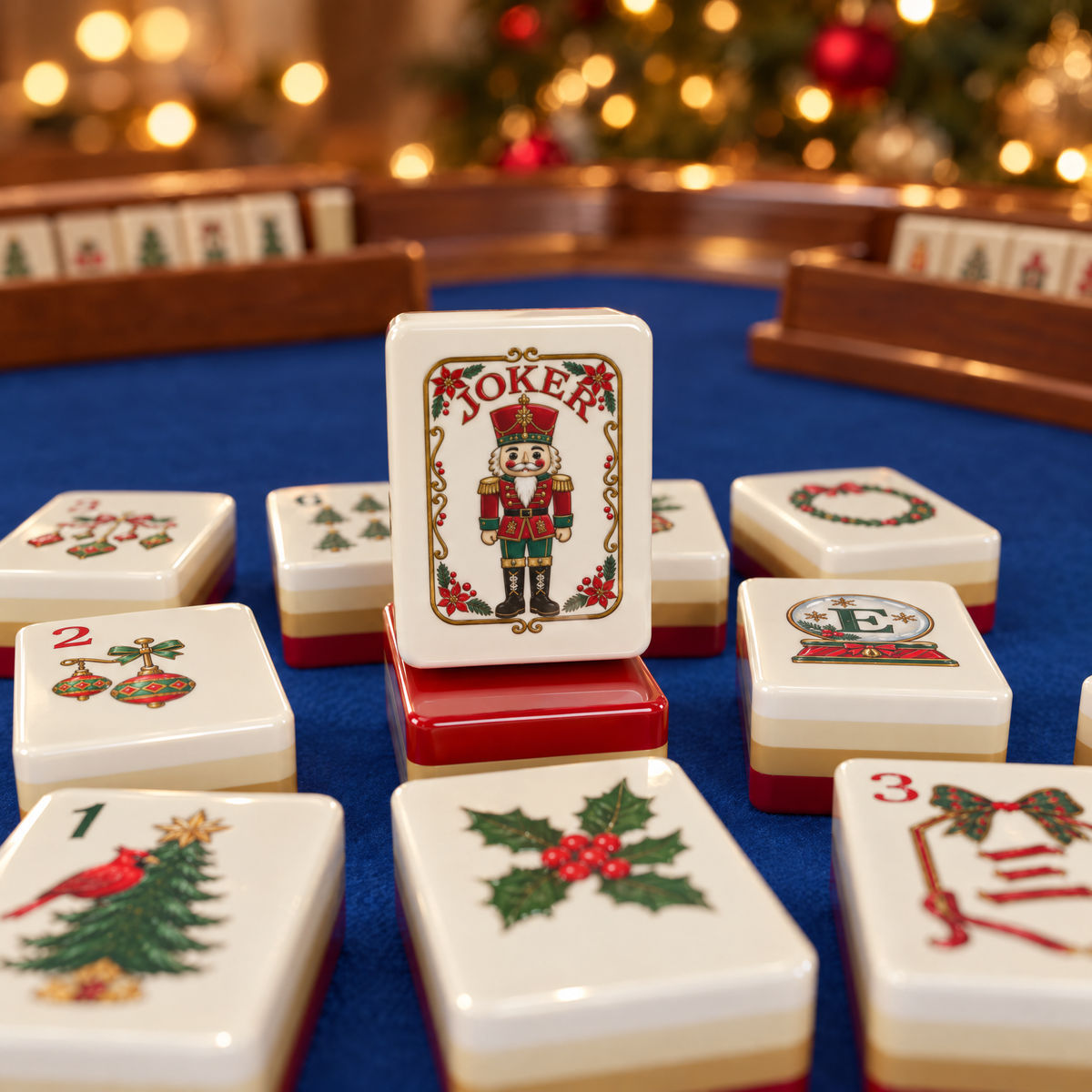
American mahjong competitions follow the National Mah Jongg League (NMJL) rulebook and the official hand card issued each spring. Play uses exactly 152 tiles—108 in three suits (Bams, Craks, Dots numbered 1–9, four of each), 16 winds, 12 dragons, and 8 flowers—plus 8 jokers, totaling 160 tiles in a standard set. Tiles must be acrylic or bone, uniform size (roughly 1¼ inches), and clearly marked. Competition rules prohibit chows (sequences); you expose only pungs (three identical), kongs (four identical), quints (five), and sextets (six). Jokers cannot fill a single tile or pair. The Charleston (tile pass) precedes every game. Hands come solely from the current year's NMJL card. For league play, buy an acrylic competition-grade set from our best-selling collection; casual players can use any complete, legible 160-tile set. Check tile legibility, weight, and case durability before ordering. 🀄 Shop best-selling mahjong sets →
What exactly are the NMJL tile standards?
The National Mah Jongg League certifies American mahjong rules and publishes the annual hand card. Tiles must measure approximately 1¼ by ¾ inch, weigh 5–8 grams, and display clear, readable suit markings (Bam, Crak, Dot) and characters. Acrylic is the standard for competitive play; bone or bamboo sets are allowed but less common in tournaments. All 152 playing tiles plus 8 jokers must be identical in weight and size within ±0.5 mm. The NMJL does not endorse specific manufacturers, but sets sold as competition-grade meet these tolerances and include a current-year hand card or a reference guide.

How do competition rules differ from casual play?
Competition play enforces strict hand validation against the current year's NMJL card and requires players to announce melds and pungs as drawn. Casual games often allow house variants—loose interpretations of the card, use of older cards, or optional use of jokers in pairs. In league play, a hand is valid only if it matches the card exactly; in casual play, house rules may override the card. The Charleston is mandatory in competition; some casual groups skip it. Scoring follows NMJL standards in league play; casual games often use simplified point tallies. If you plan to join a league or tournament, use a current-year set with the official card and a clear rulebook.
Which tile material works best for tournament play?
Acrylic dominates tournament halls because it resists chipping, maintains uniform weight distribution, and doesn't absorb moisture—critical for balanced play on a tile-shuffling mat. Bone and bamboo are heavier, more delicate, and prone to weight drift over time. Acrylic also photographs clearly for online verification if disputes arise. For competition, choose an acrylic set; for casual home play, bone is acceptable if the tiles are well-made and evenly weighted. Check the product description: competition sets specify "acrylic" and include a case. If you host weekly games and want a dependable acrylic set that lasts years, see our lineup.
What gear do you need beyond the tiles?
Competition players use a mahjong mat with a shuffling surface and a rack system with pushers to organize melds and prevent disputes over tile placement. A rack holds your hand, protects against accidental knocks, and lets you push tiles down as you play a meld. A mat provides a level, friction-based surface and defines the discard area. For league play, many tournaments supply the mat but expect players to bring their own tiles and racks. A padded travel bag or case protects your set during transport to tournaments and weekly games. Dice (often included in sets) randomize dealer position.

How do you verify a set meets competition standards before buying?
Before ordering, check: (1) tile count—exactly 152 playable tiles plus 8 jokers (160 total); (2) material—acrylic for tournament use; (3) tile size—product page should state roughly 1¼ × ¾ inch; (4) included accessories—case, current-year hand card or rulebook, and preferably a mat or mat discount; (5) weight tolerance—uniform tiles, confirmed by user reviews or product notes; (6) case condition—competitive sets ship in a protective box with dividers. Mahstead's acrylic sets include clear tile markings, a sturdy case, and free US shipping, so you inspect before committing to a league. Read the product page for tile material, dimensions, and what's inside the box.
🎁 See our most-loved mahjong sets & accessories →
Comparison: Casual vs. Competition Set Requirements
Aspect | Casual Set | Competition Set | Why It Matters |
Tile Material | Bone, bamboo, plastic | Acrylic | Acrylic resists chipping, stays uniform in weight |
Tile Count | 136–152 | Exactly 152 + 8 jokers | Competition requires full set; no shortcuts |
Tile Size Tolerance | Loose (~±1 mm) | Strict (~±0.5 mm) | Uneven tiles trigger re-shuffles or disputes |
Hand Card | Optional, can be old | Current year NMJL card | League plays only hands on current card |
Case | Soft bag, basic | Hard case, dividers | Protects investment; eases transport to tournaments |
Racks & Mat | Not essential | Standard | Tournaments expect proper setup; prevents claims of foul play |
Price Basis | Lower entry cost | Higher due to QA | Durability + compliance save money over time |
What tiles do you actually play with in competition?
A competition set contains 152 tiles used in play: 108 suited tiles (Bams, Craks, Dots 1–9, four copies each), 16 winds (four each of North, East, South, West), 12 dragons (four Red, four Green, four White), and 8 flowers. Plus 8 jokers. That's 160 tiles total in the box. No blanks are played; any spare blanks included are for replacement only. The NMJL rulebook specifies this exact inventory. If a set is missing even one wind or shows weight imbalance, it may be rejected at a tournament table. Verify the tile breakdown on the product page before checkout.
✨ Find your Mahstead set — free US shipping →
How do jokers work in competitive mahjong?
In American mahjong, jokers are wild tiles that substitute for any single tile in a meld or set—but never for a pair or a single tile on its own. If your hand calls for 3 Red Dragons and a 1 Bam, you might play two Red Dragons, one Joker-as-Red Dragon, and one real 1 Bam. Jokers cannot appear as a pair (e.g., two Jokers cannot form the pair you need to win). You have 8 jokers in a full set. Learn the full mechanics of joker placement and strategy to avoid misplays in tournament settings.
What's the role of the Charleston in competition?
The Charleston is the mandatory tile-passing ritual at the start of each game. Before play begins, players pass unwanted tiles in three rounds—first to the right, then to the left, then across the table—exchanging three tiles at a time. This redistributes tiles randomly and adds an element of strategy and luck. The Charleston is identical in casual and competitive play; no variants are permitted in league games. It typically takes 90 seconds and cannot be skipped.
What to Check Before You Buy a Competition Set
Tile material: Confirm "acrylic" on the product page.
Tile count: Verify 152 playable tiles + 8 jokers listed.
Tile dimensions: Look for "approximately 1¼ inch" or similar specification.
Case type: Hard case with dividers or felt-lined box preferred for tournaments.
Included accessories: Current-year hand card, rulebook, or tournament-approved guide.
Shipping & returns: Confirm free US shipping and return policy in case of defects.
Weight uniformity: Check product notes or reviews for comments on balanced feel.
Spare tiles: Identify what extras (jokers, blanks) are included and never play them.
If you're unsure about a specific set, contact the seller with the tile material, case style, and whether it includes a current-year NMJL card before ordering.

FAQ
Can I use a casual mahjong set for league tournament play?
Only if it has exactly 152 acrylic tiles, uniform weight, and a current-year NMJL hand card. Many casual sets lack uniform tile size or material consistency, leading to rejection at the tournament table. Invest in a competition-grade set to avoid disappointment.
What happens if a tile is missing or broken before my first league game?
Contact the seller immediately. Reputable sets come with spare jokers or blank tiles for replacement. If your set is defective, request a full refund or replacement before joining your league's first game to ensure you can play without disputes.
Do I need to buy a mat and rack to play in competition?
Tiles alone are required; mat and rack are strongly recommended but not mandated. Most tournaments expect players to bring their own racks and will provide mats or expect you to use your own. A rack prevents tile spills and illegal peeks; a mat levels play and defines the discard circle.
Is the hand card included in my set, or do I buy it separately?
Most competition-grade sets include the current-year NMJL card or a reference. Verify on the product page. If not, you must buy the card from the NMJL or use a tournament's shared copy. Never play off an old card; rules and hands change yearly.
How often do I need to replace tiles or the case?
Acrylic tiles last 5–10 years with normal play and care. Cases depend on material—hard cases outlast soft bags by years. Handle with care: shuffle gently on a mat (not a bare table), avoid extreme temperature swings, and store in a dry place. Most players replace a set only after heavy tournament use over many seasons.
Can I engrave tiles or add custom markings for league play?
No. NMJL competition requires standard, legible markings. Custom engravings void tournament eligibility. However, casual sets and decorative tiles can be engraved for home play and gifts—see our engraved collection for fun, non-tournament designs.


View More
View More
View More
