
Singapore Mahjong Setup: Rules, Tiles & Table Essentials
Last updated: Nov 23, 2026
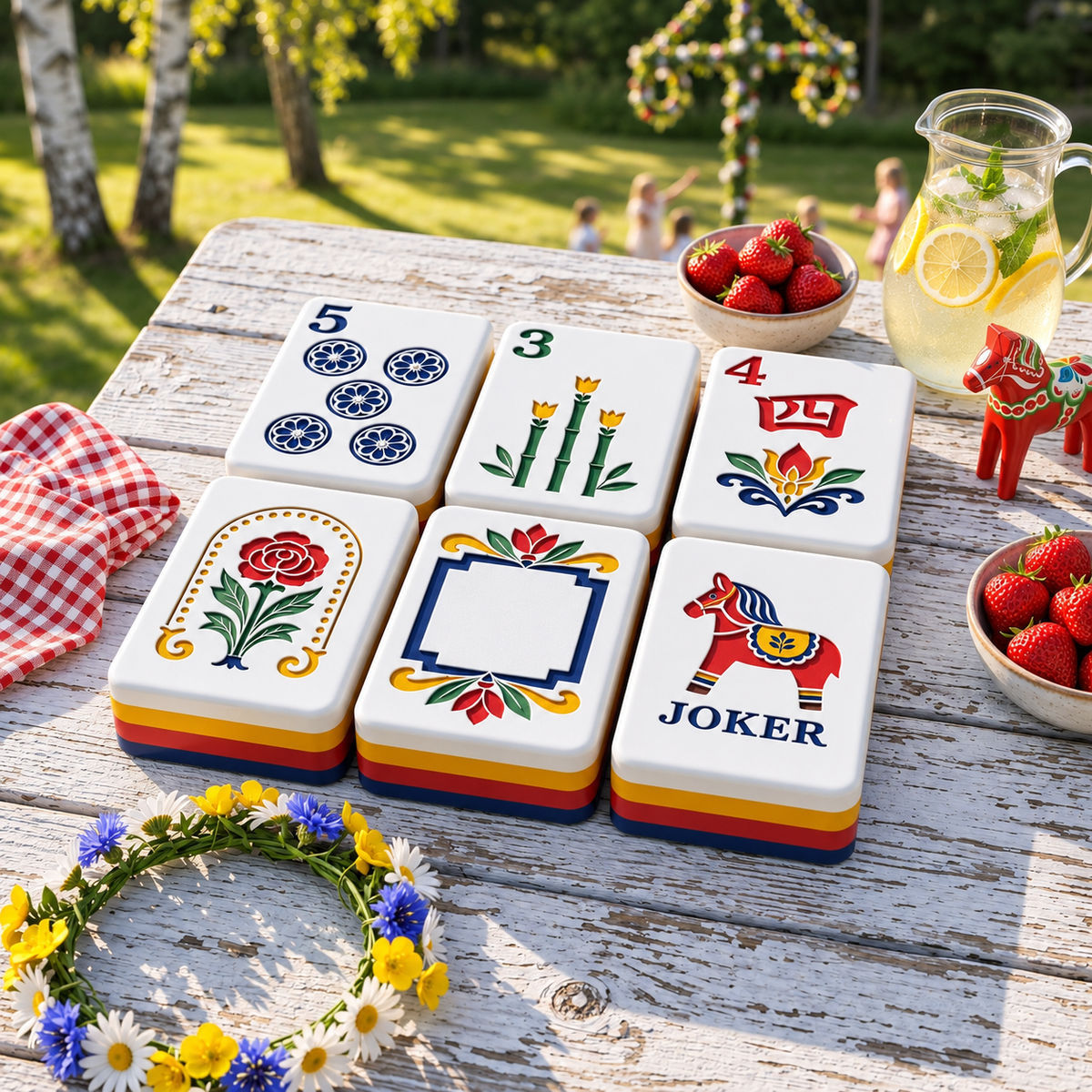
Singapore mahjong is a four-player Chinese variant using 144 tiles—36 each of Bamboos, Characters, Dots, plus 16 Winds and 12 Dragons. Unlike American mahjong (which forbids sequences), Singapore allows chows (1-2-3 runs of the same suit), pungs (three identical), and kongs (four identical). The game draws and discards sequentially; melds are called immediately and exposed. Winning hands combine triplets and chows with pair combinations. Scoring differs dramatically from American mahjong—points depend on tile value, combinations, and special hands, calculated by specific tables rather than preset card combinations. Setup takes 10 minutes; a game typically lasts 1–2 hours. Most players use a turntable (lazy Susan) for easier rotation and tile access, alongside racks to hold hand tiles. You'll need a solid surface, clear lighting, and four comfortable seats.
How does Singapore mahjong differ from American mahjong?
American mahjong uses 152 tiles, forbids sequences (chows), and plays only hands from the current year's National Mah Jongg League card. Singapore mahjong uses 144 tiles, requires chows and triplets, and allows any hand structure meeting game rules—no card needed. American jokers replace tiles; Singapore has no jokers. American play is "concealed" until someone wins; Singapore exposes melds instantly. Scoring in American mahjong follows the card (double, triple, etc.); Singapore uses a point-and-doubling system based on tile combinations, special sets, and "winning conditions" like Self-drawn or All triplets. If you already play American mahjong, Singapore feels almost like a different game—fewer tiles, more pattern flexibility, faster decision-making. Learn how to play American mahjong to see the contrast clearly.

What are the 144 tiles and how do you arrange them?
The 144-tile set breaks down as:
Bamboos (Bams): 1–9, four copies each = 36 tiles
Characters (Craks): 1–9, four copies each = 36 tiles
Dots: 1–9, four copies each = 36 tiles
Winds: East, South, West, North = four copies each = 16 tiles
Dragons: Red, Green, White = four copies each = 12 tiles
No flowers, no jokers, no blanks
All 144 tiles are placed facedown in a long wall, shuffled thoroughly. The east player (whoever draws first, or assigned player one) draws two stacks of two tiles; south draws the next four, then west, then north. This continues until each player holds 13 tiles. One tile remains as the "loose tile" (live draw). Many Singapore players build the wall in a circular arrangement on a turntable for ease; others use a linear push. A mahjong mat with guides can help beginners organize their 13 tiles and discards cleanly without confusion.
What hands win in Singapore mahjong?
A winning hand (also called "going mahjong") contains 14 tiles arranged as:
One pair (two identical tiles), plus
Four melds (triplets or sequences)
A triplet is three identical tiles (called a "pung"). A sequence is three consecutive tiles of the same suit in number (1-2-3 Bamboos, for example; called a "chow"). A four-of-a-kind (all four copies of one tile) is a "kong"; it counts as a triplet for hand structure but scores higher.
Example winning hand:
Pair: 5 Dots, 5 Dots
Pung: 2 Bams, 2 Bams, 2 Bams
Chow: 3 Craks, 4 Craks, 5 Craks
Pung: East Wind, East Wind, East Wind
Chow: 7 Bamboos, 8 Bamboos, 9 Bamboos
Winning is called "mahjong" or "hu" (胡). Special hands—such as All Triplets (no sequences), All Terminals (1s and 9s only), Dragons Only, or Self-drawn—score significantly more points. A seven-pair hand (14 tiles = seven distinct pairs, no melds) also wins and scores modestly.
How do you play a turn and call melds?
Turn order moves clockwise: East draws from the wall, then plays (discards) one tile faceup into the center. South, West, or North may then immediately "call" that discard if it completes a pung, kong, or chow in their hand. The first player to claim it wins; they expose the meld on the table in front of them and discard one of their own tiles. If no one calls, the next player in clockwise order draws from the wall, plays a tile, and turn continues.
Crucially: in Singapore, melds must be called and exposed instantly. You cannot hold a complete triplet or sequence secretly (as you can in American mahjong until you win). If you need a tile and another player discards it, you say "pung" or "chow" and take it; the discarder's turn ends. A kong can be called on a discard (showing all four) or self-drawn (adding a fourth tile from your hand mid-turn).
When you've completed your winning hand, you declare "mahjong" and show all 14 tiles. Payment is then calculated by all three opponents based on points.
How is winning calculated and scored?
Singapore mahjong scoring is points-based, not multi-way like American mahjong. The winner typically collects from all three opponents, or all four split losses equally if a self-drawn win occurs. Points are calculated using a base score (fan) × doubling factor (set) system:
Scoring Element | Fan (Points) | Example |
Simple triplet (any non-honor) | 1 | Three 5 Dots |
Honor triplet (Wind or Dragon) | 2 | Three East Winds |
Kong (any kind) | 2–4 | All four 3 Craks |
Self-drawn win | ×2 | You drew final tile |
All triplets (no chows) | ×2 | Only pungs/kongs |
All terminals/honors | ×2 | Only 1, 9, Winds, Dragons |
Winning on first discard | +1 | East's first tile taken |
Total fan is summed, then multiplied by sets (doublings). A base 8 fan might pay 32 points per opponent if doubled twice. Scores escalate quickly with special hands; beginners often play by simplified tables or house rules before learning the full system.

What setup and equipment do you need at home?
Must-have:
A 144-tile mahjong set (Chinese variant, not American)
Four seats arranged in a square or around a turntable
Clear tabletop or mat, 36" × 36" minimum (turntables are 28"–32" diameter)
Bright lighting overhead or lamps at each position
Nice-to-have:
Turntable to rotate tiles and keep play smooth
Tile racks to hold your 13 tiles upright (prevents accidental reveals, eases hand reading)
A felt or vinyl mahjong mat with clear zones for each player's discard area, melds, and wall section
Travel bag or case if you move between homes
Dice (1 or 3) to determine East player and break wall position
Most home players in Singapore start with a turntable and a simple cloth mat. If you're playing regularly and want to avoid scratches and confusion, a dedicated mahjong mat with marked zones is worth the investment. Many sets we sell include spare tiles; check your box contents before your first game.
🀄 Shop best-selling mahjong sets →
Common setup mistakes to avoid
Mixing American and Chinese tile sets. American sets have 152 tiles (including jokers and flowers); Singapore uses exactly 144 tiles. If you're learning Singapore, buy a standard Chinese 144-tile set, not an American variant.
Not shuffling the wall thoroughly. Clumped tiles or predictable patterns give unfair advantage. Shuffle facedown for at least two minutes before building the wall.
Confusing wind order. Winds are East, South, West, North (moving clockwise in most Singapore games, counterclockwise in some regional rules). Agree on direction before play.
Exposing melds too early. Once you call a discard, you must expose the meld and your hand becomes partially visible. Don't claim a tile unless you're sure.
Forgetting the loose tile. After dealing, one tile remains outside the four draws—that's your live draw, not a dead wall draw. Mark it clearly.
Playing on an uneven surface. Tiles slide unpredictably; tiles fall; disputes arise. Use a flat, firm table or mat.
What to check before you buy a Singapore set
Tile count: Confirm 144 tiles (36 per suit, 16 winds, 12 dragons, no jokers or flowers).
Tile size and weight: Chinese sets vary; standard tiles are roughly 1" × 1.3" × 0.3"—heavier resin or bone/bamboo sets feel better than thin plastic.
Clarity of markings: Characters must be readable at arm's length. Dots should have solid color contrast.
Completeness: Verify no missing tiles by sorting by suit and count before your first game.
Case or bag: If traveling, check durability of storage; loose tiles in a cardboard box get damaged easily.
House rules agreement: Different regions score differently (Cantonese, Fujian, Taiwanese variations). Ask your group's rules before buying—they may affect which set style is preferred.
🎁 See our most-loved mahjong sets & accessories →
Setting up your first Singapore mahjong night
Step-by-step checklist:
Gather four players, a clean table, and one 144-tile set.
Shuffle all tiles facedown for 2–3 minutes.
Arrange tiles into a 34-tile wall × 2 height (one wall per player initially).
Assign East player (highest die roll or agreed player).
East rolls three dice; this determines where to break the wall (clockwise count).
East draws two stacks of two tiles; South, West, North draw two stacks each (eight tiles total drawn).
Another round: East, South, West, North each draw one stack of two (eight more tiles).
East draws one final loose tile (total 14 for East; others have 13).
East discards one tile faceup into the center.
Play proceeds clockwise; call melds instantly; play until someone declares mahjong.
✨ Find your Mahstead set — free US shipping →
If you're hosting regularly and want comfortable, durable equipment, a set with racks and a quality mat is worth the initial outlay. You'll notice the difference after game two.

FAQ
Can I use an American mahjong set to play Singapore mahjong?
No. American sets have 152 tiles (including jokers and flowers); Singapore requires exactly 144 tiles. The tile distribution and face markings also differ slightly. Buy a Chinese variant 144-tile set instead.
How long does a typical Singapore mahjong game take?
One round (4 games, each player as East once) usually takes 45–90 minutes depending on speed and skill. A single game is typically 10–20 minutes once players know the hands and scoring.
Is Singapore mahjong harder than American mahjong?
Different, not necessarily harder. Singapore has more open information (exposed melds), fewer tile combinations to memorize (no card), but trickier scoring calculations. American mahjong has strict hand memory but concealed play. Most players find one easier than the other based on learning style.
What's the difference between a pung and a chow?
A pung is three identical tiles (e.g., three 5 Dots). A chow is three consecutive tiles of the same suit (e.g., 5 Dots, 6 Dots, 7 Dots). Both count as one meld in a winning hand.
Can I play Singapore mahjong with two or three people?
Yes, with rule modifications (fewer tiles per player, adapted melds). Standard play is four; two-player and three-player variants exist but require different scoring and hand structure. Ask your local group or look up house rules for your region.


View More
View More
View More
