
Singapore Mahjong for Beginners: Rules, Tiles & First Game
Last updated: Nov 23, 2026
Singapore mahjong is a Chinese regional variant played with 136 tiles (three suits of 1–9, winds, dragons, and flowers) using simpler hand patterns and faster gameplay than American mahjong. A standard game seats four players, takes 30–45 minutes per round, and uses a fixed set of winning patterns—no annual card needed. Unlike American mahjong, Singapore allows chows (three consecutive numbered tiles of the same suit) and requires only one pair to win. You'll play with 108 basic tiles plus flowers and honors. The game emphasizes speed and pattern recognition over complex hand libraries. Tiles are typically bone and bamboo or acrylic; a full set costs less than American equivalents because it contains fewer tiles. Singapore mahjong suits newer players because hand patterns repeat consistently, and rounds conclude faster, making it ideal for learning without memorizing lengthy reference cards.
What is Singapore mahjong and how is it different from American mahjong?
Singapore mahjong follows Chinese regional rules but uses a streamlined tile set and fixed hand patterns. American mahjong requires the current year's National Mah Jongg League card, forbids chows entirely, and plays with 152 tiles plus jokers; Singapore uses only 136 tiles, permits sequences (chows), and repeats the same winning hands every game. American rounds take 60–90 minutes; Singapore typically finishes in 30–45 minutes. A beginner learns faster in Singapore because hand patterns stay consistent and don't change seasonally.

How many tiles does a Singapore mahjong set contain and what are they?
A Singapore mahjong set contains 136 tiles. The breakdown is: three numbered suits (Bam, Crak, Dot)—each numbered 1 through 9, four copies of each number (108 tiles total); four winds (North, East, South, West)—one of each repeated four times (16 tiles); three dragons (Red, Green, White)—one of each repeated four times (12 tiles); and eight flower/season tiles. No jokers or blank tiles are used in classic Singapore play, which keeps the tile count fixed and prevents the setup complexity of American games.
What are the basic rules for winning a hand in Singapore mahjong?
A winning hand (called "hu" or "win") consists of four melds (groups of three or four tiles) plus one pair. A meld may be a pung (three identical tiles), a kong (four identical tiles), or a chow (three consecutive numbered tiles of the same suit—for example, 4 Bam, 5 Bam, 6 Bam). The pair must be two identical tiles. You win by drawing or claiming a discard that completes your hand. Scoring depends on how many melds contain identical tiles (pungs/kongs count higher than chows). Unlike American mahjong, you cannot win with flowers alone or special pattern combinations; the hand structure is always four melds plus a pair.
Meld Type | Tiles Required | Example | Counts in Score? |
Pung | 3 identical | 3 dots, 3 dots, 3 dots | Yes (higher value) |
Kong | 4 identical | 5 craks × 4 | Yes (highest) |
Chow | 3 consecutive, same suit | 2 Bam, 3 Bam, 4 Bam | Yes (lower value) |
Pair | 2 identical | East wind × 2 | Required to win |
How does the discard and claiming system work in Singapore mahjong?
After the dealer draws a tile on their turn, they discard one unwanted tile face-up to the center of the table. Other players then have the option to claim that discard: if it completes a pung, kong, or chow, you may call "pung," "kong," or "chow" and take the tile immediately (interrupting turn order). If no one claims the discard within a few seconds, play passes to the next player, who draws from the wall and discards. A claimed meld is placed face-up before you; your hand remains hidden until you win. Winning claims take priority: if a discard wins your hand, you claim immediately and play ends. This claiming system means the game flows faster than American mahjong, where all melds must be pre-planned.

What mistakes do beginners make and how can you avoid them?
The most common beginner errors: (1) discarding too early—holding only one useful tile and throwing away tiles that could form chows or pairs, leaving yourself stuck; (2) not reading the discard pile—failing to track which tiles opponents have thrown, so you discard a tile they obviously don't need and it gets claimed for a kong; (3) forgetting the pair requirement—building four melds but forgetting you still need a pair to win, leaving you one tile short; (4) mixing up chow direction—claiming consecutive tiles in the wrong order (e.g., 7-6-5 instead of 5-6-7), which is invalid; (5) holding honor tiles too long—winds and dragons are valuable but don't form chows, so if you don't hit a pung quickly, they clog your hand. Avoid these by: keeping at least one tile that could form a chow in every suit early on, discarding honors you can't pair within two turns, watching the discard pile like a hawk, and keeping your hand mentally organized by suit so you spot chows instantly.
What do you need to start playing Singapore mahjong at home?
What you'll need:
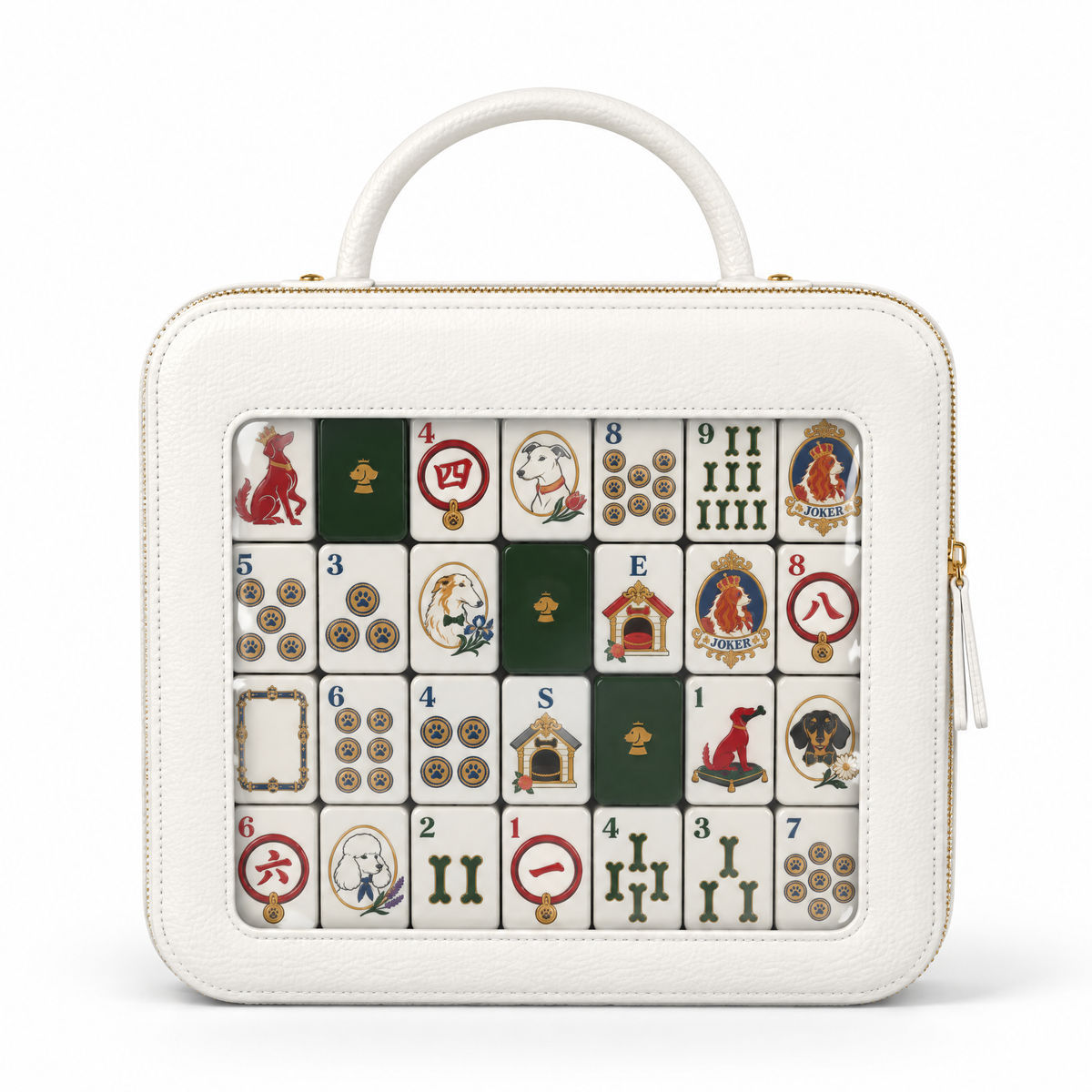
A full tile set (136 tiles), a flat playing surface with enough room for all four players, and a discard area in the center of the table. Most players use a mat that displays the layout and protects the tiles. If you play regularly, consider acrylic sets because they're durable and loud enough to hear shuffles clearly—important for keeping the fast pace. A travel bag makes it easy to transport your set to a friend's house. For hosting weekly games, many of us also keep racks with pushers on hand so players organize their melds without fumbling; racks aren't strictly required for Singapore play, but they speed up the claiming phase.
Our best-selling mahjong sets include both American and Chinese-format options; many work beautifully for Singapore play once you understand which tile count matches the game you want to learn.
🀄 Shop best-selling mahjong sets →
How do you set up and start a game?
Setup steps:
Shuffle all 136 tiles face-down on the playing surface and arrange them in a long wall, typically four tiles high.
Decide who deals first—traditionally the East player, often by rolling dice or mutual agreement.
Dealer draws 14 tiles, other players draw 13 tiles each in turn (right to left). Stack tiles in front of you, face-down or in a rack.
Dealer discards one tile face-up in the center and play begins.
Going forward: each player draws one tile from the wall, checks their hand for a winning combination, and discards one tile (unless they win).
A full 13-round game typically runs 30–45 minutes if you don't pause to discuss calls or scoring. Once everyone is comfortable with claiming and discards, rounds move briskly.
🎁 See our most-loved mahjong sets & accessories →
What should you check before you buy a Singapore mahjong set?
Honest buying checklist:
Tile count: Confirm it's 136 tiles (not 144 or 152). Some sets sold internationally include extra tiles; verify the base count is Singapore-standard.
Tile material: Acrylic sets are loud, durable, and easy to shuffle; bone-and-bamboo sets are heavier and feel traditional but need more care.
Suit markings: Check that Bams (bamboo sticks), Craks (Chinese coins), and Dots (circles) are clearly printed or embossed—hard to read = slower gameplay.
Completeness: Open the box and verify all 136 tiles are present; count each suit (should be 36 tiles per suit) and honors separately. Shipping damage or missing pieces are rare but worth confirming.
Size and weight: If you plan to carry your set, a lighter acrylic or plastic set travels better than bone-and-bamboo.
Storage: Does your set come with a drawstring bag or box? For weekly hosting, a sturdy bag protects tiles and makes transport seamless.
✨ Find your Mahstead set — free US shipping →

FAQ
Can I play Singapore mahjong with an American mahjong set?
No. American sets contain 152 tiles and jokers, include flowers and blanks, and are designed for hand patterns from the annual League card. Singapore requires exactly 136 tiles with no jokers. The two games are mechanically incompatible.
How long does a game of Singapore mahjong take?
One round typically takes 30–45 minutes. A full match (four East rounds) takes 2–3 hours, including breaks and scoring. American mahjong rounds often run 60–90 minutes because hand patterns are more complex.
Is Singapore mahjong easier to learn than American mahjong?
Yes. Singapore uses consistent hand patterns that repeat every game (no annual card), permits chows (sequences) which are intuitive to spot, and rounds finish faster. American mahjong requires memorizing the League card and forbids chows, making it steeper for absolute beginners.
What's the difference between Singapore and Hong Kong mahjong?
Singapore and Hong Kong are both Chinese variants but differ slightly in scoring and the hands permitted. Hong Kong allows more complex melds and special hands; Singapore keeps a simpler fixed list. Both allow chows, both use 136 tiles, and both play much faster than American mahjong.
Do I need a mat or rack to play Singapore mahjong?
No. A flat table is enough. A mat protects tiles and defines the layout clearly; a rack organizes your hand but isn't required. For weekly games at home, many of us use both for comfort and speed, but they're optional for learning.
Where can I buy a Singapore mahjong set?
Online retailers, specialty game stores, and some Asian markets carry Chinese mahjong sets. When ordering, verify the tile count is 136, not 144 or 152, and confirm the set includes no American jokers or blanks.


View More
View More
View More
