
Sichuan Mahjong vs. Wright-Patterson Mahjong: Which Rules to Learn?
Last updated: Nov 23, 2026
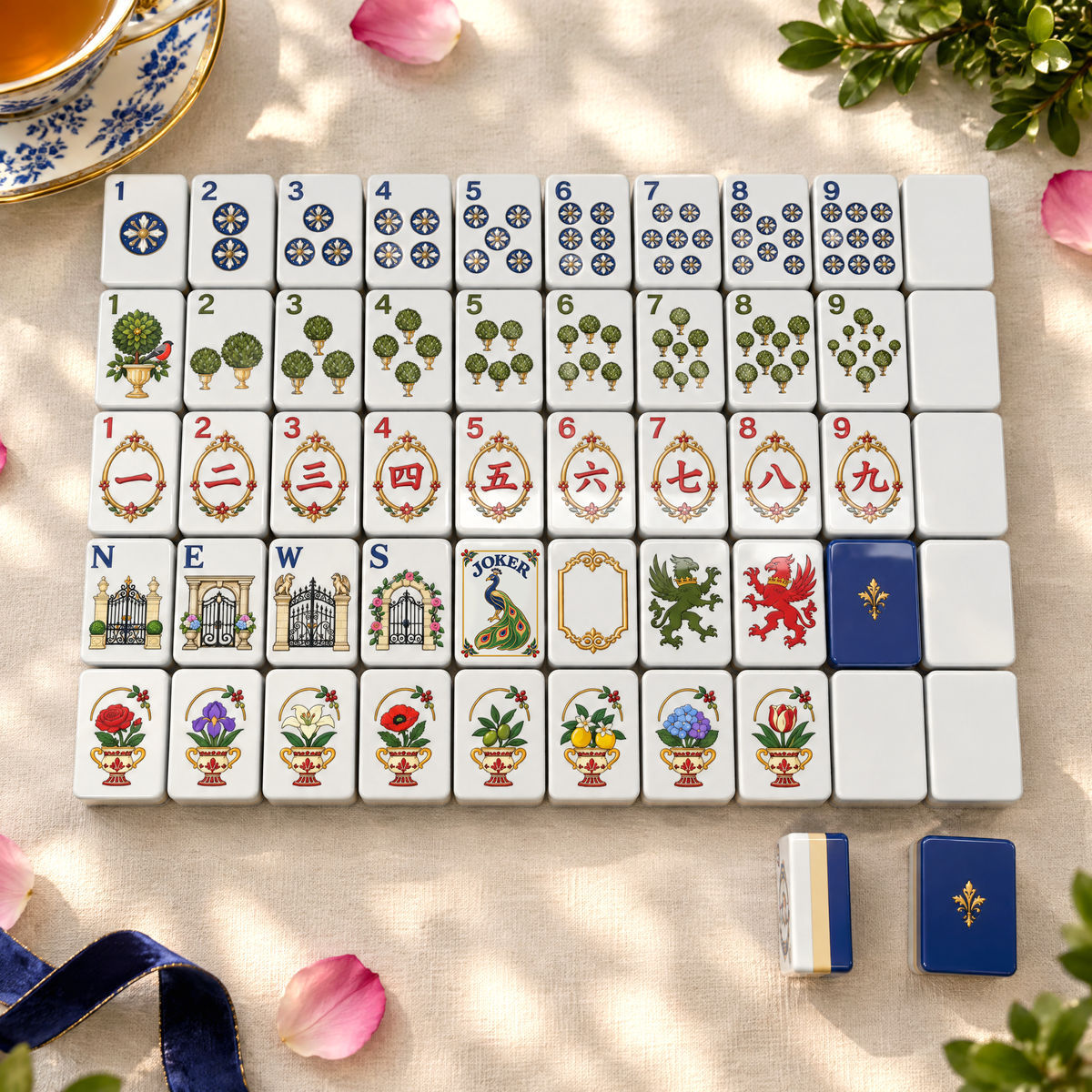
Sichuan mahjong uses 108 tiles (one suit of 1–9, winds, dragons, flowers) with sequences (chows), exposable sets, and tile-picking rules that reward speed and attention. Wright-Patterson mahjong is a mid-20th-century American hybrid, invented near the Ohio air base, that blends Hong Kong hand patterns with simplified American rules—it uses 152 tiles, no exposures mid-hand, and follows a single annual card like American mahjong. Sichuan games typically last 15–30 minutes; Wright-Patterson games run 30–45 minutes. Neither uses jokers or the Charleston. American mahjong (also 152 tiles but with eight jokers and the Charleston) remains the standard in the U.S.; Sichuan and Wright-Patterson are niche variants played in specific regions or among enthusiasts returning to family traditions. Choose Sichuan if you want fast, strategy-light play; Wright-Patterson if you seek American rules with a historical twist; American mahjong if you want the most widely available instruction, social groups, and best-selling mahjong sets designed to support it.
What Is Sichuan Mahjong, and How Does It Play?
Sichuan mahjong is a single-suit, fast-paced variant played in southwestern China with 108 tiles: one suit of 1–9 (each appearing four times), winds, dragons, and flowers. Hands are built from sequences (three consecutive tiles, called chows) and sets of three or four identical tiles. Players pick and discard tiles in turn; winning requires a hand with all sequences and sets, plus one pair—essentially the foundation of most Chinese games worldwide. Games move quickly because the smaller tile set means fewer combinations to memorize.
The defining feature: players call and expose completed sets during play, not just at the end. This creates tactical depth—opponents watch your exposed melds to deduce your strategy. Jokers do not exist in Sichuan mahjong; flowers are terminal tiles that trigger bonus scoring. The game values pattern recognition and quick mental math over written card reference. Most Sichuan games finish in under 20 minutes, making it popular for casual, high-volume social play.
American players often find Sichuan mahjong overwhelming because there are no jokers to hide mistakes, no annual card to anchor hand patterns, and no standardized rule codex—regional variations are common. If you learn Sichuan, you're committing to house rules and oral tradition.

How Does Wright-Patterson Mahjong Differ?
Wright-Patterson mahjong emerged in the 1940s–1950s among American servicemen stationed near Wright-Patterson Air Force Base in Ohio. It is a hybrid: it uses 152 American mahjong tiles (three suits, winds, dragons, flowers, and blanks—no jokers), but it does not require the Charleston, and hands come from a simplified pattern card rather than the full National Mah Jongg League card.
The core difference: Wright-Patterson is slower and more methodical than Sichuan mahjong. Players build hands entirely in their rack before declaring a win—no mid-game exposures. This mirrors American mahjong's closed-hand play. However, Wright-Patterson allows sequences (chows), whereas American mahjong forbids them entirely. In American mahjong, you can only expose pungs (three identical tiles), kongs (four), quints (five), and sextets (six); in Wright-Patterson, you can also expose chows, making it more visually dynamic.
Wright-Patterson is rarely played outside a handful of American clubs and family groups, particularly in the Midwest and among descendants of servicemen. It lacks the deep community infrastructure that American mahjong enjoys. If you learn Wright-Patterson, you're mostly playing with a narrow, aging group—not a weakness if that group is your family, but a practical limitation for finding new partners.
American Mahjong: Why the Standard Diverged
American mahjong crystallized in the 1920s–1960s and has remained codified since 1961 by the National Mah Jongg League. It uses 152 tiles (including eight jokers), requires the Charleston (a tile-passing ritual), and hands come from the annual card—a single source of truth issued every spring. American mahjong forbids sequences entirely; hands are built from identical-tile sets only (pungs, kongs, quints, sextets). Jokers act as wildcards and appear in almost every hand.
Why? American mahjong was designed for women in 1920s New York and Shanghai-immigrant communities who wanted a game that was socializing-friendly, rule-transparent, and playable with family members of varying skill levels. Jokers and the annual card remove memorization and teach newcomers quickly. Forbidding sequences makes hands visually clear—no "hidden" chow inside an exposed meld that only experts recognize.
Today, American mahjong dominates the U.S. because it has a national league, printed cards, standardized scoring, and clubs in most major cities. Sichuan and Wright-Patterson games rely on informal networks, word-of-mouth coaching, and house rule variation. For beginners, American mahjong is far easier to enter.
🀄 Shop best-selling mahjong sets →
Comparison: Tile Count, Play Speed, and Learning Curve
Factor | Sichuan | Wright-Patterson | American |
Tile count | 108 (one suit) | 152 (three suits) | 152 + 8 jokers |
Sequences allowed? | Yes (chows) | Yes (chows) | No |
Exposures allowed? | Yes, mid-game | Yes, but rare | Yes (specific sets only) |
Hand reference | House rules / memory | Simplified card | Annual league card |
Avg. game time | 15–30 min | 30–45 min | 30–45 min |
Learning curve (hours) | 10–20 | 15–30 | 10–15 |
Community size (U.S.) | Very small | Tiny | Large |
Jokers? | No | No | Yes, 8 |
Charleston? | No | No | Yes |
Sichuan is the fastest but demands the most memory work. Wright-Patterson sits in the middle—faster than American but with steeper learning than American's joker-assisted hand-building. American mahjong is easiest to learn because jokers plug gaps in new players' hands, and the annual card does the cognitive work.

How to Choose: A Decision Framework
Choose Sichuan mahjong if:
You crave speed and minimal downtime between hands.
You enjoy memorizing patterns and regional rule variations.
You play primarily with family or colleagues from China or Taiwan.
You have 10+ hours to invest in learning before playing competitively.
Choose Wright-Patterson mahjong if:
You have family or military ties to the Midwest tradition.
You want American tile familiarity with hybrid chow-and-pung play.
You already know American mahjong and seek a variation that feels closer to home.
You're comfortable playing with a small, stable group rather than public clubs.
Choose American mahjong if:
You're starting from scratch and want the easiest on-ramp.
You want access to clubs, leagues, and national tournaments.
You prefer written rules and printed hand cards.
You value jokers for learning flexibility.
Most of us at Mahstead host American mahjong weekly because the infrastructure supports it, new friends can join easily, and the annual card gives us a shared rulebook across states. If your circle is already Sichuan or Wright-Patterson, stay loyal—these games reward consistency and house culture.
🎁 See our most-loved mahjong sets & accessories →
What to Check Before You Buy a Set
If you're buying a mahjong set today, clarify your variant choice first:
American mahjong only: You need 152 playing tiles plus jokers. Our engraved American mahjong sets are built for the American game's tile count and come with acrylic tiles that last through hundreds of games.
Sichuan or Wright-Patterson: Standard American sets won't work directly (wrong tile count or missing tiles). You'll need to source sets from Chinese suppliers or regional clubs. American acrylic sets are overkill for these variants unless you're a collector.
Social play vs. competitive: If you host weekly games, invest in a quality mahjong mat and racks with pushers—these extend tile life and speed up play regardless of variant. A mat also protects your table and holds the annual card visibly.
Travel or storage: If you move between games or groups, a durable travel bag or case keeps tiles organized and protects against humidity swings that warp wood or jade tiles over years.
✨ Find your Mahstead set — free US shipping →
Your Next Step
If you're drawn to American mahjong's accessibility and community, start by learning how to play American mahjong and finding a local club (check community centers, libraries, synagogues, or online Meetup boards in your area). Ask members what set and mat they use; most American players are generous with recommendations.
If Sichuan or Wright-Patterson calls to you—perhaps through family heritage or a friend's invitation—commit to learning house rules clearly, watch games before joining, and accept that your skill-building will be steeper and slower. These variants reward immersion in a tight community, not casual club play.

FAQ
Can I use an American mahjong set to learn Sichuan mahjong?
No. Sichuan mahjong uses 108 tiles (one suit only); American sets have 152 tiles across three suits. You'd have 44 unwanted tiles and no way to play correctly. You need a dedicated Sichuan set from a Chinese supplier.
Is Wright-Patterson mahjong still played, or is it extinct?
It's still played, but in tiny pockets—mainly Ohio and among families with military heritage. You won't find Wright-Patterson clubs or a national league. If you don't have family or military connection, American mahjong is far more accessible.
Do any of these variants use jokers?
Only American mahjong uses jokers—eight of them. Sichuan and Wright-Patterson both play without jokers, which makes errors more costly and memory more demanding.
How long does it take to get good at each variant?
Sichuan: 20–40 hours for casual play, months for competition. Wright-Patterson: 15–30 hours if you know American mahjong already. American: 10–15 hours for casual play because jokers hide beginner mistakes.
Where can I find people to play Sichuan or Wright-Patterson mahjong?
Sichuan mahjong: Chinese community centers, immigration societies, and online forums. Wright-Patterson: ask relatives, check military family networks, or contact Midwest senior centers. Both require you to ask directly; there's no central registry.
Can I switch between variants, or should I pick one?
You can learn multiple variants—many experienced players do—but it's slower. Each has different hand patterns and tile logic. Most players specialize in one for social play and dabble in others for intellectual curiosity or travel.


View More
View More
View More
