
Sichuan Mahjong vs Malaysian Mahjong: Rules & Key Differences
Last updated: Nov 23, 2026
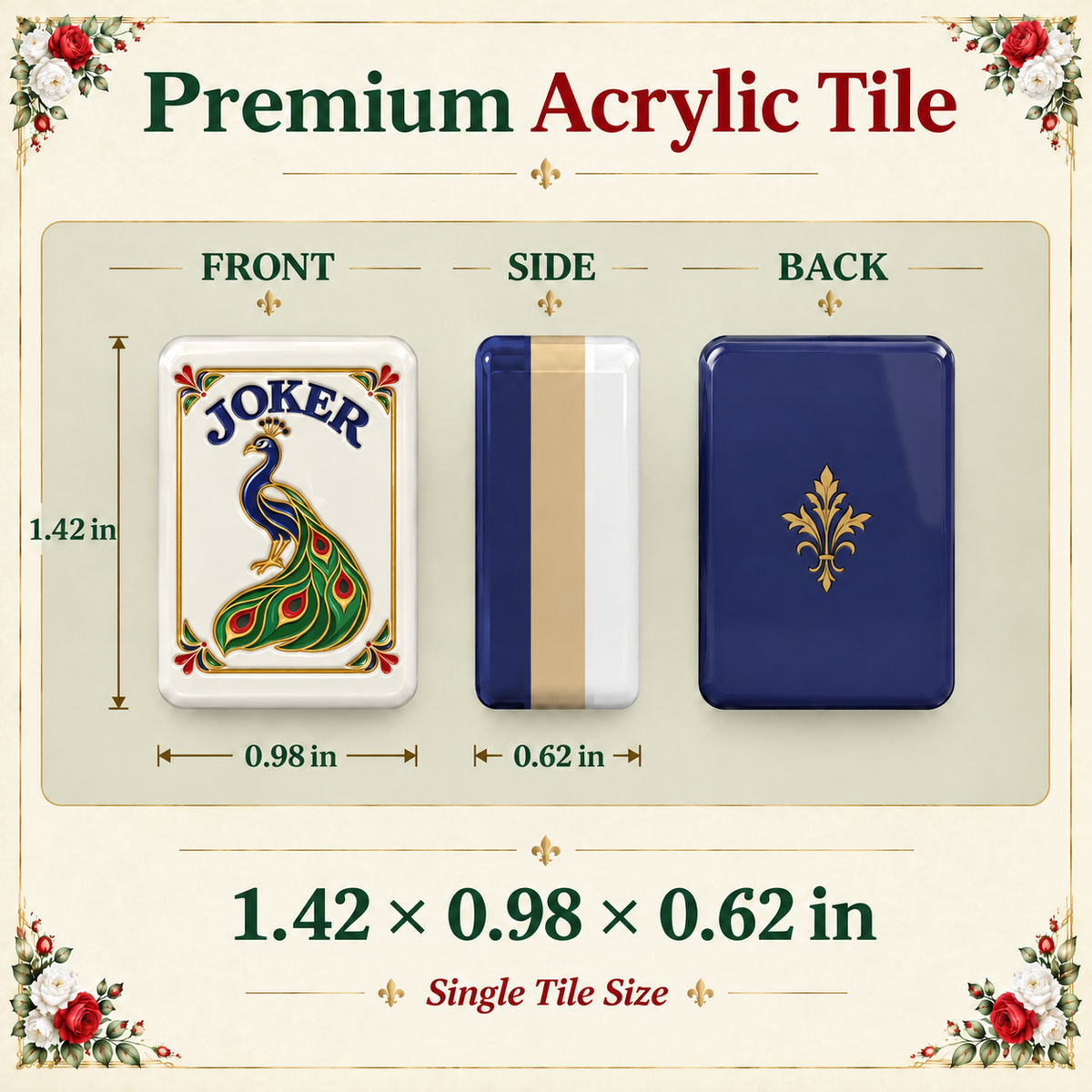
Sichuan mahjong uses 136 tiles (four 1–8 in each suit, plus winds, dragons, and flowers) and plays fast, often with hidden hands and melds called "hu" that vary by region. Malaysian mahjong typically uses 144 tiles, visible sets exposed on racks, and stricter hand patterns closer to Hong Kong rules. Neither uses the standardized hand chart that American mahjong requires. If you're hosting Sichuan or Malaysian games, you'll need a set specific to that variant—not an American set. Sichuan is speed-focused and gambling-oriented; Malaysian emphasizes skill and formal hand recognition. Both demand precision equipment: quality tiles that don't jam, racks that organize melds clearly, and mats that protect the playing surface during the fast pace these variants demand.
What tiles does Sichuan mahjong actually use?
Sichuan mahjong traditionally drops the 9 of each suit and seasons, running 136 tiles: four copies each of 1–8 in Bams, Craks, and Dots (96 tiles); 16 winds; 12 dragons; and 12 flowers (jokers not used as standard wildcards). Many Sichuan players add local "flower" tiles specific to their province. The stripped tile count makes hands form faster and games move at a pace that rewards quick calculation and memory. The 136-tile constraint also raises the speed of the Kong and subsequent draw cycle. Sichuan mahjong is built for rapid play, not contemplation.

How does Malaysian mahjong tile inventory compare?
Malaysian mahjong uses 144 tiles (closer to Hong Kong and traditional Chinese play): four 1–9 in each suit (108 tiles), 16 winds, 12 dragons, and 8 flowers. No jokers are used in classic Malaysian mahjong, though some modern social clubs add wild jokers. The 144-tile count aligns more closely with historical Cantonese play and gives hand cycles a slightly longer, more methodical rhythm than Sichuan. Malaysian sets are typically packaged as matched bamboo or bone-and-wood racks holding visible melds; every player's exposed sets sit in front of them throughout play. This transparency is fundamental to Malaysian mahjong culture: opponents watch each other's strategy unfold live.
What's the biggest rule difference between these two variants?
The core divide is concealment vs. transparency. Sichuan mahjong is played with nearly all tiles in hand, hidden from opponents until you declare a win—you may expose melds, but the majority of your hand stays secret. Malaysian mahjong requires you to place completed Pungs, Kongs, and sequences (chows) openly on your rack in front of you—everyone sees your progress. This changes strategy entirely: in Sichuan, opponents guess your strength by your tempo; in Malaysian, they read your exposed melds and calculate remaining tiles in real time. Malaysian play tends toward stricter hand validation (a referee or scorekeeper checks your declared hand against a rule sheet), while Sichuan relies more on player consensus and regional house rules.
How do hand patterns and winning mechanics differ?
Sichuan winning hands ("hu") are typically based on combinations of concealed melds plus a pair, with local variations that reward specific patterns like "all pungs," "mixed straight," or "pung flush." The exact qualifying patterns vary sharply by city and neighborhood—there is no standardized national Sichuan card. Malaysian mahjong uses named hands (such as "like hand," "mixed one suit," "pair of identical") that cluster into families based on suit content, parity, and meld type. Malaysian hands are often written on reference sheets that clubs distribute; players consult them during play. Malaysian also enforces strict "limited hands" (certain hand types are capped in points) and "unlimited hands" (rare patterns score as multiples of the base). Sichuan hand values are typically smaller, games finish in minutes, and payouts are rapid and informal. Malaysian games move slower, scores climb higher, and the reference sheet is law.

Which variant is easier to learn and host?
Variant Comparison Table
Aspect | Sichuan | Malaysian |
Tile count | 136 | 144 |
Hand visibility | Mostly hidden | All melds exposed |
Speed | Very fast (5–15 min/game) | Moderate (15–30 min/game) |
Rule standardization | Regional house rules | Reference sheet required |
Skill factor | Memory + calculation | Tile counting + strategy |
Setup complexity | Low; shuffle in-hand | Moderate; racks + reference sheet |
Best for | Social gambling, speed | Competitive club play |
Sichuan mahjong requires less infrastructure and suits casual home play: you need tiles, a flat surface, and agreement on local rules. Malaysian mahjong demands racks, a reference sheet, and respect for standardized hand families—better suited to clubs and organized groups. Neither works with an American mahjong set (which has 152 tiles and no chows, requiring the National Mah Jongg League card). If you're learning for the first time, Sichuan is faster to absorb (memory beats rulebook); Malaysian rewards deeper study and pattern recognition.
What equipment do you really need for each game?
Sichuan play works on almost any flat surface—a kitchen table, felt mat, or professional bamboo table. You need tiles (136 or the full 144 if adding flowers), ideally with a dust cover or mat to prevent damage during the rapid shuffling and draws that define the game. No racks are mandatory, though some players use them during their turn. Malaysian mahjong requires individual racks with pushers so melds stay visible and organized; tiles slide off a mat too easily during exposed play. Both variants benefit from a quality mat to protect the table and muffle tile noise. A carrying bag is essential if you move your set between homes or clubs.
If you're hosting either variant regularly, invest in durable acrylic or bone-and-bamboo tiles from our best-selling collection—they withstand the fast shuffling and repeated impacts that characterize rapid-play variants. Sichuan tiles often show lighter engraving (characters can blur with 136 repeated tile sets); Malaysian tiles typically feature bolder markings. A sturdy mahjong mat protects both your table and reduces noise in apartment settings. For Malaysian games, racks with pushers are non-negotiable—players must push tiles forward as they meld to keep the game's transparency intact.
🎁 See our most-loved mahjong sets & accessories → https://mahstead.com/en-us/collection/best-selling
How do you choose between hosting Sichuan or Malaysian mahjong at home?
Ask yourself: Do your players want speed and social gambling, or competitive skill-testing? Sichuan suits loose home groups and casual weeknight play—games end fast, scores reset quickly, and house rules let everyone customize. Malaysian suits organized clubs, consistent groups, and players who enjoy memorizing hand families and calculating probabilities. Sichuan favors extroverts who thrive on rapid decisions and bluffing; Malaysian rewards introverts who study patterns offline. If your group includes new players, start with Sichuan (simpler memory footprint) and graduate to Malaysian (deeper strategy) after a few months of play. If you're already playing American mahjong, you already understand hand logic—Malaysian feels more natural than Sichuan because both expose melds. If you play Chinese or Hong Kong mahjong, Malaysian is a closer cousin; Sichuan is a distinct dialect.
What to check before you buy:
Tile count: Know which variant your group plays before ordering. Sichuan sets are harder to find in North America; Malaysian sets are more common but still regional.
Rack compatibility: Malaysian sets must pair with racks. Ensure your tile size (typically 26–30 mm) fits standard rack slots.
Engraving clarity: Fast play degrades markings over time. Choose sets with deep, bold character engraving, not light etching.
Mat surface: Sichuan's shuffling wears mats; pick one rated for heavy use. Malaysian benefit from felt or rubber-backed cotton to prevent tiles sliding during exposed play.
Carrying solution: Both variants move between homes frequently. A padded bag or case protects tiles from cracking and character wear.
✨ Find your Mahstead set — free US shipping → https://mahstead.com/en-us/collection/best-selling

FAQ
Can I use an American mahjong set to play Sichuan or Malaysian mahjong?
No. American sets have 152 tiles (with the 9 of each suit, plus extra jokers) and are built around the standardized hand chart from the National Mah Jongg League. Sichuan requires 136 tiles and regional house rules; Malaysian requires 144 tiles and visible rack play. The tile counts and hand mechanics don't translate.
What's the typical speed difference between Sichuan and Malaysian games?
Sichuan games typically finish in 5–15 minutes per round because play is hidden and fast-paced. Malaysian games run 15–30 minutes due to the pace of exposing melds on racks and consulting hand reference sheets. Sichuan feels like speed chess; Malaysian feels like tournament bridge.
Do Sichuan and Malaysian players use jokers?
Traditional Sichuan mahjong avoids jokers in favor of pure tile combinations, though some modern social games add them as wild cards. Classic Malaysian mahjong does not use jokers; the 144 tiles form all legal hands. Some Malaysian clubs have recently adopted jokers for faster play, but this breaks purist rules.
Is Malaysian mahjong the same as Hong Kong mahjong?
No, but they're cousins. Both use 144 tiles and expose melds, and Malaysian hand families borrow heavily from Hong Kong structures. However, Malaysian has its own named hands, regional payment schemes, and scoring limits. Hong Kong plays faster, allows more flexible hand declarations, and uses a slightly different draw order.
Which variant should beginners learn first?
Sichuan is simpler to teach because play is mostly hidden—focus on hand memory and drawing strategy without tracking opponents' melds. Malaysian requires learning hand families and tile-counting simultaneously, making it steeper for newcomers. If your group plays American mahjong, Malaysian feels more intuitive because both expose sets early.
What's the main cost difference between hosting Sichuan vs Malaysian mahjong?
Sichuan requires only a quality tile set and a mat; you can skip racks. Malaysian demands a complete set plus individual racks with pushers for each player, doubling the equipment cost. Both benefit from mats, bags, and storage, so the deciding factor is racks—Malaysian is more expensive to outfit.


View More
View More
View More
