
Cantonese Mahjong Strategy: Defense, Reads, and Discards
Last updated: Nov 23, 2026
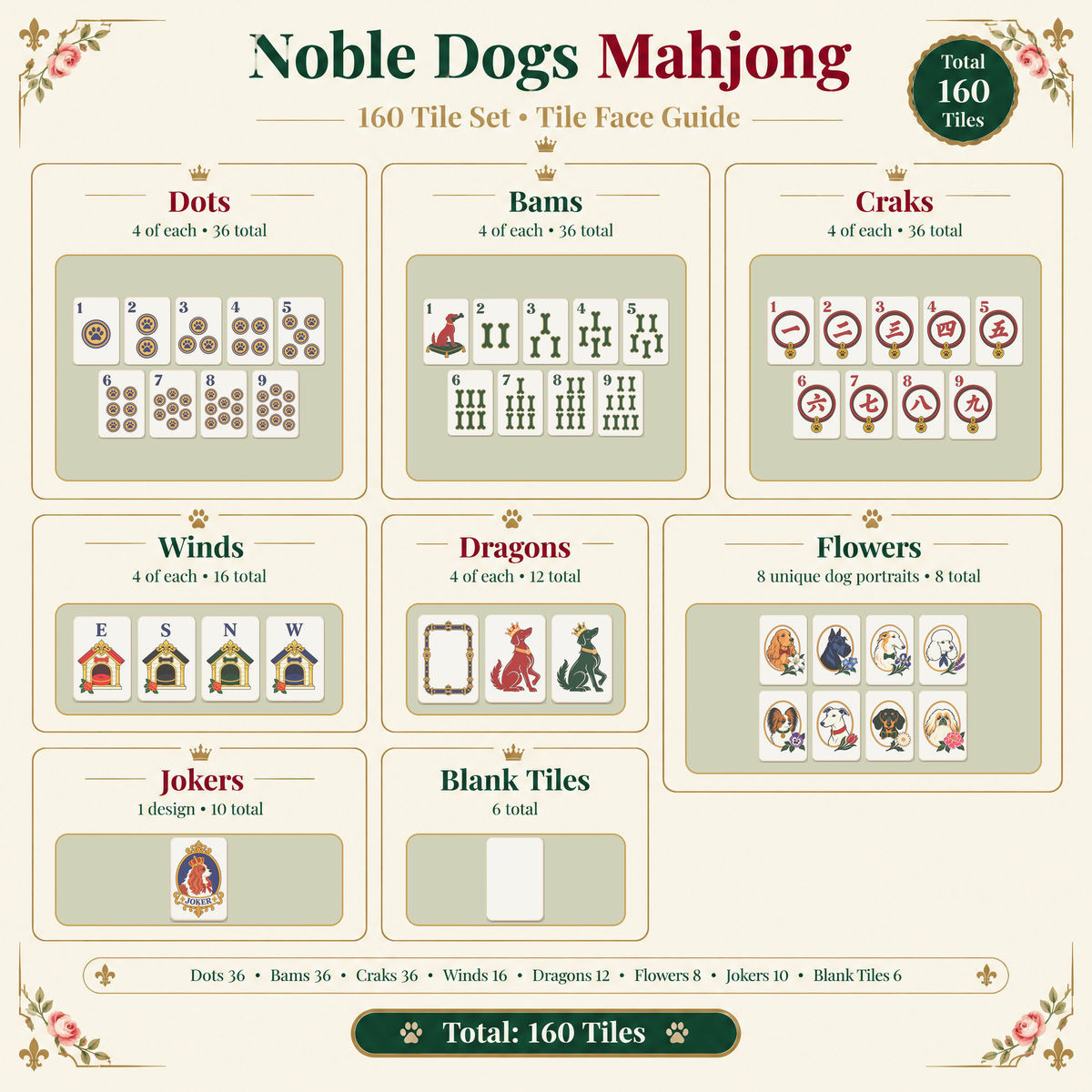
Cantonese mahjong strategy centers on three pillars: aggressive discard management, opponent tile-reading, and speed of decision-making. Unlike American mahjong (which follows a fixed National Mah Jongg League card annually), Cantonese play is fluid—any player may form winning combinations from any tile, and the game rewards observing what others discard, retain, and draw. Core tactics include discarding safely early (throwing suji tiles and honor tiles others have already shown), shifting to aggressive wall play mid-game when your hand strengthens, and mentally mapping opponent holdings by tracking their picks and discards. Speed matters: hesitation signals strength or weakness, and experienced players adjust their play accordingly. Winning consistently requires balancing offense (pursuing your own hand) with defense (blocking opponents' obvious paths). Most players develop their personal style through weekly play rather than rote memorization.
Cantonese mahjong has no printed card, no fixed hand list, and no jokers—it's a pure game of tile combinations, probability, and table psychology. If you've only played American mahjong, stepping into Cantonese feels like learning chess after playing checkers. The stakes are smaller (most home games move quickly over many hands), but the mental load is constant. We host weekly Cantonese games and watch the same mistakes trip up strong American players: they wait too long to go "all in" defensively, they assume discarded tiles are truly safe, and they underestimate how much opponents learn from their own discard patterns.
Here's what separates winning Cantonese players from the rest: they decide their defensive stance before their first discard, adjust it live as the wall shrinks, and they never assume a tile is safe just because it was thrown once.
What tiles are actually safe to throw early?
In the first 20 or so discards, safety is about reading the table, not absolute rules. Suji tiles—numbers far from winning combinations—are lowest-risk early: throw a 1 when others discard 1s, throw a 9 when you see 9s go by. Honor tiles (winds and dragons) you've already seen discarded are nearly safe, because most players need duplicates or pairs. East wind appears three more times in the wall; if another East has been thrown, you're safer throwing your East. Conversely, middle tiles (4, 5, 6) are highest-risk early because they form winning combinations with almost any neighbor. The cardinal mistake is thinking "I threw a 5 Dots already, so mine is safe"—other players may need 5 Dots for an entirely different hand. Instead, look at who threw it and when: if your right-hand player threw it in discard #2, she likely doesn't need Dots. If your left-hand player discarded one in discard #15 (deep in play), she may have picked up a new Dot combo and is now also worried. Throw what mirrors the table's recent discard pattern, not what you wish were safe.

How do you shift from defense to offense mid-game?
Early-game Cantonese is nearly always defensive: you're feeling out hands, watching the wall, waiting for signals. Offense begins when three conditions align: your hand shape becomes clear (you have a pair and two near-complete melds), the wall reaches half-empty (roughly 50 tiles remain), and you've watched at least one opponent's discard pattern stabilize. If your left player threw three middle Bams by turn 12, she's probably not building with Bams—she's committed to another suit. That's your green light to pursue Bams aggressively. The worst timing for offense is turn 5; the best is turn 15–22 (depending on table speed). Many Cantonese players call this "the shift"—the moment you stop studying and start hunting. To execute it: stop throwing middle tiles (attack those suits), commit to one or two melds, and pick faster. Your speed change itself signals other players, which is fine; a table of equal skill levels will respect it because everyone else is learning your hand shape too. The mistake is going all-in too early (you tip your hand when you're still 8 tiles away from a win) or staying defensive when you should shift (you miss the window and finish with a dead hand).
What does discard order really tell you?
Every discard is data. Cantonese players track three layers: the tile itself, the order it appeared relative to its suit-mates, and the player's pick-time on the next draw. If East wind appears from seat 1, then North from seat 3, then East again from seat 1 in quick succession, East is likely hot (useful to multiple players) and North is cold (one player sits on it). If a player picks slowly after throwing a 5 Crak, she's thinking: she may have just drawn a hand that includes Craks and is mentally calculating her next move. If she picks instantly after throwing, she's relieved—that tile wasn't part of her plan. After 40+ discards, you'll see patterns: seat 1 is building dragons, seat 3 is holding honor tiles as safety, seat 2 is chasing one suit hard. Respecting these patterns is offense—you throw tiles that hurt their hand—and defense—you throw tiles that don't help theirs. The classic bluff is throwing a tile that looks safe (suji, or recently discarded by another player) when it's actually the tile your opponents need most. Strong Cantonese players throw a single 1 Dot early, then throw 1 Dots late in the game to signal "I'm not building Dots anymore," even if they are. The table that falls for this loses money; the table that sees through it wins.
Why does hand speed matter more than hand strength?
American mahjong teaches hand strength first: you either have a winning hand on the card or you don't. Cantonese mahjong respects hand speed because any winning combination is valid (1–2–3, 2–3–4, or 1–1–1, 2–2–2, etc.), and the fastest player to complete it wins the hand. This is why psychological pressure is so real: a player who draws and discards in two seconds signals either a strong established hand (less thinking needed) or a weak hand (less choice). Hesitation signals uncertainty, and opponents exploit it by throwing risky tiles or pivoting their own play. Speed is also advantage: if you're ready to win by turn 18 and your opponents won't be ready until turn 25, you likely win even if their hand-scoring value is higher. A hand worth double the points is worthless if someone else reaches it first. This flips strategy: sometimes you throw your best tile early to accelerate opponents' decision-making (fatigue them, get them playing on instinct), and sometimes you slow yourself down to appear weak while you're actually hunting. The skill is matching your speed to your hand state: fast picks when you're close to complete, normal picks when you're mid-game, slow picks when you're blocked (fishing, hoping for one of several cards).

How do you decide when to "go for it" versus play safe?
The threshold is always hand count and wall size. In the first 10 discards, nearly every hand is incomplete; betting aggressively (throwing risky tiles) is reckless. By turn 15–20, if you have a clear path to one winning shape, you can bet aggressively—throw middle tiles and punish opponents. By turn 25+, the wall is nearly empty and luck matters more than skill; a hand that was losing at turn 20 may suddenly win because fewer tiles remain. Most Cantonese players use this rule: count your incomplete melds (a pair plus two incomplete melds = "3 away") and count the empty discard pile (roughly pile size ÷ 4 = turns since the last kong or draw). If you're 3 tiles away and 15 turns remain, bet aggressively. If you're 5 tiles away and 8 turns remain, play ultra-safe. The math is rough but consistent. Money-table play (betting actual stakes) sharpens this calculation because fear is real—weak players go ultra-safe and fold early, strong players calculate odds and push. Home games are looser; the strategy is the same but the stakes make it invisible. A mistake is "I have a strong hand so I'll be aggressive"—no, you'll be aggressive only if the wall math supports a win. A second mistake is "I'm losing so I'll play wild"—that accelerates your loss. Play within the math, and the math plays for you.
Decision Point | Hand State | Wall Remaining | Recommended Play | Why It Works |
Early game (turns 1–10) | 3+ tiles away, no pairs | 80+ tiles | Ultra-safe discards only | Table is still forming; no edge yet |
Mid-game (turns 11–18) | 2 tiles away, one complete meld | 50–80 tiles | Moderately aggressive; throw middle tiles | Hand is clear; wall is shrinking |
Late game (turns 19–28) | 1 tile away, two complete melds | 20–50 tiles | Aggressive hunt; accept risky discards | Win probability is high; wall is tight |
End-wall (turns 28+) | Any state | <20 tiles | Luck-based; play to block opponents | Fewer tiles mean fewer options for everyone |
What does a winning Cantonese player never do?
Never assume a tile is safe because you threw it once and no one called it—other players' hands evolve. Never hesitate after you've decided to throw a tile; hesitation signals weakness and tips your real hand. Never abandon your discard pattern abruptly; consistency is armor. Never play on tilt—if you lose a big hand due to bad luck, slow down on the next two hands and observe. Never forget that Cantonese is fastest-hand-wins; a mediocre hand played fast beats a beautiful hand played slow. And never underestimate the value of throwing early honors (East, West, North, South, Red, Green, White); many home games lack dragons or have fewer need for them, so honors clear the table's tension early. The players who profit from weekly games do three things: they adjust their discard pattern weekly (not mechanically), they respect the wall math (no hand is worth chasing at turn 28 when only 5 tiles remain), and they play the people, not the tiles—they watch opponents' eye contact, pick-speed, and discard sequences and let that drive their decisions.
🀄 Shop best-selling mahjong sets →
What to check before you play Cantonese mahjong at a new table
Ask the house rules: Are kongs drawn from the wall or the dead wall? Can you declare a win on a discard or only on your own draw? Is there a minimum hand value, or does fastest-hand-wins apply regardless? Do players play with jokers or blanks (American sets sometimes include extra tiles that Cantonese games don't use—most Cantonese games use 144 tiles only, no extras)? Verify the deck count: Cantonese uses 144 tiles (36 per suit × 3 suits, plus 28 honors and flowers), and any extra tiles are discarded. If a table is using an American set, confirm whether the extra jokers are in play or set aside. Cantonese tiles are often smaller and lighter than American acrylic sets, so if you're bringing your own, confirm they're Cantonese-weight (not tournament American bamboo tiles). Finally, ask if there's a house bot or house edge—some tables charge a small fee per hand from the winner's pot, and you should know that going in. Most home games are zero-rake and split the winner's stakes evenly among the other three players.
🎁 See our most-loved mahjong sets & accessories →
If you're hosting a regular Cantonese game at home, you'll want a durable set built to withstand weeks of weekly play. Our best-selling mahjong sets come in engraved acrylic or carved wood, both built to last. For tracking discards and managing the faster pace of Cantonese play, quality racks with pushers keep tiles organized and speed up picks. A protective travel bag or case ensures your set survives regular transport between players' homes.

FAQ
How is Cantonese mahjong different from American mahjong strategy?
Cantonese has no printed hand card and allows any player to form any winning combination at any time. Strategy is fluid and opponent-focused: you read discards and adjust live. American mahjong is card-locked: winning hands are fixed each year, and strategy revolves around finding your specific hand on the card. Cantonese rewards speed and psychology; American rewards memory and card knowledge.
What's the safest discard when you don't know the table yet?
Throw a tile you've already seen another player discard in the first 10 turns. Suji tiles (1s, 9s) are lowest-risk because they don't neighbor many combinations. After 10 discards, watch the table's discard pattern and match it—throw a suit that others have already thrown.
Can you win on another player's discard in Cantonese mahjong?
Yes, in most Cantonese house rules. You can declare a win (call "mahjong" or "win") immediately when another player discards a tile you need to complete your hand. Some conservative tables allow only self-drawn wins; always confirm house rules before playing.
How many hands does a typical Cantonese game contain?
Most home sessions play 8–16 hands per player (rotating the dealer), taking 1–2 hours. Each hand is faster than American mahjong (15–30 minutes) because no card lookup is needed. Players often play until a target time or money total is reached.
What's the "shift" and when should I make it?
The shift is when you move from defensive play (studying) to offensive play (hunting). Make it around turn 15–20 if your hand is nearly complete and the wall is half-empty. You stop throwing middle tiles and start playing fast, signaling confidence and putting pressure on opponents.
Do Cantonese sets come with jokers like American sets?
No. Traditional Cantonese mahjong uses exactly 144 tiles with no jokers, blanks, or extras. American sets sometimes include extra tiles; if you're playing Cantonese at home, confirm your set doesn't add jokers into active play, as they change the game's mathematical balance. ✨ Find your Mahstead set — free US shipping →


View More
View More
View More
