
Sichuan Mahjong Special Hands: Rules, Rankings & Strategy
Last updated: Nov 23, 2026
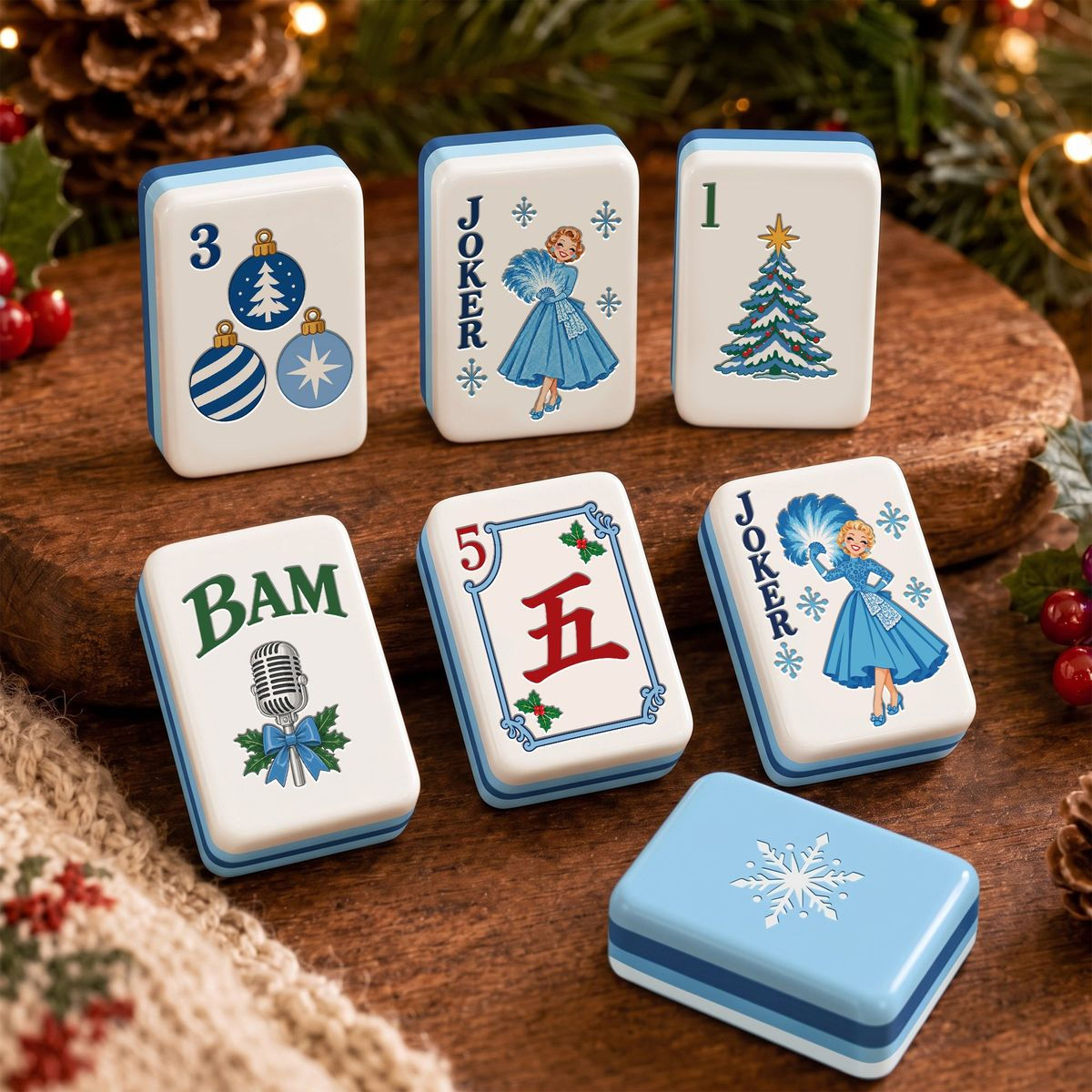
Sichuan mahjong—played across central China with regional variations—uses 108 tiles (one suit of 1–9 in Craks, Bams, Dots × 4 copies, plus 16 winds and 8 dragons, no flowers or jokers). A winning hand combines a pair plus melds (pungs, kongs, or chows in any number-sequence order: 1-2-3, 5-6-7, etc.). Special hands include "all pungs" (no chows), "all terminals" (1s and 9s only), "honor hands" (winds and dragons), and "limit hands" worth maximum points. Hands are scored by type, fan count, and whether they're concealed (drawn yourself) or exposed (called from others' discards). The game ends when someone completes their hand and draws a winning tile—not before. Speed, hand ranking memory, and understanding exposure rules are core skills. Unlike American mahjong, Sichuan has no reference card; players must memorize hand patterns. Many groups play with engraved best-selling mahjong sets to keep American standards clear when switching variants.
What tiles does Sichuan mahjong actually use?
Sichuan uses a 108-tile deck: four copies each of Craks 1–9, Bams 1–9, Dots 1–9 (that's 108 number tiles), plus 16 winds (4 each: North, East, South, West) and 8 dragons (4 Red, 4 Green) = 132 tiles total. No flowers, no jokers, no White tiles as blanks. Each player draws 13 tiles at game start; the 14th comes from a draw or discard that completes the winning hand. The tile distribution is balanced (equal copies of each rank), which makes probabilities much simpler than American play—no wild jokers means every hand must be built from real tiles only.

How do Sichuan hand ranks differ from American mahjong?
American mahjong follows a yearly published card with fixed hand patterns; how to read the mahjong card explains the system fully. Sichuan mahjong has no reference card—instead, it classifies hands into fixed types that never change. Examples: Pung hand (all melds are pungs—no chows), terminal hand (all 1s and 9s), honor hand (only winds and dragons), mixed straight (all ranks 1–9 in mixed suits in one hand). Each type has a base fan (point multiplier), and bonus fans stack if you achieve multiple categories at once (all pungs and all terminals = double-fan bonus). American mahjong has no fan system—you score based on the specific pattern listed on the card for that year. The difference is huge: Sichuan rewards hand-type consistency, American rewards exact pattern memory.
Aspect | Sichuan | American |
Tile count | 108 + 16 + 8 = 132 | 152 |
Reference tool | None (memorized types) | Annual card (fixed patterns) |
Jokers/wild tiles | Zero | 8 jokers required |
Sequence (chow) rules | Called freely; multiple allowed | None (no chows in winning hand) |
Pair rule | Must have exactly one | Must have exactly one |
Scoring basis | Fan count × hand type | Pattern match on card |
Exposure | Melds called mid-game | Limited (pungs, kongs, quints, sextets only) |
Win condition | Complete hand + tile draw | Any 14-tile pattern on current card |
What counts as a "special hand" in Sichuan play?
Special hands—or limit hands—are patterns so valuable they earn maximum points regardless of fan count. Common examples: all honors (no number tiles at all), seven pairs (seven separate pairs; some variants allow this only if all pairs are different types), all one suit (e.g., only Craks and honors), thirteen orphans (one copy of each terminal 1–9, winds E/S/W/N, and dragons R/G/B—rare, showstopper hand). Some versions include big three dragons (three pungs of Red, Green, Black) or four winds (pung of each wind). The exact list and point value varies by province, club, and house rules—always ask before play. What unifies them: they are closed (you complete them yourself, not by calling from discards) and they bypass normal fan counting—you simply declare "limit hand" and collect maximum points. This is radically different from American mahjong, where no hand rank exists above the card.
How does calling work in Sichuan mahjong?
When an opponent discards a tile, any player can claim it to complete a pung, kong, or chow—or to win. Unlike American mahjong (where how to play American mahjong details strict exposure rules), Sichuan allows you to call chows freely mid-game and expose them face-up. A pung is three identical tiles (e.g., three 5 Craks); a kong is four identical; a chow is a sequence like 4-5-6 of one suit. Calling interrupts turn order—if you call a discard, you expose your meld, then play continues from you (not the discarder). The key: your exposed melds reduce your hand's score value. A concealed hand (built entirely from draws, no calls) earns a fan bonus. This creates strategic tension—do you call for speed or stay hidden for points? American mahjong has no such choice; most hands must be either fully concealed or fully exposed as a set meld unit. Speed of play is also much faster in Sichuan; rounds often finish in 15–20 minutes.
What's the fastest way to learn Sichuan hand types?
Start with the three most common hand bases: pung-only (no sequences), mixed straight (1–9 using mixed suits and honors), and one-suit melds. Learn the 5–7 limit hands your group plays before your first session. Use a reference sheet (handwritten or printed) at the table for your first 10 games; memory solidifies fast because patterns repeat. Group similar hands mentally: all terminal-based hands together, all single-suit hands together, etc. Play with engraved American mahjong sets for initial practice with a familiar layout, then switch to a 132-tile set once you've grasped the difference. One practice tip: have the player who knows the rules call out hand types after each win for the first 5 rounds—this narrates learning and avoids silent mistakes. Most players reach competence in 15–20 games; memory is the gate, not strategy.
🀄 Shop best-selling mahjong sets →

How do fans and scoring multiply in Sichuan?
Each hand type has a base fan value—typically 1 to 8 depending on difficulty. A simple pung hand = 1 fan; all terminals = 6 fans; all one suit = 4 fans. Bonus fans stack: if you achieve pung-only and all terminals at once, you get both fan values added. Fan is then multiplied by the base point per fan (often 1, 2, 4, or 8 points per fan depending on house rules). If you also win on a discarded tile (vs. a draw), that's an extra fan. If your hand is completely concealed, add a concealment fan. So a hand worth 3 base fans might become 5 fans with bonuses—and if the base points are 2 per fan, you score 10. Contrast this with American mahjong scoring: American scores by pattern and exposure type listed on the card, with no fan system or multiplier stacking. Sichuan is pure arithmetic; American is lookup-table based. If your group mixes players, always clarify scoring method before the first hand.
Should you play Sichuan on a traditional or modern mat?
A how to choose a mahjong mat covers American mat needs; Sichuan has similar but slightly different asks. Sichuan play demands speed—tiles must slide easily and discards must land predictably. A mat with a textured bamboo or felted surface (vs. a slick acrylic) helps tiles grip and slow their travel, reducing flying discards and misdeals. You'll want clear discard zones marked—one per player, typically a 3×3 grid displayed on the mat. Four-player zones clearly labeled (usually N/E/S/W) prevent confusion when multiple players call the same discard. Racks with pushers are less critical in Sichuan than American (hands change faster), but they're still helpful if players are slow or new. A mat that shows tile suit icons (Crak, Bam, Dot, Wind, Dragon symbols) in the corners helps absolute beginners verify they've drawn the right tile. Many Sichuan groups in overseas communities use portable mahjong mats and fold them away after play—durability and easy storage matter more than ornament.
🎁 See our most-loved mahjong sets & accessories →
What tile set should you buy if you play Sichuan?
A standard 108-tile Sichuan set (Craks, Bams, Dots 1–9 × 4, plus 16 winds and 8 dragons) is all you need—no jokers, no flowers, no blanks. If you play both Sichuan and American, buy a separate 152-tile set for American; mixing tiles mid-session causes chaos. Acrylic tiles are durable for weekly play; resin or bamboo are heavier and slower (useful if your table has airflow that moves tiles). Engraved tiles (suit and number clearly stamped) are worth the small upfront cost if your group includes older players or anyone color-blind. Size matters: standard 30mm tiles suit most hands; very large hands benefit from 28mm. For travel or casual play, a travel-bag mahjong set stores a full 108-tile deck plus a mat and racks in one easy-to-carry case. If you host weekly Sichuan games and want a durable, long-term investment, best-selling mahjong sets include sets with quality tile sorting and tile separation included. Always verify tile count before purchase—confirm you're getting a 108-tile Sichuan set, not a 144-tile Chinese variant.
Common mistakes: Sichuan hand rules to avoid
Mistake 1: Treating chows like pungs. A chow (sequence: 1-2-3) is different from a pung (three identical 2s). Beginners often confuse "I have 2-3-4 of Craks" with "I have a pung of 3s." They're not the same hand type. A pung-only hand scores high; a hand with any chow scores low.
Mistake 2: Forgetting concealment bonus. If you never call a tile and complete your entire hand from draws only, add a fan. Many new players ignore this and give up points.
Mistake 3: Calling too aggressively. Calling a tile for a small pung might seem smart for speed, but it drops your score (exposed hands earn fewer fans). Better to wait and keep your hand concealed if the discard isn't critical to your win.
Mistake 4: Mixing up limit hand declarations. A limit hand must be announced exactly right. Saying "all honors" when you have one number tile = hand void, no score. Know your group's limit hands before play.
Mistake 5: Not tracking discards. Unlike American mahjong's single annual card, Sichuan requires memory of what's been played. If three 9 Craks are discarded and you need a 9 Crak, it's gone. Watch the discard pile.
What to check before you buy
Tile count: Confirm the set includes exactly 108 tiles (Craks, Bams, Dots 1–9 × 4, plus 16 winds and 8 dragons—no jokers, flowers, or blanks).
Suit markings: Check that Craks show a clear character or pattern (not just a number), Bams show a bamboo stick icon, Dots show dots. This speeds tile recognition.
Tile size: Standard is 30mm; verify this fits your hand and your mat's tile slots.
Engraving clarity: If tiles are engraved, test that numbers are legible under the table light your group uses.
Shuffle feel: Handle a sample if possible; tiles should slide smoothly on your mat without sticking or flying.
Missing tiles: Count before the first game; manufacturers occasionally miscount. A full set has 132 tiles total; any fewer and the game can't proceed.
✨ Find your Mahstead set — free US shipping →

FAQ
Can I use an American mahjong set for Sichuan play?
No. American sets have 152 tiles (including jokers, flowers, and White blanks that Sichuan doesn't use). Sichuan uses 108 specific tiles with no wild tiles. Mixing them creates confusion mid-game. Buy a dedicated 108-tile Sichuan set if you plan to play regularly.
Is Sichuan mahjong harder than American mahjong?
Different, not harder. American requires reference-card lookup and hand-pattern memory; Sichuan requires hand-type classification and fan arithmetic. American uses more melds and jokers; Sichuan is purer hand logic. Most players find Sichuan faster to learn (10 games vs. 20) because there's no yearly card change.
What's the best mat for Sichuan if I travel between groups?
A portable rubber or canvas mat with clear discard zones (3×3 grid per player) folds compactly and works on any table. Avoid thin vinyl; it slips. Look for one with stitched edges so it lasts after 50+ trips. Many groups use the same mat for years if it's stored in a mahjong bag.
Do I need racks with pushers for Sichuan?
No, but they help. Sichuan play is fast; without racks, tiles pile messily. Racks slow the pace slightly, which is good for beginners. Experienced players often skip them. If your group is 50% new players, use racks; if all experienced, they're optional.
How long does a typical Sichuan game take?
A single round: 15–25 minutes (vs. 30–45 for American). A session (4 rounds): 60–90 minutes. Play speed depends on hand complexity and how fast players call. Limit hands end rounds instantly; complex pung hunts can stretch a round to 35 minutes.
Which special hands should a beginner memorize first?
All honors (winds and dragons only), seven pairs (if your group allows it), big three dragons (pung of Red, Green, and one other dragon), and four winds (pung of all four winds). These five cover 60% of limit-hand scenarios in most groups. Ask your host which five their group plays before game one.


View More
View More
View More
