
How to Build a Mahjong Wall: Step-by-Step Setup
Last updated: Nov 23, 2026
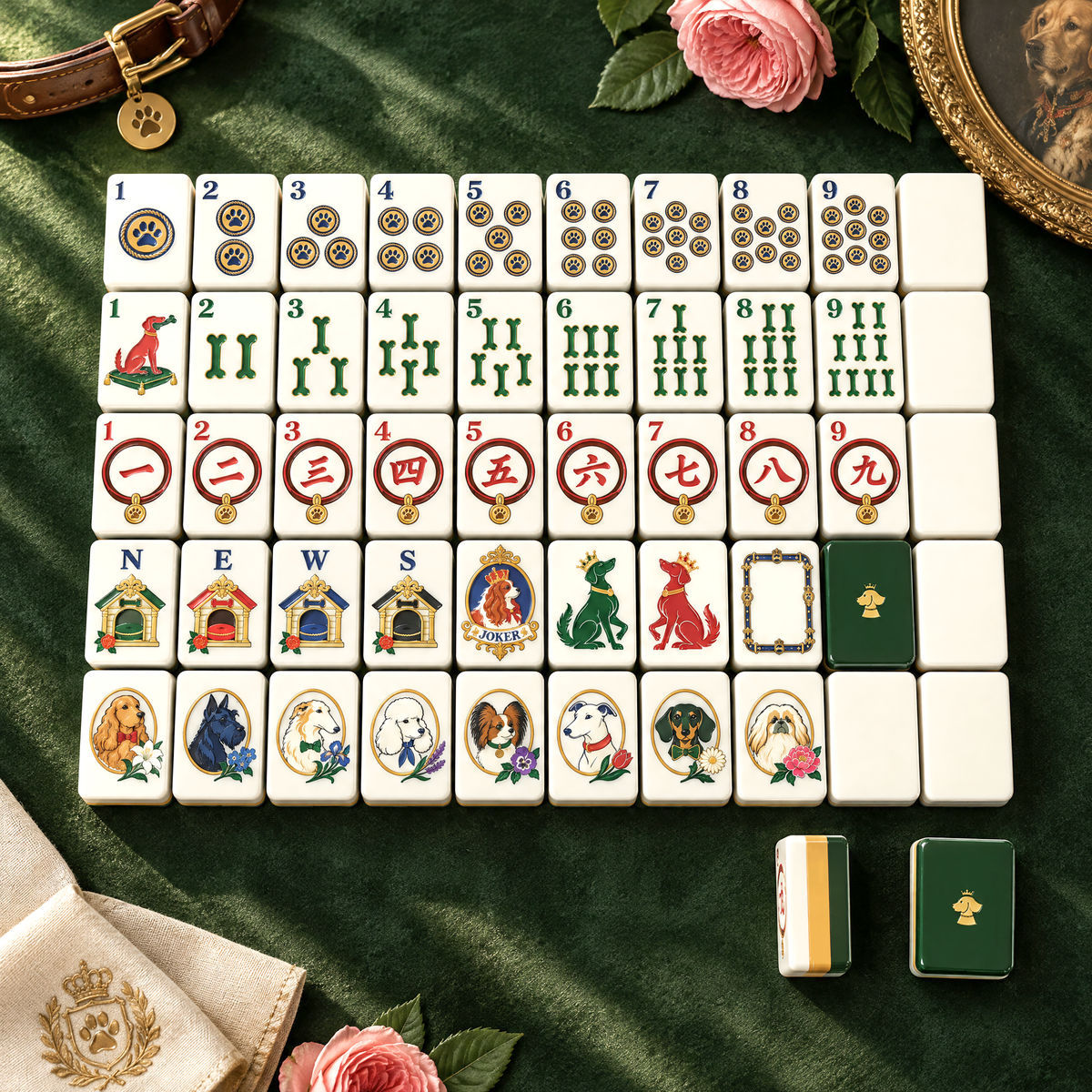
The mahjong wall is a shared stack of tiles built by all four players before the hand begins. Each player builds a section of the wall in front of them using 38 tiles (19 pairs stacked two high), then the East player "breaks" the wall by rolling dice to determine where the draw begins. The entire assembly takes 2–3 minutes. A standard American mahjong set contains exactly 152 playing tiles plus 8 jokers; you use all 152 tiles to construct the wall, leaving the jokers aside for later draws. Common mistakes include building pairs unevenly, forgetting to leave room for the break, or stacking tiles too loosely—which causes collapse mid-game. Build on a firm surface, keep stacks tight, and always count your tiles before you start.
Building the wall is the foundation of every American mahjong game. Each player builds a section of the wall in front of them using 38 tiles (19 pairs stacked two high), then the East player "breaks" the wall by rolling dice to determine where the draw begins. The entire assembly takes 2–3 minutes. A standard American mahjong set contains exactly 152 playing tiles plus 8 jokers; you use all 152 tiles to construct the wall, leaving the jokers aside for later draws. Common mistakes include building pairs unevenly, forgetting to leave room for the break, or stacking tiles too loosely—which causes collapse mid-game. Build on a firm surface, keep stacks tight, and always count your tiles before you start.
🀄 Shop best-selling mahjong sets →
How many tiles go into the wall?
The wall uses exactly 152 tiles—all tiles in a standard American set except the 8 jokers. Each player contributes 38 tiles, forming 19 pairs stacked two tiles high side-by-side in a straight line. When all four sections join end-to-end, they form a square frame in the center of the table. Never add the jokers to the wall; they remain in the spare tile rack and are drawn only during play when a player needs a replacement.

What's the correct way to stack tiles in pairs?
Tiles must be placed flat (face-down, unread) in pairs, with both tiles of each pair lying horizontally side-by-side, then one pair stacked directly on top of the other. This creates a two-high stack roughly one pair wide and two pairs deep for each of your 19 pair-stacks. If you stack tiles vertically or at angles, they topple during the game. Press each tile firmly into place so it doesn't shift. Many players use mahjong racks with pushers to keep their hand organized during play, but during wall-building, you work with loose tiles only.
How do the four players position their wall sections?
Each player sits at one side of the table—North, East, South, and West. North builds the wall closest to them and pushes it slightly toward the center; then East, South, and West each build their sections to the right, forming a square. The wall now has four sides:
North side: built by North
East side: built by East
South side: built by South
West side: built by West
The four sections should meet at corners to form a closed square in the center. Leave roughly 6–12 inches between the wall and the edge of the table so players can lean in without knocking tiles.
How does the East player break the wall to start the draw?
After the wall is complete, the East player rolls two dice and adds the numbers. This sum determines which player and which pair in their wall section will be the breaking point. For example, if the dice show 5, East counts five players clockwise starting from East (East = 1, South = 2, West = 3, North = 4, East again = 5). Then that player counts the specified number of pairs from the right end of their section, and the East player draws the top tile of the pair to the right of the break, beginning the hand. This randomizes which tiles enter play and prevents predictable patterns.

What mistakes should you avoid when building?
Uneven pair height: All 19 of your pairs must be stacked to the same height (two tiles per stack). If one stack is one tile high and another is three, the wall looks unstable and tiles will shift during play.
Loose or crooked tiles: Tiles must be pressed flat and parallel. Angled or leaning tiles fall during the draw.
Miscounting: Always count your 38 tiles before you build—no more, no fewer. A missing tile or an extra tile throws off the entire game.
Breaking the wall too close to a corner: When East rolls the dice, ensure the break lands in the middle of a player's wall section, not at the junction between two players' sections—breaking at a corner can collapse the wall.
Using jokers in the wall: Jokers never go into the wall. Some newer players accidentally include them, leaving too few tiles and forcing an incomplete wall.
Use a firm table, not a folding card table prone to flexing. If you play regularly, a mahjong mat with a padded surface gives tiles a stable, non-slip foundation. An acrylic or ceramic tile set (as opposed to plastic) stacks more reliably because the weight and finish grip better.
Issue | What Goes Wrong | How to Fix It |
Tiles slide during break | Loose fit, glossy surface | Build on a textured mat; press tiles firmly |
Wall collapses at corners | Sections misaligned, uneven height | Ensure all stacks are two tiles high; align corners squarely |
Missing tiles in play | Miscounted before building | Count tiles aloud in groups of 10 before you start |
Can't find the break point | Confusion over dice direction | Have a non-player call out the break pair; East draws to the right of it |
Wall too far from players | Players lean and bump it | Position wall 6–12 inches from table edge |
🎁 See our most-loved mahjong sets & accessories →
What surface and equipment works best?
A mahjong mat or padded table cover prevents tiles from sliding and absorbs the impact of the dice roll. Acrylic tiles grip better than highly polished ceramic or bone, and they're durable for weekly play. If you travel with your set, store it in a mahjong bag or case so tiles don't shift in transit and arrive scratched or misaligned. A hard, flat surface like a dining table works well; avoid low coffee tables where players must hunch over. Good lighting helps you read tiles quickly, especially during the break.
How long does wall-building take, and when should you practice?
On your first game, wall-building takes 5–10 minutes because everyone is learning. After 5–10 games, most players can build the wall in 2–3 minutes. Practice off-table at home: grab your set, count 38 tiles, build your section, and time yourself. This removes the pressure of holding up your group. Have each player build their section simultaneously, not one at a time, to keep the momentum. Once you're comfortable, the wall becomes automatic—you can chat and catch up while building.
✨ Find your Mahstead set — free US shipping →
What to check before you buy
Tile quality and weight: Heavier acrylic or ceramic tiles stay in place better than lightweight plastic. Pick up a tile and feel its density; it should feel solid, not hollow.
Set completeness: Confirm your set includes exactly 152 playing tiles plus 8 jokers. Count before your first game—a short set ruins wall-building.
Tile face clarity: Tiles must be easy to read from arm's length. Poor printing or faint stamps cause hesitation during play.
Storage: Ensure your set comes with a bag or case that keeps all tiles together. Loose tiles get lost between games.
For your first set, choose from our best-selling mahjong sets, which are tested by regular players and built to standard dimensions. If you want something more personal, engraved American mahjong sets let you add names or a joke title—perfect for a regular group. See current pricing and designs on each collection page.

FAQ
Can I build the wall by myself before players arrive?
No. Each player must build their own section so they can shuffle tiles face-down and randomize order. This prevents setup bias and keeps the game fair.
What happens if I run out of tiles before completing my section?
You miscounted. Stop, recount your loose tiles before returning them to your player area, and recount your stacked pairs. You should have exactly 38 tiles—no more, no fewer.
Do the jokers go in the wall?
Never. Jokers stay in the spare tile area. The wall uses only the 152 numbered and honor tiles. Jokers are drawn later if a player needs a replacement during play.
How tight should tiles be stacked?
Tiles should be pressed firmly together so they don't shift when the dice is rolled or tiles are drawn. A loose wall collapses; an overly compressed wall is hard to draw from cleanly.
What if the wall breaks when someone draws?
Pause play, rebuild that player's section (or the adjacent section if the break point was at a corner), and resume. If tiles keep collapsing, restack the entire wall more firmly and reposition it closer to the center of the table.
Can two players build the wall together?
Not recommended. Each player should build their own section. Shared building often leads to uneven pair heights or miscounts—and it defeats the fairness of randomizing tiles.


View More
View More
View More
