
Sichuan Mahjong Scoring Strategy: Hand Points & Bonus Rules
Last updated: Nov 23, 2026
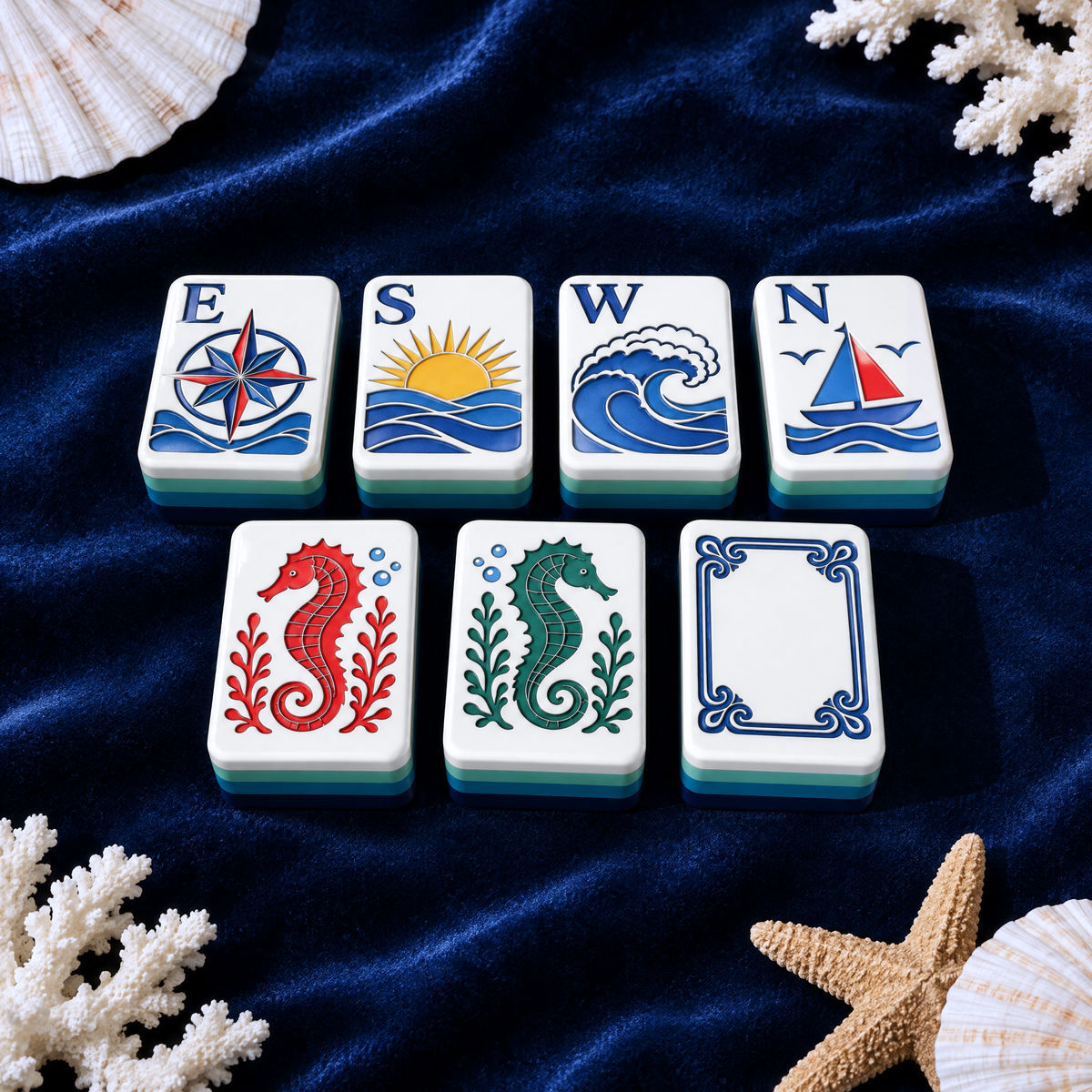
Sichuan mahjong scoring differs sharply from American play: instead of flat points or money, you earn a base score (usually 2–8 points per tile type in your hand) multiplied by bonus factors. Common multipliers include self-drawn winning (×2), Kong bonuses, honor tiles (Dragons, Winds), and limit hands that cap at maximum payment. Sichuan rules recognize around seven bonus types and typically pay East player at ×1.5 settlement; a winning hand might score 4 base points × 2 (self-drawn) × 2 (flower bonus) = 16 units before settlement. The strategy hinges on reading likelihood of completion, managing discards to block rivals' bonus paths, and calculating expected value against risk—unlike American play's static yearly card. Most Sichuan games complete a full 16-tile hand draw (no pass). Scoring sheets and reference cards are essential, and many players use best-selling mahjong sets with included guides as a learning foundation, though Sichuan variants require external rule supplements.
How do base points work in Sichuan mahjong?
Each tile type carries a point weight: numbered suits (1–9) often 1–3 points, Winds 2–4, Dragons 4–8, flowers 8–10. When you complete a hand, you add the base values of all 14 tiles, multiply by your melds' type (pung = ×1, Kong = ×2, quint = ×3), then apply bonuses. A hand of three Craks (1 Crak = 1 pt, so 3 = 3 pts) plus kongs and flowers might total 12 base before multipliers. The final settlement divides that among three opponents or concentrates it if you won by Kong draw or self-draw. Tracking base points honestly prevents disputes mid-game.

What bonuses multiply your Sichuan score?
Six core bonuses stack additively or multiplicatively depending on your ruleset (house rules vary widely): self-drawn win (×2), Kong bonus (each Kong adds 2–4 points), flower/season bonus (×2 if you hold all four, or per flower drawn), honor-tile bonus (extra points if all Winds or all Dragons in hand), all-pung hand (×1.5), and limit hand (capped maximum, typically 24–32 points). A hand with self-drawn, two Kongs, and all flowers might multiply 8–12× base—easily 20+ points. Many groups also apply first-to-win bonus (East pays ×1.5) and consecutive win bonus (same player wins two hands). These bonuses make Sichuan faster and more punishing than flat American scoring—one lucky hand can shift the session balance dramatically.
When should you calculate expected value vs. wait for a bigger hand?
This is the core strategic decision. If your hand holds 12 tiles, one discard from anyone completes your hand at ~8 base × 2 (self-drawn) = 16 units, but you're vulnerable to Kong claims and being blocked by rivals' discards. The math: (probability of draw within next 3 turns) × (final score) − (probability an opponent wins first) × (payment to them). If probability of your win is 60% over three turns and you'd score 16, that's 9.6 expected value; if a rival's win costs you 12, and their probability is 40%, the net is 9.6 − 4.8 = 4.8. Decision: call for win. But if you're two tiles short, your probability drops to 20%, expected value crashes to 3.2—often better to hold and build. Experienced players mentally track discarded tiles (like American mahjong tile-counting, but looser) to refine these odds. Writing a quick probability note on paper before your turn speeds group play and reduces argument.
Scenario | Hand Status | Bonus Stack | Base Points | Final Units | Call or Wait? |
One tile to win, no Kongs, self-draw likely | 13/14 tiles | ×2 (self-drawn) | 8 | ~16 | Call |
Two tiles short, no honors, rivals discard freely | 12/14 tiles | ×1.5 (all-pung only) | 5 | ~7.5 | Wait |
One tile, two Kongs, all flowers | 13/14 tiles | ×2 × ×2 × ×2 (stacked) | 10 | ~80 capped | Call fast |
Three tiles short, opponent has Kong bonus active | 11/14 tiles | ×1 (base) | 4 | ~4 | Fold/ wait |
How do Kongs drive strategy differently than American play?
In American mahjong, a Kong (4 identical tiles) scores as one exposed meld; in Sichuan, each Kong you form during play adds immediate bonus points to your hand and prevents rivals from using those tiles. If you Kong a 5 Dot set, you earn +3 points immediately, draw a replacement tile, and block anyone hoping for that 5 Dot. Strategic Kongs happen early (turn 4–6) to lock in bonuses before rivals complete; late Kongs (turn 12+) risk losing the hand to someone who draws first. A rival may purposely discard a tile that completes your Kong if their win score is higher—forcing you to Kong, draw a risky replacement, and lose tempo. The meta: form Kongs only when your base score justifies the delay, or when you're ahead and can absorb a hit. Many beginners Kong reflexively, bleeding points to faster rivals.
Why does East player settlement work differently in Sichuan?
In most Sichuan variants, the East player pays and receives at ×1.5 multiplier—so when East wins, South/West/North each pay ×1.5 of the final score. If the hand scores 10, East collects 15 from each opponent (45 total); if South wins, East pays ×1.5 while West and North pay ×1 (uneven). This creates an asymmetry: East should push for bigger hands because a 10-point win nets 45 vs. South's 30–35. Over eight rounds (two full rotations), East advantage compounds—roughly 20–30% swing across a session. Strategy: when you're East, tighten your standards (wait for 8+ base before calling); when South/West/North, call slightly smaller hands to lock East out of bonus turns. Recording East's cumulative points session-to-session shows whether the rule is working as intended or if one player is dominating through skill vs. luck.
🀄 Shop best-selling mahjong sets →

Checklist: What to check before you play Sichuan mahjong
Ruleset agreement: East multiplier, Kong bonus amount (2–4 pts), flower bonus (per-flower or all-four). Write it down.
Tile values: Confirm whether 1 Bam is higher than 9 Bam (varies by region) and whether Soap (White Dragon) = 0 or high honor.
Bonus stack order: Does self-drawn × 2 × Kong × 2 = ×4, or do some bonuses replace rather than multiply? Test one example hand.
Discard tracking: Keep discarded tiles visible in a line per player. Sichuan speed means tile-calling mistakes happen fast.
Scoring sheet: One person keeps running tally, not mental math. Disputes spike when players disagree on old rounds.
Session limits: Set win/loss cap (e.g., ±100 points per player per session) to prevent runaway losses.
How do Sichuan rules compare to other regional variants?
Chinese regional variants splinter widely. Sichuan emphasizes multiplier bonuses and speed; Cantonese (Hong Kong) mahjong uses a flat-points "fan and point" system closer to American's static structure. Shanghai mixes fast play with tile-concealment rules. Jiangxi focuses on all-pung and all-honor melds. The unifying theme: all except American use a drawn/called tile to end the hand immediately—no yearly card, no fixed rack of hands. If you learned American mahjong first, expect a learning curve; Sichuan players often find American's static card "too slow" and American players find Sichuan's multiplier stacking "chaotic." The best approach: play both, write down the local ruleset for Sichuan, and never assume a new group plays your previous group's variant.
🎁 See our most-loved mahjong sets & accessories →
Common Sichuan scoring mistakes (and how to avoid them)
Mistake 1: Calling a hand at 3 base points, forgetting East multiplier means you owe ×1.5 settlement. Fix: Always calculate settlement cost before you call—multiply by ×1 or ×1.5 depending on your seat, then divide by three opponents.
Mistake 2: Stacking bonuses wrong. A player Kongs, draws a flower, and self-draws—but your group doesn't agree whether that's (×2 Kong) + (×2 flower) = ×4 or just ×2 max. Fix: Before the session, play one test hand with all bonuses together and settle it in writing.
Mistake 3: Discarding a tile that completes a rival's Kong, not realizing it was a strategic move. Fix: Before you discard, glance at your opponents' exposed melds—if they're one tile short of a Kong, hold that tile unless you're winning this turn.
Mistake 4: Forgetting which tiles have been Konged. A player tables a Kong, draws, but no one marks which tile was Konged. Ten minutes later, someone claims a Crak 5 they haven't seen yet. Fix: Use a small token or note beside each Kong to show it's locked.
✨ Find your Mahstead set — free US shipping →
What you'll need to play Sichuan mahjong comfortably
A standard best-selling collection of 160 playing tiles works perfectly for Sichuan—though Sichuan play doesn't require the National Mah Jongg League card, the tiles themselves (Bams, Craks, Dots, Winds, Dragons, flowers, jokers) are identical. A mahjong mat with marked discard zones keeps play organized and speeds settlement. Many serious Sichuan groups use racks with pushers to hide their hands and prevent mis-calling—pushers let you hold 14 tiles securely without fumbling. For traveling to weekly games, a travel bag or case protects acrylic tiles from cracking. Score-tracking paper and a printed ruleset card are your best friends—write your group's house rules on a laminated card and keep it at the table.

FAQ
Does Sichuan mahjong use jokers like American mahjong?
Sichuan variants rarely use jokers in traditional play—they're a Western addition. Some modern recreational groups add jokers as wildcards (like American mahjong's flowers rule), but this isn't standard. Confirm before joining a new table.
Can I play Sichuan mahjong with an American mahjong set and card?
Yes, the tiles are the same. But you cannot use the National Mah Jongg League card for Sichuan hands—that card lists only American legal combinations. You need a Sichuan rulebook or your group's written rules.
What happens if two players complete a hand simultaneously?
The player with the draw (self-drawn wins priority over called wins in most rulesets). If both called, East settles first; if both are same seat, the first to announce wins. Always clarify this with your group before play.
Do I have to Kong immediately when I can, or can I hold the tiles hidden?
You may hold a hidden pung and keep it secret until you're ready to Kong—this is legal hiding play. Once you Kong, it's exposed and locked. Strategic groups use hidden pungs to feint their hand strength and confuse rivals' discards.
How do I calculate what I owe if I lose a hand?
If you lose and East won: (East's final score × 1.5). If another player won: (winner's final score × 1). Multiply by the number of opponents paying (usually 3). Example: East scores 12 points; you pay 12 × 1.5 = 18 units to East, 12 to each other player = 42 total out of pocket.


View More
View More
View More
