
Mahjong Tile Colors Meaning: American Game Guide
Last updated: Nov 23, 2026
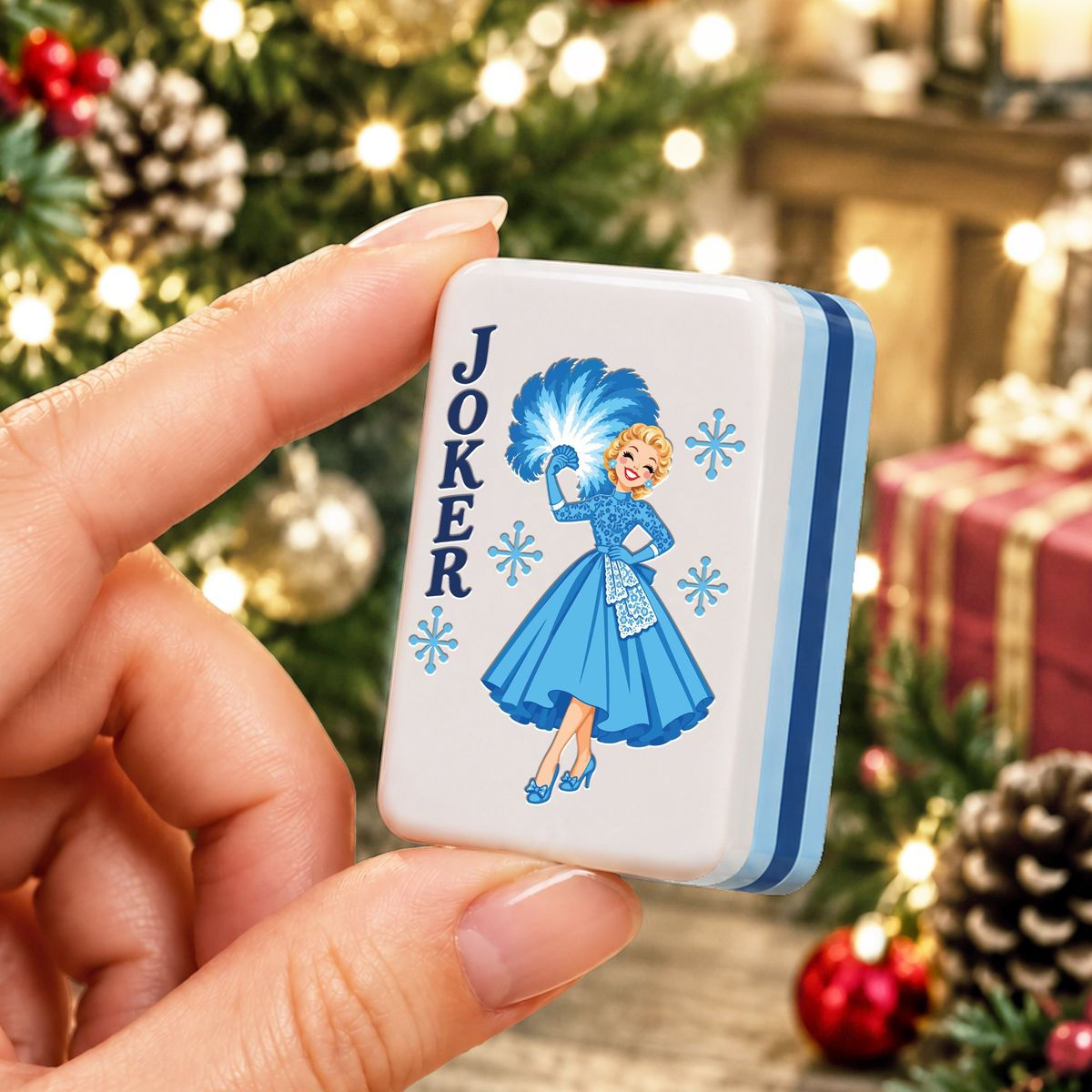
American mahjong tiles use color to distinguish three suits (Bams, Craks, Dots), honor tiles (Winds, Dragons, Flowers), and wild cards (Jokers). Bams are typically tan or bamboo-colored with stick symbols; Craks show red or orange circles; Dots display white or light colored circles. Winds (North, East, South, West) and Dragons (Red, Green, White/Soap) appear in their symbolic colors. Each tile's color plus its printed number or character tells you instantly what you're holding. Flowers and Seasons also use distinct colors to set them apart. At Mahstead, our engraved American mahjong sets feature acrylic tiles with crisp, high-contrast colors so every player at your table reads the board without squinting.
What do Bam, Crak, and Dot colors represent?
The three number suits in American mahjong use distinct colors to prevent confusion when you're scanning your rack. Bams are traditionally bamboo-tan or light brown—the 1 Bam shows a bird symbol. Craks appear in red or bright orange, numbered 1–9 with circular or cracked-circle designs. Dots are white or pale cream, marked 1–9 with hollow circles. Each suit runs from 1 to 9, and you hold four copies of each tile (36 tiles per suit, 108 total across all number tiles). When you're building a hand from the best-selling mahjong sets, these colors let you spot a pung (three identical tiles) or a kong (four identical) across the table in seconds—critical when opponents are calling.

Why are Dragons colored Red, Green, and White?
Dragons in American mahjong map directly to the number suits. The Red Dragon pairs with Craks (the red suit), so it's printed in red. The Green Dragon belongs with Bams, rendered in green. The White Dragon—called Soap because it's blank—goes with Dots and appears as a plain white or ivory tile. This color-to-suit bond isn't arbitrary; it helps you recall which dragon completes a suit-based hand pattern. On the current year's National Mah Jongg League card, many hands require one or more dragons, and color coding speeds your mental checklist when you're deciding whether to take a discard.
How do Winds differ in color and symbol?
The four Winds (North, East, South, West) are printed with their Chinese character and compass direction on each tile. Some sets use distinct colors—green for East, red or bright for South, white for West, and black or dark for North—while others keep all Winds in a neutral background with only the character to tell them apart. The color isn't a rule (unlike suits and dragons), so it varies by manufacturer and design. What matters is legibility: you must instantly identify which Wind you're holding, especially when calling Pung or Kong of Winds, so choose a set where the characters are large and clear, like our most-loved designs.
What about Flowers and Seasons—do they have color codes?
Flowers and Seasons (eight tiles total, one of each flower and season) are printed in naturalistic colors: plum blossoms in pink or white, orchids in purple, chrysanthemums in yellow or white, bamboo in green, spring in green, summer in red, autumn in gold, winter in white or blue. These visual cues help you sort them quickly and keep them visible when they're exposed on the table. Not all hands require Flowers, but when they do, the color makes them unmistakable. In your hand or on your rack, the lush palette of Flowers stands out from the geometric simplicity of number suits, so you never accidentally count a Flower as a Dot.
How do Jokers and blank tiles stand out in a set?
Jokers in American mahjong are the eight wild cards that substitute for any tile you need to complete a hand. They're typically bright red, hot pink, or neon—a shocking, unmistakable color that guarantees no one at the table misreads them as a number tile or honor. Blank tiles (extras in a 160-tile set, never part of the 152-tile play set) are plain white or clear acrylic with no marking. Jokers are the only tiles you're allowed to use as a wild card; blanks serve only as replacements if a tile is damaged during a game. The vivid color contrast between Jokers and every other tile is non-negotiable—if your set's Jokers look dull or similar to Whites, you'll cause confusion at the table and slow play. This is one reason why acrylic sets with bold color engineering outperform cheaper alternatives that skimp on dye or print quality.
Color-Coding Quick Reference Table
Tile Type | Color(s) | Count | Where Used |
Bams (1–9) | Tan / bamboo | 36 tiles | Number suit; 1 Bam = bird symbol |
Craks (1–9) | Red / orange | 36 tiles | Number suit; circular symbols |
Dots (1–9) | White / cream | 36 tiles | Number suit; hollow circles |
Red Dragon | Red | 4 tiles | With Craks; pairs in hands |
Green Dragon | Green | 4 tiles | With Bams; pairs in hands |
White Dragon | White / ivory | 4 tiles | With Dots; blank face or "Soap" |
Winds (N/E/S/W) | Varies or neutral | 16 tiles | Honors; symbol/character distinct |
Flowers (4) | Pink, purple, yellow, green | 4 tiles | Bonus tiles; set-dependent patterns |
Seasons (4) | Green, red, gold, white | 4 tiles | Bonus tiles; set-dependent patterns |
Jokers | Bright red / neon | 8 tiles | Wild cards; never in pair or single |

Real-World Example: Reading Your Rack
You're sitting down at your first game with a new set. Your rack shows a tan 3 Bam, a red 5 Crak, a white 7 Dot, a red Dragon, and a bright red Joker. You can instantly identify each without asking: the tan tells you it's a Bam; the red circular tile is a Crak; the white circle is a Dot; the red honor is a Red Dragon (goes with Craks); the neon Joker is wild and can substitute for anything. If your set used poor color contrast—say, the Craks and red Dragon looked the same shade, or the Joker was pale pink—you'd hesitate every time, and so would your opponents when reading your discards. That's why color quality matters more than novelty. Choose a set where each color is vivid enough to read from across a card table, even under dim lighting.
What to Check Before You Buy
Before you order a mahjong set online, verify that product photos or descriptions show:
Clear, distinct colors for each suit (Bam tan ≠ Crak red ≠ Dot white)
Bold color on Dragons (Red, Green, White are unmistakable)
Neon or bright Jokers that pop against number tiles
Large, legible characters on Winds and honors (not tiny fonts)
High-contrast print (dark character on light tile, or vice versa)
Acrylic or quality resin material that resists color fading over years of play
If a product photo is dim, dark, or colors blur together, ask the seller for a close-up in natural light. At Mahstead, every set ships with photos and sample tiles visible so you see the color palette before checkout.
🀄 Shop best-selling mahjong sets →
Why Does Color Clarity Matter for Scoring and Play?
Speed and accuracy are core to American mahjong. When you're discarding, calling, or checking another player's hand against the National Mah Jongg League card, you need to verify suit and honor instantly. A player with color blindness or aging eyesight especially benefits from bold, separated hues—a tan Bam, red Crak, white Dot palette is the gold standard because those three colors sit far apart on the visual spectrum. If your set uses muddy browns, washed-out oranges, or pale grays, everyone slows down. Play becomes tedious, mistakes happen, and the game loses its rhythm. This is why acrylic sets with vibrant, screen-printed or engraved color hold up better than painted ceramic over time. Color clarity also matters if you photograph your hand for reference during an online or remote game—poor color contrast photographs terribly and causes disputes.
How Does Set Material Affect Color Longevity?
Bamboo tiles, resin, and acrylic each handle color differently over decades of play. Bamboo is porous and can fade in sunlight; paint can chip or wear off high-contact edges. Resin can yellow over time, especially lighter shades. Acrylic, when properly dyed before molding, resists fading, doesn't chip easily, and holds vibrant color even after years in a humid game room or basement. At Mahstead, our 160-tile acrylic sets are engineered to preserve color clarity—the dye is integral to the material, not a surface coating. This means your Bam tan, Crak red, and Dot white stay visually distinct through hundreds of games, and the Jokers remain bright and unmistakable. If you store your set in a travel bag or case, the tiles are protected from sun and humidity, extending color life indefinitely.
🎁 See our most-loved mahjong sets & accessories →
Are There Regional Differences in Tile Color Conventions?
American mahjong follows the National Mah Jongg League standard, so colors are consistent across all official sets. Chinese mahjong, Hong Kong mahjong, and Riichi (Japanese) mahjong use different color schemes and tile inventories entirely—they include chows (sequences), have no Jokers, and organize suits and honors differently. If you're learning American play, stick with an American set and ignore tutorials for other variants, which will confuse you with incompatible colors and tile counts. The American standard is: three suits (Bam, Crak, Dot) in distinct colors, honor tiles in symbolic colors, and bright Jokers. If you ever join a game in another city or country and someone hands you a Chinese or Hong Kong set, the color layout will feel alien until you relearn the hand patterns—so commit to your set type. Our how-to-play guide walks beginners through American conventions so you're never second-guessing tile meaning.
✨ Find your Mahstead set — free US shipping →

FAQ
Why is the White Dragon called "Soap" in American mahjong?
White Dragon is blank-faced (no character), so old players called it Soap because it's the "clean" or blank tile. It pairs with Dots (the white suit) in scoring patterns and is never counted as a White honor—it's purely a Dragon. The slang persists in legacy games.
Can I use color alone to identify tiles in my rack, or do I need to read the number?
Color tells you the suit or honor; the number or character completes the ID. Never rely on color alone—a red Dragon and a red 5 Crak are different tiles. Always glance at the symbol to confirm which tile you're holding, especially when calling.
What if my set's colors look faded or washed out after a few months?
Fading usually means the tiles were printed (not dyed) or exposed to direct sun. Store your set in a bag or case indoors, away from windows. Acrylic sets resist fading far better than bamboo or cheap resin. If colors fade rapidly, the material quality was poor from the start.
Does every mahjong set use the same colors for Bam, Crak, and Dot?
American mahjong sets follow the National League standard, so yes, colors are consistent: Bam is tan/bamboo, Crak is red/orange, Dot is white/cream. Variations in shade (darker tan, brighter red) exist, but the palette is uniform so you can play with any American set.
How do I teach a beginner to remember tile colors without overwhelming them?
Start with one suit: "Bams are tan sticks, Craks are red circles, Dots are white circles." Repeat it aloud each time you pick a tile the first few rounds. Then introduce Dragons ("Red with Craks, Green with Bams, White with Dots"). Flowers and Jokers are intuitive—bright and colorful. Color sticks faster than you'd expect.
Is it okay to buy a set with unusual or trendy colors if it makes the tiles harder to read?
No. Readability trumps aesthetics at the mahjong table. A set with neon green Bams and electric blue Craks might be striking but creates confusion and slows play. Choose a set where the color palette is clear and traditional, then express style through the engraving or case design.


View More
View More
View More
