
Sichuan Mahjong Scoring: Rules, Points & Hand Values
Last updated: Nov 23, 2026
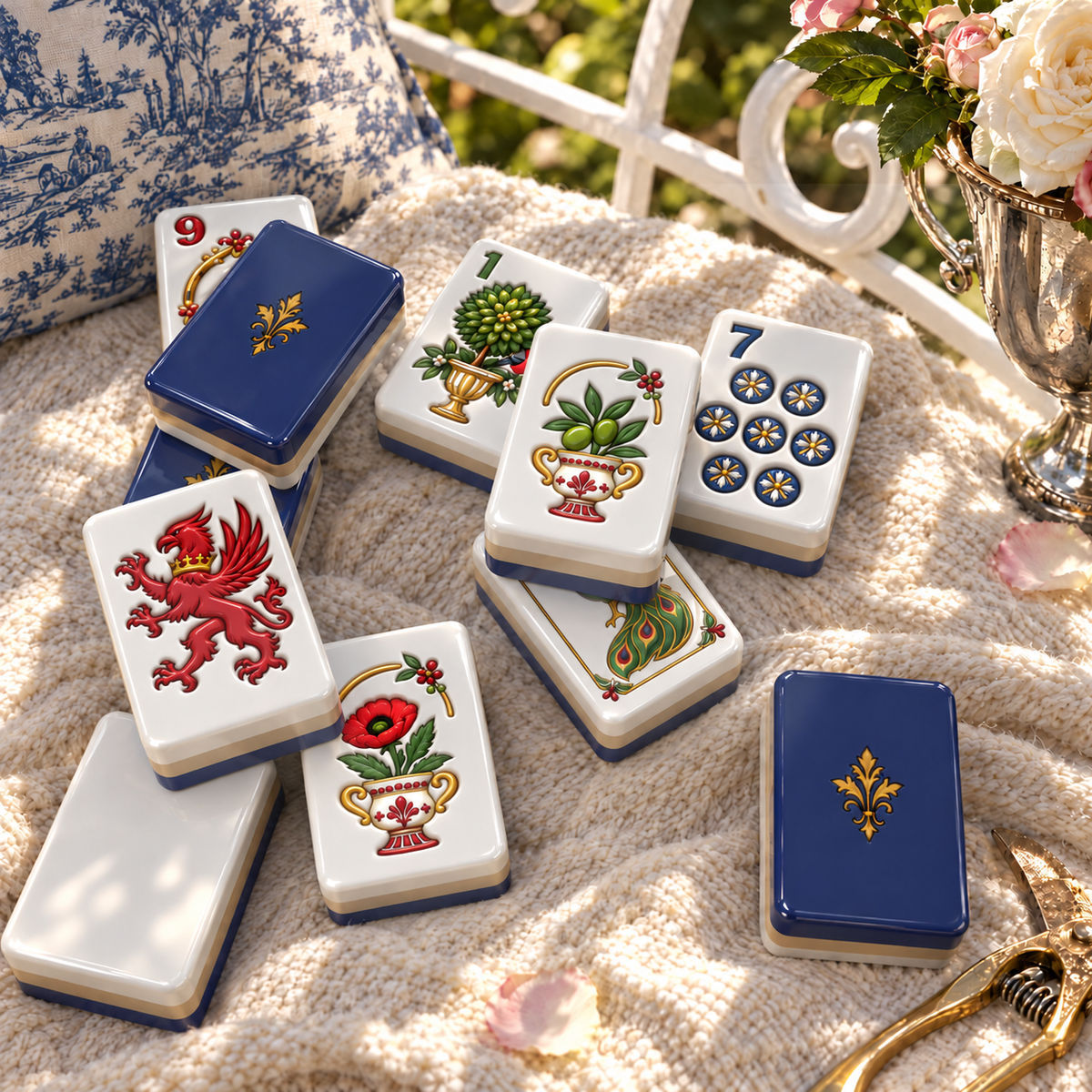
Sichuan mahjong scoring awards points for melds (pungs, kongs, chows), winning condition, and bonus tiles (dragons, winds, flowers). A standard winning hand scores between 8 and 50+ points depending on the combination; the winner collects payment from all three players. Gameplay uses only 108 tiles (one suit of 1–9 per player role, plus honors), no jokers. Rounds conclude when someone declares "mahjong" (melds 14 tiles into a legal pattern). Unlike American mahjong, Sichuan allows exposed chows and assigns points per meld type. Games are typically best-of-rounds or first-to-a-target-score; no standard equipment brand dominates Sichuan play, but our acrylic sets work for casual learning if you add region-specific house rules.
How do meld types earn points in Sichuan mahjong?
In Sichuan, each exposed meld carries a fixed point value. A pung (three identical tiles) scores 2 points if it's a minor tile (1–9 of a common suit), or 4 points if it includes a dragon or wind. A kong (four identical tiles) doubles: 4 points for minors, 8 points for honors. A chow (three consecutive tiles like 5–6–7) scores 1 point only if you declare it as part of a sequence hand; not all Sichuan variants allow chows. Flowers (if used) are typically bonus: 1 point each, collected at hand's start. The winning payment depends on whether your final meld was drawn from the discard pile, the wall, or from another player's discard—some variants award bonus points for "self-drawn" wins (called tsumo in Riichi mahjong). Count every exposed meld on the table plus your concealed winning hand to reach the total before settling.

What are bonus points for winning conditions?
Sichuan awards bonus points for how you complete your hand. If you draw from the wall (not discard), you earn a 2-point bonus. If someone discards into your declared hand, you earn 1 point (sometimes no bonus). Completing a pung of dragons or pung of the round wind awards 2 bonus points. Some tables grant 4 points for going "mahjong" (declaring all tiles in melds or a final pair) with no other player having discarded. House rules vary widely by region and table; always confirm bonuses before the game begins. A hand that scores 8–12 total points is typical; hands exceeding 30 points often involve multiple honors, a self-drawn win, and favorable melds, making them rare and valuable.
How do flowers and honors affect the score?
Flowers are not always used in Sichuan mahjong; some regions include them, others don't. When flowers are present, each player receives a flower tile at the start. If your flower matches the round (e.g., a Spring tile in Round 1), you score an extra flower point immediately and draw a replacement. Flowers in your hand at the end do not count toward melds unless you've combined them into a specific bonus pattern. Wind tiles (North, East, South, West) act as honors: a pung of your own wind (the wind assigned to your seat position) scores bonus points; a pung of the round wind (drawn at the start of each round) also scores bonus. Dragons (typically three or four types, depending on variant) each form pungs worth 4 points for any player—they carry no positional advantage. Some Sichuan variants award 1 bonus point per flower tile held at hand's end; confirm this before dealing.
What's the scoring difference vs. Hong Kong and Riichi mahjong?
Variant | Hand Size | Melds Allowed | Winning Tile Source | Typical Base Score |
Sichuan | 14 tiles | Pungs, kongs, chows | Wall or discard | 8–20 points |
Hong Kong | 14 tiles | Pungs, kongs, only concealed chows | Discard preferred | Calculated by fan system |
Riichi | 14 tiles | Pungs, kongs, chows (calls allowed) | Wall (tsumo) or discard | 1000+ points per hand |
American | 14 tiles | Pungs, kongs, quints, sextets only | Discard only | Based on National League card hand |
Sichuan uses a flat points system: 2–4 points per meld, plus bonuses. Hong Kong mahjong uses fan-and-point layering: a hand is worth a certain number of "fan" (multipliers), which then translate to base points, creating scores in the hundreds. Riichi (Japanese) scores in the thousands by default and involves formal hand types (yaku). American mahjong does not assign point values at all—you match the current year's League card hand; if you match, you win; if not, you cannot declare. For casual Sichuan learning, focus on meld types and the 2–4 point rule; ignore fan or yaku.

How do house rules change scoring at your table?
Most Sichuan mahjong games run under local house rules that override standard scoring. Common variations include: all pungs: a hand of only pungs (no chows) scores double points; all honors: a hand using only wind and dragon tiles scores triple points; set a target: play to the first person to reach 100 points, collecting from all players each round. Some regions use payment multipliers: if you win with a high-score hand (over 16 points), you collect double from each player instead of single payment. Before playing, establish three rules: (1) Do chows count?, (2) How many flowers are in play?, (3) What is the target score or number of rounds? Write these down so no disputes arise mid-game. Many overseas players adopt "first to 100" as a neutral rule that mirrors Riichi's speed without the formal complexity.
🀄 Shop best-selling mahjong sets →
What should you check before learning Sichuan scoring?
Confirm the tile set: Sichuan uses 108 tiles; American sets contain 152 tiles plus jokers. Both can teach the scoring system, but a Sichuan set (108 tiles, no jokers) eliminates confusion.
Ask your players: Which house rules do they follow? Are chows allowed? Do flowers count? How many rounds?
Pick one bonus rule and stick to it for three games; then adjust if needed.
Keep a score sheet: jot down each player's total after each hand; disputes nearly vanish when scores are written.
Test with two people first: play a practice hand, count every meld aloud, verify the total before anyone pays.
Why does Sichuan mahjong appeal to fast-play groups?
Sichuan mahjong moves faster than American mahjong because the hand limit (108 tiles vs. 152) and simpler meld rules (any three identical = pung, any sequence = chow) mean fewer valid hands on the board. Rounds often conclude in 10–15 minutes; an afternoon session can run 20–30 games. Scoring happens live (per meld), so no shuffling through a reference card. American mahjong requires the current year's National League card to look up valid hands; Sichuan depends only on player agreement. This speed attracts college students and casual meetups. If you host a Sichuan group regularly, invest in a durable acrylic set with a matching mat—wear and tear is heavier with frequent play.
🎁 See our most-loved mahjong sets & accessories →
Common scoring mistakes and how to avoid them
Mistake 1: Forgetting to add bonus points before payment. Count melds first, then add bonuses (self-drawn +2, dragon pung +2, etc.), then collect from all players. Many players pay after the first count and miss the bonus—recount aloud.
Mistake 2: Allowing chows without agreement. If chows are not explicitly allowed at your table, a player who declares a 5–6–7 hand may not be valid. Agree before the first hand starts.
Mistake 3: Mixing up pung and kong scores. A pung (3 tiles) is 2 or 4 points. A kong (4 tiles) is 4 or 8 points. Write it on a card and place it in the center of the table during play.
Mistake 4: Not confirming the winning tile. If a tile comes from the wall, the winner earns a bonus. If from the discard, no bonus (or a smaller one). Verify before payment.
Mistake 5: Playing without a target score. Open-ended games invite rules chaos. Set a first-to-X target (commonly 100 or 150 points) and announce it when the first hand starts.
✨ Find your Mahstead set — free US shipping →

FAQ
Is Sichuan mahjong the same as Cantonese mahjong?
No. Cantonese (Hong Kong) mahjong uses a fan-and-points system (scores in hundreds), while Sichuan uses flat 2–4 point melds. Both allow chows and use 108 tiles, but scoring rules and bonus conditions differ significantly.
Can I use an American mahjong set to play Sichuan?
Yes, but with caution. An American set has 152 tiles plus jokers; you'll need to remove extra tiles and explain that jokers don't apply. A true Sichuan set (108 tiles, no jokers) is clearer for new players.
Do I need to memorize all the house rules?
No. Before each game, ask one player to state three rules: (1) Are chows allowed? (2) What is the target score? (3) Do flowers count? Write them down and refer to the card if disputes arise.
What is a "self-drawn" win in Sichuan mahjong?
You draw a tile from the wall and that tile completes your hand (mahjong). This earns a +2 bonus before payment. If an opponent discards the winning tile, you earn no bonus (some tables award +1).
How many flowers are in a Sichuan set?
Typically four (Spring, Summer, Autumn, Winter), one per player. Some regional variants use eight flowers or none at all; confirm before your first hand.
What does "mahjong" mean in Sichuan terms?
Declaring "mahjong" means you have arranged all 14 tiles into valid melds (minimum three pungs/kongs/chows plus a pair). You then score points for those melds and collect from all three players.
Are Sichuan and Riichi scoring the same?
No. Riichi (Japanese) scores in thousands and uses formal hand categories (yaku). Sichuan scores in tens and uses simple meld counting. They play with the same tile count but different rules.


View More
View More
View More
