
Sichuan Mahjong: Rules, Tiles & How It Differs from American
Last updated: Nov 23, 2026
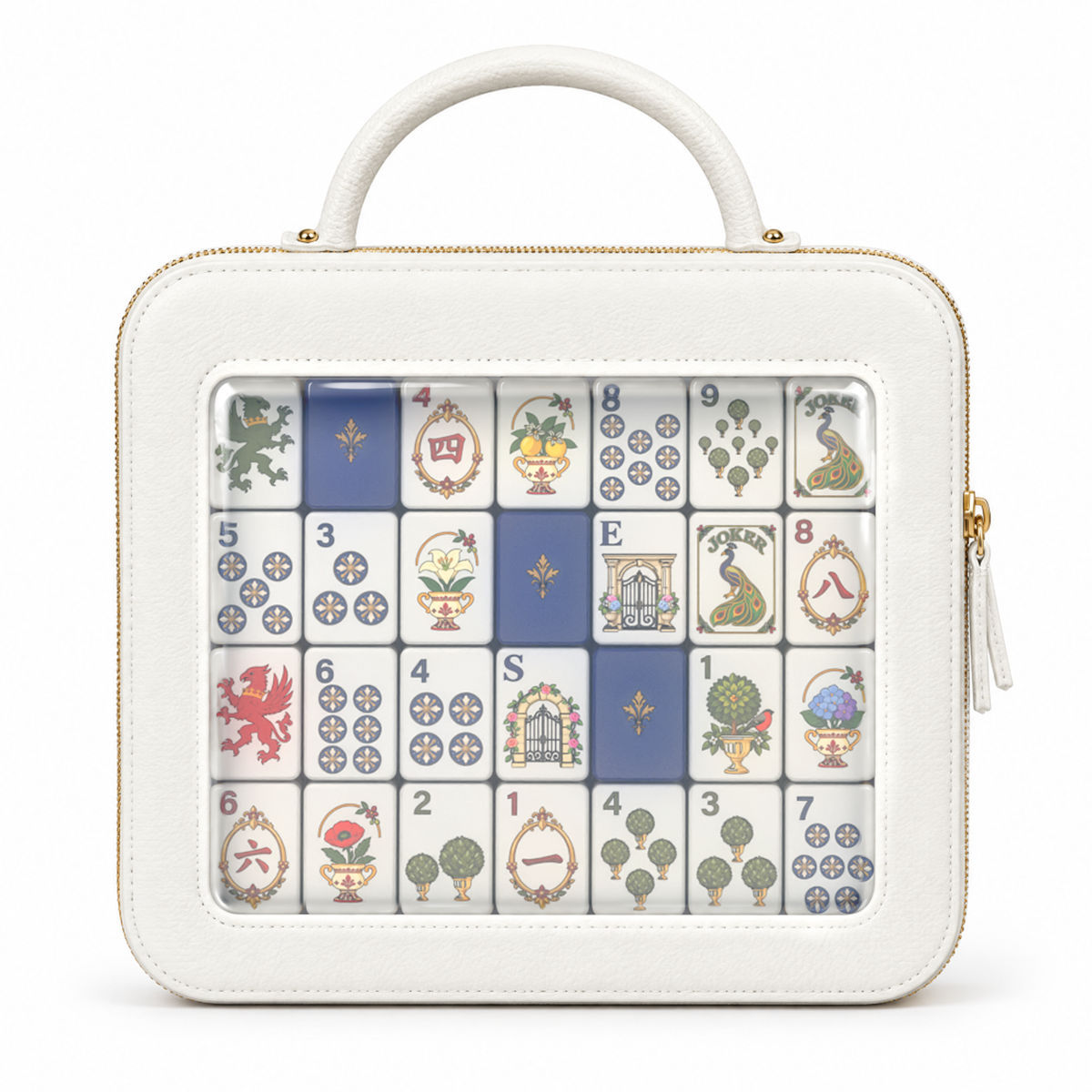
Sichuan mahjong is a Chinese regional variant played with 108 tiles (four suits: Honors, Bamboo, Characters, Dots), jokers, and a completely different hand-matching system than American mahjong. Games typically last 20–40 minutes per hand and emphasize rapid tile recognition and strategic joker play. Unlike American mahjong, which follows the year's National League card, Sichuan uses traditional hand patterns based on combinations (like sequences, sets, and wildcards). You'll need a 108-tile set with jokers, though players often add extra jokers. Jokers in Sichuan can substitute for any tile in most hands, making them far more flexible than in American play, where jokers are strictly controlled. The game has regional scoring conventions that vary by city; we recommend learning the house rules of your group first.
What tiles are in a Sichuan mahjong set?
Sichuan mahjong uses 108 base tiles: four suits (Honors, Bamboo, Characters, Dots), each containing numbers 1–9 or special tiles like winds and dragons. Jokers—usually 2–4 per set—act as wildcards. Unlike American mahjong's 152-tile structure with flowers and fixed tile counts, Sichuan's 108-tile core reflects the traditional Chinese game. Many players add extra jokers to speed up hand completion. Each tile appears in multiples; you'll recognize the green bamboo (often showing a bird on the 1), red character tiles, and round dot symbols. The total playable count depends on house rules, but the core remains these 108 tiles plus jokers.

How do Sichuan jokers work differently from American mahjong?
In American mahjong, jokers substitute for a single missing tile within a specific pung, kong, or quint you've already declared—and they never form pairs or singletons. In Sichuan mahjong, jokers are far more liberal: they can represent almost any tile in most hand types, and players often use them to complete sequences, sets, or pairs more flexibly. This means Sichuan games finish faster and rely more heavily on joker strategy; you must count and plan joker usage carefully. American players accustomed to tight joker rules often overbuild hands in Sichuan without realizing how many jokers they've committed, leaving themselves stuck. Before sitting down, confirm your group's joker rules—some regions allow jokers in pairs, others don't; some cap jokers per hand, others don't. This single house-rule difference can reshape every decision you make.
What are the main hand patterns in Sichuan mahjong?
Sichuan hands revolve around two core patterns: melds (sequences of 1–2–3 or 4–5–6, etc., across one suit) and sets (three or four identical tiles like three 5-Bamboos). A winning hand typically contains four melds and one pair, much like traditional Chinese mahjong. However, some Sichuan variants allow eyes (pairs) to be any two identical tiles, not just specific dragon or wind pairs, and some permit all-honors hands or all-simples hands with bonus scoring. The hand structure is far more forgiving than the specific National Mah Jongg League card hands American players memorize each year. Your winning hand must be declared at the table and witnessed before you claim the win; there's no referee card to check. This means house consistency and verbal clarity matter enormously.
How does Sichuan mahjong scoring work?
Sichuan scoring is region-dependent and often simpler than American mahjong's complex fan-based system. Most Sichuan groups use a point-per-hand model: a basic winning hand might be worth 1 or 2 points; hands with special patterns (all sequences, all honors, multiple jokers) earn multipliers. Unlike American mahjong, where the 2026 National League card dictates payoffs, Sichuan scoring is purely customizable—your group negotiates it before the first hand. Some regions use monetary stakes (small coins per point), others keep score numerically for pride alone. Before your first game, write down your group's scoring rules on a piece of paper so everyone references the same system. Disputes about scoring are the top reason casual Sichuan games turn tense; clarity prevents all of it.
How does the discard and draw cycle differ from American play?
In American mahjong, a player draws one tile, discards one, and the next player draws the discard or the live wall. In Sichuan, the cycle is nearly identical in mechanics but differs in speed and flexibility: Sichuan players are usually allowed to call tiles more freely. If you discard a tile that completes a meld for another player, that player can immediately declare the win or claim the tile for a meld (called pung or kong in traditional play), and the hand stops. This means a careless discard—especially late in a hand—can end the game instantly. American players used to laying off dead tiles must re-learn Sichuan's faster-paced discard psychology. Also, in many Sichuan groups, the draw order cycles through players in a set round direction (East, South, West, North) for multiple hands; American mahjong rotates who holds which seat after each hand based on wins. Confirm your group's draw cycle and seat rotation before playing.

What are the key rule differences when moving from American to Sichuan mahjong?
Rule | American Mahjong | Sichuan Mahjong | Impact |
Tiles in play | 152 (4 suits, fixed counts, flowers) | 108 + jokers (traditional suits, variable jokers) | Sichuan is faster; tile counting is simpler |
Hand reference | Current-year National League card | House rules & regional patterns | Sichuan requires verbal agreement; no printed guide |
Joker flexibility | Strict; one joker per exposed meld, never in pairs | Liberal; varies by region; often used in pairs | Sichuan hands finish faster; strategy shifts |
Winning call | Must match the card exactly; referee checks | Group witnesses & agrees; no card check | Sichuan relies on honesty; misunderstandings escalate fast |
Seat rotation | Rotates after each hand, winners may hold seat | Often rotates per hand in set cycle | Predictability vs. variability; learn your group's method |
Pung/Kong exposure | Allowed; jokers cannot form exposed singletons | Allowed; joker rules vary by region | More flexibility in Sichuan, but house rules trump all |
The single biggest adjustment: American players expect a printed card to settle disputes; Sichuan players rely on consensus. If your group hasn't played together before, spend 10 minutes aligning on four rules—joker use, hand patterns, scoring, and seat rotation—and write them down.
Should I buy a separate Sichuan set, or can I adapt an American mahjong set?
You can technically play Sichuan with American tiles—the suits and numbers are universal—but American sets are over-engineered for Sichuan. American sets include flowers (never used in Sichuan) and often 160+ tiles (Sichuan needs only 108–120 total). However, an American set gives you extra jokers and a familiar tile aesthetic, which helps new players learn. If you're serious about Sichuan and play weekly, a dedicated 108-tile Chinese set (available through general game retailers) is lighter, simpler, and culturally authentic. If you're starting out or splitting time between American and Sichuan games, a best-selling acrylic American set works fine—just set aside the flowers and use your group's joker count. Many Dallas-area players do exactly this: one versatile American set for both games, plus a travel mat and racks to keep tiles organized during the faster Sichuan pace. The clarity of acrylic tiles helps when you're learning new hand patterns.
🀄 Shop best-selling mahjong sets →
How do I learn Sichuan rules if my group plays it differently than another group?
There is no single Sichuan standard—each city, even each neighborhood, has house rules. Chengdu, Shanghai, and Chongqing all play with regional tweaks. When you sit down with a new group, ask three questions first: (1) How many jokers do we use, and can they form pairs? (2) What hand patterns count as winning? (3) What's the scoring multiplier for special hands? Write their answers on a notepad before the first hand, and refer back if disputes arise. Many online communities (Reddit's r/mahjong, regional WeChat groups, and local mahjong clubs) have Sichuan players willing to explain their house rules; YouTube channels dedicated to Chinese mahjong also walk through regional variants. The fastest way to learn is to play one hand, lose deliberately (or for play-money), ask questions, and play again. Experienced Sichuan players expect beginners to ask; skipping questions leads to conflict later.
What to check before you buy a set for Sichuan play
Tile clarity: Acrylic or bone tiles? You'll be calling hands fast—make sure numbers and suits are unmistakable from a distance. Engraved designs are beautiful but only if they don't obscure the rank.
Joker count: Does your group prefer 2, 3, or 4 jokers? American sets come with 8; you'll use only a handful per hand.
Weight & portability: Sichuan hands move quickly. Lightweight acrylic tiles are easier to shuffle and reset rapidly. If you're hosting weekly games, a travel bag with handles keeps your set safe and organized between sessions.
Mat & racks: Not essential, but a durable mahjong mat prevents tiles from sliding during fast play, and racks with pushers keep your hand hidden from other players.
House rules written down: Before buying, confirm with your group what tiles and joker count they use. An over-equipped 160-tile American set is wasted if your group plays 108+2 jokers only.
🎁 See our most-loved mahjong sets & accessories →
Sichuan mahjong rewards speed, pattern recognition, and communication over the rigid card-checking ritual of American play. If you're switching between the two, expect your first few hands to feel chaotic—that's normal. The jokers will feel too flexible, the hand patterns too forgiving, and the lack of a reference card maddening. Play through it. By hand five, you'll stop checking for non-existent flowers, and by hand ten, you'll love the pace. The key is to nail down your group's house rules before your first win dispute; everything else flows from clarity.
✨ Find your Mahstead set — free US shipping →

FAQ
Can I use an American mahjong set to play Sichuan?
Yes. Set aside the eight flowers and use your group's preferred joker count. American sets are over-equipped but perfectly playable for Sichuan. If you play Sichuan weekly, a dedicated 108-tile Chinese set is lighter and simpler, but not mandatory.
Why do Sichuan jokers work so differently than American mahjong jokers?
Sichuan jokers originated in traditional Chinese mahjong, where they substitute for any tile in melds and pairs. American mahjong tightened joker rules deliberately to increase difficulty and skill. Sichuan still follows the older, more permissive system.
How long does a Sichuan mahjong hand take compared to American?
Typical Sichuan hands last 15–40 minutes depending on draw luck and group speed. American hands (with the National League card) often run 20–50 minutes due to the precision required to match the card. Sichuan feels faster because hand patterns are simpler and jokers finish hands quicker.
Do all Sichuan groups score the same way?
No. Sichuan scoring is completely regional and varies by house rules. Before your first game, ask: Do basic hands pay 1 or 2 points? Do special patterns (all sequences, all honors) multiply the base? Are stakes monetary or numerical? Write it down and confirm with all four players.
What's the biggest mistake American players make when switching to Sichuan?
Expecting a printed card to settle disputes. In American mahjong, the National League card is the referee. In Sichuan, the group is the referee. This means you must speak up immediately if you disagree—silence is consent. Also, American players often hoard jokers too cautiously; Sichuan hands expect liberal joker use, so adjust your building strategy.
Can I play Sichuan mahjong with only three players or two?
Traditional Sichuan is designed for four players. Some groups play three-player variants, but rules vary wildly by region. Ask your group if they accommodate fewer players, and if so, confirm how they adjust the tile wall and winning conditions. Two-player Sichuan is rare and requires significant rule tweaks.


View More
View More
View More
