
Best Mahjong Travel Bags Under Budget: What to Compare
Last updated: Nov 23, 2026
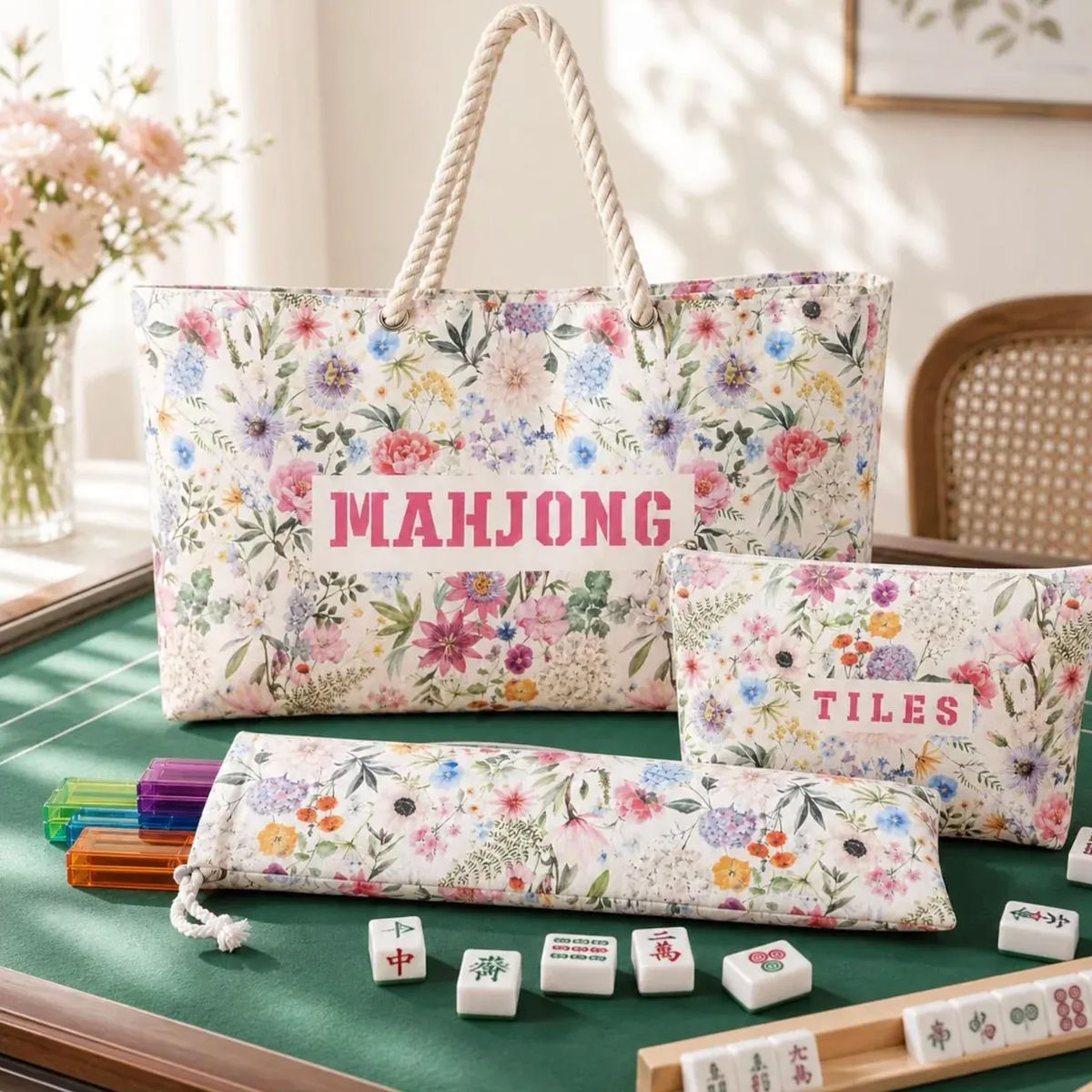
A mahjong travel bag is a padded carrier designed to hold a 160-tile set, mat, racks, and dice without damage during transport. Most are soft-sided nylon or canvas with foam padding, shoulder straps, and internal pockets. Size ranges from compact (fits a set and mat, weighable around 3–5 pounds when packed) to large enough for a full game kit including racks and spare tiles. Budget options start at the low end and climb based on material thickness, compartments, and brand reputation. Mahstead offers bags and cases in several styles—from simple sleeves to multi-compartment carriers—so you can match your needs without overspending. The key is balancing protection (padding thickness, stitching), access (how many pockets), and weight (if you carry it often). Avoid bags marketed for other purposes (generic "game bags" without mahjong-specific padding) and always measure your set's dimensions before ordering. 🀄 Shop best-selling mahjong sets →
What size bag do you actually need?
Most American mahjong sets—including our 160-tile acrylic sets—measure roughly 10 × 7 × 3 inches when assembled in their original box. A travel bag must fit that footprint plus padding, and ideally leave room for a small mat, dice, and pushers. Measure your specific set before buying: some acrylic sets are heavier and bulkier than tile-only options. A compact bag (12 × 8 inches internal) works for the set alone; a medium bag (15 × 10 inches) accommodates the set plus a rolled mat; a large bag (18 × 12 inches or bigger) holds a complete game kit. If you play at different venues weekly, prioritize a medium or large with padded dividers so tiles don't shift during car rides. Weigh the packed bag: anything over 8 pounds becomes fatiguing to carry repeatedly. Choose a size that leaves one inch of clearance on all sides—tight fits invite crushing and zipper strain.

Soft case vs. hard shell: which protects better?
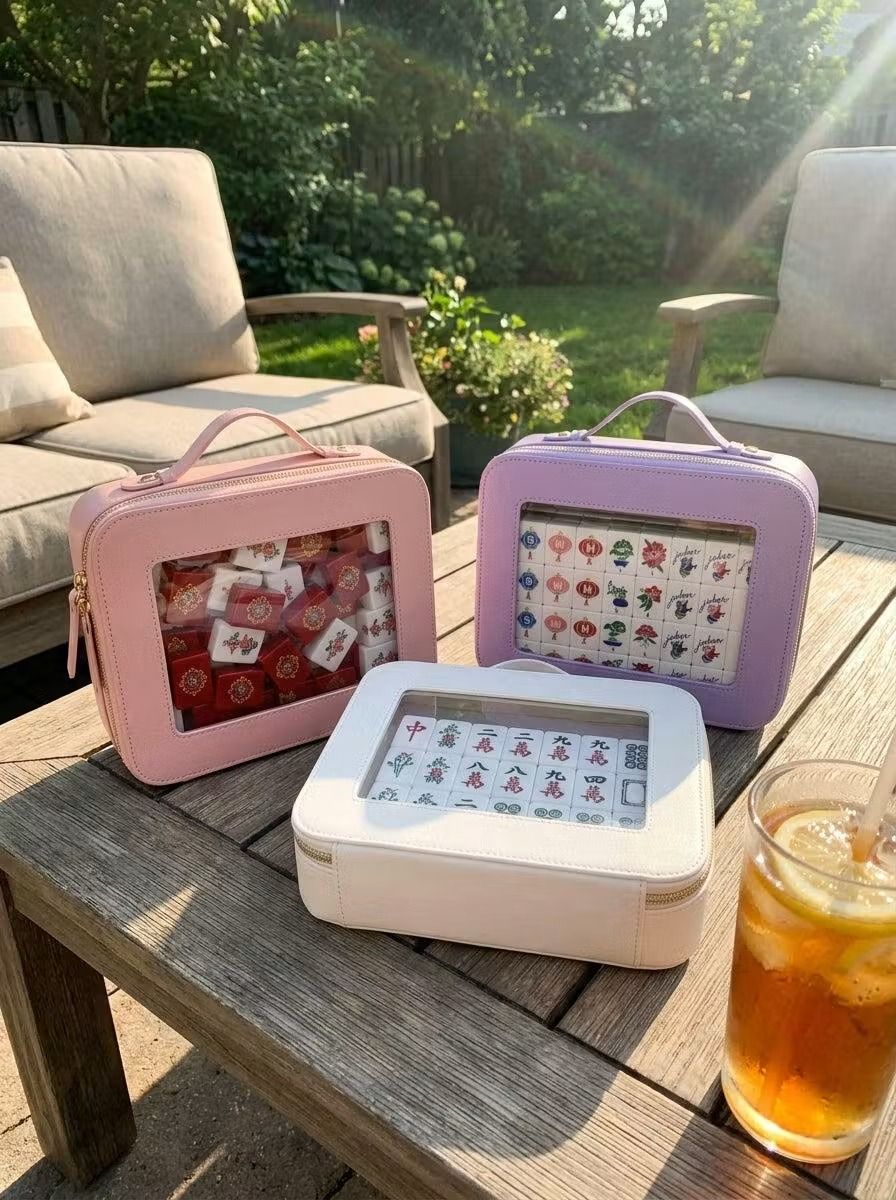
Soft-sided nylon or canvas bags with half-inch foam padding are lighter, more portable, and work for casual weekly games in climate-controlled homes or nearby venues. Hard shells (plastic or molded cases) offer superior crush resistance and weatherproofing, ideal for tournament travel or outdoor events, but weigh significantly more and cost more. Most mahjong players hosting home games prefer soft cases for convenience; players who travel by car frequently or fly to tournaments lean hard shell. Stitching and zip quality matter more than material type: a poorly sewn soft bag fails faster than a well-constructed one. Check that padding is glued or quilted throughout—not just at corners. For bags under your budget, confirm that seams are reinforced and zippers have sliders on both sides (two-way zips let you open from top or side). Our travel bag collection includes both styles; read individual product descriptions to verify padding thickness and compartment count.
🎁 See our most-loved mahjong sets & accessories →
How many pockets and dividers do you need?
A one-compartment sleeve bag is cheapest but forces you to wrap tiles, mat, and dice separately or let them shift. A two-pocket design lets you stash the set in one and a mat or dice pouch in the other. Multi-compartment bags (four or more pockets) provide a pocket for racks, one for pushers, one for dice, and a zippered mesh pocket for rule cards or score sheets. Weekly game hosts benefit from dedicated pockets—no fumbling to find pushers mid-game. Solo players or beginners can manage with two pockets. A crucial feature is a key clip or mesh pocket on the outside: it holds your car keys or phone without cluttering the main bag. Check whether dividers are removable (they let you customize layout for future sets) or fixed (they prevent tile movement but limit flexibility). Interior dimension labels or photos in product listings tell you compartment sizes; cross-reference against your set's box to ensure snug fit without crushing.
Price, material, and durability comparison
Bag Type | Primary Use | Material | Typical Padding | Durability | Best For |
Compact sleeve | Single set, short trips | Nylon | ¼–½ inch foam | 2–3 years casual play | Occasional players, minimalist hosts |
Medium soft case | Set + mat, weekly games | Canvas/nylon blend | ½–¾ inch foam | 4–5 years regular use | Home game hosts, car travel |
Large multi-pocket | Full kit, frequent transport | Reinforced nylon | ¾–1 inch foam | 5+ years heavy use | Tournament players, traveling groups |
Hard shell case | Maximum protection, air travel | Polycarbonate/molded plastic | Built-in rigidity | 7+ years | Serious collectors, road trips |
A budget-conscious choice balances initial cost (see current price on product pages) against how often you'll replace it. Soft cases with ½-inch padding and two pockets last 3–5 years in weekly home games; hard cases cost more upfront but tolerate abuse. Reinforced stitching and nylon blends outperform single-layer materials. Look for bags with interior name tags—resale value or claim-back after tournaments depends on identification. Most mid-range options include a shoulder strap and carry handle; premium bags add a luggage pass-through (slides over suitcase handles for airport travel).
✨ Find your Mahstead set — free US shipping →

What to check before you order
Measure your set's box dimensions and add 1 inch on all sides for padding clearance—then confirm the bag's internal dimensions match.
Count the tiles and accessories you'll carry: if you own engraved mahjong sets or multiple sets, ensure the bag fits or plan two bags.
Verify padding thickness in the product description or photos—at minimum ½ inch for any set containing acrylic or bone tiles.
Check compartment count against your kit: set goes in one, mat in another, racks and pushers in a third.
Read reviews for zipper durability: zippers fail faster than padding; two-way sliders and reinforced ends signal quality.
Test the shoulder strap: a narrow strap cuts into your shoulder on heavier bags; padded straps are worth the trade-off in weight.
Ask about return or exchange policy if the bag doesn't fit your set—most reputable sellers offer 30 days.
Factor in future purchases: if you plan a second set soon, buy a bag that holds two side-by-side.
Why most players regret their first bag choice
Players often buy the cheapest option and discover the zipper sticks after five uses or tiles shift during a 20-minute drive. Others choose large cases when they only need small, then carry unnecessary weight to every game. The real cost isn't the initial price—it's replacing a failed bag mid-season, scrambling to borrow one, or damaging tiles because padding was thin. We see frequent game hosts invest in medium soft cases with four pockets and reinforced zips; that single choice eliminates 90% of transport headaches. A second mistake: buying a bag designed for other board games (chess, Scrabble) that lack mahjong-specific padding or don't protect acrylic tiles from temperature swings. Acrylic can crack if exposed to rapid heat or cold; thicker, enclosed bags minimize risk. The most reliable bags pair sufficient padding (¾ inch minimum), side-seam stitching, and compartments that isolate tiles from moisture and sunlight. At Mahstead, we've listened to players' transport frustrations and curated our travel bag collection to eliminate guesswork.
Matching your bag to your game style
Home game host, weekly 4-player sessions: Choose a medium soft case with two to three pockets and a shoulder strap. You'll appreciate the dedicated mat pocket and the ability to sling it over one shoulder as you move from kitchen to living room. Reinforced nylon and ½-inch padding are sufficient; weight should stay under 6 pounds when packed. This setup costs less than a hard case but outlasts a cheapest-option sleeve bag by years.
Traveling or tournament player: Invest in a hard shell or multi-pocket reinforced soft case with a luggage pass-through. You'll move the bag through cars, onto planes, and in and out of vehicles; extra padding (¾+ inch) and rigid protection justify higher cost. Include a TSA-friendly lock slot if flying.
Casual or learning player: A compact nylon sleeve with ¼-inch foam protects the set and keeps it portable. Budget-conscious, short lifespan expected—but perfect while you decide if mahjong is "your game."
Collector or gift giver: If you own or plan multiple best-selling mahjong sets, buy a large case that holds two sets side-by-side, or two medium cases. This prevents buying three bags piecemeal and ensures consistency in your game room.
Free shipping and final thoughts
Mahstead offers free US shipping on all orders, so the bag arrives ready to use. Inspect padding, zips, and seams upon arrival; most carriers handle padded cases well, but confirm no transit damage before your first game. Break in your bag with empty runs before loading your full set—zippers loosen up, and you'll learn which pockets work best for your accessories. A great travel bag doesn't need to be expensive; it needs to fit your set, protect it, and last through hundreds of plays. Spend time matching bag type and material to your actual use, measure before ordering, and you'll enjoy years of hassle-free transport.
FAQ
Can I fit a mahjong set and mat in the same small travel bag?
Yes, if the bag is at least 12 × 8 inches internally and has two compartments. Roll the mat tightly and nest the set box beside it. Confirm internal dimensions before ordering to avoid crushing either item.
What's the difference between a mahjong bag and a generic game bag?
Mahjong bags include acrylic-specific padding (thicker, more rigid) and compartments sized for 160-tile sets and rectangular mats. Generic game bags often have thinner foam and square pockets, risking tile damage and poor fit. Always confirm the listing mentions mahjong sets.
Do I need a hard shell case or is soft padding enough?
Soft padding with ½–¾ inch foam is adequate for weekly car transport and home play. Hard shells are necessary only if you fly frequently, play outdoors, or transport sets in overhead compartments. Soft cases weigh less and are easier to store at home.
How do I know if a bag's padding is thick enough?
Check the product description for padding thickness (measured in inches) or ask the seller directly. Minimum ½ inch for acrylic sets; ¾ inch or more if you travel often. Look for photos showing the bag's cross-section or interior.
Can I fit racks and pushers in the same bag as my set?
Yes, if it's a multi-compartment bag (four or more pockets). Place racks in one pocket, pushers in another, and the set in a main compartment. Confirm total internal volume by adding compartment sizes from the product listing.
What should I do if the bag doesn't fit my set?
Contact the seller within 30 days (most offer exchanges). Measure your set's box dimensions and the bag's internal dimensions before reordering. Confirm whether the new bag accommodates padding thickness without crushing the set.
Are bags with shoulder straps better than handles for weekly play?
Shoulder straps are more convenient for one-handed carrying between rooms or cars; handles work if you set the bag down often. Padded straps reduce fatigue on heavy loads; narrow straps cut into shoulders. Choose based on how often you carry it and distance between play venue and storage.
Do I need a separate dice bag or does it fit in the main compartment?
Dice fit inside the main compartment but can rattle and damage tiles. A dedicated zippered pocket or small pouch keeps them silent and protected. Most medium and large bags include a mesh pocket for dice and small accessories.


View More
View More
View More
