
Sichuan Mahjong Beginner Strategy: Hand Selection and Tile Flow
Last updated: Nov 23, 2026
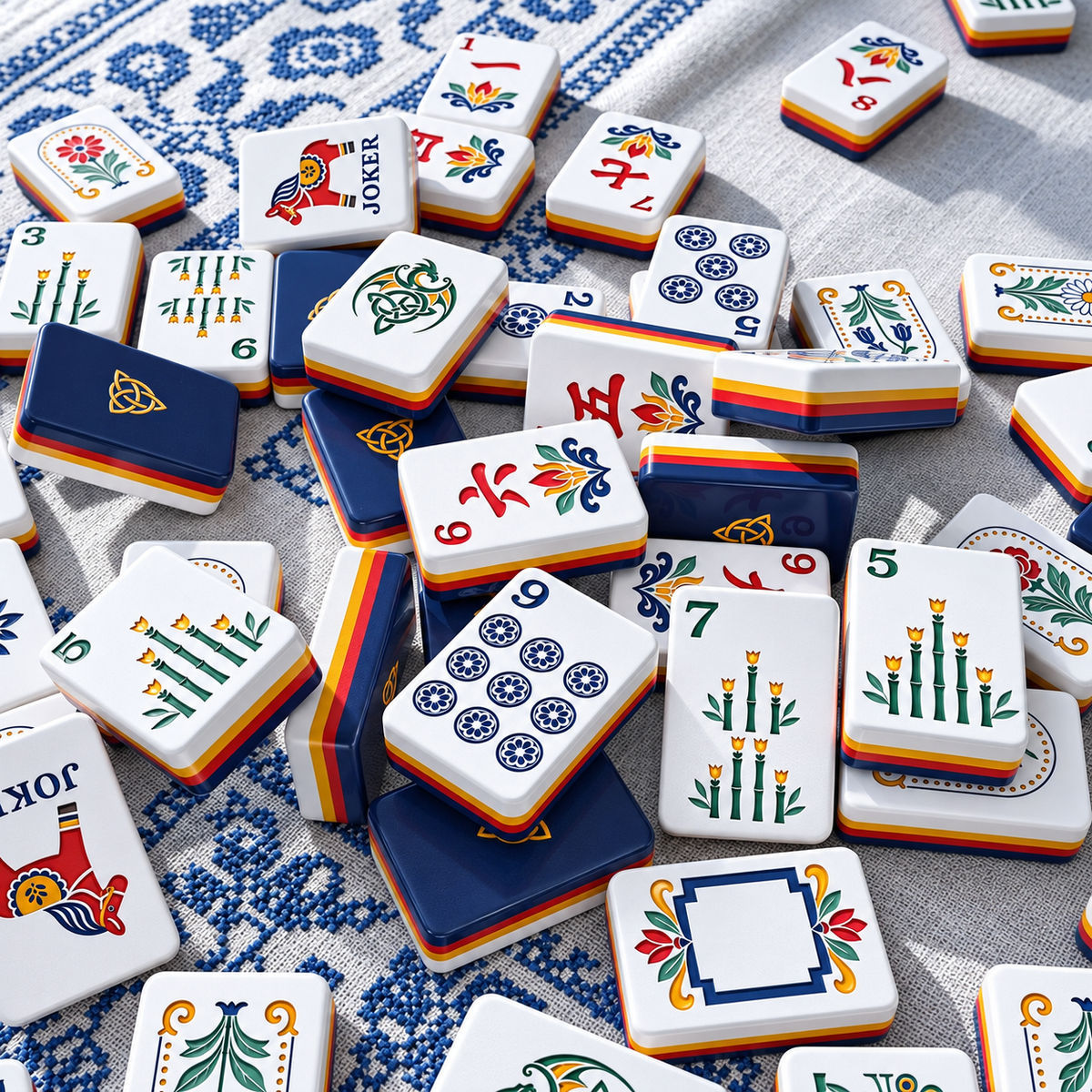
Sichuan mahjong is played with 136 tiles (no winds or flowers), emphasizing speed and pattern recognition over the fixed-hand system of American mahjong. Winning hands consist of one pair plus four melds (pung, kong, or sequence), where sequences—unlike American play—are actively called and exposed. Beginners should start by learning the 14 basic hand types, prioritize keeping sequences and pungs over isolated high-value tiles, focus on completing one suit before spreading across all three, and watch opponents' discards ruthlessly to spot winning tiles before declaring. Most games run 15–30 minutes; common beginner mistakes include holding too many orphan tiles hoping for late-game luck and ignoring drawn tiles that signal which melds neighbors are building. A quality tile set with clear markings helps beginners track flow; we recommend acrylic sets for their durability during the rapid play Sichuan demands. 🀄 Shop best-selling mahjong sets →
What is Sichuan mahjong and how does it differ from American play?
Sichuan mahjong strips down the standard 152-tile Chinese set to 136 tiles—removing winds and flowers entirely—creating a lean, speed-focused game. In American mahjong, you match hands from a published seasonal card and cannot call sequences; in Sichuan, you build hands dynamically, calling sequences (chow) freely as they form. A complete Sichuan hand is one pair plus four melds (three or four tiles each). This means the game rewards quick pattern spotting and aggressive melding over careful hand planning. Play revolves around reading the discard stream: when an opponent throws a tile you need, you must call it immediately or lose it forever. Beginners often struggle with this real-time pressure compared to American mahjong's deliberate pace, where every hand is pre-set and no sequences are exposed.

How do you select starting hands and early melds in Sichuan?
The foundational rule in Sichuan strategy is: favor hands that declare in 13 tiles, not 14. This means you want a hand where one additional drawn tile completes a winning pair-plus-four structure instantly. Start by grouping your opening 13 tiles into obvious melds (three consecutive numbers, three identical tiles) and one waiting pair. Do not hold three isolated high-value terminals (1, 9 of each suit) hoping they connect later; instead, discard one immediately and concentrate on the middle numbers (2–8), which form sequences far more often. If you draw a tile that starts a new suit, ask yourself: "Does this tile complete a meld I'm building, or does it sit alone?" If the latter, discard it unless it's a valuable honor tile like 5 or 7 that you're actively collecting. Early in the hand, expose melds as soon as three matching tiles arrive; exposing melts pressure on opponents and signals your direction, forcing them to discard safely around your pattern.
What is the one-suit strategy and why do beginners ignore it?
Winning beginners play one-suit Sichuan hands 70% of the time. A one-suit hand means your pair and all four melds come from a single suit (Bams, Craks, or Dots). For example, a winning hand might be: three 2-Bams, three 5-6-7-Bams, three 8-Bams, four 3-4-5-Bams, plus a pair of 9-Bams. Why is this so strong? Because every tile you draw from that suit is useful (either filling a gap or replacing a joker), and you discard 9–10 tiles from the other two suits, each signaling opponents not to save those numbers. Beginners scatter their hopes across two or three suits because they fear "bricking"—running out of useful tiles in a single suit. But spreading thin guarantees slow hand development; opponents will circle back and exploit your weakness. Focus on one suit for the first 8–10 draws; only if that suit dries up (two consecutive opponents discard nothing from it) do you pivot. The one-suit discipline also teaches you to read the table: if three 4-Dots have been discarded and your hand needs 4-Dots, you know the fourth is in someone's hand—either exposed or a blocker.
How do you read opponent discards and spot your winning tile before declaring?
Discard order reveals intent; a skilled player watches which tiles each opponent throws and in what sequence. If East discards a 2-Crak on turn two and a 3-Crak on turn four, East is unlikely to hold 1-2-3-Crak sequences and is probably avoiding that suit. Conversely, if South throws a 7-Dot, then a 6-Dot two turns later, South may be fishing for a 5-Dot to complete 5-6-7 (a two-way wait). Beginners spot their winning tile too late because they're focused on their own hand. Instead, before each draw, mentally list the three most dangerous tiles for each opponent (tiles that would complete their likely melds). When someone discards a tile, move it to "safe." When someone exposes a meld, study which tile they called: that's the suit and number range they're pursuing. Most critical: if an opponent exposes a pung (three identical tiles), every tile in adjacent numbers (one above and one below) becomes a potential winning tile for them—be ready to block by discarding safely or winning yourself. The player who declares first wins, regardless of opponents' readiness, so speed and awareness merge into strategy.
What are the top three beginner mistakes in Sichuan tile management?
Mistake | Why it kills your hand | Fix |
Holding 2–3 orphan honors (terminal/flower) hoping to pair them late | Orphans rarely improve; they clog your hand and slow melding | Discard one orphan early; keep only one per suit as a pair prospect |
Calling every meld the moment three tiles appear, even if you need the hand flexibility | Exposed melds lock your direction; opponents block those suits aggressively | Expose melds only if they serve your one-suit target; hold concealed melds (hidden in hand) when unsure |
Discarding randomly when behind, instead of reading what's safe | Random discard often gives an opponent their winning tile; you accelerate their win | Track exposed melds; discard tiles that would complete their patterns; throw from suits three opponents have already discarded from |
The deepest beginner trap is hand hesitation: sitting on a "maybe" tile for three turns waiting for a draw that never comes, then panicking and discarding it too late. Commit early. If you draw a tile that doesn't fit your one-suit plan within two draws of receiving it, discard it. Speed and decisiveness are Sichuan superpowers.

When should you switch strategies mid-hand and when should you stay the course?
Stay the course if:
You've exposed 1–2 melds in your target suit and discarded 6+ tiles from other suits (opponents see your direction clearly).
At least one other player is fishing in a different suit (you're not competing for the same tiles).
Your hand is 11 tiles away or closer from winning; pivoting now means rebuilding from 13 tiles.
Pivot immediately if:
The suit you chose has yielded zero useful draws in five turns and three opponents have heavily discarded from it (the fourth player holds all the tiles you need—a losing race).
You've exposed a meld, but the two sequels to that meld have not appeared after five combined draws from all players (the meld is a dead end).
An opponent has exposed two melds in your target suit; they're ahead, and competing wastes tiles.
The pivot is simple: abandon exposed or hidden melds in the old suit; select a new suit from your hand (pick the one where you already hold two tiles that can form a sequence), and discard everything from the old suit over the next two turns to signal the shift. Do not waffle; commit to the new suit for at least five more draws before considering another pivot.
🎁 See our most-loved mahjong sets & accessories →
A beginner checklist: your first Sichuan session
Tile clarity: Use a set with distinct tile markings and high contrast (avoid similar-looking 1 and 9 under poor light; acrylic sets eliminate glare).
Hand organization: Arrange tiles in suits (Bams left, Craks center, Dots right) and by sequence within each suit; this cuts scanning time by half.
Discards visible: Lay discards in a 3×3 grid so all players see which 9 tiles are out; beginners miss signals when discards pile randomly.
Pace agreement: Confirm hand length (11 or 13 rounds) before starting; Sichuan varies by region.
One suit per hand: Commit to a single suit for your first five hands; only deviate after you've won at least once.
Watch opponents closely: Before your turn, glance at each player's exposed melds and last three discards; this five-second habit halves your decision time.
What to check before you buy a Sichuan mahjong set
Not all acrylic mahjong sets support rapid Sichuan play equally. When shopping, confirm:
Tile numbering clarity: Can you spot the 1–9 index on each tile in low light? Sichuan games move fast; unclear markings cost you seconds per draw.
Set completeness for Chinese-style play: Standard 152-tile American sets include winds and flowers, which you'll ignore in Sichuan. A 136-tile Chinese set is ideal, but a 152-tile set works fine (you simply don't use winds and flowers). Verify the seller includes enough spare tiles in case of damage during transport or extended play.
Racks and mat fit: Acrylic tiles are wider than bone; if you use racks, confirm they're sized for modern tiles. A mahjong mat designed for rapid play with clear tile grooves prevents scrambling during fast discards.
Longevity for travel: If you'll transport your set between sessions, choose durable tile material and a protective case that won't crack or warp in car trunks or basements.
Our best-selling mahjong sets come in acrylic with clear markings, and all ship free across the US—ideal if you're outfitting a regular Sichuan group.
✨ Find your Mahstead set — free US shipping →
Sichuan progression: from beginner to intermediate
Your first 10 hands should focus on one-suit discipline and reading discards; your second 10 should add "tenpai awareness"—recognizing when you're one tile away from winning and playing defensively. By hand 25, practice two-suit hands where your melds split 2–2 across two suits; this unlock winning in 12 tiles instead of 13, a significant speed advantage. Only after 50+ hands add honor tiles (terminals and pair-holders) intentionally; beginners who hunt honors too early clog their hand and lose to one-suit players. Sichuan rewards pattern memory and speed; the best way to improve is to play the same group weekly, so everyone learns the table's tile flow and risk tolerance.

FAQ
Can I play Sichuan mahjong with an American 152-tile set?
Yes. American sets include winds and flowers; simply don't use them. You'll still have all 136 tiles needed for Sichuan. Some players remove the 8 unused flowers and 16 winds before dealing to avoid confusion, but it's not required.
What's the fastest way for a beginner to learn the 14 basic Sichuan hand types?
Play each hand type once in a practice round before real play begins. Most regions use: one pair plus four melds (single color, mixed color, all terminals, honor-heavy, etc.). Ask your table for a hand-type reference card, or find a regional rulebook online.
If I'm stuck between two strategies mid-hand, what should I do?
Discard the tile that appears in fewer of your melds and fewer likely opponent patterns. Speed beats perfection in Sichuan; a decisive wrong choice loses fewer points than hesitation.
How do I know if an opponent is close to winning?
If they've exposed 3+ melds or haven't discarded from one suit in three turns, they're fishing there. Discard from that suit yourself (or block their likely tiles) until they declare or discard from it again.
Should beginners avoid playing with experienced Sichuan players?
No; play alongside them. Watching their discard order, calls, and pivots teaches more than ten practice rounds alone. Ask them after a hand why they discarded a specific tile—most players enjoy explaining strategy.
Is there a difference between Sichuan mahjong and "Chengdu" or "Chuan" mahjong?
Sichuan, Chengdu, and Chuan often describe the same game, varying slightly by whether jokers (wildcards) are used and how many tiles remain in the wall. Confirm house rules before your first session; differences matter for scoring.


View More
View More
View More
