
Riichi Mahjong Chanta Rules: When Terminals Win
Last updated: Nov 23, 2026
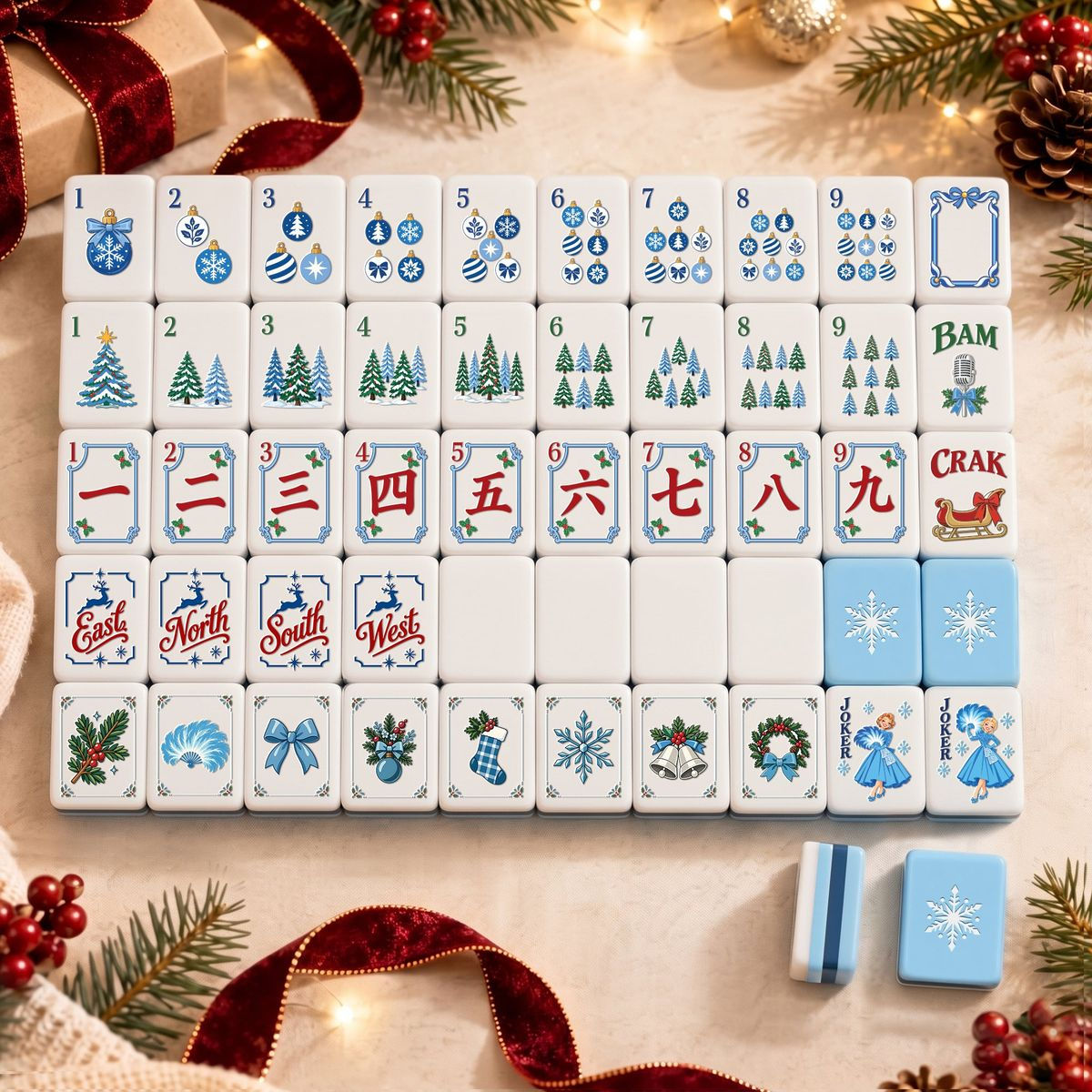
Chanta (チャンタ) in riichi mahjong is a yaku requiring your winning hand to contain only terminals (1s and 9s of each suit) and honor tiles (winds and dragons)—no number 2 through 8. Each of your four melds plus your pair must use only these tiles. Chanta scores 2 han (if open/called on another player's discard) or 3 han (if closed/concealed until win). It's different from American mahjong, which has no yaku system and no terminals-and-honors pattern. In riichi, chanta is so common that many winning hands combine it with another yaku (like tanyao, the opposite—only 2–8 tiles) to score higher. We see chanta several times per game night because it's achievable with simpler tile combinations than pure patterns like all sequences or all triplets.
🀄 Shop best-selling mahjong sets →
What tiles count as terminals and honors?
Terminals are the 1 and 9 of each suit: 1 Bam, 9 Bam, 1 Crak, 9 Crak, 1 Dot, 9 Dot. Honors are the four winds (East, South, West, North) and three dragons (Red, Green, White). Together, these form the 13 unique tile types allowed in chanta. Any tile numbered 2 through 8 breaks your hand immediately, whether exposed or hidden. If you're building chanta and draw a 5 Crak, discard it—it will never score. This rule applies equally to all four meld types you can form: pungs (triplets), kongs (quads), and sequences.

Why does open chanta score less than closed chanta?
Open chanta (明顺, "minshun"—called on someone else's discard to complete a sequence, or with exposed melds) scores 2 han at completion. Closed chanta (门前清, "menzen"—tiles all hidden in your hand until you win) scores 3 han. Riichi mahjong rewards concealment because it means you have more control and risk; you've held the full pattern secret. In contrast, American mahjong does not separate open and closed scoring—every valid hand scores the same points based on the official yearly card. The 1-han penalty for open hands is one reason experienced riichi players often hold chanta patterns longer before calling, hoping to win with it closed and earn the bonus.
Can you combine chanta with other yaku?
Yes, and this is where chanta becomes strategic at the table. The most common pairing is chanta + tanyao—also called "chanta with tanyao" or simply doubling down on terminal/honor play. Tanyao requires only numbered tiles 2–8 (the exact opposite of chanta's tiles), so they are never compatible in the same hand. However, you often see chanta combined with toitoi (all triplets), sanankou (three concealed triplets), or honroutou (all terminals and honors, a standalone yaku that encompasses chanta's tile set). When two yaku score together, their han values add. A hand with chanta (3 han closed) plus honroutou (2 han) gives 5 han total—a significant jump toward yakuman (limit hands). We track these combinations mentally during discard; spotting that an opponent is collecting only 1s, 9s, and honor tiles tells us they're chasing a multi-yaku pattern.
How do sequences and triplets work in chanta?
In chanta, you cannot form a sequence (also called a run or "shuntsu") using only terminals and one honor, because sequences require three consecutive numbers in one suit—and terminals are 1 and 9, which are not consecutive. For example, 1-9 Bam is not a sequence. However, you can form honor sequences if your rules variant allows them (some rule sets do not). In most common riichi variants, you form triplets and kongs from the 13 allowed tiles (the terminals and honors). So a chanta hand might consist of: a pung of 1 Dots, a pung of East winds, a pung of 9 Bams, and a pair of Red dragons. All four melds follow the rule, and the hand wins. This is different from American mahjong, where sequences are never called or exposed; you only expose triplets, quints, and sextets of identical tiles.
What mistakes lead to a failed chanta hand?
The most common error we see is drawing or calling a tile numbered 2–8 and not discarding it immediately. A 5 Crak or 7 Dot invalidates the chanta pattern entirely; you cannot "use it anyway" or downgrade to a different yaku mid-hand. Once you call a tile into a meld (by winning on it or taking it from the discard pile to complete an exposed meld), it is locked. Another mistake is forgetting that 1 and 9 are not consecutive, so 1-9-something is never a valid sequence even if you have another tile. A third error is misidentifying a closed vs. open hand: if you've called even one meld by taking a discard, your hand is now open and scores only 2 han instead of 3. Many players also assume chanta includes tiles they haven't carefully verified—double-check your pair is an honor or terminal before declaring. We use a mental checklist at the table: all four melds from the 13 tiles, pair also from the 13, no drawn tiles that break it. If all four boxes check, you have chanta.
🎁 See our most-loved mahjong sets & accessories →

Chanta vs. American mahjong—why the difference?
American mahjong uses a static yearly card listing all legal hand patterns; there is no yaku system at all. You simply match your tiles to a published pattern (e.g., "three pungs of Bams, two pungs of winds, one pair of Craks") and score points based on exposure and the card's difficulty ratings. In riichi mahjong, you build hands using yaku rules—a set of point-scoring conditions that any combination of tiles can satisfy as long as it meets each yaku's definition. Chanta is one of approximately 40 standard yaku. American mahjong does occasionally feature terminal-heavy patterns (especially pairs and triplets of 1s and 9s), but there is no equivalent scoring rule for "all terminals and honors" because American play is pattern-driven, not condition-driven. If you're switching between the two games, recognize that in riichi you're learning why a hand scores (its yaku), whereas in American play you're checking whether your hand matches a card entry. This fundamental difference means a chanta hand cannot be scored under American rules, and vice versa.
Attribute | Chanta (Riichi) | American Mahjong |
Tiles required | Only 1, 9, winds, dragons | Varies by yearly card pattern |
Scoring basis | Yaku (condition-based) | Named hand (pattern-based) |
Han/points | 2 han (open), 3 han (closed) | Points per card difficulty |
Sequences allowed | Only among numbers; honor sequences rare | Never—no called sequences |
Can combine yaku | Yes, han values add | No—one pattern per hand |
Tile set size | 136 tiles (standard riichi) | 152 tiles (American standard) |
✨ Find your Mahstead set — free US shipping →
What to check before you play chanta hands
Know your rule variant: Chanta rules differ slightly between Japanese, Hong Kong, and online platforms (Tenhou, etc.). Some allow honor sequences, others do not. Agree with your table before starting.
Verify the 13 tiles: Write down or memorize the 13 allowed tiles (1–9 of three suits, plus four winds and three dragons). Check your hand against this list before calling or going out.
Track discards: Watch what your opponents discard. If someone throws away 1s and 9s early, they're likely not chasing chanta. If they're hoarding them, they might be.
Calculate dan (rank) impact: In tournament riichi, a 5-han hand (chanta + another yaku) pushes into mangan (limit hand) territory. Know your scoring table so you don't overbid.
Declare concealment clearly: If your hand is all hidden (menzen), state it before or at win so you earn the 3-han score, not the 2-han open score.
If you're learning riichi mahjong and want a quality set with clear tile markings, acrylic or bamboo sets designed for multiple variants help you practice the 13 chanta tiles without confusion. Riichi-style sets often display numbers and symbols crisply, making it easier to verify tile types during rapid play.
When does chanta lead to higher scores?
Chanta rarely scores alone; it's a stepping stone. The magic happens when you pair it with honroutou (all terminals and honors as a standalone yaku worth 2 han), pushing you to 5 han (3 + 2) or more. Another common pairing is chanta with sanankou (three concealed triplets, 2 han)—if all four of your melds are triplets (no sequences) and all are hidden, you stack both yaku. A fifth pairing is chanta with toitoi (all triplets, 2 han). In practice, we look for hands that are "chanta-adjacent": a player collects 1s and 9s of multiple suits plus several honors early in the hand. If they can also complete two or three hidden triplets from those tiles, they jump from 3 han to 5 or 6. This is why spotting a chanta pattern early in your opponent's discards helps you defend—if you see them holding multiple 1s and 9s, you'll likely face a 4+ han hand, not just a 3-han chanta.
Why learn chanta if other yaku seem easier?
Chanta is a foundation yaku that teaches tile classification and concealment strategy. By learning to identify the 13 allowed tiles instantly, you build the muscle memory for other yaku that overlap with terminals and honors—like honroutou, sanankou, and toitoi. Additionally, chanta hands are frequent, so if you ignore it, you'll miss scoring opportunities and lose games. In our weekly sessions, chanta appears in roughly 10–15% of all winning hands because it's neither too restrictive (like all green tiles) nor too broad (like tanyao). Learning to spot and build chanta early means you can switch strategies mid-hand if needed—hold it closed for the 3-han bonus, or call tiles and pivot to another hand if you draw blocking tiles. Finally, chanta teaches you defensive play: if your opponents are chasing chanta, you now know which tiles to force out and which to hold, giving you a competitive edge.

FAQ
Can I use jokers in chanta?
No. Riichi mahjong does not use joker tiles at all. American mahjong uses jokers, but riichi does not. In riichi, you must have actual tiles from the 13 allowed types; there is no substitute.
If I draw a 5 Crak while chasing chanta, must I discard it immediately?
Yes. Any tile numbered 2–8 cannot appear in your hand once chanta is your target. Discard it at your earliest turn. Holding it risks losing the yaku if you draw a winning tile before discarding the 5.
Does chanta count if only one of my melds uses terminals and honors?
No. All four of your melds and your pair must use only the 13 allowed tiles. If even one meld contains a 2–8, the hand is not chanta.
What's the difference between chanta and honroutou?
Honroutou (all terminals and honors) is a separate, higher-value yaku. Both require the same 13 tile types. Chanta is 2–3 han; honroutou is 2 han standalone but often appears with chanta to add together. Honroutou is not as frequently scored because it's more restrictive in hand structure.
Can I form a sequence using 1 East, 2 East, 3 East?
No. Riichi honor sequences (winds and dragons) do not form sequences with numbers or with each other in most rule sets. The two exceptions (where honor sequences exist) are rare online variants. Stick to triplets and kongs for honors and terminals.
If I'm one tile away from chanta and I win on a 6 Dot, does the hand score?
No. You cannot score chanta if your winning tile is numbered 2–8. The hand is dead. You must win on a 1, 9, wind, or dragon to validate chanta.


View More
View More
View More
