
Sichuan Bloody Mahjong Strategy: Rules, Scoring & Winning Play
Last updated: Nov 23, 2026
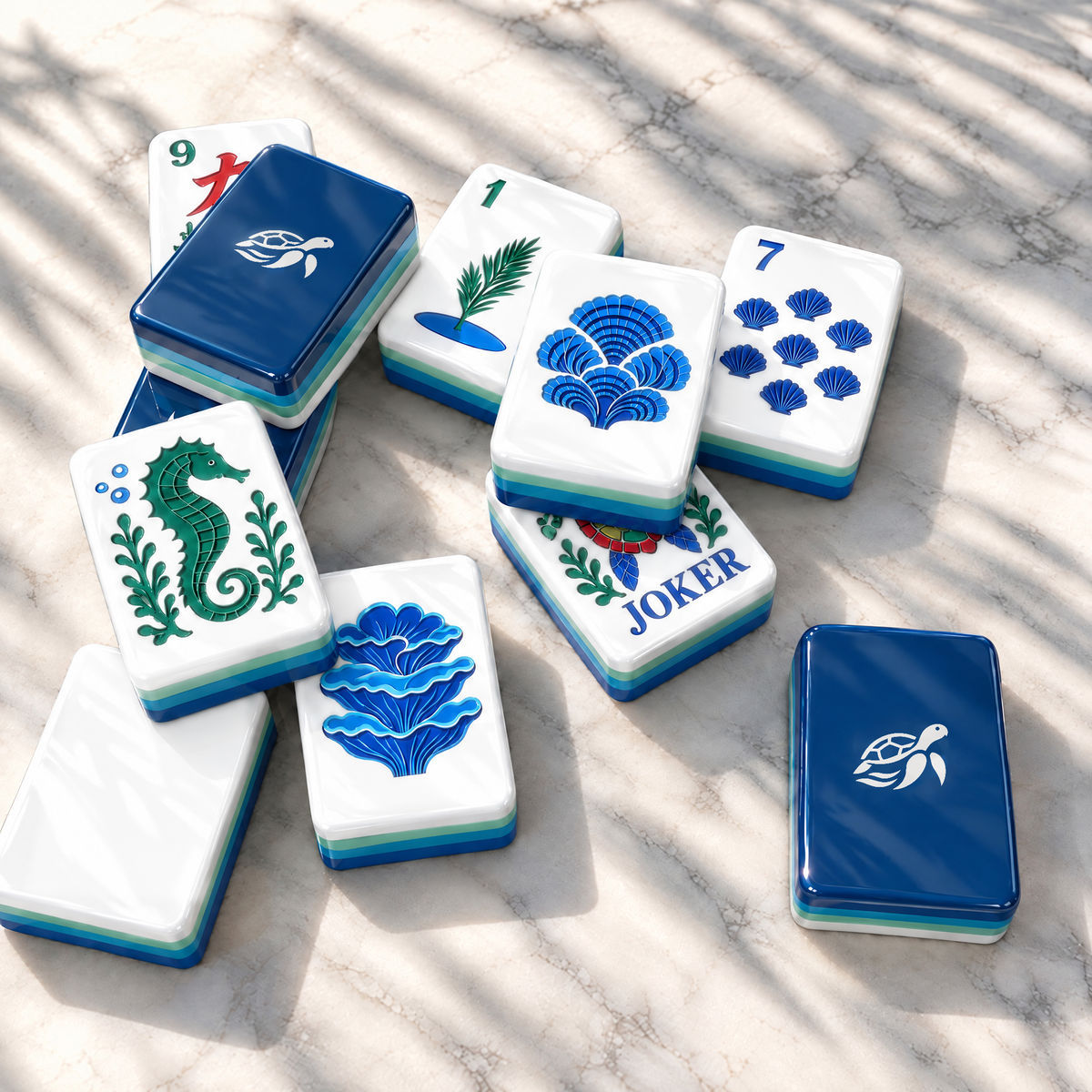
Sichuan Bloody Mahjong is a Chinese regional variant played with 108 tiles (one copy each of Bams, Craks, Dots 1–9, plus 16 winds and 12 dragons) using radically simplified winning rules: any player who forms any pung, kong, or completed hand wins immediately and claims the whole pot from all three opponents—no melds shown beforehand, no complex scoring charts. Games last 5–15 minutes per round. Strategy hinges on speed, tile-reading, and aggressive claim calling rather than hand composition. It differs sharply from American Mahjong (which requires hands from an annual card, uses jokers, and awards points by hand rank) and from Hong Kong Mahjong (which allows chows and relies on fortune scoring). Sichuan players prioritize tile probability, rapid discard flow, and claim timing over complex hand planning—a refreshing high-octane variant for players who find traditional scoring laborious.
Sichuan Bloody Mahjong strips away the scorecard bureaucracy that slows traditional Chinese games. What makes it "bloody" is the all-or-nothing settlement: one hand ends the round, and all chips flow to the winner instantly. We've hosted this variant weekly during summer breaks, and the raw pace and psychological edge draw players who crave quick, decisive games over lengthy hand-building marathons.
Why do players call it "bloody"?
The term refers to the sudden, decisive financial outcome of each round. In Sichuan Bloody Mahjong, the instant any player completes a legal winning hand—or forms a winning pung—the round ends, and that player takes the entire pot from all three opponents. There's no gradual point accumulation or scoring negotiation; the settlement is immediate and total. Players unfamiliar with the variant often feel the sting of losing entire round stakes in seconds, which is how the name stuck in casual play across Sichuan Province and now among diaspora communities in North America and Southeast Asia.

What tiles and sets do you actually use?
Sichuan Bloody Mahjong plays with the core 108-tile Chinese set: one complete Bam suit (1–9), one Crak suit (1–9), one Dot suit (1–9)—27 tiles per suit, 81 total—plus 16 winds (4 each of North, East, West, South) and 12 dragons (4 Red, 4 Green, 4 White). Each tile appears once only in play (unlike American Mahjong, which uses four copies per tile). No jokers, no blanks, no flowers. The entire deck shuffles, four tiles form the dead wall, and 108 tiles distribute across four players' starting hands (27 each). Because each tile is unique and the inventory low, tile-reading becomes central: you know exactly which tiles remain unseen and can calculate claim odds mid-hand. This direct sight-line advantage makes speed and memory as crucial as luck.
A standard 160-tile American set contains more tiles than needed for Sichuan play—American sets include eight copies of flower tiles, eight jokers, and multiples of each number tile. For Sichuan Bloody Mahjong, you need a single-copy Chinese set, which is not widely stocked in Western retailers. If you own a best-selling American mahjong set, you'll need a separate Chinese-game purchase to play Sichuan rules accurately.
How does the winning condition differ from American or Hong Kong play?
A legal win in Sichuan Bloody Mahjong requires any of these:
Pung win: Three identical tiles (same number and suit—e.g., three 5 Dots).
Kong win: Four identical tiles.
Quint or sextet: Five or six identical tiles (less common, same rank).
Complete hand (rare variant): 14 tiles forming two eyes (identical pair) plus four melds (pung/kong/quint), like Hong Kong or Vietnamese games.
The moment you form any of these patterns, you declare, the round ends, you collect. No waiting for a perfect hand type, no consulting the scoring card, no negotiation. Compare this to American Mahjong, where how to read the mahjong card requires matching a hand to that year's National League card—you must hold the exact pattern listed. In Hong Kong Mahjong, you need a complete 14-tile hand and pass a specific fan count (point total). Sichuan strips both: any pung, any kong, any completion = immediate win.
This simplicity creates constant tension: players must weigh the safety of waiting for a pung against the risk of an opponent completing their hand first.
What's the core strategy for claiming and tile management?
Early-game tile reading:
Note which high-value tiles (dragons, terminals 1 and 9) are discarded early; if a Red Dragon falls by turn 3, you know it's not forming a pung soon.
Track discards face-up and count which suits are moving through the discard pile fastest; a suit with many discards is less likely to form pungs.
Mid-game claiming pressure:
Any pung threatens the table. If two 7 Bams appear in the discard and you hold one, claim immediately—three copies exist, and odds that the fourth remains undrawn shift hourly.
Slow-play discards (pausing before each play) signal strength; aggressive, rapid play signals weakness or confusion.
Pung-over-completion priority:
Never discard a tile that matches two others you've seen or held; let an opponent form a pung rather than feed them their third tile.
Conversely, if you're one tile away from a pung and the discard pile is full, pull aggressively; others will play to deny you.
Late-game pot psychology:
As the dead wall shrinks, pot odds worsen—fewer tiles remain, so pungs are likelier to form. Play tighter. Discard only safe tiles (high numbers in suits where you've seen heavy discard, never dragons or terminals if you hold duplicates).
Game Phase | Tile Priority | Claiming Strategy | Risk Level |
Turns 1–6 | High numbers (4–9), terminals less exposed | Wait for clarity; don't force | Low |
Turns 7–14 | Dragons, terminals if unpaired | Claim any pung; accept parity risk | Medium |
Turns 15–20 (late) | Any safe tile; terminals unsafe if held twice | Claim pung or fold; few tiles remain | High |
Why this table matters: New players often claim too late (hoping for a complete hand that never arrives) or too early (forming pungs with only 15 tiles left and losing before the dead wall clears). This roadmap shows when claiming shifts from greedy to necessary.
🀄 Shop best-selling mahjong sets →

What mistakes do newcomers make in Sichuan play?
1. Misreading the "blood" rule: New players sometimes assume they can share a win or negotiate the pot. Sichuan Bloody Mahjong is zero-sum: one winner, three losers, immediate settlement. No splits, no draws. Clarify stakes and rules before the first shuffle.
2. Forgetting that each tile exists only once: American players trained on four-copy tile sets miscalculate pung odds. In Sichuan, if you've seen or held all three copies of a tile, that suit is mathematically dead for pung play. Track discards rigorously, or you'll overvalue weak hands and claim too late.
3. Underestimating terminal (1 and 9) pung strength: Terminals are rare, move slowly through the discard pile, and form pungs late. Holding two terminals increases claim odds because few players discard them; if you spot a terminal in the discard, a pung is forming nearby.
4. Playing too fast or too slow: Rushed play leaks information (you're panicked or weak). Glacial play signals strength and may deter others from claiming, even if they're close. Develop a neutral rhythm and break it only when claiming.
5. Ignoring pot size and bankroll: Sichuan Bloody Mahjong can swing 3× or 4× your stake in one round. Set table stakes before play begins and honor them; don't let the all-or-nothing structure lure you into bet creep.
How do you set up and manage the dealing and dead wall?
Setup follows standard Chinese Mahjong dealing:
Shuffle all 108 tiles face-down. (Ensure no doubles or spares—Sichuan uses a single-copy set only.)
Build the wall: Stack tiles in pairs, 18 pairs per wall side (72 tiles per side, 288 tiles total wall height—but since you have 108 tiles, stack them in 18 pairs across one edge and loop around to four players, or simply line them in a 4-player arc).
Place the dead wall: Set aside 14 tiles (4 tiles × 4 players = 16 tiles, minus 2 for the dealer's opening, but variant: some rule 4 tiles + 10 reserved; rules vary by region). Traditional: East dealer draws 2, then players draw in order until 27 each.
Deal opening hands: East (first player) draws 2 first, then North, West, South each draw 2, then repeat around until each holds 27 tiles. East discards first.
Play: Draw-discard cycle. Any player may claim a discard to form a pung/kong; claiming breaks the normal draw sequence and the claimer becomes the new discarder.
Dead wall variants: Some Sichuan circles reserve only 2–4 tiles (speeding up play). If you agree on a smaller dead wall, more tiles enter circulation and pungs form faster, shortening rounds to 10–12 minutes.
🎁 See our most-loved mahjong sets & accessories →
What's the best mindset shift from American or Hong Kong to Sichuan play?
American Mahjong trains you to think in hand types: you memorize patterns from the yearly card and hunt for specific arrangements. Sichuan Bloody Mahjong flips that—you think in pung probability. Every tile that leaves the deck reduces the chance of its duplicates forming. Every discard you see narrows the field. American players often spend Sichuan rounds searching for a "complete hand" while an opponent forms a 3-tile pung and collects the pot in turn 8.
Hong Kong Mahjong players adapt faster because they're used to rapid discard reading and fan calculation. But even they must shed the scoring-chart reflex; in Sichuan, a pung of low-value tiles (say, three 2 Dots) beats a pung of terminals every time—there's no rank or honor, just speed.
The mindset: Claim early, claim often, trust the tile count. The round ends the instant a pung forms. Waiting for perfection is how you lose.
What to check before you buy
Tile set source: Ensure you have a single-copy Chinese Mahjong set (108 tiles, no jokers, no blanks). American sets won't convert—the tile counts and compositions differ fundamentally.
Discard pile clarity: Use a mat or tray that lets all four players see every discard clearly and quickly; poor discard visibility slows reading and breeds disputes.
Bankroll and stakes: Agree on per-round and session limits before shuffling. Sichuan's all-or-nothing payout can escalate emotions fast.
Regional rule variance: Some Sichuan circles permit kong claims, others don't. Some play with a 4-tile dead wall, others with 10. Clarify local rules before your first game.
✨ Find your Mahstead set — free US shipping →

FAQ
Can I play Sichuan Bloody Mahjong with an American set?
No. American sets have four copies of each tile, eight flowers, and eight jokers—wrong inventory for Sichuan's single-copy, 108-tile structure. You need a dedicated Chinese Mahjong set.
What's the minimum number of players?
Four players is standard and required for Sichuan Bloody Mahjong. Two or three-player variants exist in other Chinese games, but Sichuan assumes a full table.
How long does a typical round last?
8–15 minutes. Speed is the game's hallmark. Slow rounds signal weak play or rule confusion.
Do I have to claim a pung the instant it forms?
Rules vary by circle. Most permit claiming mid-turn if you draw the tile, or when it's discarded and you call it. Once you claim, others cannot re-discard or counterclaim—you've won. Check local table rules.
Is there a "robbing the kong" rule like in Hong Kong Mahjong?
Some Sichuan circles permit it; others forbid kong wins entirely. Establish this before play. If allowed, robbing means an opponent's fourth tile to complete a kong is instead claimed by you as your winning third pung tile.
What happens if two players claim the same discard?
First claim wins. If ambiguous (simultaneous call), the player in turn order closest to the discarder claims priority. Table convention should be set before play begins.


View More
View More
View More
