
Siamese Mahjong vs Mahjong Solitaire: Which Game Is Which?
Last updated: Nov 23, 2026
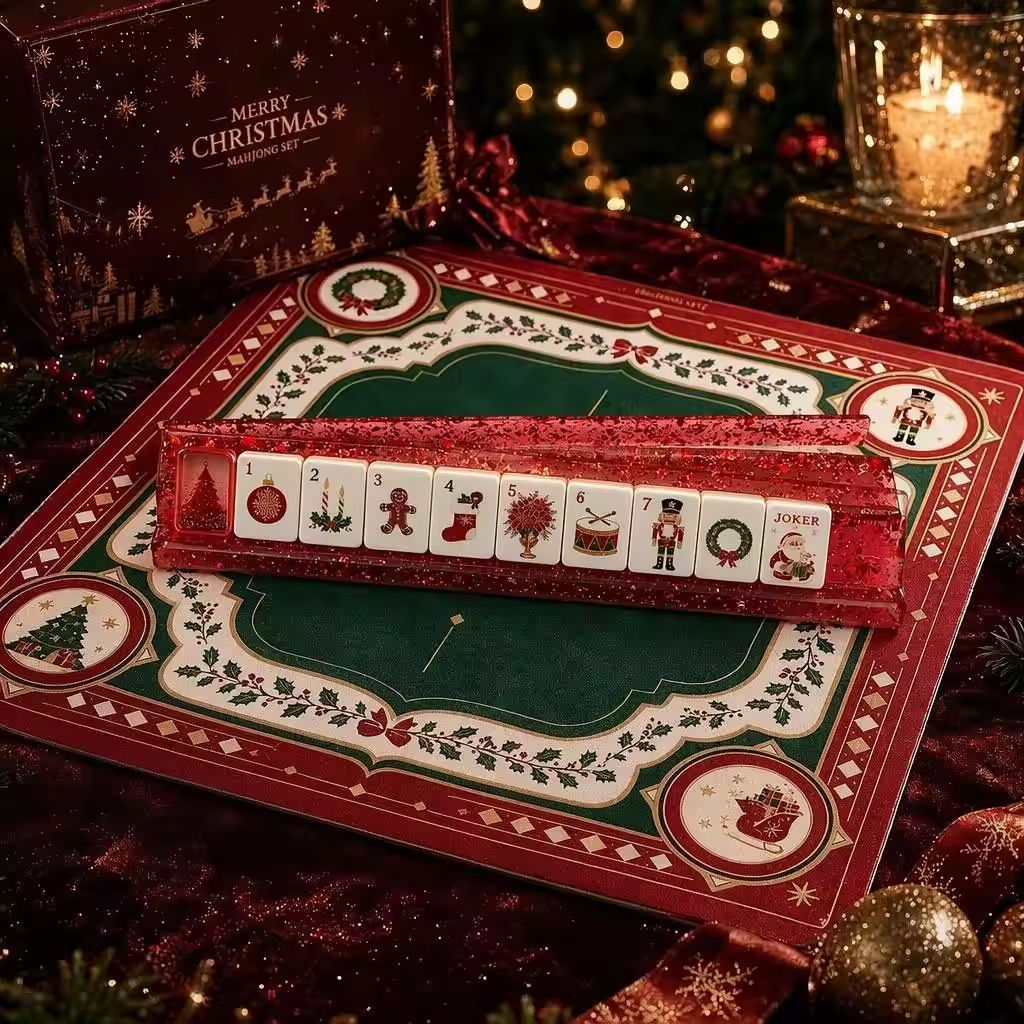
Siamese mahjong is a four-player tiling game played with 144 tiles (four suits instead of three) that originated in Thailand and Southeast Asia; it plays more like Chinese mahjong than American mahjong. Mahjong solitaire, by contrast, is a single-player puzzle game where you match and remove pairs of identical tiles from a static layout on a board or screen—no luck, no passing, no scoring by a hand card. The two share the name and some tile imagery but are fundamentally different activities: Siamese mahjong is live, social, and rule-heavy; mahjong solitaire is meditative and turn-based. If you host a weekly group game with real tiles and a mat, you're playing a variant of mahjong (American, Chinese, or Siamese). If you're playing on a computer or laying out tiles in a pyramid on a kitchen table, you're likely doing solitaire. The best-selling American mahjong sets we offer are designed for four-player competitive mahjong, not solitaire or Siamese play. 🀄 Shop best-selling mahjong sets →
What exactly is Siamese mahjong?
Siamese mahjong is a four-player tile game native to Thailand and played across Southeast Asia, using a deck of 144 tiles divided into four suits instead of the three (Bams, Craks, Dots) in American mahjong. Like Chinese mahjong, Siamese mahjong emphasizes melds (pungs, chows, kongs) and strategic discarding, with a different scoring system tied to tile values and hand complexity rather than a published card. Players draw and discard in turn, building toward winning hands—but Siamese variants permit chows (sequences like 1-2-3) that American mahjong forbids. The game plays faster than American mahjong and often with less rigid hand validation. If you're in Dallas or traveling through Thailand, you'll hear Siamese mahjong at clubs and family gatherings; it's not typically played in North American mahjong rooms, which favor American, Chinese, or Hong Kong variants.

What is mahjong solitaire, really?
Mahjong solitaire is not a game at all in the traditional sense—it's a tile-matching puzzle for one person. You begin with 144 tiles (or sometimes fewer) arranged in a layout, typically a pyramid, turtle, or arch, and you remove pairs of identical, unblocked tiles until the board clears or you get stuck. There's no dealer, no passing, no scoring card, no opponent. Every round is identical if you use the same layout and starting tile order; the puzzle has a fixed solution. Most people encounter mahjong solitaire on computers (as free online games or phone apps) or occasionally in print books of tile puzzles. It's meditative and requires spatial logic, not knowledge of mahjong rules. Some tabletop versions exist—you can buy physical solitaire sets—but the vast majority of play happens digitally. If someone says "I play mahjong solitaire on my iPad," they mean this puzzle; it shares tiles and imagery with real mahjong but not the game structure.
🎁 See our most-loved mahjong sets & accessories →
How do Siamese, American, and Chinese mahjong differ?
Aspect | American Mahjong | Chinese Mahjong | Siamese Mahjong |
Tiles | 152 (3 suits: Bam, Crak, Dot; winds; dragons; flowers; jokers) | 144 (3 suits; winds; dragons; no flowers or jokers) | 144 (4 suits; winds; dragons; variant tile count by region) |
Chows allowed? | No (only pungs, kongs, quints, sextets) | Yes (1-2-3, 2-3-4, etc.) | Yes (sequences permitted) |
Hand validation | Must match published NMJL card for current year | Hand strength varies by regional rules | Scoring tied to tile values & hand type, no external card |
Jokers | 8 jokers standard; can substitute in melds | No jokers in play | Varies by region (some use "flowers" as wild) |
Scoring | Points & limits per NMJL card; dealer advantage | Point scoring; varying systems by region | Typically cash-based or point-based (no standard card) |
Best for | North American clubs, weekly home groups | Chinese communities worldwide; family games | Southeast Asia; less common outside Thailand, Laos, Cambodia |
American mahjong is the only variant that uses a published hand card (refreshed yearly by the National Mah Jongg League) and forbids chows—that's what makes it distinct and what our mahjong racks with pushers and engraved American mahjong sets are built for. If you're looking to host a game with real players and tiles, American mahjong is the easiest to learn from published rules and the most widely available in North America.

Should I learn Siamese mahjong or stick with American?
Your choice depends on where you play and who you play with. American mahjong is dominant in North American home games, senior centers, and synagogue groups—it's easy to find a teacher, buy a modern set, and get a current-year hand card from any mahjong retailer. Siamese mahjong requires knowing regional rule variations and access to players who grew up with the game; it's vibrant in Thailand and diaspora communities but rare in casual American settings. If you're hosting a weekly game in the US with players of mixed skill levels, American mahjong is your clearest path: the rules are codified, tiles are standardized, and you can learn in weeks. If you have family or friends from Thailand or Southeast Asia who play Siamese mahjong, learning it connects you to their tradition—but you'll need a patient mentor and regional-specific guidance, not a generic online tutorial. Neither is objectively "better"; American mahjong is simply more accessible outside Asia. Our mahjong sets are designed and counted for American mahjong play (152 tiles plus 8 jokers), so if you're starting American, that's the standard to follow.
✨ Find your Mahstead set — free US shipping →
Why people confuse Siamese mahjong and solitaire (and what each really is)
The confusion arises because "mahjong" is loosely used for anything involving these tiles. Solitaire apps market themselves as "mahjong" to attract players curious about the game but without time for a four-player group. Siamese mahjong, unfamiliar to most Americans, gets lumped generically into "Asian mahjong" alongside Chinese variants, then mistakenly called "solitaire" if described as a solo learning experience. Here's the truth: if you are playing against other people, drawing and discarding in turns, aiming for a hand that beats theirs, you are playing a real mahjong variant (American, Chinese, Siamese, or Hong Kong)—it is never solitaire, no matter the tile count or region. If you are removing identical pairs from a static layout, with no opponent and no ongoing hand-building, you are playing a puzzle, not mahjong. The name "mahjong solitaire" was marketing genius: it promises the charm of mahjong tiles without the complexity of learning rules or finding three other people. Both have their place. If you want the social, competitive, strategic mahjong experience, you need a group, a mat, and a mahjong set with rules. If you want a casual tile puzzle on your phone during lunch, solitaire is perfect. They're different products for different moments.
What to check before you buy a mahjong set for any variant
Rule clarity: If you're learning American mahjong, confirm your tiles include a current-year hand card or that you can access one from the National Mah Jongg League. For Siamese or Chinese mahjong, find a rules guide or mentor before buying; these variants are taught by experience, not packaging.
Tile count: American mahjong requires exactly 152 playing tiles plus 8 jokers; our 160-tile sets include spare tiles for durability. Siamese mahjong uses 144 tiles with no jokers—if you're buying for that game, verify the set includes the four-suit structure.
Playability: Check that tiles are large enough to read (at least 1 inch per side), feel comfortable in hand, and come with a padded mat to protect the table and tiles from sliding.
Storage: Real mahjong sets are investments. Verify your set ships in a sturdy bag or case (we include mahjong bags and cases) so tiles don't get lost or cracked in storage or transport.
Regional accuracy: If you're buying for Siamese mahjong specifically, source from a retailer or community familiar with that variant; generic "mahjong sets" are almost always American or Chinese.

FAQ
Can I use an American mahjong set to play Siamese mahjong?
Not reliably. American sets have 152 tiles (three suits plus winds, dragons, flowers, jokers); Siamese mahjong uses 144 tiles without the same flower structure. The tile distributions don't match. You'd need a set specifically designed for Siamese or Chinese mahjong.
Is mahjong solitaire a real way to learn mahjong rules?
No. Solitaire teaches you tile recognition and spatial logic but nothing about hand-building, discarding, pungs, chows, or strategy. It's a puzzle, not a game. To learn real mahjong, play with other people or study the hand card and rules.
Which mahjong variant is easiest to teach beginners in the US?
American mahjong. Rules are published yearly by the NMJL, players follow a single hand card, and no sequences (chows) are allowed—that simplifies strategy. Chinese and Siamese mahjong require more regional knowledge and are typically taught one-on-one.
Do I need a mat and racks to play any mahjong variant?
A mat is strongly recommended for all variants—it protects tiles, reduces noise, and helps prevent tiles from sliding. Racks (tile stands) are optional but make hand-holding easier, especially for players with arthritis or weak hands.
Where can I find people to play Siamese mahjong if I live in North America?
Check community centers, cultural associations, or meetup boards for Thai, Lao, or Cambodian communities in your area. Some online groups teach Siamese mahjong via video, though in-person play with an experienced group is the fastest way to learn.
Can a single mahjong set work for both American and Chinese mahjong?
Only if the American set has no flowers or if you're willing to exclude them. Most American sets include flowers and jokers that Chinese mahjong doesn't use. It's safer to keep sets separate to avoid confusion during play.


View More
View More
View More
