
Filipino Mahjong vs. Mahjong Solitaire: Which Game Is Right for You?
Last updated: Nov 23, 2026
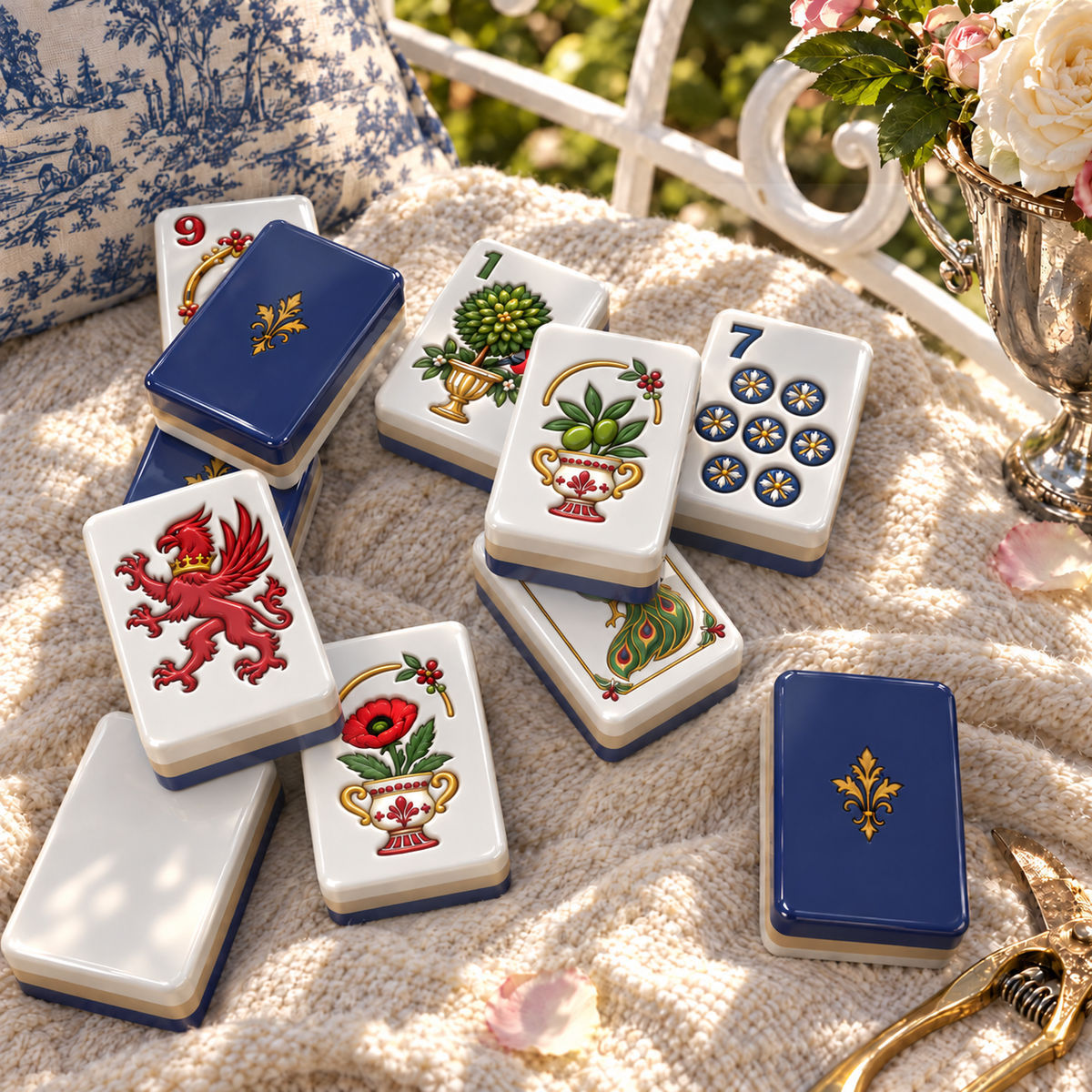
Filipino mahjong is a four-player live game played with a 152-tile set (or 160-tile set with spares) where players form melds, pass tiles through the Charleston, draw and discard strategically, and compete for matched hands listed on the current National Mah Jongg League card. Mahjong solitaire, by contrast, is a computer-based or physical puzzle where a single player removes matching adjacent tile pairs from a stacked layout until all tiles clear—no card, no rules, no opponent. Filipino mahjong requires 45–90 minutes per game, skill, and three other people; solitaire is solo, casual, and typically takes 10–20 minutes per round. If you want social play, hand-building, and competition, choose Filipino mahjong with a quality acrylic set. If you want a relaxing brain puzzle, solitaire works on any device or tile app.
Is Filipino mahjong the same as American mahjong?
Filipino mahjong and American mahjong are the same game. The term "Filipino mahjong" refers to the version widely played in the Philippines and among Filipino communities in the United States, Canada, and abroad—it follows American Mahjong League rules. The only variance is that some Filipino players use slightly different hand-selection strategies or house rules for scoring multipliers, but the core is identical: four players, 152 tiles, the annual card, Charleston, exposure rules for pungs and kongs, joker use, and identical melding structure. If you learn American mahjong, you can sit at any Filipino mahjong table.

What exactly is mahjong solitaire?
Mahjong solitaire is a digital or physical tile-matching puzzle where one player faces a pyramid or arrangement of 144 tiles and removes pairs by clicking or tapping tiles that match (same number, suit, or honor symbol) and share at least one open edge. It has no winning hand structure, no card, no opponents, no scoring—you win by clearing all tiles before running out of legal moves. Most versions are free apps or browser games; some wooden tile sets include solitaire instruction sheets for casual tabletop play. It relaxes the mind but bears no resemblance to Filipino or American mahjong strategy, hand-building, or competition.
What are the core rule differences?
Feature | Filipino Mahjong | Mahjong Solitaire |
Players | 4 (must have exactly 4) | 1 (always solo) |
Tiles in play | 152 per game | 144 per layout |
Charleston | Yes (mandatory tile pass) | No (no setup phase) |
Winning hand | Must match exact patterns on current-year card | No winning condition—goal is to clear all tiles |
Melds | Pungs, kongs, quints, sextets (exposed) | None—just adjacent pair matching |
Jokers | Can substitute in melds (never alone or in pairs) | Not used in most solitaire versions |
Game time | 45–90 minutes | 10–20 minutes per round |
Equipment needed | 152-tile acrylic set, mats, racks, annual card | Computer, app, or printed tile layout |
Skill factor | High—card knowledge, tile reading, strategy | Medium—pattern recognition, foresight |
Filipino mahjong demands live opponents, shared equipment, and knowledge of current-year hands; solitaire is a self-contained puzzle.
Why do people confuse these games?
The word "mahjong" spans dozens of variants—Chinese, Hong Kong, Riichi, Taiwanese, Vietnamese, and American—each with different rule sets, tile counts, and meld structures. Mahjong solitaire borrowed the name because it uses traditional tile imagery (Bams, Craks, Dots, winds, dragons, flowers) and a similar visual aesthetic, but the gameplay mechanics are completely separate. A beginner searching "how to play mahjong" might find both and assume they're related. In reality, someone who loves solitaire tile puzzles might struggle with Filipino mahjong's strategic depth, and vice versa. The shared name creates confusion, but the games are not variants of each other—they're different activities that happen to use similar tiles.

Which game should you choose?
Play Filipino mahjong if you want:
Social connection and conversation during gameplay
Mental strategy—hand planning, tile reading, discarding logic
Weekly or monthly game nights with friends, family, or a club
Structured competition with scoring and winners
A skill that takes months to master but deepens with practice
Play mahjong solitaire if you want:
Solo relaxation on your phone, tablet, or computer
No rules to memorize or opponents to coordinate with
A quick 10–15 minute brain break
Accessibility—works anywhere, anytime, no setup
Puzzle satisfaction without social commitment
To start Filipino mahjong at home, you'll need a 160-tile acrylic set, the current National Mah Jongg League card, a mat, and racks. To play solitaire, download an app or buy a wooden tile set printed with solitaire layouts.
🀄 Shop best-selling mahjong sets →
What equipment does each game require?
Filipino mahjong setup:
One 160-tile acrylic set (152 tiles + spares for durability and flexibility)
Current-year National Mah Jongg League card (updated each spring; essential—hands change annually)
Four mahjong racks with pushers (one per player, keeps your hand tidy and tiles face-down)
One mahjong mat (divides the table, marks discard zones, protects tile surfaces)
Pencil and paper or scoring app (tracks points across rounds)
Dice (some sets include them; used to determine seat rotation and starting dealer)
Mahjong solitaire setup:
A smartphone, tablet, or computer (most popular solitaire apps are free)
OR a wooden tile set labeled with solitaire layouts (optional; many people play only digitally)
No card, no opponent coordination, no mat needed
The practical barrier to entry strongly favors solitaire—it requires almost nothing—but the social and intellectual reward favors Filipino mahjong. We recommend starting with solitaire on your phone to learn tile names (Bams, Craks, Dots, winds, dragons), then exploring Filipino mahjong with a club or friend group when you're ready for live play.
🎁 See our most-loved mahjong sets & accessories →
Can you play Filipino mahjong with solitaire tiles?
Technically, yes—a standard 144-tile wooden set (common in solitaire) contains enough tiles to play a single round of American mahjong if someone manually separates them. However, this creates problems: wooden tiles wear faster than acrylic from constant handling; a 144-tile set lacks the spare tiles (jokers and blanks) that an acrylic 160-tile set provides for replacement; and no mat or racks come with solitaire sets, making organized play difficult. If you're serious about Filipino mahjong, buy an engraved 160-tile acrylic set designed for multiplayer use. If you only want solitaire, don't buy a mahjong set—use a free app instead.
✨ Find your Mahstead set — free US shipping →
What to check before you buy
Verify the tile count: For Filipino mahjong, you need 160-tile acrylic sets (152 playing tiles plus spares); 144-tile wooden sets are solitaire-only and don't have enough pieces for live multiplayer.
Confirm the current-year card: If you're buying a Filipino mahjong set, source the latest National Mah Jongg League card separately—it's required and reissues every spring; no online variant or old card will work.
Plan for a mat and racks: A 160-tile set alone won't organize your game. Budget for a mat and four racks with pushers to play comfortably.
Test solitaire first if you're uncertain: Download a free app for a week to see if you enjoy the tile aesthetics and puzzle pacing before investing in physical tiles.
Check your player availability: Filipino mahjong requires exactly four people and 45–90 minutes; if you live alone or travel frequently, solitaire is more practical.

FAQ
Can you teach Filipino mahjong to someone who knows mahjong solitaire?
Yes, but they'll need to unlearn pattern-matching and learn hand formation, the card, Charleston, melds, and scoring instead. Tile names transfer directly (Bams, Craks, Dots, winds, dragons), but strategy and rules are entirely different. Start with a beginner lesson or video to avoid frustration.
Is Filipino mahjong considered "harder" than mahjong solitaire?
Yes. Filipino mahjong requires memorizing hand patterns, reading opponent discards, managing risk, and making real-time decisions under social pressure. Solitaire is a solo puzzle with no time limit and no opponent—relaxing but not strategically demanding.
What's the cost difference between Filipino mahjong and solitaire?
Filipino mahjong requires a 160-tile acrylic set, mat, racks, and card—roughly a one-time equipment investment. Solitaire is free on most phones or costs nothing to play online. If cost matters, solitaire has no entry barrier; Filipino mahjong requires upfront spending.
Can you play Filipino mahjong with fewer than four players?
Traditional Filipino mahjong requires exactly four. Some houses allow 2- or 3-player variants using modified rules and fewer tiles, but these are non-standard. For true Filipino mahjong, you need four people.
Do you need the annual card to play solitaire?
No. Solitaire has no card and no winning hands—you simply match adjacent tiles until the board clears. The card is only for Filipino and American mahjong.


View More
View More
View More
