
Chinese vs. Hong Kong Mahjong: Key Rules & Differences
Last updated: Nov 23, 2026
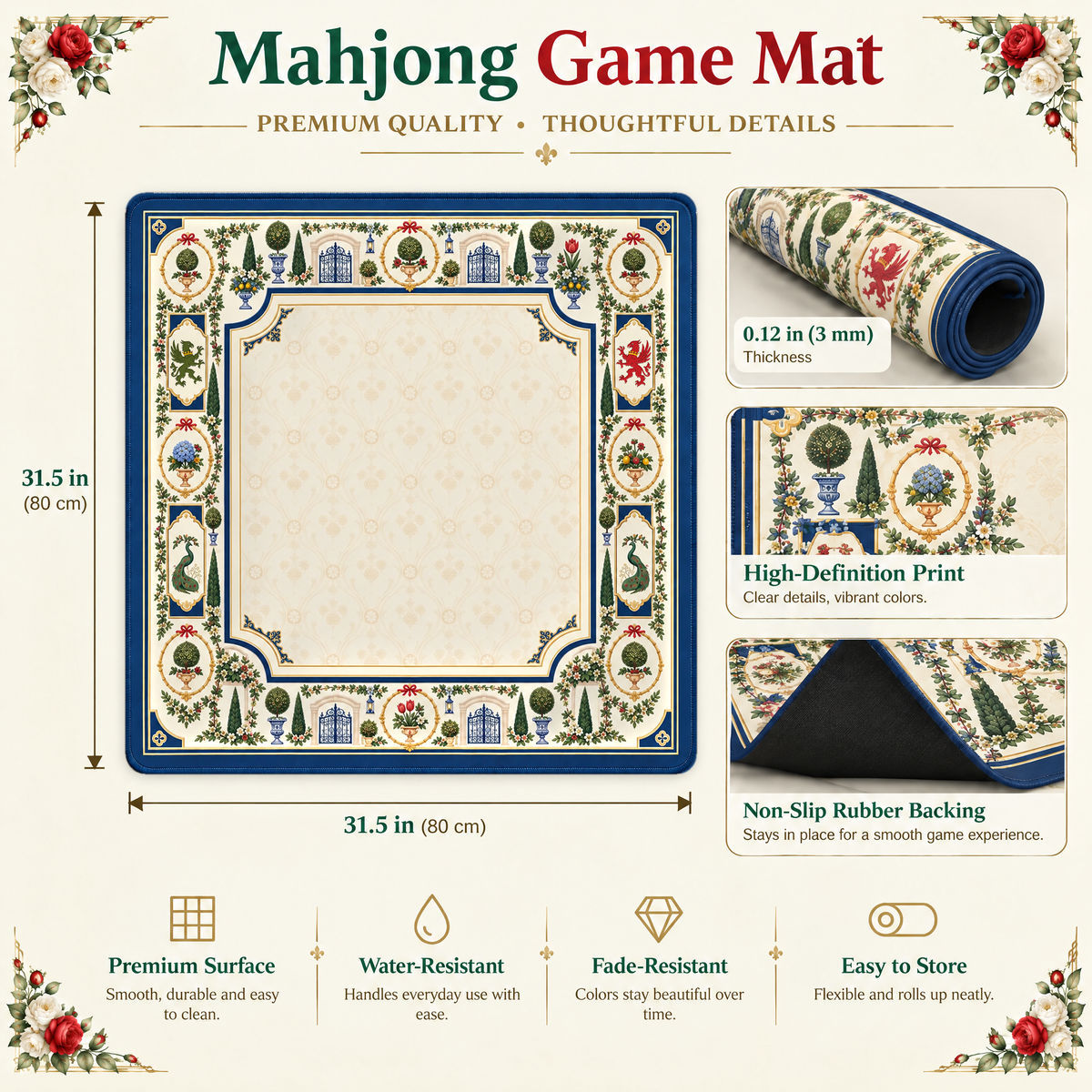
Chinese mahjong uses 144 tiles (three suits × numbers 1–9, four winds, three dragons, one or two flower sets), while Hong Kong mahjong also uses 144 tiles but with stricter hand-composition rules and a faster, more aggressive play style. Both variants allow chows (sequences like 1-2-3 of one suit) and pungs (three identical tiles) to be exposed mid-game—unlike American mahjong, which forbids sequences entirely. Hand values differ sharply: Chinese mahjong rewards simple patterns and bonuses for concealed melds; Hong Kong mahjong prioritizes scoring through complex "limit hands" (patterns worth maximum points). Draw and Kong mechanics also vary. Neither uses jokers. Both games require four players and a dealer rotation. Learning which variant your group plays determines your strategy, hand reading, and equipment needs—and Mahstead stocks the 160-tile American sets suited for North American play.
Chinese mahjong and Hong Kong mahjong are distinct variants with different tile counts, hand patterns, and scoring systems. Understanding these differences helps you play correctly and choose the right equipment.
What tiles does each variant use?
Chinese mahjong uses 144 tiles: three suited ranks (Bams, Craks, Dots) numbered 1–9 with four copies each (108 tiles), four winds (N/E/W/S, 16 tiles total), three dragons (16 tiles total), plus one flower set or two depending on regional rules. Hong Kong mahjong also plays with the same 144-tile structure but sometimes adds bonus tiles (flowers or seasons) in specific regional variants. The tile imagery, suits, and wind/dragon designations are identical between the two. The core difference lies not in inventory but in how hands are formed and when players can expose tiles during play.

How do hand-building rules differ?
Chinese mahjong permits exposing chows (sequences: three consecutive numbers of one suit, e.g., 3-4-5 Craks) and pungs (three identical tiles). A complete hand requires four melds (exposed or concealed) plus a pair; chows are standard building blocks. Hong Kong mahjong also allows chows and pungs but imposes stricter rules about when you can claim a discard from another player or draw from the live wall. In Hong Kong play, declaring "win" requires either a concealed hand or winning on the last tile of the wall—conditions rarely enforced in casual Chinese play. American mahjong, by contrast, forbids chows entirely; players may only expose pungs (three identical tiles), kongs (four identical tiles), and longer groups—and hands come only from the current year's National Mah Jongg League card.
What makes Hong Kong scoring different?
Chinese mahjong scoring emphasizes simple patterns and bonuses: a pung of dragons scores base points; going out "concealed" (self-drawn) or on the final tile doubles your score. Bonus calculations are straightforward—adding up melds and special conditions. Hong Kong mahjong reverses this philosophy: hands follow a strict list of "limit hands" or "scoring patterns" (similar to the League card in American mahjong). Each pattern on the list has a fixed value; once a hand matches one pattern, it scores that amount regardless of how many melds you have. This makes Hong Kong play highly strategic—you must know the approved patterns and adjust your play toward them. American mahjong also uses a League card with set patterns, but American tiles and hand composition differ so completely that the scoring systems are not interchangeable.
When can you expose melds and win?
In Chinese mahjong, you can claim an opponent's discard to complete a chow or pung at almost any time during your turn; you may also expose the meld immediately. Once exposed, the meld stays visible on the table. Winning can happen mid-turn or on your own draw. Hong Kong mahjong tightens these windows: claiming a discard often requires immediate exposure, and players cannot always claim for a chow (some variants allow chow claims only in specific turns). Win conditions in Hong Kong play may also require specific tile combinations or concealment. American mahjong permits no exposure of chows at all; only pungs, kongs, quints, and sextets can be exposed, and winning requires exactly one of the League card patterns with 13 or 14 tiles (depending on the season).

How do draw and Kong mechanics work?
Chinese mahjong features a "live wall" (tiles waiting to be drawn) and a "dead wall" (set aside for Kong draws). When a player forms a Kong (four identical tiles), they draw a replacement from the dead wall, then discard as normal. In Hong Kong play, the Kong mechanic is similar but often stricter about timing and re-draws. If the live wall depletes before anyone wins, the game ends in a draw (no one scores). American mahjong operates without a Kong-draw mechanism in the traditional sense; players may meld kongs for points, but the turn structure and draw sequence differ fundamentally. Jokers are never used in Chinese or Hong Kong mahjong but are essential in American play.
🀄 Shop best-selling mahjong sets →
Quick reference: Chinese vs. Hong Kong mahjong
Feature | Chinese Mahjong | Hong Kong Mahjong | American Mahjong |
Tile count | 144 | 144 | 152 (+ 8 jokers) |
Chows allowed? | Yes, can expose | Yes, can expose | No, forbidden |
Pungs allowed? | Yes, can expose | Yes, can expose | Yes, can expose |
Hand source | Player choice | Approved list | NMJL card only |
Scoring basis | Melds + bonuses | Fixed limit patterns | Card patterns + points |
Kong draw? | Yes, from dead wall | Yes, similar rules | N/A (different system) |
Jokers used? | No | No | Yes, 8 per game |
Typical duration | 1–2 hours per game | 45 min–1.5 hours | 1–2 hours per game |
This table shows that while Chinese and Hong Kong mahjong share tile structure, their play mechanics and scoring philosophies are fundamentally different—each requiring distinct strategy and hand-reading knowledge.
Which variant should your group choose?
If your players are learning mahjong for the first time, Chinese mahjong offers the most forgiving entry point: you can build hands organically, expose melds freely, and the scoring increments are visible and intuitive. Hong Kong mahjong demands faster thinking and memorization of the approved pattern list—better suited to experienced players. American mahjong is ideal for North American groups already familiar with the National Mah Jongg League card; it has no chows, requires annual card updates, and uses jokers extensively. The choice depends on your group's background and whether you plan to play competitively or casually. If you're hosting American mahjong regularly, investing in a best-selling 160-tile acrylic set ensures you have durable, consistent equipment and the correct joker count for every game.
🎁 See our most-loved mahjong sets & accessories →
What to check before you buy a set for your variant
Tile count: Chinese and Hong Kong mahjong require 144 tiles; American mahjong uses 152 tiles plus 8 jokers. Confirm your variant before ordering.
Jokers: If you play American mahjong, your set must include jokers. Chinese and Hong Kong sets contain none.
Durability: Acrylic or resin tiles last through hundreds of games; bamboo or bone tiles are authentic but require care. Consider how often you'll play.
Readability: Large, clear symbols on the tile face matter if players have vision challenges or if tiles sit at arm's length. Check sample images.
Storage: Sets come with racks, bags, or cases. Decide whether you need travel storage or a display rack for your playing table.
✨ Find your Mahstead set — free US shipping →

FAQ
Can I use the same tiles for Chinese and Hong Kong mahjong?
Yes. Both use 144 identical tiles (three suits, winds, dragons, flowers). The difference is strategy and rules, not equipment. You only need one set if you play both casually.
Is Hong Kong mahjong faster than Chinese mahjong?
Generally, yes. Hong Kong play emphasizes speed and fixed scoring patterns, so games often finish 15–45 minutes faster. Chinese mahjong allows more flexibility, which can extend play.
Why doesn't American mahjong allow chows?
American mahjong evolved separately in the mid-20th century, codified by the National Mah Jongg League. Its rules prioritize exposed pungs, kongs, and jokers—creating a distinct, standardized game independent of Asian variants.
What happens if I mix up the rules mid-game?
Stop and clarify before the next discard. Agree on which variant you're playing, then restart the round if needed. Experienced groups keep a rules sheet or card reference visible.
Are Hong Kong and Chinese mahjong tournaments held in the US?
Yes, both exist in communities with strong Chinese populations. Search local community centers, libraries, and cultural organizations in your city for clubs and informal tournaments.
Can a beginner learn all three variants?
Absolutely. Start with one variant and play 10–15 games; the hand-building logic transfers. Learn the second variant's rules next, then the third. Most players can code-switch within weeks.


View More
View More
View More
