
Self-Drawn Win Mahjong: Meaning, Points & Rules
Last updated: Nov 23, 2026
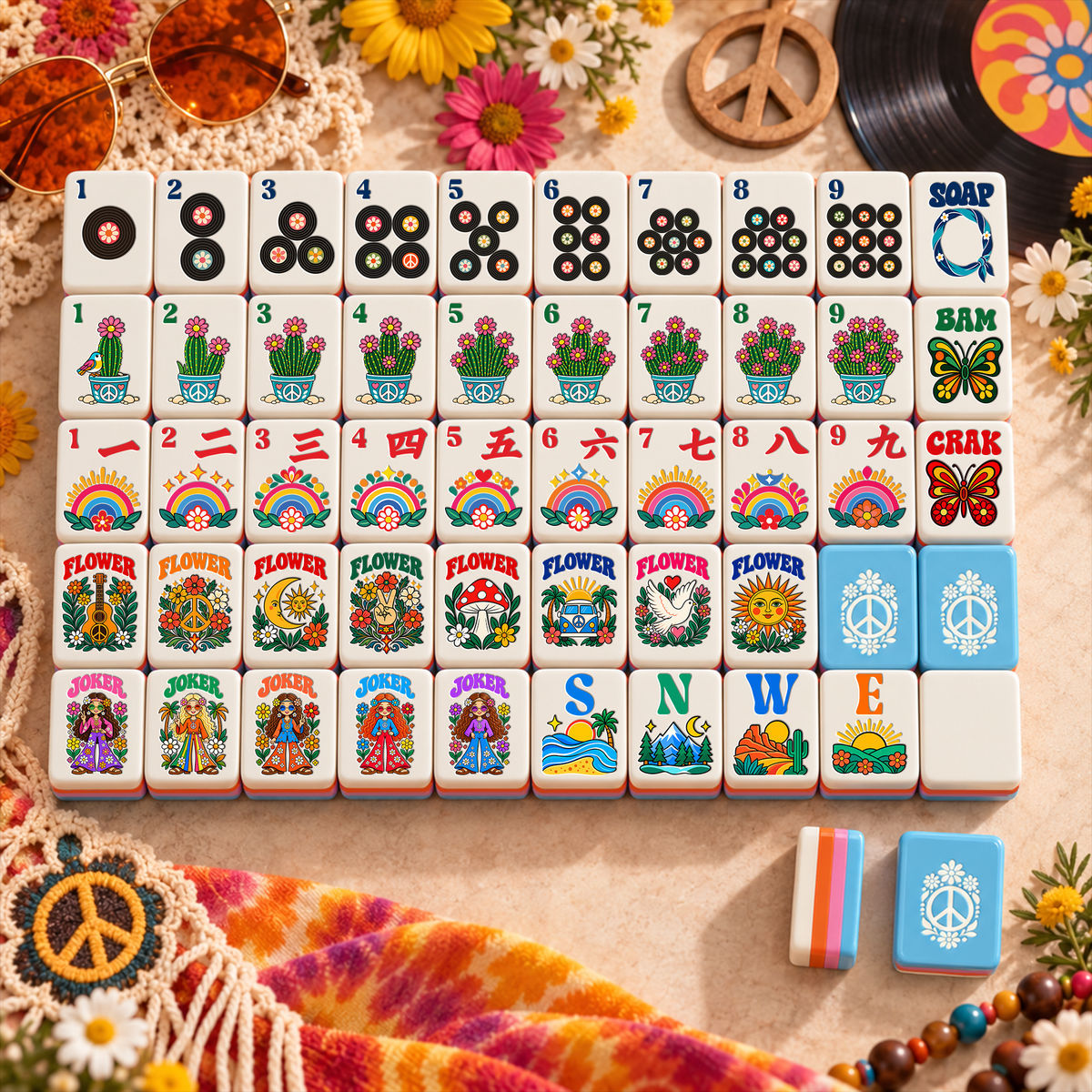
In American mahjong, a self-drawn win occurs when you complete your hand by drawing a tile from the wall during your turn, rather than calling a discard from another player. The hand must match the current year's National Mah Jongg League card. When you win this way, all four players pay you (instead of just the discarder), and the point value typically doubles or increases. For example, a hand worth 30 points as a discard win might be worth 40 or 60 points as a self-drawn win, depending on your game's house rules. Self-drawn wins also include "quint" or larger melds drawn from the wall. The exact point multiplier varies by region and table agreement—always confirm scoring rules before play begins.
A self-drawn win gives you a significant advantage: instead of waiting for someone else to discard the tile you need, you pull it directly from the wall and complete your hand on your own turn. This changes the payout structure, because all four players contribute equally to your winnings rather than only the player whose discard you used.
What counts as a self-drawn win versus a discard win?
A self-drawn win happens only when the winning tile comes from the wall during your regular draw phase—not from a discard, not from Kong replacements (in most house rules), and not from a flower or bonus tile replacement. A discard win occurs when you call someone else's discard to complete your hand. The National Mah Jongg League card lists both winning patterns the same way, but the payout method and often the point value depend on how you won. Confirm your table's rules on Kong draws and replacements before the first hand.

How do self-drawn wins change the point calculation?
The base hand value comes from the National Mah Jongg League card, which lists each pattern with a single point number. When you win by discard, you collect that exact amount from the player who discarded. When you win by self-draw, most American tables double the value or apply a multiplier (×1.5, ×2, or ×3 depending on house rules), and all four players pay you equally. A hand listed as "30 points" on the card might net you 30 points total as a discard (paid by one player) or 60–120 points total as a self-drawn win (paid by all four players divided among the total). Always clarify multipliers in advance.
Why do self-drawn wins pay out differently?
The payout reflects the rarity and difficulty of completing a hand without help from other players' discards. A self-drawn win means you managed to draw exactly what you needed from a shuffled wall—statistically harder than fishing for a specific discard. The doubled or increased payout rewards that skill and luck. It also balances the game: players who discard riskier tiles (and thus feed discards that help others) spread risk more evenly. In variants like Chinese mahjong, self-drawn wins are called "win from wall" and carry similar scoring bonuses. In American mahjong, the rule varies by table, so the first thing to ask when joining a new game is: "What's your self-drawn multiplier?"
Do all hands on the card count as self-drawn wins?
Yes—any hand listed on the current year's card can be won by self-draw, as long as your tiles match the pattern exactly. The card does not distinguish between hands easier or harder to draw from the wall; the point value is the same regardless of which hand you play. However, some hands are statistically more likely to result in a self-drawn win because they require fewer specific discards or rely on more common tile combinations. A hand heavy on Bam tiles and flowers, for example, benefits from the higher frequency of those draws. Over time, experienced players develop intuition about which hands are realistic to draw versus which almost always require a discard call—but the scoring rule itself applies uniformly.
What happens if you draw a tile after a Kong?
This is where house rules diverge sharply. Some tables treat a Kong replacement draw as a self-drawn win; others do not. In the strictest American rules, only tiles drawn during your regular turn phase count as self-drawn; Kong replacement tiles are treated as if drawn from the wall for point calculation but may not trigger the doubled multiplier. Ask about Kong replacement scoring before play, because it can significantly affect strategy and payouts. If you're hosting a game or joining a new group, clarify this rule in writing or note it on a scoresheet.
🀄 Shop best-selling mahjong sets →

Common mistakes and how to avoid them
Mistake 1: Assuming self-drawn always means you pay less. It doesn't—you collect more, but from all four players, so the total is usually higher. If the base value is 30 and your multiplier is ×2, you collect 60 total (15 from each player), not 30 total.
Mistake 2: Forgetting to confirm the multiplier at game start. Scoring disputes are the most common table friction. Write the multiplier on your scoresheet or repeat it aloud before the first hand.
Mistake 3: Misunderstanding when a draw counts as self-drawn. Tiles from a flower exchange, a discarded flower, or a Kong replacement may or may not count, depending on your house rules. Establish this before play.
Mistake 4: Claiming a self-drawn win when the hand doesn't match the card. Always verify your pattern against the card before declaring. If it doesn't match, you cannot win yet; you stay in play.
Mistake 5: Drawing a tile and declaring before confirming no one wants to call it. In American mahjong, players have a moment to call a discard; similarly, wait a beat after drawing before announcing a win to give others a fair chance to respond (per your table's etiquette).
Scoring comparison: self-drawn vs. discard wins
Scenario | Base Card Value | Discard Win (You Collect) | Self-Drawn Win (All Pay; You Collect) | Multiplier |
Hand listed as 30 points | 30 | 30 (from 1 player) | 60 (15 each from 4 players) | ×2 |
Hand listed as 40 points | 40 | 40 (from 1 player) | 80–120 (20–30 each from 4) | ×2–3 |
Hand listed as 50 points | 50 | 50 (from 1 player) | 100–150 (25–37.50 each) | ×2–3 |
The exact multiplier is set by your group before play. Most American tables use ×2 (double); some use ×1.5 or ×3. Confirm in advance and keep a written record.
🎁 See our most-loved mahjong sets & accessories →
Why self-drawn wins matter for table strategy
Understanding self-drawn wins changes how you play. If the multiplier is ×2, completing a 40-point hand by self-draw nets you 80 points—a major swing compared to 40 from a single discarder. This incentivizes keeping tiles alive longer and fishing from the wall rather than relying on quick discards. Experienced players watch what others are fishing for and discard cautiously if a player is close to a high-value hand. Self-drawn wins also reward defensive play: the longer you keep your hand flexible and draw from the wall, the better your odds of a self-drawn finish. This is why rack management and tile tracking matter—you want to maximize the chance of drawing what you need without telegraphing it.
✨ Find your Mahstead set — free US shipping →
What you'll need to play with confidence
If you're hosting weekly games or joining tournaments, invest in a quality set with clear, legible tiles and a sturdy mat to track play. Engraved American mahjong sets with personalized titles or jokes add hospitality and help players remember your table. A good mat with a score tracker also prevents scoring disputes—you can write down your house rules and multiplier right on the scorekeeping area. If you travel to games, a padded mahjong bag protects your tiles and keeps everything organized.
What to check before you buy
— Tile size and clarity: Can all four players read the tiles from across the table, or only the person holding them? — Set completeness: Does it include all 152 playing tiles plus 8 jokers? (A complete American mahjong set has no gaps.) — Mat design: Does it have a scorekeeper area and tile racks, or is it a bare play surface? — Durability: Are the tiles acrylic (longer-lasting) or plastic? Do the racks and pushers feel sturdy? — Portability: If you play at different locations, do you need a case or bag?
All Mahstead sets come with free US shipping and are built for weekly play—so check the product page to see if your choice includes a mat, racks, and carrying case.

FAQ
If I win by self-draw with a hand worth 50 points, do I collect 50 or more?
You collect more than 50 if your table uses a multiplier. Most tables double it (×2 = 100 total paid by all four players, 25 each). Confirm the multiplier before play, because it varies by group and region.
Can I declare a self-drawn win if I picked up a Kong replacement tile?
This depends on house rules. Strict American rules count only regular turn draws as self-drawn; Kong replacements may not qualify for the multiplier. Ask your table before the first hand.
What's the difference between self-drawn and a discard win in Chinese mahjong?
Chinese mahjong also scores self-drawn wins higher, but the multipliers and exact payout structure differ from American rules. Chinese tables often use fanns (double points), not a fixed multiplier. Play by the rules of your specific variant.
If the hand on the card says "30 points," does that change if I win by self-draw?
The card value stays 30, but the payout changes. A discard win nets 30 from one player; a self-drawn win with ×2 nets 60 total (15 from each player). The card listing does not change.
Do self-drawn wins happen often, or should I plan for discard wins?
Plan for both. Self-drawn wins are less frequent but possible with any hand on the card. In a typical game, you might see 1–2 self-drawn wins per session of 8–10 hands. Good players keep multiple winning patterns in hand to improve their odds of either a discard or self-drawn finish.
Are self-drawn wins in American mahjong the same as "tsumo" in Riichi mahjong?
Similar concept, different games. Tsumo is a self-drawn win in Riichi (Japanese mahjong), and it also scores higher. The multipliers and scoring systems are separate; learn the rules for your specific variant before playing.


View More
View More
View More
