
Season Mahjong Tile Symbol Explained
Last updated: Nov 23, 2026
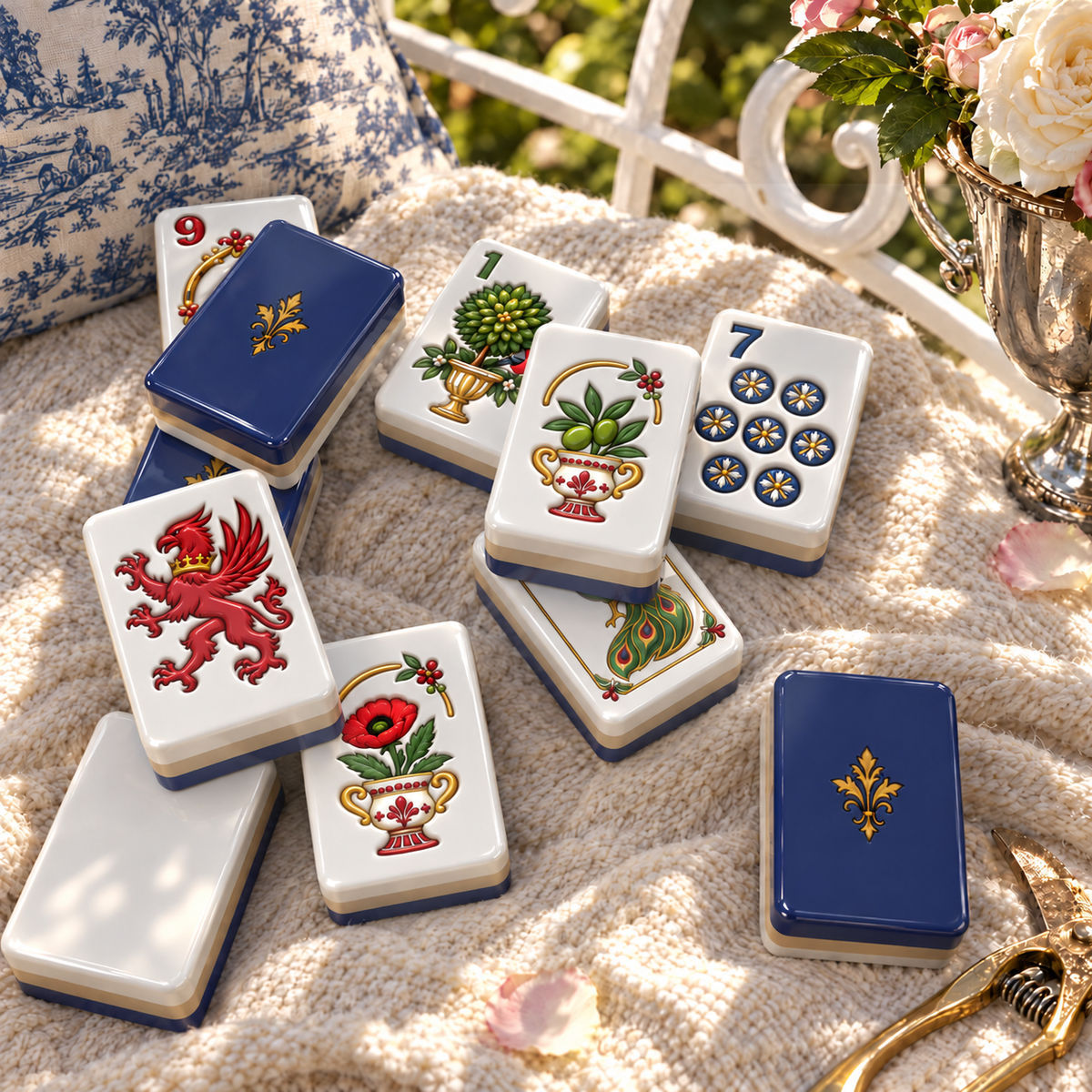
American mahjong includes eight flower tiles—two copies each of Spring, Summer, Autumn, and Winter. Each season tile displays a symbolic flower or motif: Spring shows a plum blossom, Summer a peony, Autumn a chrysanthemum, and Winter a bamboo or plum. These tiles are part of the standard 152-tile deck and appear on every hand you play. They function as honor tiles (like Winds and Dragons), never in sequences, and are typically worth points based on whether you own them or discard them. Unlike suit tiles (Bams, Craks, Dots), seasons are standalone; you can't build them into combinations. Learning to spot season symbols instantly speeds up tile recognition and prevents the common beginner mistake of confusing seasons with Winds—they sit in the same honor category but have completely different values and strategic roles.
Each season tile carries its own distinct image so players can recognize it at a glance, even across a crowded table. Spring traditionally features a delicate plum blossom—often rendered as a five-petaled flower or branch with blossoms. Summer displays a full, layered peony blossom, typically larger and rounder than Spring's design. Autumn shows a chrysanthemum, often with visible petals radiating outward. Winter depicts bamboo stalks or occasionally a second plum blossom rendered differently from Spring. On acrylic sets, these images are engraved or printed on the tile face alongside the Chinese characters for the season name.
Why do season tiles look different from Winds and Dragons?
Seasons occupy their own visual niche: Winds (North, East, South, West) carry directional symbols or characters, while Dragons (Red, Green, White) use solid colors or specific motifs. Seasons always depict botanical imagery, making them instantly distinguishable once you know what to expect. This visual separation prevents the costly misread of calling a season when you meant to call a Wind. At the table, you'll see all three honor categories mixed in the wall, so quick recognition saves time and embarrassment.

Which sets show season symbols most clearly?
High-contrast acrylic sets with deep engraving render seasons most legibly. Bright colors (ivory and black, cream and jade) amplify the visual difference between seasons, Winds, and Dragons. When choosing a set for regular play, prioritize clarity: if the tile face is too small or the engraving shallow, season symbols blur together, especially under table lighting. Our best-selling mahjong sets collection balances durability with clean, readable season artwork.
🀄 Shop best-selling mahjong sets →
How do season tiles score in American mahjong?
Season scoring depends on the current year's National Mah Jongg League card—the official hand list issued every spring. Owning a season tile (not discarding it when called) often awards bonus points; discarding a season tile at the wrong moment can cost points or block you from winning. Some hands explicitly require specific seasons in exposed melds; others ignore them entirely. The card shows which hands include seasons and how they're valued. Unlike Winds and Dragons, seasons rarely serve as "wildcards" in hand construction—they're typically fixed in their positions. Because the card changes yearly, season strategy shifts: a season that scores high one year may score low the next. This annual reset keeps the game fresh and prevents stale strategies.

What's the most common beginner mistake with seasons?
New players confuse seasons with Winds because both are honor tiles and both appear in the wall mixed with Craks, Bams, and Dots. The error compounds: you may think you're building a Wind pung when you've actually grabbed three seasons. At the table, this wastes time and reveals your hand to alert opponents. A second mistake is assuming seasons can substitute for other honors—they can't. Season tiles are always distinct; jokers never replace them in a pung or kong. Practice spotting seasons before your first real game: lay out a full set and group all eight flower tiles together, then separate them by season name. The muscle memory pays off instantly.
When should you hold or discard a season tile?
Hold a season tile if the current hand on the card requires it—check the hand layout before you touch the discard. Discard seasons early if your target hand doesn't need them, especially if holding them blocks your winning draw. Experienced players watch the discards: if you see three Spring tiles on the table, you know the fourth is in someone's hand or still in the wall. This intel influences your strategy. Never hold a season hoping "it might help"—commitment to a specific hand from the card is how you win. Seasons are tools for that hand, not lottery tickets.
🎁 See our most-loved mahjong sets & accessories →
Season Symbol Reference Table
Season | Flower/Symbol | Visual | Tile Count | Honor Category |
Spring | Plum blossom | Five petals, delicate | 2 | Flower (Honor) |
Summer | Peony | Layered, full bloom | 2 | Flower (Honor) |
Autumn | Chrysanthemum | Radiating petals | 2 | Flower (Honor) |
Winter | Bamboo or plum | Stalks or branches | 2 | Flower (Honor) |
How do you tell seasons apart if the print fades?
Over years of play, engraved tiles can wear smooth and details blur. If you can no longer see the season clearly, mark the tiles with a small dot or symbol on the back (use permanent marker lightly) to keep them organized during shuffling. Better: replace worn sets with fresh acrylic tiles that preserve detail through thousands of hands. If you're hosting weekly games, consider a dedicated playing set and a backup set for situations where clarity matters. Acrylic durability means you'll retain sharp engravings far longer than wood or bamboo. We ship engraved American mahjong sets nationwide with free US shipping, so refreshing a worn set is straightforward.
What to Check Before You Buy
Tile size: Standard American tiles are 1¼ inches wide; confirm the set includes 160 tiles (152 playing tiles plus spares).
Engraving depth: Run your finger across a season tile—the image should be tactile, not flat.
Color contrast: Ask for photos under table lighting; ivory-and-black sets outperform monochrome designs.
Season clarity: Request images of all four season tiles from the seller; they should be visually distinct.
Joker count: Verify the set includes 8 jokers (included in the 160-tile count); you need exactly 8 for play.
Rack quality: If the set includes racks, test that tiles stand upright without warping—weak racks hide season symbols.
✨ Find your Mahstead set — free US shipping →
Season tiles are your first step into the ceremonial side of American mahjong. Once you learn to spot them, they become automatic—like recognizing Winds by shape or Dragons by color. The real skill is memorizing the current year's card and knowing when seasons unlock a hand. That's where the strategic depth lives. New to the game? Start with mahjong for beginners to build confidence on all tile categories. Ready to host regular games? A durable acrylic set with clear engravings ensures every player reads seasons correctly, keeping the table smooth and fast.

FAQ
Are the four season tiles in each American mahjong set identical, or does each season appear once?
Each season appears twice—two Spring tiles, two Summer tiles, two Autumn tiles, and two Winter tiles—for a total of eight season tiles in every 152-tile deck. This matches the structure of Winds and Dragons.
Can season tiles be used as jokers in American mahjong?
No. Season tiles are fixed honor tiles; they never substitute for other tiles or act as wildcards. Jokers are separate tiles used only where the current year's card explicitly allows them.
What happens if I discard a season tile someone needs on their hand?
They can call it (pung, kong, or as part of a winning hand if the card permits). You lose the tile and they gain it—same as discarding any other tile. This is why tracking which seasons remain matters.
How do I know if a season tile is worth keeping in my hand?
Check the current year's National Mah Jongg League card. Find your target hand and see if it includes a season. If yes, hold it; if no, discard it early. Never hold seasons hoping they'll help—play only the hands listed on the card.
Do season symbols mean the same thing in Chinese mahjong as they do in American mahjong?
The imagery is similar, but scoring and play rules differ entirely. Chinese mahjong plays with honors and seasons but follows different hand patterns and point values. American mahjong is its own ruleset; focus on the current year's card.
If my acrylic set's season engravings start to fade, can I refresh them?
No; once acrylic engravings wear, they can't be recut. Prevention is best: store the set in a protective case, handle tiles gently during shuffling, and use a backup set for high-volume play. Acrylic durability means fading takes years of heavy use.


View More
View More
View More
