
Season Mahjong Tile Meaning: Why Flowers Matter in American Games
Last updated: Nov 23, 2026
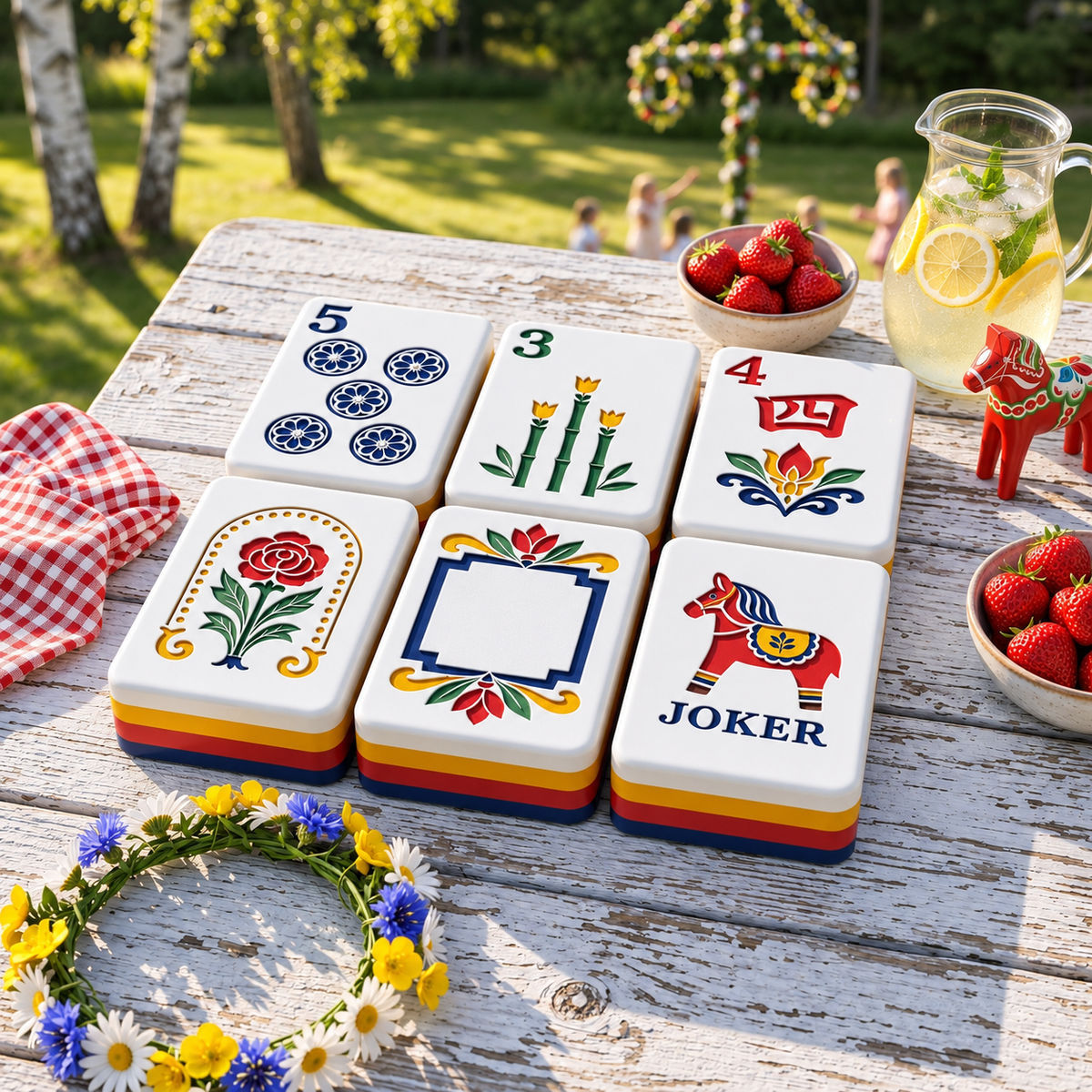
The four flower tiles in American mahjong each represent one season: Spring, Summer, Autumn, and Winter. Unlike winds or dragons, flowers are not suit tiles—they're bonus tiles drawn separately during the game. A player who draws a flower tile immediately sets it aside, shows it to the table, and draws a replacement tile from the wall, effectively "passing" that bonus without affecting hand composition. The four flowers appear once each in a standard 152-tile set; some players and collectors prefer engraved American mahjong sets where the seasonal imagery is clearer or matches a themed design. Flowers do not appear on the annual National Mah Jongg League card and cannot be used to form any winning hand. Their symbolic association with renewal and cyclical time reflects mahjong's origins in classical Chinese philosophy, making them a meaningful decorative and cultural element rather than an active strategic piece.
What does each season flower symbolize?
In traditional Chinese thought, each season carries a specific meaning and energy. Spring represents renewal, growth, and new beginnings; Summer symbolizes abundance, brightness, and vitality; Autumn evokes transition, harvest, and reflection; Winter stands for rest, stillness, and contemplation. These associations appear in classical Chinese poetry, landscape painting, and philosophy—and mahjong preserves them. On the tile itself, you'll typically see a stylized flower illustration (often a plum blossom for Spring, a peony for Summer, a chrysanthemum for Autumn, or a bamboo shoot for Winter, though designs vary by manufacturer). When you draw a flower during play, you're not making a strategic choice—you're simply cycling that bonus tile out. The seasonal meaning is cultural heritage embedded in the game's structure, not a mechanic that changes how you win.

How do flowers work during an actual game?
When you draw from the wall, if that tile is a flower, you immediately announce it ("Flower!"), set it face-up on the table in front of your rack, and draw a replacement tile from the end of the wall. This replacement cannot be a flower; if it is, you repeat the process. By the end of the initial draw (before play begins), every player has drawn tiles until no flowers remain in their hand. The flower tile you drew does not count toward your 13-tile hand; it exists outside play. Flowers never go into your hand composition, never block your sight, and never trigger a winning hand. They simply come and go. This mechanism ensures all eight flowers end up exposed on the table before anyone plays their first tile, giving the game a moment of shared attention and ritual.
Why does American mahjong use flowers if they don't affect winning?
Flowers serve three purposes: cultural continuity, rhythm, and visual identity. Mahjong evolved from classical Chinese games where bonus tiles marked seasonal cycles and spiritual significance. American mahjong, formalized in the 1920s by women in California, inherited that structure. The flower-drawing ritual—called the "flower phase"—slows the opening moments, builds anticipation, and gives players a meditative pause before the competitive play begins. Aesthetically, flowers are also the easiest tiles to recognize at a glance on the table; they break up the visual monotony of numbers and winds, making the set feel complete and balanced. For players hosting regular games, this rhythm is part of what makes mahjong feel like a ceremony, not just a card game.
How do flower tiles differ across American, Chinese, and other variants?
American mahjong includes eight flower tiles (four unique seasons × two copies each in a 160-tile set, though only four are in play at any time). Chinese mahjong traditionally uses the same four flowers but may label them differently depending on regional rules. Hong Kong mahjong often omits flowers entirely or uses them in a limited way. Riichi (Japanese) mahjong does not include flower or season tiles at all; it relies on suit sequences, winds, and dragons only. Taiwanese mahjong may use flowers as bonus tiles similar to American rules but with different scoring mechanics. If you play across variants, check your house rules before the first game—some groups treat flowers as bonus points, others ignore them, and a few add jokers to flowers to create special melds. Understanding what's in a standard American set helps you spot these differences immediately.

Should you choose a set with engraved or decorative season flowers?
Yes, if clarity and aesthetic pleasure matter to your group. A plain tile with a small printed flower can be hard to spot across a noisy table; an engraved set with deep, textured seasonal imagery makes flowers pop visually and adds ceremony to the game. Some players prefer minimalist tiles (cleaner, faster to read at a glance), while others enjoy sets where each season is illustrated in color or relief—especially if you host regular games and want your table to feel special. Engraved or themed sets also make better gifts for collectors and newcomers; the visual richness teaches new players that mahjong carries meaning beyond mechanics. Mahstead offers several styles from understated to ornate, so you can match your playing style and table décor. Consider too the material and durability: acrylic tiles with sharp engraving last through hundreds of hands, while painted images may fade.
🀄 Shop best-selling mahjong sets →
Comparison: Set styles and when to choose each
Style | Best for | Visibility | Durability | Collector appeal |
Minimalist flat print | Fast casual play, learners | Moderate—requires focus | High—paint wear minimal | Low—functional only |
Engraved or relief flowers | Regular weekly games, gifts | Excellent—three-dimensional | Very high—carved deep | High—beautiful on display |
Color-illustrated flowers | Decorative, themed tables | Very good—bright pigments | Medium—paint may chip | Very high—art focus |
Themed seasonal sets | Collectors, seasonal parties | Excellent—artist-designed | High—quality acrylic | Excellent—one-of-a-kind feel |
Choose minimalist if speed and reading clarity matter most. Pick engraved if you host weekly and want tiles that last and impress. Go themed if this is a gift or decorative piece you'll treasure between games.
What to check before you buy a mahjong set with featured flowers
Before ordering, verify: (1) Does the set clearly differentiate all four seasons visually? Hold a photo at arm's length to simulate table distance. (2) Are the flowers engraved, painted, or printed—and how durable is that finish for your play frequency? (3) Does the set include the full 152 playing tiles plus spares? A 160-tile set gives you extra jokers and blanks for replacement, which is standard and smart. (4) Will the flowers' artistic style match your existing table décor or mat? (5) If this is a gift, does the recipient play American mahjong, or would a different variant's rules confuse them? (6) Check the accompanying materials—does the set come with a mahjong mat or racks with pushers that complement the flower design?
🎁 See our most-loved mahjong sets & accessories →
Flowers may not determine who wins, but they set the tone for your game. A set where seasons shine makes every opening feel like a small ceremony—and that ritual is part of why people return to mahjong week after week.
Real-world timing and play flow with flowers
In a typical American game, the flower-drawing phase takes 30–60 seconds per player. All four players draw simultaneously until no player holds a flower, with replacements drawn from the wall live. Once complete, play begins with the East player's first discard. This sequence feels natural in person but matters for pacing: if your tiles are hard to read under dim lighting, flowers get missed and the game stalls. Players hosting weekly games appreciate sets with bold, distinct seasonal tiles. Some groups set flowers aside in a display area; others line them along the top of the wall where everyone can see them immediately. A quality mat with clear demarcation zones makes this ritual smoother, because flower tiles have a designated spot.
✨ Find your Mahstead set — free US shipping →

FAQ
Do flowers count as part of my 14-tile hand in American mahjong?
No. Flowers are bonus tiles that you set aside immediately upon drawing them. Your hand always contains 13 tiles plus one drawn from the wall (14 total), and flowers never enter that count. They exist outside the hand structure entirely.
Can I use a flower tile in a winning hand or meld?
No. Flowers cannot be used in any meld, pung, kong, or winning hand according to American mahjong rules and the National Mah Jongg League card. They have zero strategic value in hand composition and are purely decorative and cultural elements.
What happens if I draw a flower tile in the middle of play?
You set it aside face-up, announce "Flower," and draw a replacement tile from the wall immediately. The replacement tile becomes your drawn tile for that turn, as if the flower never entered your hand.
Are flowers the same in Chinese and American mahjong?
Chinese mahjong includes four flowers and may use them similarly as bonus tiles, but rules vary by region. Riichi (Japanese) mahjong omits flowers entirely. Always clarify variant rules before playing with a new group.
Should I buy a set specifically because it has beautiful flower artwork?
Yes, if you play regularly and value both aesthetics and clarity. Beautiful flowers make the game feel more ceremonial and are easier to spot on the table. For casual or infrequent play, a simpler set works fine; for weekly games, engraved or illustrated flowers are worth the investment.
Do flower tiles have any impact on scoring in American mahjong?
No. Flowers are not mentioned on the annual National Mah Jongg League card and do not contribute points, bonuses, or hand validity. They are purely ceremonial and tactical in setting the rhythm of play.


View More
View More
View More
