
Riichi Mahjong With 2 Players: Rules, Setup & Tips
Last updated: Nov 23, 2026
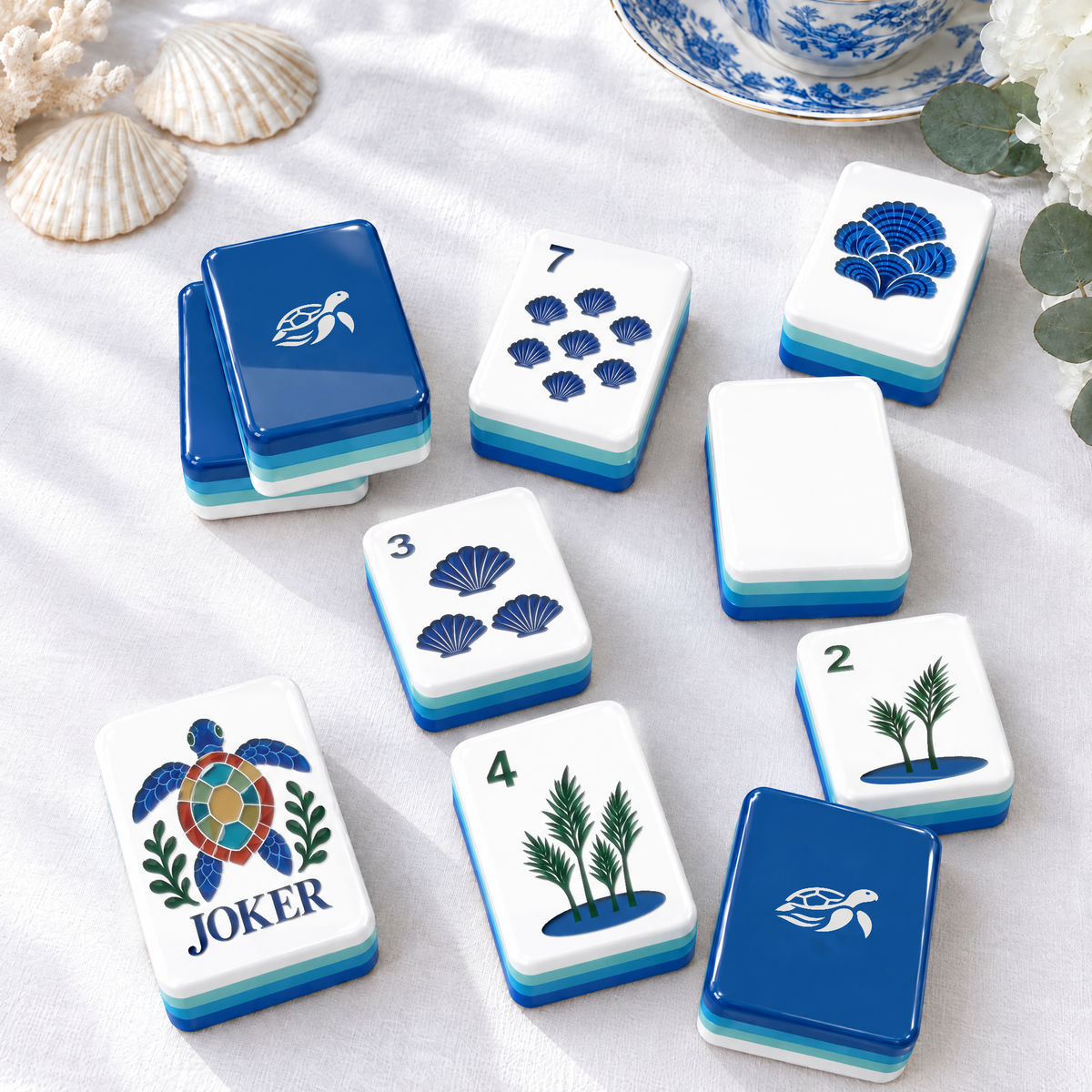
Two-player riichi mahjong (called ryanma or futari mahjong) uses a modified 136-tile deck and adjusted hand-forming rules to speed play and reduce dead time. In the standard approach, players sit opposite each other, draw 13 tiles each in the opening deal, and proceed through a shorter tile wall. Players must declare riichi (a closed hand waiting for one final tile) to earn bonus points. Hand values are scored per standard riichi hand tables but with modified multipliers. The game works but plays faster and feels less strategic than 4-player riichi because fewer tiles remain in play and fewer discard reads are possible. Most Japanese clubs offer 2-player casual variants; American mahjong players typically use a 160-tile American set to play adapted two-player American rules instead, which require no special deck and integrate more naturally with weekly game habits.
Two-player riichi mahjong exists but requires tile-count changes and house rules because the original game assumes four players drawing and discarding in rotation. We've hosted players experimenting with head-to-head riichi sessions, and here's what actually works.
How many tiles do you need for 2-player riichi?
A full riichi set contains 136 tiles—three numbered suits (Craks 1–9, Bams 1–9, Dots 1–9, four copies each = 108 tiles), 16 winds (East, South, West, North, four each), 12 dragons (four each: White, Green, Red), and 8 flowers. In 2-player riichi, both players typically draw 13 tiles in the opening deal (instead of 14 for the dealer, 13 for others in 4-player). The wall begins with the remaining 110 tiles. Each player draws one tile from the wall and discards one per turn. Play concludes when a player either wins by drawing or claiming a discard, or when the wall is exhausted (a draw called tenpai or exhausted draw). Some clubs use a shortened 108-tile variant (removing flowers), but the standard 136-tile deck is more common because it keeps hand-building mechanics closer to 4-player riichi.

What hands can you make in 2-player riichi?
All standard riichi hand patterns—melds of three or four identical tiles (pungs / kans), sequences of three consecutive tiles (chows), pairs—remain legal. However, fewer competing players mean fewer disruption opportunities: when you discard a tile, only one opponent can claim it, and only one other player's discard reaches you per turn. This shifts strategy away from discard reading and defense. Winning hands in 2-player riichi follow the same value tables as 4-player: a hand worth 1,000 points in isolation scores the same points, but table position (East vs. non-East dealer) and bonuses (dora, yaku, fu) still apply. Some players house-rule that a hand must be worth at least 1,000 points to win; others allow smaller scores to speed play. Confirm house rules before you sit down, because variations differ between clubs and casual groups.
How does riichi declaration work with two players?
To declare riichi, a player must have a closed hand (no exposed melds, no claimed discards) that is one tile short of a winning shape. The player discards, announces "riichi," and places 1,000 points in front as a visible bet. If the player wins on riichi, they earn a bonus. If another player wins before your riichi hand is complete, you lose your 1,000-point stake. In 2-player riichi, declaring riichi is a stronger signal than in 4-player because your opponent knows a specific hand shape is waiting—there's no third or fourth player to confuse reads. This makes riichi declarations riskier but also more decisive. Some 2-player house rules forbid riichi altogether to avoid standoff situations; others allow it but remove the 1,000-point stake and score it as a simple "one-shot" hand bonus. Ask your group which rule applies.
Is 2-player riichi faster than 4-player?
Yes—a 2-player game typically ends in 15–25 minutes because the wall shrinks faster and fewer discards are necessary to complete a hand. In 4-player riichi, a full game (8 rounds, dealer rotations, scoring adjustments) can run 60–90 minutes. Two-player riichi compresses to a single "session" of one continuous game until a player reaches a target score or you call time. However, the shorter game means less opportunity to recover from a bad opening round, and variance in tile luck is more visible. If you prefer the pacing and strategy of standard 4-player riichi, you're better off waiting for a fourth player or switching to American mahjong with 2 or 3 players, which is purpose-built for smaller groups and uses acrylic tiles and a standard ranking card.
🀄 Shop best-selling mahjong sets →

Should you play 2-player riichi or American mahjong instead?
Variant | Players | Tile Count | Hand Format | Learning Curve | Play Time |
Riichi (4-player standard) | 4 | 136 | Sequences + pungs | Moderate | 60–90 min |
Riichi (2-player adapted) | 2 | 136 | Sequences + pungs | Moderate | 15–25 min |
American mahjong (4-player) | 4 | 152 + jokers | Pungs/kongs/jokers; no sequences | Steep (card + rules) | 45–75 min |
American mahjong (2-player) | 2 | 152 + jokers | Pungs/kongs/jokers; no sequences | Steep (card + rules) | 20–40 min |
American mahjong is designed to work with 2–4 players using a published annual hand card and jokers as wild tiles; riichi is rigid about player count and relies on hand-value scoring. If you already play riichi, 2-player riichi is straightforward. If you're new to mahjong and have only two regular players, American mahjong is often easier to learn because hands are printed on a reference card and you're not memorizing hand values. If you want to keep learning riichi but need sessions with fewer players, 2-player riichi works—just set house rules about riichi stakes and minimum winning scores upfront.
What equipment do you actually need for 2-player riichi?
A standard 136-tile riichi set (usually bamboo or acrylic, sold by Japanese game suppliers), a discard mat or play area, and a pencil for scoring. Some players use a dedicated tile wall or frame, but it's optional. If you're mixing riichi with American mahjong games, buy a 160-tile American set with matching mats instead—they're acrylic, durable for frequent play, and include jokers and spare tiles. For a compact 2-player setup, a travel-size bag with pushers and racks keeps your tiles and scoring pieces organized between rounds. Don't invest in both riichi and American sets unless you're committed to both games; choose one based on your play group's preference.
🎁 See our most-loved mahjong sets & accessories →
Common mistakes when starting 2-player riichi
Ignoring house rules beforehand. Different clubs and casual groups house-rule riichi stakes, minimum winning scores, and whether flowers or jokers (if included) are legal. Ask your opponent or group organizer before the first tile is drawn.
Overestimating hand potential too early. With only two players and fewer total tiles drawn per round, chasing a high-value hand often leaves you exhausted—a smaller, complete hand wins faster.
Forgetting that fewer players = fewer discard reads. In 4-player riichi, you have three opponents to monitor; in 2-player, you read one person's strategy more closely. Predictability works against you; vary your discards to stay unpredictable.
Playing riichi when American mahjong is available. If your group has irregular attendance (2–4 players on different nights), American mahjong is more forgiving. Riichi insists on a specific player count for optimal flow; American adapts seamlessly.
What to check before you buy
Tile count: Riichi sets are 136 tiles; American sets are 152 tiles + jokers. Make sure your set matches your chosen variant.
Tile material: Acrylic (easy to clean, durable, loud shuffle), plastic (lighter, quieter), or bamboo/bone (heavier, premium feel). Acrylic is most common in US clubs and our best-selling collections.
Included accessories: Mats, racks, pushers, bags, and dice vary by set. If you're traveling, check that a travel bag is included or available separately.
House rules in your group: Before buying, confirm whether your players prefer riichi, American, or a hybrid. Budget and time investment differ significantly.
✨ Find your Mahstead set — free US shipping →

FAQ
Can you play riichi mahjong with 2 players using only 108 tiles?
Yes, some casual 2-player groups remove flowers and play with 108 tiles. The game works but hand shapes shift slightly. Confirm this rule with your opponent or group before you start; most formal play uses the standard 136-tile deck.
Is 2-player American mahjong easier to learn than 2-player riichi?
It depends on your background. American mahjong requires memorizing one year's hand card and joker rules; riichi requires learning hand values and melds. Both are medium difficulty. If your group plays American regularly, start there; if riichi is available, riichi is more flexible for 2 players.
Do you need a wall frame or special mat for 2-player riichi?
No, a flat surface and a pencil for scoring are enough. A mat prevents tile noise and defines the play area; a wall frame tidies the remaining tiles but isn't necessary. Many casual 2-player sessions use a small mat or kitchen table.
What happens if the wall runs out in 2-player riichi before anyone wins?
The game ends in a draw (exhausted draw). Depending on house rules, players may split points, reset, or no one scores. Discuss end-of-wall scoring before you play.
Should I buy a riichi set or an American set if I only play with one other person?
Choose based on your group's game preference and whether you might expand to 3–4 players later. American mahjong scales better with 2–4 players; riichi is optimized for 4 but works for 2 with house rules. If undecided, ask local clubs which variant they teach beginners in your area.


View More
View More
View More
