
Riichi Mahjong vs Vietnamese Mahjong: Key Rules & Differences
Last updated: Nov 23, 2026
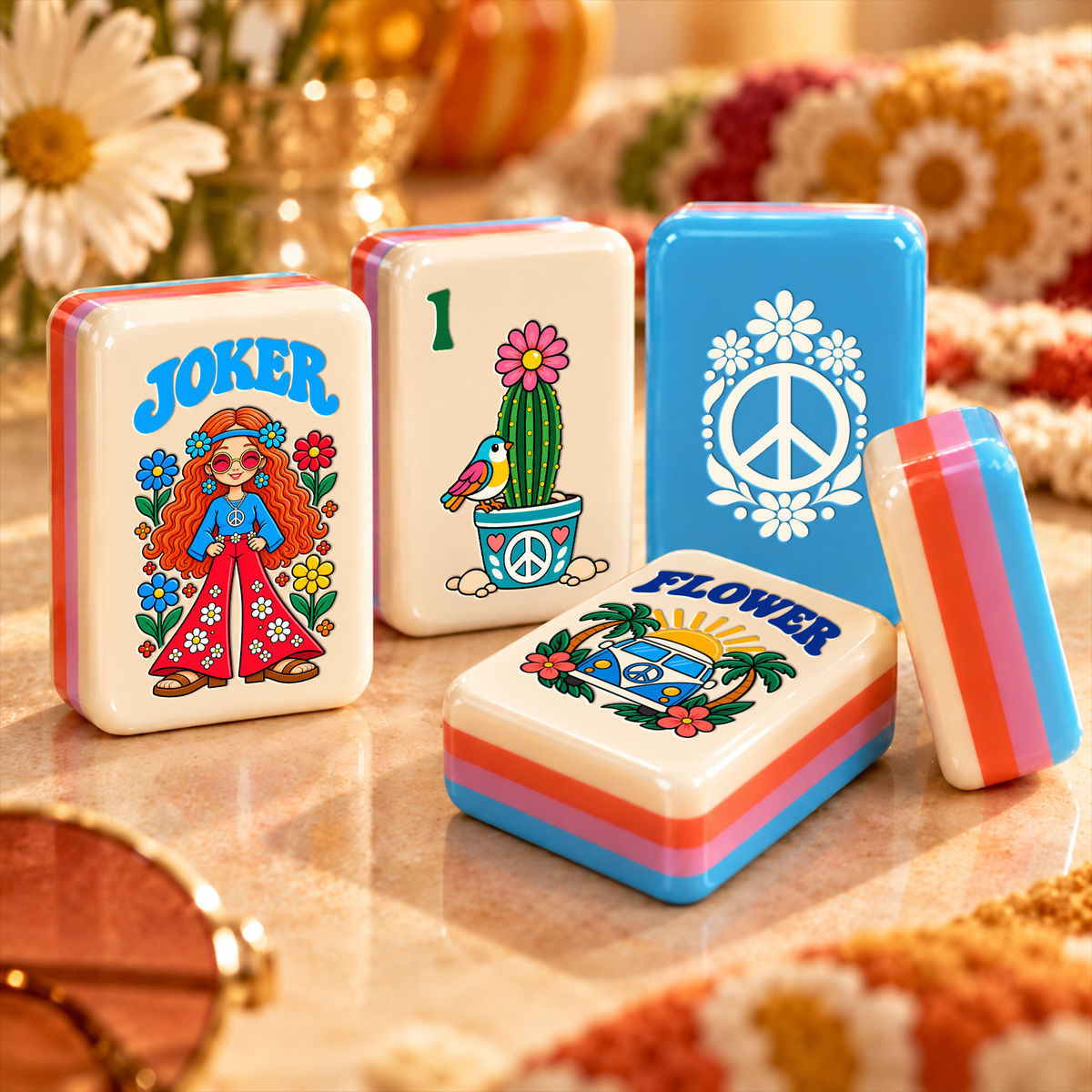
Riichi mahjong (Japanese standard) uses 136 tiles across four suits, emphasizes hidden hands and melds declared only at win, and requires a "ready" announcement (riichi) before winning. Vietnamese mahjong, also called "Tây" mahjong, typically uses 144 tiles, allows visible melds earlier in play, and has simpler winning patterns. Both are popular in Asia and North America, though Riichi dominates in Japan and Vietnamese is strongest in Vietnam and diaspora communities.
What tile count and suits does each variant use?
Riichi mahjong plays with exactly 136 tiles: four suits of 34 tiles each (Manzu/numbers, Pinzu/circles, Souzu/bamboo, plus Honors containing winds and dragons). Vietnamese mahjong typically uses 144 tiles in a similar structure but with one extra tile per category to allow for larger hands and different discard patterns. This is a fundamental difference—you cannot mix sets, and sourcing the correct tiles matters before your first game. Riichi players in North America often import sets from Japan; Vietnamese players similarly rely on sets from Vietnam or specialty Asian retailers.

How do winning melds differ between the two?
In Riichi mahjong, you win by completing a "tenpai" (winning hand shape) and either drawing a winning tile or calling a discard from another player (ron). Your melds stay hidden until the moment you declare victory; only then do you expose your tiles. This hidden-hand model rewards memory and deception. Vietnamese mahjong allows players to form and display melds (pungs, kongs, chows) during play, similar to some Hong Kong variants, making the game more visible and interactive. The flow of information differs dramatically: Riichi is largely a game of inference; Vietnamese is more transparent.
What does "riichi" mean, and do Vietnamese players use it?
Riichi is a Japanese declaration meaning "ready"—you announce it when your hand needs only one more tile to win, and you freeze your hand (cannot change it). This declaration locks your betting and score multipliers. Vietnamese mahjong does not use riichi; instead, players build toward "win" states without the locked-hand announcement. This makes Riichi more high-stakes in each turn; Vietnamese tends to feel more fluid. Understanding riichi strategy is core to learning the Japanese variant; without it, you'll miss a major layer of play.
How do scoring systems compare?
Riichi mahjong uses a complex point multiplier called "han" (repeats) and "fu" (base points), which determine payouts to all players or from one opponent. A hand can be worth 1,000 to 48,000+ points depending on the pattern, and scores accumulate across rounds. Vietnamese mahjong typically uses a simpler flat-point system or incremental increases based on hand rarity, making it faster to score and less mathematically intense. If you're new to either game, expect Riichi scoring to demand a calculator or cheat sheet; Vietnamese is more pickup-friendly. Many casual players use scoring charts or apps to avoid disputes.

Which variant should your group play, and why?
Variant | Player count | Best for | Learning curve | Meld visibility |
Riichi | 4 (best) | Competitive players, memory fans | Steep (weeks) | Hidden until win |
Vietnamese | 4, sometimes 3 | Social players, faster games | Moderate (days) | Visible during play |
American | 4 only | League play, card-based hands | Moderate (1–2 weeks) | Only exposed pungs/kongs |
Choose Riichi if your group values strategy, memory, and a global competitive community (Japan dominates official tournaments). Choose Vietnamese if you want simpler scoring, faster rounds, and a game suited to casual hangouts. Choose American if you already have an American mahjong set and want to stick with one variant—the National Mah Jongg League card and annual updates make it self-contained.
🀄 Shop best-selling mahjong sets →
Where do you find players and sets for each variant?
Riichi communities exist in most major North American cities; search for "riichi mahjong club" or "Japanese mahjong" + your city on community boards, Discord servers, and Meetup. Vietnamese mahjong clusters in cities with large Vietnamese populations (Houston, Orange County, Dallas, Seattle, and California regions); ask at Vietnamese community centers and churches. American mahjong runs through the National Mah Jongg League and affiliated clubs nationwide. Sets for Riichi and Vietnamese are harder to source domestically—most players order from Japan (for Riichi) or Vietnam (for Tây). If you're building a home game library and already enjoy American mahjong, our best-selling collections include acrylic American sets with free US shipping; those won't help you play Riichi or Vietnamese, but they're reliable for teaching others American rules while you explore other variants elsewhere.
🎁 See our most-loved mahjong sets & accessories →
Common mistakes when switching between variants
Mistake 1: Mixing tile sets. Riichi and Vietnamese tiles look similar but are structurally different; using a Riichi set to play Vietnamese creates confusion and unfair advantage. Always confirm your tiles match the variant before sitting down.
Mistake 2: Forgetting hand shapes are variant-specific. A winning hand in American mahjong won't work in Riichi or Vietnamese—each variant has its own legal patterns. Study the rulebook for your chosen game before playing.
Mistake 3: Ignoring scoring systems. If you learn Riichi but then try Vietnamese without reviewing the point structure, you'll miscalculate payout frequently. Jot down or screenshot the scoring table before your first session.
Mistake 4: Playing with incomplete rules knowledge. Riichi has dozens of named hand types (yaku); Vietnamese has simpler patterns. Halfway through a game is the wrong time to look up whether a meld is legal. Read the rules end-to-end before inviting friends.
Mistake 5: Assuming one set works for all three variants. It doesn't. American, Riichi, and Vietnamese each require their own tile set. Don't buy a 160-tile American set and expect it to work for Riichi or Vietnamese play.
What to check before you buy
Confirm the variant. Search for "Riichi set" (Japan), "Vietnamese tây set" (Vietnam), or American sets if you're shopping domestically.
Verify tile count. Riichi = 136, Vietnamese = typically 144. American = 152 play tiles plus 8 jokers (sold as 160-tile sets).
Check seller location and reviews. Riichi sets from Japan and Vietnamese sets from Vietnam tend to be authentic; verify return policy.
Read the rules before ordering. Free rulebooks are available online (World Riichi Society, Vietnamese mahjong Facebook groups); don't buy blind.
Join a local club or Discord first. Play a few hands before investing in a set; you'll know which variant truly clicks with your playstyle.
✨ Find your Mahstead set — free US shipping →

FAQ
Can I use an American mahjong set to play Riichi or Vietnamese?
No. American sets (152 tiles) have different suit symbols, no jokers in the Riichi/Vietnamese sense, and are incompatible with those rule systems. You need a dedicated Riichi (136) or Vietnamese (144) set.
Which variant is easier to learn: Riichi or Vietnamese?
Vietnamese is generally faster to pick up—simpler scoring and more visible play. Riichi's hidden-hand model and complex han/fu system take weeks to master but reward memory and strategy long-term.
Do Riichi clubs exist in the United States?
Yes. Search Meetup, Discord (Riichi Mahjong Discord servers are active), and local game cafés in urban areas. The World Riichi Society maintains a club directory.
Where do I buy Riichi or Vietnamese mahjong sets in North America?
Riichi sets are typically imported from Japan (Maru, Tileset Japan, etc.). Vietnamese sets come from Vietnam or specialty Asian retailers. Domestic mahjong shops rarely stock them—plan ahead and allow for shipping time.
Why do Riichi players announce "riichi"?
Riichi signals that your hand is one tile away from winning and freezes your melds. It doubles your final score if you win but costs money if you don't win before the round ends. It's a risk-reward declaration.
Can I play Riichi or Vietnamese with fewer than four players?
Riichi is designed for exactly four players. Vietnamese has variants for three, though four is standard. American mahjong also requires four players for standard league play.


View More
View More
View More
