
Blue Mahjong Case: How to Choose the Right Travel Protection
Last updated: Nov 23, 2026
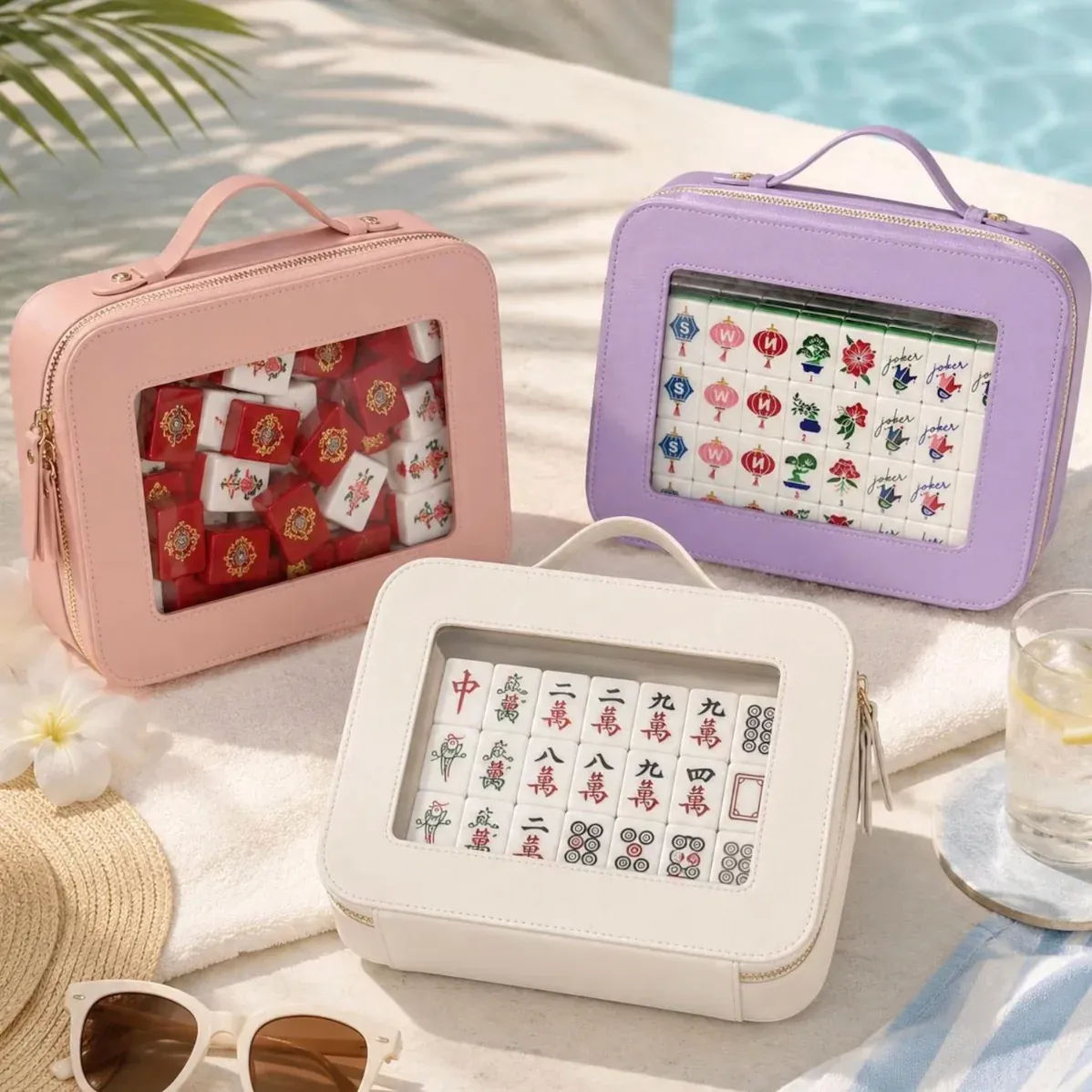
A blue mahjong case is a hard-shell or padded carrying container designed to hold a 160-tile American mahjong set during travel and storage. Cases range from compact, rigid designs (ideal for car transport) to soft padded bags with dividers that accommodate the full set plus mahjong racks with pushers and accessories. Most blue cases measure 12–16 inches across and weigh 2–4 pounds empty. Prices vary by material: budget-friendly nylon or vinyl starts at the lower end, while reinforced hard-shell or premium padded cases cost more. Before ordering, confirm the case's internal dimensions match your set's tile stack height (roughly 4–5 inches stacked) and footprint; acrylic tiles are durable but sensitive to scratches in transit. Mahstead cases are pre-checked to fit our 160-tile sets; check the product page for exact dimensions and compartment layout.
What's inside a blue mahjong case, and why it matters?
Most blue cases include dedicated compartments or elastic straps to prevent tiles from sliding during movement. A typical layout has one main chamber for the tile rack or stacked tiles, smaller pockets for joker tiles and the card holder, and sometimes a separate slot for mahjong mats. Cases with rigid dividers protect tiles better than soft pouches but weigh more. Padding (foam, neoprene, or felt) reduces tile chipping and cracks from bumps. The best cases separate your set from the mat; mixing them causes creasing and mildew on fabric. Choose a layout that matches how you store and transport your set most often—weekly car trips favor compact hard cases, while home storage suits larger soft bags with ventilation.
🀄 Shop best-selling mahjong sets →

Hard shell vs. soft padded: which blue case fits your game?
Type | Best for | Protection | Weight | Durability |
Hard shell (ABS, polycarbonate) | Car & plane travel | Highest—rigid walls block impact | 3–4 lb | 5–10 years in regular use |
Soft padded (nylon + foam) | Weekly home-to-table | Good—padding absorbs shock | 1.5–2.5 lb | 3–7 years; straps wear first |
Nylon tote (minimal padding) | Short car trips, storage | Moderate—relies on tile stacking | <1.5 lb | 2–4 years; handles fray easily |
Rigid carry (polycarbonate + dividers) | Frequent travel, theft risk | Very high—compartments isolate tiles | 4–5 lb | 7–10 years; hinges are weak spots |
Hard-shell cases protect tiles from crushing if the case is dropped or sat on; they're essential if you fly with your set or store it in a car trunk. Soft padded bags are lighter, quieter, and fit easily on closet shelves, but they offer less protection against punctures or bent edges. For weekly game nights within a 30-minute drive, soft nylon is adequate; for cross-country trips or clubs that travel, invest in rigid shell with corner reinforcement.
How to measure your set and case before ordering?
Lay your best-selling mahjong sets flat in its rack or stacked gently without the mat. Measure height from table to the topmost tile (typically 4–5 inches for a full 160-tile set in a rack). Measure the rack's width and depth (roughly 9 × 6 inches for a standard American rack). Add 0.5–1 inch to each dimension for padding and case walls. Cross-reference these numbers against the case's advertised internal depth, width, and height on the product page. A case listed as "11 × 7 × 5 inches inside" will fit a 9 × 6 × 4.5-inch rack with 1 inch of clearance on all sides—ideal for sliding the rack in and out without jamming. Cases marketed as "universal" often assume a smaller rack; always verify dimensions. If the case is too tight, tiles can crack under pressure; too loose, and tiles shift during transport, creating noise and misalignment.
🎁 See our most-loved mahjong sets & accessories →

What makes a blue case durable for years of play?
Inspect the case's corners, hinges, and seams before purchase. Hard cases should have reinforced plastic at each corner; soft cases need double-stitching along stress points (handles, divider anchors, zipper tabs). Check if the zipper is nylon or metal (metal is quieter and lasts longer). For hard-shell cases, examine the hinge design: piano hinges (full-length metal hinges) beat snap hinges because they distribute stress across the entire edge. Handles should be recessed or padded to prevent accidental snagging during storage. Ventilation holes or mesh fabric panels reduce moisture buildup inside, protecting your tiles and mat from mildew—especially important if the case sits in a humid garage or car. Cases without drainage can trap condensation in winter or after transport in rain. Test the latch mechanism (magnetic, snap, or lock): magnetic latches are most convenient for frequent access but can fail if magnets weaken; snap latches require more force but never fail unless the plastic cracks.
Blue case comparison: what other players choose?
Most weekly players at our Dallas games favor soft padded nylon bags (easy to grab, compact for closets) for home-to-table runs under 20 minutes. Experienced hosts investing in travel-bag collections opt for rigid hard-shell cases with interior dividers—the extra cost pays off in tile longevity and easier stacking of multiple sets for larger tournaments. Players who also store a mahjong mat in the same case choose cases with two compartments or flat-bottom designs (24+ inches long) to avoid creasing fabric. Blue is the most common choice because it's neutral, easy to spot among luggage, and traditionally associated with calming (a bonus for tense gameplay). Some players upgrade to cases with combination locks if they travel on public transit or store sets in shared spaces. For a first case, a soft padded blue bag is forgiving and affordable; upgrade to hard shell once you've confirmed your transport routine and set size.
✨ Find your Mahstead set — free US shipping →
What to check before you buy: a quick checklist
Dimensions: Measure your rack or stacked tiles; compare height, width, depth to the case's internal dimensions (add 1 inch for padding).
Compartments: Confirm at least one main chamber plus pockets for jokers, cards, and dice.
Material: Hard shell for frequent air/car travel; soft nylon for home storage and short trips.
Padding: Look for 0.5–1-inch foam or felt lining; avoid bare plastic interiors.
Seams & hinges: Check for double-stitching and reinforced corners; inspect hinge type (piano > snap).
Zipper & latches: Test that mechanisms move smoothly; verify zippers are metal or heavy-duty nylon.
Ventilation: Confirm drainage holes or mesh panels to prevent mildew.
Color fade: Review photos under different light; blue dyes fade if stored in direct sunlight.
Warranty: Confirm what damage is covered by the seller (many exclude wear and tear).
Fit test: If possible, request a return window to verify the case holds your exact set without forcing.
#
FAQ
Can a standard blue mahjong case fit a set with a mahjong mat rolled inside?
Most standard cases are too shallow; mats add 2–3 inches when rolled. Choose a case labeled "expandable" or with a flat base 20+ inches long, or store the mat separately in a flat bag to avoid creasing and mildew.
How do I prevent tiles from scratching inside a blue case?
Use felt dividers or foam compartments, never bare plastic. Wrap your rack in a soft cloth or zip it into a mesh bag before placing it in the case. Avoid stacking heavy items on top of the case during transport.
Are hard-shell blue cases airline-approved for checked luggage?
Yes, if the case meets your airline's size limits (typically 62 inches total length + width + depth). Hard cases protect tiles better in rough baggage handling. Contact your airline before travel to confirm size and weight restrictions.
What's the difference between a blue mahjong case and a generic tile storage box?
Mahjong cases are sized specifically for tile height and rack dimensions, with compartments for cards and jokers. Generic boxes often lack padding and interior dividers, risking tile damage. Buy a case designed for mahjong to ensure proper fit.
Can I fit multiple sets in one large blue case?
Only if the case is 20+ inches long with internal dividers or multiple compartments. Most standard cases hold one set plus accessories; stacking two sets risks crushing the bottom set. Use a second case or a flat storage bin for backup sets.
How often should I clean the inside of my blue mahjong case?
Wipe the interior with a dry, lint-free cloth every 2–3 months, or after transport in wet conditions. Vacuum gently to remove dust. If mildew appears, air-dry the case in sunlight for several hours and add a silica gel packet before sealing.


View More
View More
View More
