
Riichi Mahjong vs Mahjong Solitaire: Which Game Is Right for You
Last updated: Nov 23, 2026
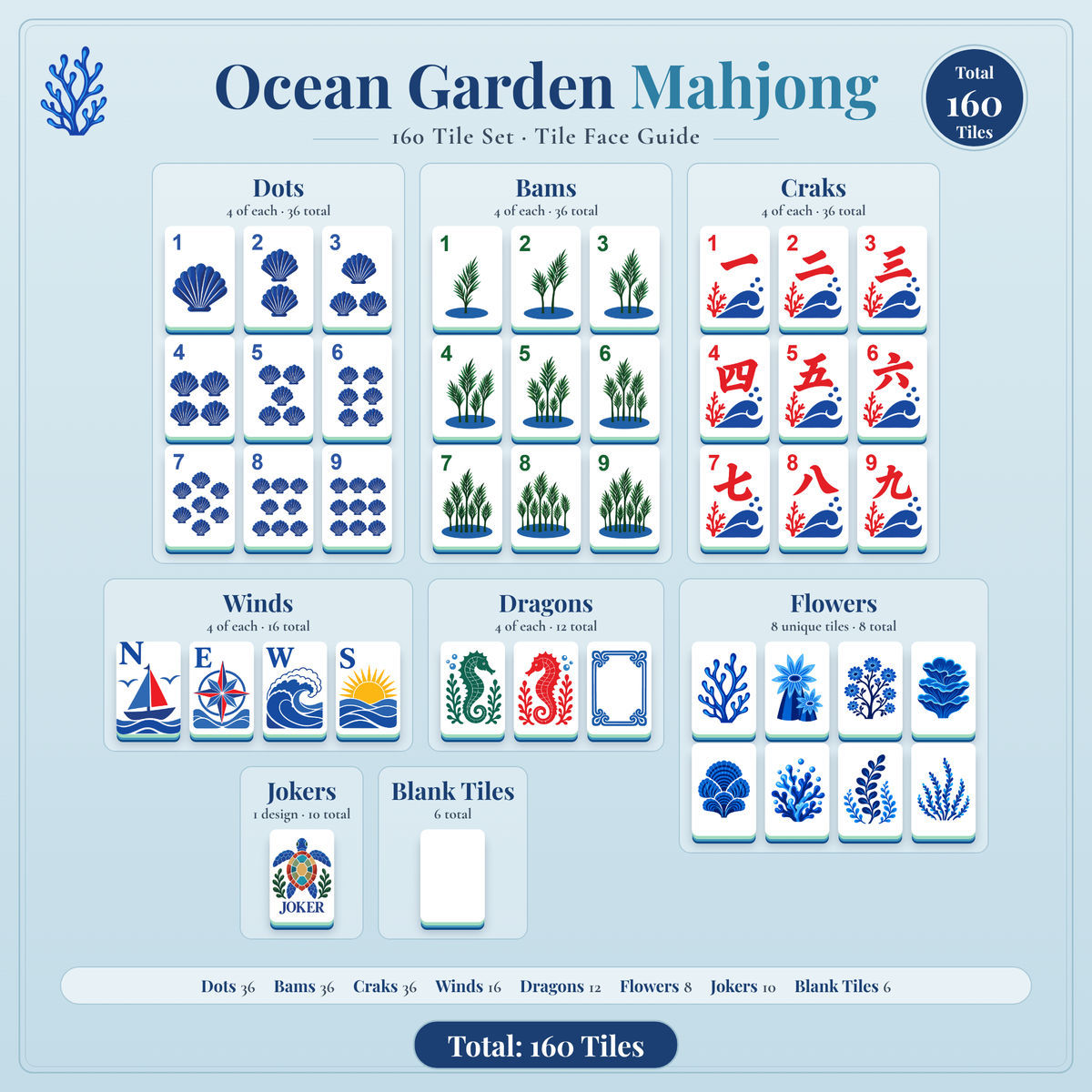
Riichi mahjong (also called Mah-jong or Japanese mahjong) is a four-player competitive game using 136 tiles, played with sequences (chows), triplets (pungs), and a one-tile draw-and-discard mechanic across 8–16 rounds. Mahjong solitaire is a single-player tile-matching puzzle—unrelated to competitive mahjong—where you clear pairs from a shuffled layout on screen or physical board within a time limit. Riichi follows strict hand-finishing rules and hidden melds; solitaire is about spatial pattern recognition. Riichi requires strategy and real opponents; solitaire is casual brain exercise. If you want social four-player competition with scoring and hand hierarchy, riichi is your game. If you want a quiet solo puzzle, solitaire fits better. We host riichi games weekly and use standard sets with 136 tiles and dice; solitaire boards are digital-first and rarely competitive.
Riichi mahjong and mahjong solitaire share a name and tiles but are fundamentally different games. Many people confuse them because "mahjong solitaire" apps became wildly popular, while riichi mahjong—the original Japanese competitive variant—remained less visible in the West. Here's how to tell them apart and choose the one that matches your goal.
What is riichi mahjong, exactly?
Riichi mahjong is a four-player tile game where each player draws and discards one tile per turn, building a winning hand of 14 tiles arranged into specific melds (triplets, sequences, pairs). Play proceeds through multiple rounds with a rotating dealer, similar to poker. The winning pattern must meet strict criteria: at least one sequence (chow) and one triplet (pung), plus a pair—or special hand types like all triplets (toitoi) or all honors. Jokers exist in some variants but are not core to standard riichi play. A complete riichi set contains 136 tiles (108 number tiles from three suits in 1–9 x 4 copies each, plus 16 winds, 12 dragons, plus optional red fives). Riichi is played face-to-face with real opponents at a physical table, usually lasting 2–4 hours per session. Scoring follows a point hierarchy based on hand difficulty and who won (self-draw vs. discard claim).

What is mahjong solitaire, then?
Mahjong solitaire is a tile-clearing puzzle, not a competitive game. A random or pre-set layout of 144 tiles sits face-up (often in stacks or pyramids on screen), and you match pairs of identical tiles and remove them. The goal is to clear all tiles before time runs out or moves are exhausted. There's no dealer, no sequences, no hand hierarchy, no opponent. Mahjong solitaire became famous as a free computer game in the 1990s and remains one of the most-played casual games on mobile. It uses the visual appearance of mahjong tiles—suits, dragons, winds, flowers—but the gameplay logic is pure matching puzzle, closer to Memory or Solitaire card games than to any actual mahjong variant. Many people play it for brain stimulation while watching TV; it's entirely single-player and asynchronous.
🀄 Shop best-selling mahjong sets →
How do the rule sets differ?
Riichi mahjong has complex, codified rules enforced across competitive play. You must declare your winning hand's composition to prove it's legal; melds are shown and scored; hands are ranked by difficulty (fan, or doubling). Discards are tracked for all players to see. Play is turn-based and real-time (you announce your move within seconds). Draws, claims, and Kong declarations follow strict order. Penalties exist for rule violations.
Mahjong solitaire has no formal "rules" in the competitive sense. The only rule is: match two identical free tiles (not blocked by other tiles on top) and remove both. The puzzle layout and tile counts are fixed per game; your goal is to clear everything. There's no scoring hierarchy, no hidden information, no negotiation. Win = all tiles gone. Lose = no more moves possible with tiles remaining. The entire game is deterministic and transparent.
Comparison: rule structure
Aspect | Riichi Mahjong | Mahjong Solitaire |
Players | 4 (simultaneous) | 1 (solo) |
Tiles per game | 136 | 144 (standard layout) |
Sequences allowed? | Yes (chows); core to winning | No; only pair matching |
Draw mechanic | Turn-based; each player draws once, discards once per turn | N/A; you choose which pairs to match |
Winning condition | Complete hand meets specific melds + scoring criteria | All tiles cleared from the board |
Scoring | Points depend on hand difficulty (fan) and win type | Time remaining or moves left (if scored) |
Hidden information | Yes; hands and draws are private until win claim | No; all tiles visible at start |
Typical session | 2–4 hours; 8+ rounds | 5–15 minutes per puzzle |
Social element | Essential; four opponents | None; purely personal/casual |
Skill ceiling | High; hand recognition, probability, psychology | Medium; spatial reasoning, pattern speed |
Which game should a new player start with?
If you enjoy card games like poker or gin rummy, or if you want a social table experience with friends, riichi mahjong is for you. You'll need a group (ideally four players), a 136-tile set, and several weeks to learn hand patterns, rules, and basic strategy. Riichi rewards memory, probability judgment, and reading opponents. Sessions are long; the learning curve is steep. Many Western players begin with American mahjong—which also uses four players but different tiles and rules—before exploring riichi.
If you like puzzle games—Tetris, Candy Crush, crosswords—mahjong solitaire is an easier entry point. Download an app, play free games, and learn the matching logic in minutes. No opponents, no scoring system to decode, no scheduling needed. It's accessible everywhere. The downside: there's no competitive depth; you're just playing against time or luck of the layout shuffle.
We run riichi sessions weekly for players committed to learning. Solitaire players in our circle use apps on breaks and occasionally set up physical wooden or acrylic solitaire boards as decor rather than active play.

Can you play riichi with fewer than four players?
Riichi is designed for four simultaneous players. With three or two players, the game becomes unbalanced because each player discards and draws too frequently; hand patterns break, and tile probability shifts. Some variants exist for two or three players (usually played as teams or with rule tweaks), but they're less standard and require a rulebook amendment. Two and three-player mahjong is playable but not the canonical riichi experience.
Mahjong solitaire has no player-count issue; you play alone by definition.
Why is riichi mahjong so different from American mahjong?
Many Westerners encounter American mahjong first, often at synagogues, senior centers, or community groups. American mahjong uses a different tile count (152 tiles + 8 jokers), a different hand lexicon (based on the annual National Mah Jongg League card), and does not allow sequences—only exposed triplets, quints, and sextets. Hands are called from a specific list each year; plays rotate the dealer among four players. It's a melds-based game with a reference card.
Riichi mahjong predates American mahjong by decades and follows Japanese convention: sequences are fundamental, hands are built from patterns (not a card), the game is harder, and strategy hinges on reading tile flow and opponent behavior. American mahjong is more forgiving, rule-book-dependent, and beginner-friendly. Riichi demands higher pattern recognition and real-time decision-making under pressure.
If you're learning to host riichi nights and want a best-selling set to start with, choose one with clear tile markings (especially suit symbols) and sturdy racks—clarity matters in a fast-paced four-player game. Tiles must shuffle smoothly and feel balanced in hand.
🎁 See our most-loved mahjong sets & accessories →
What equipment do you need for each game?
Riichi mahjong:
One 136-tile set (Japanese mahjong)
Dice (two dice to determine draw order)
A table or mat with space for four players
Hand racks (optional but helpful to keep tiles organized and hidden)
Riichi does not typically use a score sheet or formal scoreboard; players track points verbally or with pencil and paper.
Mahjong solitaire:
Either a digital device (computer, tablet, phone) running solitaire software, or a physical wooden/plastic solitaire board (usually 144 tiles in a fixed pyramid or stacked layout)
No racks, dice, or scoring devices needed; time clock (built into apps) is optional
For hosting riichi at home, you need only the tiles, dice, and a clear table. Mahjong mats help protect the surface and define the play zone; racks with pushers are nice-to-have for keeping hands hidden and organized. For traveling to mahjong clubs or friends' homes, a mahjong bag or case is invaluable. Solitaire boards are usually played solo and stored as decorative displays; no special equipment needed.
✨ Find your Mahstead set — free US shipping →
What to check before you buy
For riichi mahjong:
Verify the set contains exactly 136 tiles (not 144 or 152, which are American or other variants).
Check that tiles are weight-balanced and shuffle smoothly (resin or acrylic sets are best for durability).
Ensure suit symbols and number marks are embossed or printed clearly (poor markings cause misreads during fast play).
Confirm the set includes dice; some don't.
If hosting multiple weekly sessions, buy a mat and rack set to professionalize the experience and speed up setup.
For mahjong solitaire:
If buying a physical board, verify all 144 tiles are accounted for and no duplicates are mismatched.
Check the storage case—loose tiles get lost.
If choosing an app, read reviews for ads, in-app purchases, and crash frequency; many free versions are ad-heavy.
Test on a tablet or computer first before investing in a wooden board; most players use apps.

FAQ
Is mahjong solitaire actually based on real mahjong?
Mahjong solitaire borrowed the tile imagery and names from riichi and Chinese mahjong but is a completely unrelated puzzle game. The actual rules of competitive mahjong don't apply; it's a pair-matching puzzle. Historians debate whether it was invented as a marketing tie-in or casual adaptation, but it's not a mahjong variant in the traditional sense.
Can you play riichi mahjong online?
Yes; several dedicated platforms exist (e.g., Tenhou, Mahjong Souls) where you play riichi against bots or other humans in real time over the internet. The rules and hand rankings are identical to in-person play. Many Western riichi players use these apps to practice and compete outside scheduled club sessions. However, in-person riichi at a physical table is preferred for social play.
How long does it take to learn riichi mahjong?
Basic rules and hand patterns take 2–3 weeks of weekly practice. True proficiency (reading tile flow, probability calculation, opponent psychology) takes months to years. Most casual riichi players reach functional competence within 4–6 weeks and remain satisfied at that level.
Does mahjong solitaire have any competitive scene?
Not in the traditional sense. Some apps offer leaderboards and daily challenges, but there's no world championship or formal competitive structure. It's treated as a casual solo game. Riichi mahjong, by contrast, has regional and world championships with thousands of competitors.
Can riichi mahjong tiles be used for mahjong solitaire?
Technically yes, but it's awkward. Riichi tiles are shuffled and used for draw-and-discard play, not laid out in fixed pyramids. You'd have to manually arrange riichi tiles into a solitaire layout on a board (possible but tedious). Most solitaire players use digital apps or dedicated physical boards, which are cheaper and more convenient than buying a full riichi set for one-off solitaire sessions.
Which is easier for beginners: riichi or American mahjong?
American mahjong is easier because hands are listed on a reference card each year; you just match your tiles to the card. Riichi requires memorizing hand patterns and understanding sequence logic. However, American mahjong is regional (popular in the Western U.S. and among older players); riichi is international and more widely available online and in clubs. Choose based on local availability and your learning preference—reference cards (American) or pattern memory (riichi).


View More
View More
View More
