
Riichi Mahjong Mangan Rules: Scoring & Hand Winning
Last updated: Nov 23, 2026
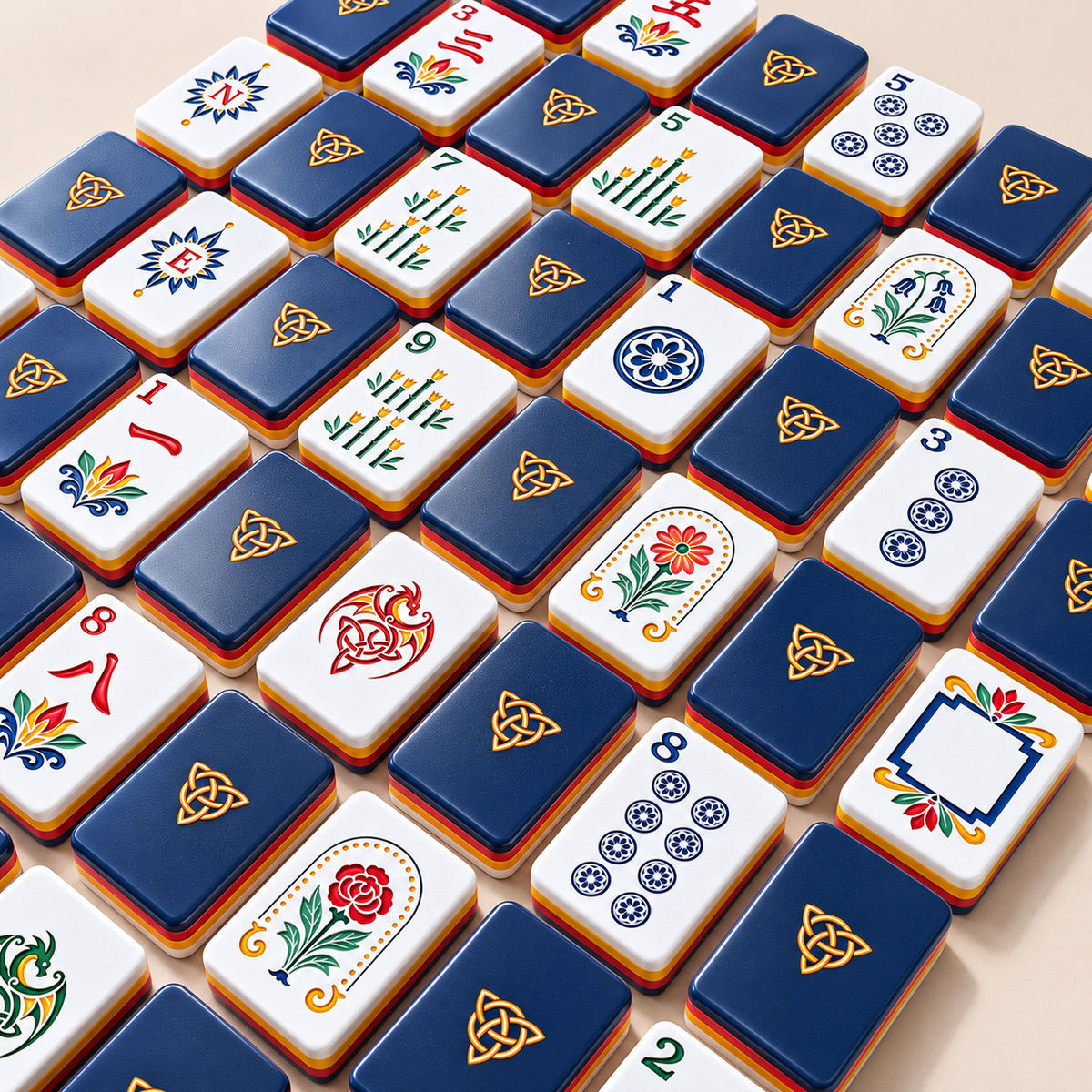
In riichi mahjong, a mangan (満貫) is a hand worth exactly 2,000 base points—8,000 if the dealer wins, 4,000 if a non-dealer wins from the discard, or split among three opponents if a non-dealer wins from the draw. Unlike American mahjong, which uses a single annual card and no scoring progression, riichi uses a point-value system tied to tile combinations (melds), special hands, and wait patterns. A mangan typically requires 5–6 fu (the base multiplier) and 3 han (hand multiplier)—for example, a hand with two dragon pungs, a wind pung, and a simple meld might score 3 han 60 fu, which rounds to mangan. Mangan sits between haneman (6,000 base) and baiman (12,000 base) and represents a strong but not exceptional hand in tournament play. 🀄 Shop best-selling mahjong sets →
What is a mangan and when do you score it?
A mangan is the third-tier fixed payout in riichi mahjong's scoring system. You score mangan when your hand reaches exactly 2,000 base points—typically 3–4 han with 30+ fu, or any hand with 5+ han (even 1 fu). It's the threshold where the game stops calculating han and fu individually and jumps to a fixed payout. If you're the dealer (tsumo), everyone pays you 4,000 each; if non-dealer (ron from discard), the discarder pays 4,000; if non-dealer tsumo, each opponent pays proportionally.

How does riichi han-fu scoring differ from American mahjong?
American mahjong awards one fixed payment per completed hand listed on the current NMJL card—no sliding scale. Riichi mahjong awards points on a han-fu grid: each hand gets a han count (1–13) multiplied by a fu multiplier (20, 25, 30, 40, 50, 60, 70, 80, or 110). The product determines payout; mangan and above bypass the grid entirely. American players use the Charleston tile-exchange ritual before play; riichi has no Charleston. American tiles include birds and flowers and modern jokers; traditional riichi sets omit flowers and use tiles only. Learning riichi requires unlearning American card-bound thinking—each hand is calculated live, not looked up.
What hand patterns count toward mangan?
To score 3 han (the most common path to mangan), you need three yaku—pattern types. Examples: winning from your own draw (tsumo), being non-dealer and winning on a one-tile wait (pinfu), holding a pung of a dragon (yakuhai), or completing a hand with all one suit (tanyao). A hand with two dragon pungs and a pung of your seat wind scores 3 han automatically; add any simple meld and you'll hit 30+ fu, crossing the mangan threshold. Higher-han hands (4, 5, or more) score even faster. The catch: you must finish with a legal wait shape (pair + melds) and declare tenpai (one tile away) before drawing the winning tile or accepting a discard.
🎁 See our most-loved mahjong sets & accessories →
What's the exact point payout for mangan?
Situation | Dealer Wins | Non-Dealer Wins (Ron) | Non-Dealer Wins (Tsumo) |
Payout per opponent | 4,000 | Discarder pays 4,000 | Each pays 1,000 (except discarder 2,000 if applies) |
Total to winner | 12,000 | 4,000 | 2,000 from each = 6,000 |
These payouts are fixed—they don't change even if your actual han-fu calculation would be higher. Once you hit mangan, you cap at mangan payout unless your hand qualifies for haneman (6,000 base) or above. Most rule sets cap payouts at mangan during casual play to keep games balanced; tournament rules may differ.

How do you count han and fu to reach mangan?
Han comes from yaku (winning patterns). Each yaku is worth 1, 2, or 3 han depending on difficulty. For example: tsumo = 1 han, dragon pung = 1 han, all one suit (chinitsu) = 6 han. Fu (符; literally "counts") is a base multiplier starting at 20 and added for each structural element: 2 fu per triplet (pung/kong), 2 fu per honored-tile pair (any wind or dragon), 1 fu per concealed triplet, and adjustments for wait shape and non-dealer status. A non-dealer with two kongs, two dragon pungs, and a pair of seat wind might score 4 han 30 fu, which automatically becomes mangan. Use a scoring reference chart (often printed on riichi scorepad backs) to avoid calculation errors during play.
✨ Find your Mahstead set — free US shipping →
Common mistakes players make with mangan scoring.
Mistake 1: Assuming all 3-han hands are mangan. A 3-han 20-fu hand pays only 1,920 base points (rounds to 2,000 in some rule sets but not as a true mangan). You need 3 han AND at least 30 fu to guarantee mangan; lower fu requires more han.
Mistake 2: Forgetting fu multipliers for concealed kongs. A concealed kong (ankan) is worth 16 fu, not 8—this pushes borderline hands over the mangan line and is easy to overlook mid-game.
Mistake 3: Misreading dealer vs. non-dealer payouts. A non-dealer dealer mangan (the dealer wins) pays 12,000 total (4,000 × 3). A non-dealer winning mangan pays only 4,000 from the discarder or 2,000 each from three opponents if self-drawn. Players often assume all mangans pay the same.
Mistake 4: Confusing riichi payouts with American fixed hands. American mahjong does not use mangan, han, or fu—it uses one annual card with fixed pattern names. If you're learning riichi after American, unlearn the lookup-table model entirely.
What to check before you buy mahjong tiles for riichi play.
Riichi is traditionally played with a 136-tile set (34 tiles × 4 copies)—no jokers, no flowers. If you're sourcing tiles for casual riichi or teaching, check that your set includes all suited tiles, winds, dragons, and seasons in the right counts. Many Western players use mixed sets or add jokers for casual rules; if you're joining a club or tournament, confirm the official tile count and rule set first. Our best-selling mahjong sets include full American-standard 160-tile sets; if you need a riichi-only set, ask your local club or order from a specialist riichi supplier. For casual home play mixing variants, a full best-selling set gives you flexibility to play American, Hong Kong, or house-rule riichi without gaps.

FAQ
Can you score mangan in American mahjong?
No. American mahjong uses a single fixed payout per listed hand on the annual NMJL card; there is no mangan, han, fu, or scoring progression. Mangan is riichi (Japanese) only.
What's the difference between mangan and haneman?
Mangan = 2,000 base (8,000 dealer). Haneman = 3,000 base (12,000 dealer). Haneman requires at least 5 han or 4 han with certain tile arrangements. Mangan sits directly below it.
Do you need to announce tenpai to score mangan?
In most riichi rules, yes—you must declare tenpai before drawing to be eligible for most yaku. Some casual games waive this; check your table's house rules first.
How many tiles in a riichi mahjong set?
The standard riichi set has 136 playing tiles: four each of numbered suits 1–9 (108 tiles), four each of seven honors (winds and dragons: 28 tiles). No flowers, no jokers, no blanks.
Can you score mangan if you're a beginner?
Yes, once you learn yaku (patterns). A beginner's first mangan often comes from simple hands like two dragon pungs plus a seat wind pung—just 3 han with 30+ fu. Practice on a scoring grid before playing competitively.
What's pinfu and why does it affect mangan?
Pinfu (平和) is a 1-han hand with a non-honor pair and a one-tile wait, no melds. It's valuable because fu reset to 30 minimum for non-dealer, so 3-han pinfu always scores mangan. Dealer pinfu scores only 3-han regular unless combined with other yaku.


View More
View More
View More
